Have you ever given a thought to these silent natural wonders around you standing tall in diverse shapes and sizes?
I am talking about trees — yes, trees are natural wonders and a gift to this world and to the entire humanity. They are a vital source of survival of all the living things on this planet because they provide oxygen, food and shelter; they maintain ecology and keep the atmosphere clean.
Trees appeared some 360 million years ago on the face of the Earth. It is estimated that there are more than 60,000 tree species in the world, and all have a unique role to play.
Researching to write on this beautiful creation of nature was a great experience for me because I was able to learn so many amazing things about trees, which I did not know before. But it was also a very difficult task to choose a few from the thousands of wonderful trees there are in nature.
These trees include Japanese maple trees, giant sequoia, blue jacaranda, angel oak, Sagana bamboo, Rainbow eucalyptus, Cannonball tree, Japanese cherry and Wisteria.
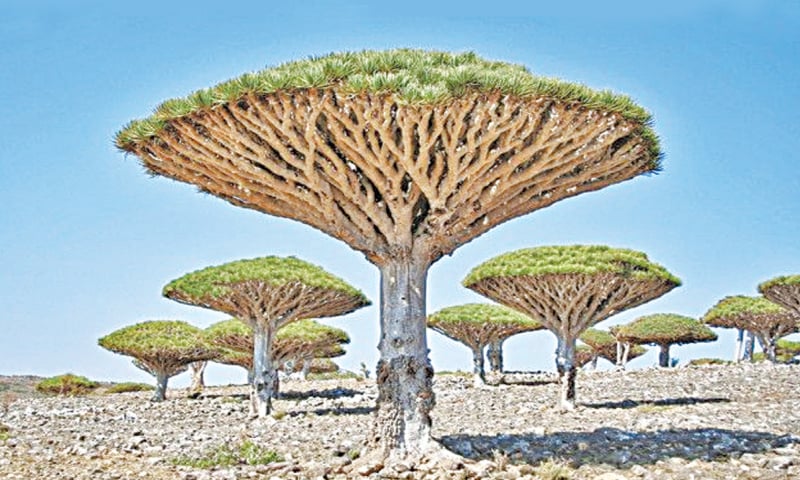
Dragon blood trees, Socotra, Yemen– At first sight, they look like upside down giant umbrellas, or alien fauna on some other planet. Of course, these unusually beautiful trees are not alien fauna, nor are they on any other planet. They are called dragon blood trees, scattered over a vast deserted area of Socotra, Yemen.
You may wonder why the tree is named dragon blood.
The trees don’t have anything to do with dragon or blood either, but the name has been given to them for the red sap that comes out from their bark when cut or damaged.
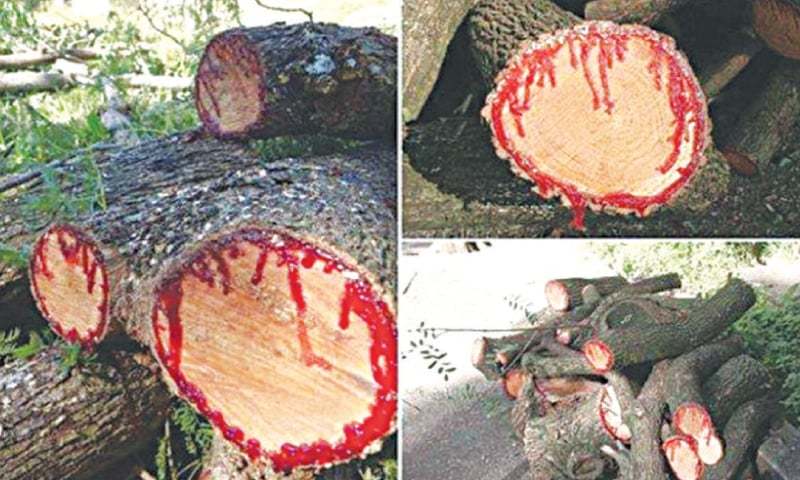
The red sap is actually the dragon blood trees’ defence system and helps them against the attack of pests and disease.
In 17th century Europe, the sap was regarded as a magical cure for all. The claim was right, the sap has medicinal properties and more recently, the resin has been used in breath fresheners and other medicines.
Baobab tree, South Africa– These majestic pillar-like trees stand tall in arid regions of Madagascar, mainland Africa, Arabia and Australia. From a distance, baobabs seem lifeless giant pillars, but they are the most sustainable fauna found in arid regions. They have leafless branches for around nine months and bloom only for three months. The leaves appear on their tips and white flowers bloom in the night, spreading a scent of sour milk around. Baobabs also grow fruits and the egg-shaped one-foot long fruit is considered by the locals as a superfood because it is rich in magnesium, potassium and calcium.
Baobabs are also called “The tree of life” because baobabs store water in their trunk and branches, which are porous and work like a sponge. Therefore, they allow them to conserve more water than any other tree. It is estimated that a healthy baobab can hold up to 120,000 litres of water in their trunk. Amazing, isn’t it!
All trees hold benefits, but in the case of the baobab, it seems that the tree is a wonder. For example, the bark is pounded to make ropes, mats, baskets, paper, cloth, musical instruments’ strings, and waterproof hats. Apart from that, baobabs are also used in various medicines to treat kidney and bladder-related diseases, asthma, insect bites and several other maladies.
The sandbox trees– The sandbox trees are considered life-threatening trees. They are native to tropical regions of North and South America, including the Amazon rainforest. They are also found in parts of Tanzania. Sandbox trees are also called dynamite tree.
Sounds weird? Yes, it is weird that the fruits they produce explode propelling seeds at the speed of 160 miles per hours, which means they can land up to a hundred feet or more away from the tree. The fruit resembles small pumpkins but work like grenades; they pose serious injury to whoever comes in their range.
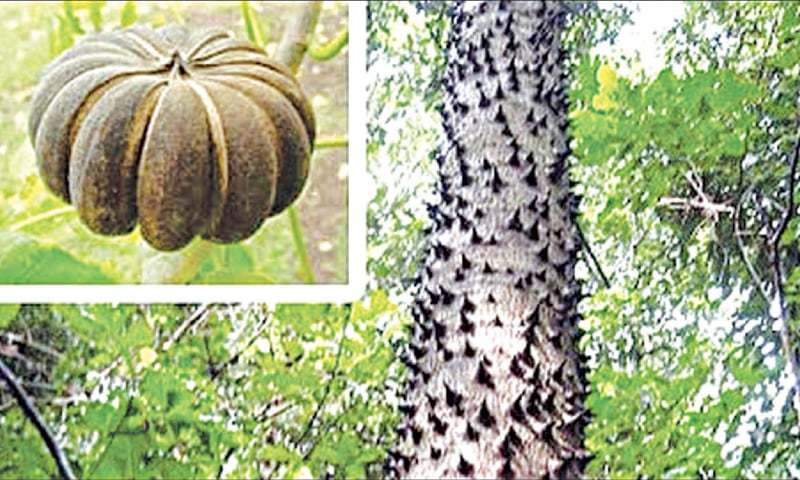
Apart from that, the trunk of the tree is completely covered with dark pointed spines, which are full of toxic sap and is known to be very dangerous for humans.
Titilayo Kupoliyi