By Maxwell Oyekunle
The New Year, 2026, is just a few hours away.
It is a brand new year, a year we have not seen before.
And the New Year deserves a “new you”, as the bible says, “You can’t put new wine in old wineskin, else the old wineskin will burst, and the wine would be wasted”, (Matthew 9:17 Paraphrased)
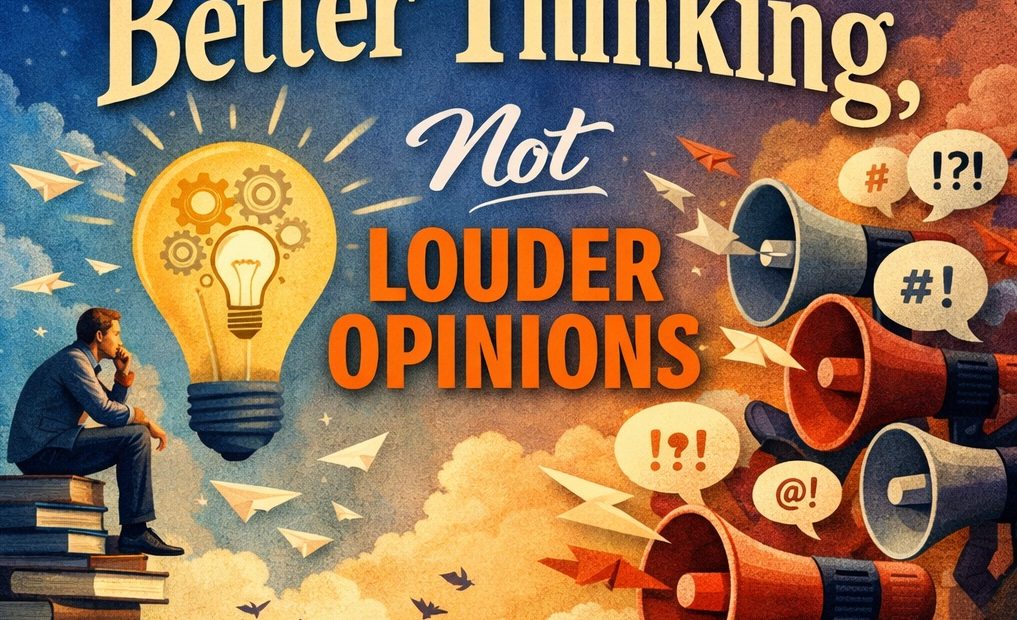
As we step into a New Year, one quiet but powerful resolution we should all consider is this: to become better listeners and more thoughtful thinkers.
Not louder. Not more reactive. Just better.
In a world that constantly pushes us to respond instantly, being able to listen critically has become a rare skill.
Yet, it is one of the most important habits we can carry into a new year.
Listening critically means going beyond the surface—being able to extract quality information regardless of how it was phrased, who said it, or whether it came wrapped in language we don’t like.
It means focusing on substance over tone and meaning over emotion.
One reason this is difficult is that many mindsets have quietly turned into walls instead of bridges.
Some belief systems, when taken to unhealthy extremes—whether toxic feminism or toxic masculinity—sink so deeply into people’s thinking that everything is interpreted through that single lens.
Conversations stop being conversations.
Every comment feels like an attack.
Every opposing view feels like a threat.
This is a terrible place to be mentally, and it is not a good posture to carry into a new year meant for growth.
The New Year should challenge us to relearn emotional intelligence.
Emotional intelligence is not about ignoring your feelings; it is about not letting your feelings control your reasoning.
It starts with the willingness to seek the truth, not just our truth.
Our truth is shaped by our experiences and biases, but truth itself is informed by facts, context, and evidence.
When truth becomes our anchor, our convictions become stronger, yet our minds remain open.
There is wisdom in the saying: “It is a mark of an educated mind to entertain an idea without accepting it.”
This is the mindset the New Year demands.
You can listen without agreeing.
You can examine an opinion without adopting it. You can relate with someone’s perspective without feeling triggered or invalidated.

Becoming better in the New Year also means changing how we handle disagreements.
Instead of fighting opinions with raw emotions, we should learn to engage them with facts, data, figures, and real events—especially recent and verifiable ones.
This is why everyone, in some form, should learn basic data analysis or analytical thinking.
It trains the mind to ask better questions, to look for patterns, to separate assumptions from evidence, and to judge situations more fairly.
When you think this way, you become harder to manipulate and slower to anger.
You stop reacting and start reasoning.
The New Year is not just about new goals, new plans, or new opportunities.
It is about new mental habits.
Habits that allow us to listen more, judge less, and respond better.
If we can carry this posture into our conversations, relationships, workplaces, and online spaces, we won’t just be starting a new year—we’ll be becoming better people in it.
And that kind of growth is worth far more than any resolution we write down.
Follow us on Telegram and YouTube, and join our WhatsApp Update Group for more news updates.