By Taiwo Akinola
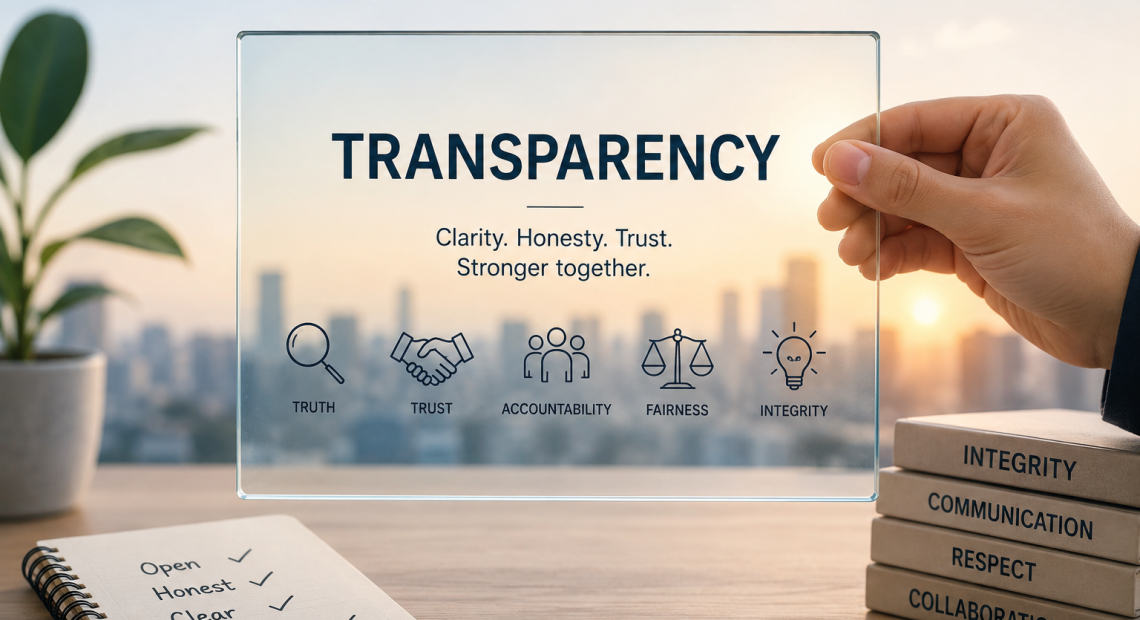
In the philosophy of life—especially in ethics and moral philosophy—transparency refers to living and acting in a way that is open, honest, and free from deception.
It is closely tied to ideas like integrity, accountability, and trustworthiness.
A transparent person does not hide intentions or manipulate others through secrecy.
What Transparency Means (Philosophically)
Transparency is not about revealing everything without discretion; rather, it is about alignment between what you think, say, and do. Philosophers often connect it to moral virtues:
- In Virtue Ethics, transparency supports the development of good character.
- In Deontology, it reflects a duty to tell the truth.
- In Existentialism, it relates to authenticity—being true to oneself.
Practical Example
Imagine a student leader managing funds for a school project.
- Without transparency: The leader hides how the money is spent. People begin to suspect misuse, even if nothing wrong occurred.
- With transparency: The leader shares receipts, explains decisions, and answers questions openly. Trust grows, and cooperation improves.

Benefits of Transparency
1. Builds Trust
When people see consistency between your words and actions, they rely on you more.
- Example: A friend who admits mistakes honestly is trusted more than one who hides them.
2. Encourages Accountability
Transparency makes you responsible for your actions because they are visible.
- Example: A manager who explains decisions publicly is more careful and fair.
3. Reduces Conflict and Suspicion
Secrecy often creates doubt; openness removes unnecessary tension.
- Example: In a family, openly discussing finances prevents misunderstandings.
4. Strengthens Relationships
Honesty deepens emotional and social bonds.
- Example: In friendships, expressing true feelings (respectfully) avoids hidden resentment.
5. Promotes Personal Integrity
Living transparently aligns your inner values with outward behavior.
- Example: Refusing to cheat in an exam—even when no one is watching—builds self-respect.
6. Supports Fairness and Justice
Transparency helps ensure decisions are made fairly and can be evaluated by others.
- Example: Transparent election processes increase public confidence.
Philosophical Insight
Transparency is powerful because it connects truth (what is real) with ethics (what is right) and human relationships (how we live together).
A life guided by transparency tends to be more stable, respected, and meaningful.
Follow us on Telegram and YouTube, and join our WhatsApp Update Group for more updates