For most Nigerians, these are not the best of times. Why? The economy! Its painfully excruciating bites spare no one. Parents moan being unable to adequately feed their children amidst skyrocketing food prices, besides the struggles to pay school fees. And should the wards in school be beyond two, and then the ‘headache’ becomes more soaring?
How come Nigerians find themselves in this rough terrain? All hail subsidy removal! Last year, President Bola Tinubu, during his inauguration, announced the removal of fuel subsidies on the grounds that it was injurious to the Nigerian economy and only beneficial to some cabals.
Previous administrations had avoided the contentious issue of subsidy removal.
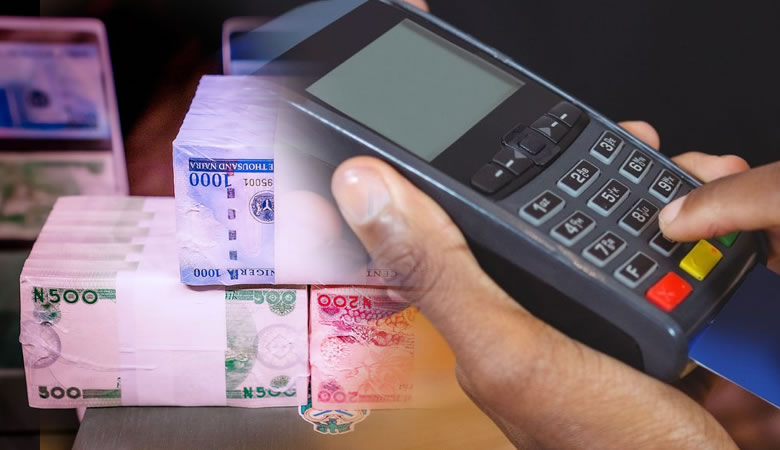
The effect of its removal has continued to sweep through the nation like a tsunami, hitting hard at the economic and social life of Nigerians, who were still reeling from the battery of cashless policy imposed on the nation by the Central Bank of Nigeria.
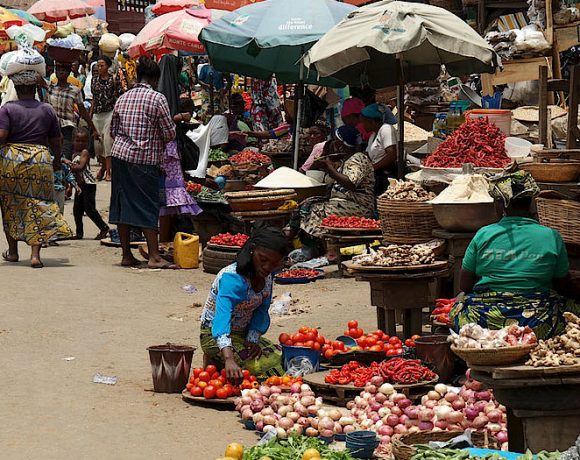
Today, a bag of rice sells at about N60,000, beans at N1200 per congo, and gari N800; even mineral drinks, which people take as a leisure now, sell for N300. So, the question on every lip is ‘Whither are we heading?’
In light of the current situation, Nifemi Owolabi, an intern with Radio Nigeria Ibadan, interacted with undergraduates of some Nigerian universities to find out how they have been coping with the situation.
Owonifari Kolawole, a student of the Federal University of Technology Akure describes the situation as quite challenging. In the words of Awoyemi Deborah from the Federal University of Health Science, Ila Orangun, Osun State, “Every damn thing rises every day, and you never have a choice to get them, especially when it’s being asked for in school. With the things happening all around you also have to be considerate because you can always see what is happening at home and at large.”
Ogunjemilua Timothy from Federal University, Oye Ekiti letting a breath, Hmmmm…., says “Well to be honest things have not been so easy but we thank God for his grace… We have been able to adapt to all the changes in the economy…we have turned it into opportunities….”
For Babatunde Samson from Ekiti State University, the present situation is dreary; he says “Being a student in the current Nigeria’s economy has some quality of suicide mission considering the 100 per cent increase in tuition fee, as if there’s no advocate…”
For Pensioners to continue to live a meaningful life after retirement, there is a need for Government to review their benefits and entitlements.
Founder and Spiritual Head, Shafaudeen-in-Islam Worldwide, Professor Sabit Olagoke stated this at the 18th public service lecture entitled “Exploding more retirement life -public servant experience” organized by the National Forum of Heads of Federal Establishments, NAFOHEADS, Oyo State chapter held at the federal secretariat Ibadan.
Professor Olagoke said he believed that, like the developed countries, the government should make life easier for retirees by fashioning out ways to make them live longer through creation of recreation centres for them and good allowances.
In a remark, the First Vice Chairman of NAFOHEADS in Oyo State, Dr Stephen Adewumi said the lecture was chosen as a way of reducing untimely deaths among retirees and to make them engage in meaningful trade activities
Chairperson of NAFOHEADS in Oyo state, Mrs Funmilayo Mogaji said the NAFOHEADS week was marked in a low key with the lecture and the investiture of Professor Sabit Olagoke as the patron of the Forum.
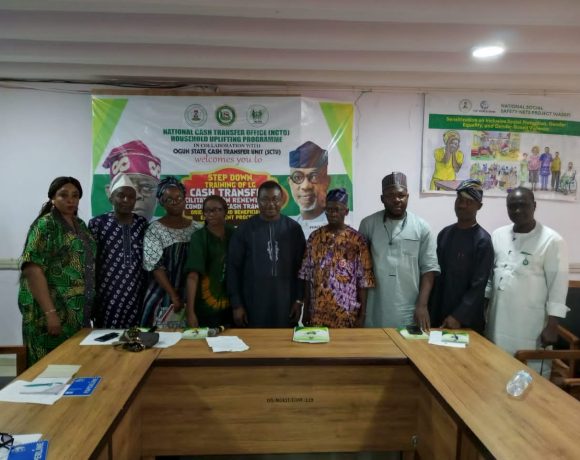
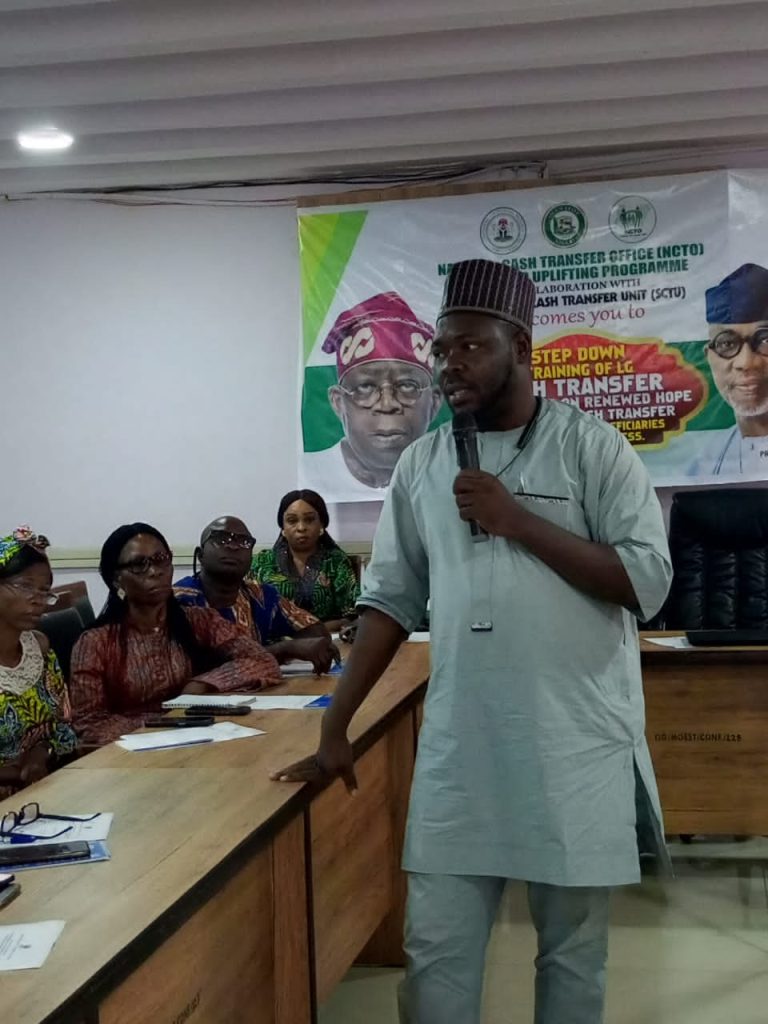
Ogun State Government has officially commenced the training of facilitators for the Renewed Hope Conditional Cash Transfer across the 20 Local Government Areas of the State.
Addressing the trainees in Abeokuta, the Commissioner for Special Duties and Intergovernmental Affairs, Mrs Funmilayo Efuwape said the training was necessary to enhance the process for the disbursement of the Renewed Hope Conditional Cash Transfer (RH-CCT) to the most vulnerable indigents in the State.
Represented by the Permanent Secretary in the ministry, Mr Lateef Benson, the Commissioner said the facilitators would be equipped with the requisite knowledge and skills to sensitise the communities and beneficiaries, while ensuring the enrolment of the poor and vulnerable households into the RH-CCT programme.
She commended President Bola Tinubu for expanding the initiative to cover all the 20 local government areas of the state, unlike the previous scheme that covered only 6 council areas.
“Before now, we used to have an epileptic cash transfer to the beneficiaries and only 6 LGAs were taken but with President Tinubu, the programme is now scaled up to all the 20 LGAs across the State.
“I am so delighted because this programme is aimed at alleviating poverty, touching the vulnerable and also poorest of the poor,” she said.
She urged the facilitators to equip themselves with good communication skills to help them interact professionally with the beneficiaries to avoid hitches in the process.
The Commissioner also urged them to be judicious with the grant that would be given to them, urging them to start up small scale businesses that would uplift them from their present financial state.
The State Programme Manager for RHCCT, Mrs Funmi Bakers who pledged the successful implementation of the programme also applauded the Federal Government for scaling up of the programme to accommodate the 20 LGAs and commended Governor Dapo Abiodun’s administration for promoting the National Social Investment Programme (NSIP) in the state.
Mrs Bakers cautioned the facilitators against sharp practices, including extorting money from the beneficiaries before of the programme, warning that those caught in the act would face severe sanctions.
Senator Sharafadeen Alli (APC-Oyo South) has said that the 2024 Budget would benefit Nigerians, urging them to continue supporting President Bola Tinubu’s administration.
This is contained in a statement by his Special Adviser on Media, Mr Akeem Abas and made available to newsmen on Friday in Ibadan.
The lawmaker made the call on Thursday while featuring on a programme ‘The Platform’ anchored by Akeem Kareem on Success 105.3 FM in Ibadan.
Alli, the Senate Committee Chairman on Electoral Matters, said that the president was leaving no stone unturned to return Nigeria to economic prosperity.
“The 2024 Budget is different from the 2023 budget. We’ve been running a deficit budget for several years. The reality today is that the percentage of the deficit is less than what it used to be.
“Today, we have more money to conserve as a result of improvement in revenue generation. President Tinubu is doing very well. May God bless him and give him good health.
“We are going to get there. It may not be really visible, but there have been lots of improvements. You can also see that those taking billions are not been spared,” he said.
Speaking on the distribution of cash to the vulnerable, Alli said it was not the best, but better than not doing anything at all.
He acknowledged the hardship Nigerians were going through which would soon be over, urging them to persevere.
“I am Nigerian and know things are very hard today. This hardship is temporary and will soon be over. It is just like pouring iodine on a sour, at first it will be painful and later dry off.
“Giving cash is not the best, but a stop-gap. It is better to give it than not doing anything at all,” he said.
The lawmaker described as untrue the information that all National Assembly members have collected bags of rice or hundreds of million naira, saying there was nothing of such.
According to him, it was a statement made by the president in October, but we haven’t received of such till we left on December 31, 2023.
“There is none of the three senators from Oyo State who has not distributed more than two trucks of rice during the festive period. This is purchased individually by the three senators.
“We have not received any rice from the government. We will continue to serve our people diligently as promised during the campaign,” he said.
Speaking on speculations that Alli was executive lots of projects within his district because he is eyeing the governorship seat in 2027, the lawmaker said that he was elected as a senator.
He said that he was being guided by his electioneering promises to the people, promising to do more for his people.
“I promised to sink 100 boreholes in the 99 wards that make up Oyo South. Today we have done more than 40 and hoping to finish by July this year.
“It is not about being governor, I was elected as a senator. I am contented today being a senator. Where I will be in 2027 is in the hand of God,” he said.
In the area of legislative functions, Alli said he had since his assumption of office been involved in several oversight functions.
The lawmaker said that no fewer than 1000 youths benefitted from e-commerce and agribusiness, while 3,000 widows as well as 3,000 traders benefitted from N70 million worth of food bank.
Alli said that he facilitated ICT centres, installed no fewer than 200 solar lights, donated inverters/boreholes to the police, paid WAEC fees of 54 students, constructed a public toilet, and assisted individuals and associations financially.
He said the 10th National Assembly under the leadership of Senator Godswill Akpabio is determined to make laws that would benefit Nigeria and Nigerians.
“I have been involved in some bills and motions, prominent among which was the one I moved for a befitting burial/Immortalisation of Pa Taiwo Akinkunmi, designer of the national flag.
“I have a private bill on pensioners issues. What we have on the ground today is not in consonance with realities. I already proposed some amendments to the bill.
“I am also much involved in the proposal for the establishment of the Federal Medical Centre in Ibarapa. This was the initial proposal of Dr Ajibola Muraina, the former representative of Ibarapa Central/North federal constituency,” he said.
Alli said that he was working with the incumbent representative of the Constituency, Dr Anthony Adepoju towards actualising the proposal at the National Assembly.
He said that he was also involved in the successes recorded in some oversight functions carried out by other committees of the National Assembly, particularly that of the judiciary.
The Ondo State Government says it is committed to the welfare of senior citizens in the state with prompt payment of their monthly stipends and payment of Gratuities
Governor Lucky Ayedatiwa made this known at the commencement of payment of one point two billion naira gratuities to the year 2014 pensioners in Ondo State.
The event which took place at the cocoa conference hall governor’s office in Alagbaka Akure witnessed a large number of senior citizens who were full of appreciation for the gesture.
Represented by the Chief of Staff Chief Olugbenga Ale, Governor Aiyedatiwa noted that the state government decided to pay the 2014 Gratuities in full into the personal accounts of the retirees instead of the usual issuance of cheques to avoid any form of manipulation.
Earlier, the Head of Service, Pastor Kayode Ogundele while appreciating Governor Aiyedatiwa told the senior citizens that the gratuities paid would not in any way affect their monthly stipends.
Responding on behalf of other pensioners, Mr Moses Olofigoroye thanked the state government for what he described as unprecedented.
Ogun State Governor, Prince Dapo Abiodun has appealed to the federal government to approve the operation of the Remo Economic Zone as a Free Trade Zone.
The governor, who made the plea when he received the Minister of Industry, Trade and Investment, Dr Doris Uzoka-Anite and her team in his office at Oke-Mosan, Abeokuta, noted that the approval was needed to enable processing companies that have signed to process their raw materials in the zone commence operations.
He emphasized that the zone would record multiple processing companies willing to sign up to begin work in the zone in the next year if the approval was given, saying out of the six Special Agro Processing Zones, the state has the highest number.
The governor said his administration has created four economic zones in the last four and a half years, in addition to the existence of the Agbara Industrial Zone.
While intimating the minister of efforts to further attract investments to the state, Governor Abiodun informed that his administration would soon sign a memorandum of understanding, MoU with its partner to commence the construction of the Deep Seaport at Olokola to complete the circle of economic zones in the state.
The governor thanked the minister for the visit, noting that it would further cement the relationship with the government at the centre.
In her remark, Dr Doris Uzoka-Anite applauded the state government for its developmental strides, saying the springing up of industries in the state was a confirmation of the conducive business environment and the availability of necessary infrastructure that attracts investors.
Dr Uzoka-Anite said as the industrial capital, Ogun State has distinguished itself as a pioneer and leader in developing, expanding and attracting industries with ease, adding that the visit would enable her and her team to rub minds with the officials of the state government on how best to be of help to each other.
The President General, Senior Staff Association Of Statutory Corporations and Government-Owned Companies, SSASCGOC, Mr Kayode Alakija has debunked the rumour going around that its members will not further benefit from weigh-in allowance.
Mr Alakija stated this during a courtesy call on the Zonal Director, Federal Radio Corporation of Nigeria, Ibadan Zonal Station, Mr Dominic Mokikan.
He said the union needed to clear the air on the false report, stressing that the weigh-in allowance was jointly negotiated by all the leaders of the various unions.
Mr Alakija maintained that the visit to the Ibadan Zonal Station of the FRCN was a periodic check on the welfare of the members and to inform them of the programmes of the union.
In a remark, the Zonal Director, Federal Radio Corporation Of Nigeria Ibadan Zonal Station, Mr Dominic Mokikan represented by the Deputy Director Of Programmes, Reverend Niyi Dahunsi, thanked the union for clearing the air on the false information urged them to always prioritize their members’ welfare.
Mr Mokikan said the corporation would continue to support all the in-house unions for the overall development of the organization.
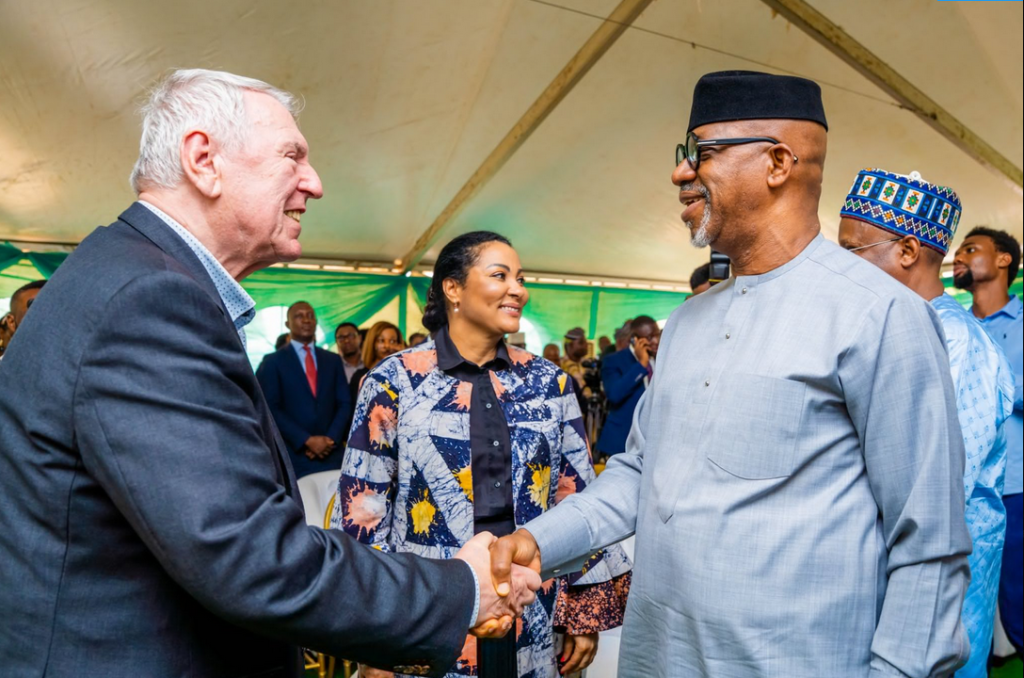
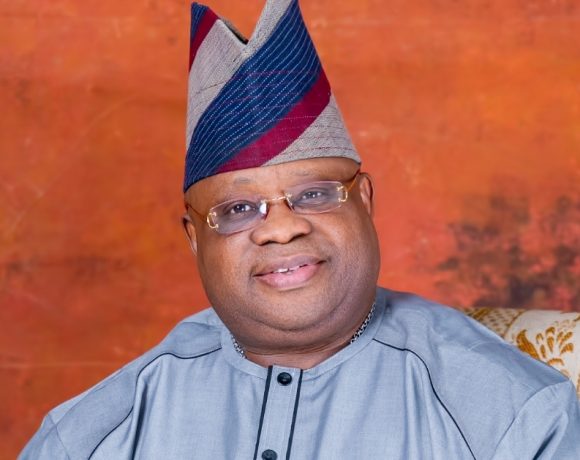
Osun State Governor, Senator Ademola Adeleke has harmonized into a single bill the multiple taxes and levies collected by different government ministries, departments, agencies across all business sectors, formal and informal.
The Governor’s new initiative was informed by the need to put an end to the incessant challenges of multiple taxation being faced by taxpayers in the Osun state.
The Harmonized Bill comprises all levies, which all business owners are expected to pay on an annual basis as a single bill for easy and convenient payments that could be in equal or unequal tranches.
A statement by the Governor’s spokesperson, Mallam Olawale Rasheed, explained that the tax harmonised bill certificate will be issued automatically after completion of the payment.
The statement listed the Official Online Payment Channels in the State to include https://pay.irs.os.gov.ng, POS Machines in Tax Stations across the state, banks in and outside Osun, ATM Machine across the country and using of any Money Transfer Service for those outside the country by using the Pay with Transfer feature online on http://pay.irs.os.gov.ng.
The state government has further deployed some Automation Systems for improved government services delivery which include the Government Assets and Utility Management System for renting and leasing of government properties and assets, C of O in 45 days programme, Electronic Affidavit system, Electronic State of Origin and Local Government Area of Origin portal, Mobile Tax stations, Seamless online payment systems for taxes among others.
The release urges members of the public to always ensure collection of evidence of payment which is in form of Government Automated Revenue Receipt (A.R.R) for all payments made and to visit any OIRS Tax Offices nearest to them for any complaint or enquiry.
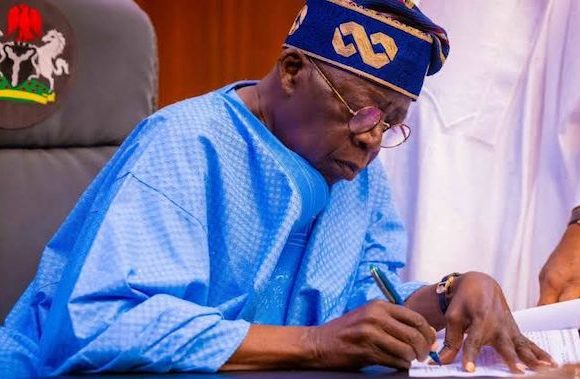
President Bola Tinubu on Monday afternoon signed into law the 2024 Appropriation Bill at the Presidential Villa, Abuja.
Tinubu signed the N28.7tn budget document earlier approved by the National Assembly hours after he arrived in Abuja from Lagos where he spent the past week holidaying.
The budget is N1.2tn higher than the budget he proposed to a joint session of the National Assembly on November 29, 2023.
Then, the President had pegged the budget deficit for the 2024 fiscal year at N9.18tn.
He stated, “The N9.18tn deficit is lower than the N13.78tn deficit recorded in 2023 which represents 6.11 per cent of GDP.
The deficit will be financed by new borrowings totalling N7.83tn, N298.49BN from Privatisation Proceeds and N1.05 trillion drawdown on multilateral and bilateral loans secured for specific development projects.”He also emphasized the need to maintain the January-December implementation cycle saying “Our goal is to ensure that the Appropriation Act comes into effect on January 1, 2024,”.
On Friday, December 29, 2023, the Senate increased the 2024 budget by N1.2tn, moving the budget from N27.5tn to N28.7tn.According to the report submitted by the Appropriation Committee led by Senator Solomon Adeola, aggregate expenditure was pegged at N28,777,404.073.861; statutory transfers at N1,742,786,788,150; recurrent expenditure at N8,768.5330,852; capital expenditure at N9,995,143,298,028 and GDP at 3.88 per cent.
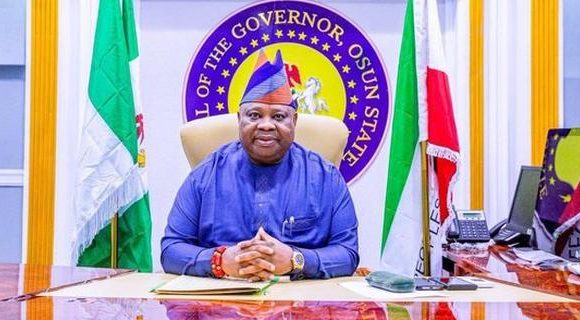
Osun State Governor, Senator Ademola Adeleke has signed the 2024 budget into law with a promise to ensure full implementation.
The budget is Two Hundred and Seventy-Three Billion, Nine Hundred and Eight Million, Nine Hundred and Ninety-Seven Thousand Naira and Four Hundred and Ten Kobo (273,908,997,410)
In a remark, Governor Adeleke said the budget tagged “Budget of Reconstruction and Recovery” is crafted to fast track the revitalisation of the various sectors of the state economy.
The Governor restated that his administration’s focus is to put the state on the path of sustainable development, therefore, rebuilding all the sectors including education, health, sports, agriculture, creative industry, digital economy and general infrastructure alongside women and youth-focused programmes and policies.
He commended the State Assembly for prompt processing of the appropriation bill and the Heads of Ministries for their cooperation with the various Assembly committees in the budgetary process.
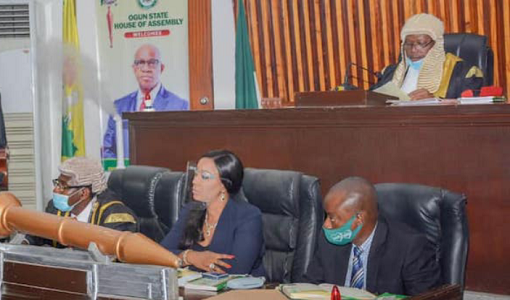
The Year 2024 Appropriation Bill for Ogun State has been passed by the State State House of Assembly.
The document was passed as “A Bill for a Law to authorise the issue and Appropriation of the sum of 703 Billion, 28 Million, 13 Thousand, 441 Naira, 64 Kobo Only, from the Consolidated Revenue Fund for the Services of Ogun State Government of Nigeria for the Financial Year Ending 31st
day of December, 2024.”
The bill presented to the lawmakers last month by Governor Dapo Abiodun witnessed a review in the capital and recurrent expenditures as well as the projected revenue of 18 Ministries, Departments and Agencies.
The Chairman, the House Committee on Finance and Appropriation, Mr Musefiu Lamidi presented the committee’s report and moved the motion for its adoption as seconded Mr Damilola Soneye and supported by the Whole House, sequel to the passage of the Appropriation Bill at a plenary presided over by the Speaker, Mr Olakunle Oluomo.
The Clerk of the House, Mr. Deji Adeyemo took the third reading of the bill after a motion moved by the Majority Leader, Mr Yusuf Sheriff as seconded by the Minority Leader, Mr Lukman Adeleye and supported by the Whole House through a voice vote.
Thereafter, the Speaker of the House, Mr Oluomo directed that a clean copy of the Appropriation bill should be transmitted to the State Governor, Prince Dapo Abiodun for his assent.
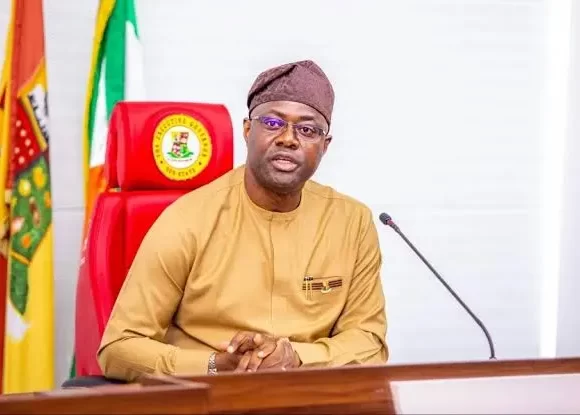
Governor Seyi Makinde of Oyo state has signed 2024 appropriation bill of over four hundred and thirty-eight billion naira into law.
Governor Makinde while accenting the bill tagged “Economy Recovery” at the Executive Chamber, Agodi, Secretariat,Ibadan described the 2024 budget as a critical one where government has to demonstrate responsiveness to governance in view of emerging challenges facing the nation.
The governor therefore called for more support and understanding from stakeholders particularly organized labour in the state.
Governor Makinde who explained that his administration has doubled 35 percent budget performance it met in 2019 assured that the 2024 budget is being targeted at 80 percent performance.
In a remark, the Speaker, Oyo State House of Assembly, Adebo Ogundoyin said the legislative arm, gave the budget accelerated passage with due diligence to adequately prepare ahead of next fiscal year.
Earlier, the Commissioner for Budget and Economic Planning, Professor Musibaudeen Babatunde, disclosed that the 2024 budget was prepared based on science, logic, and data.
It would be recalled that Oyo State house of Assembly had on Tuesday passed into law, 2024 budget which is four billion, two hundred million naira higher than the budget proposal presented by Governor Makinde earlier this month.
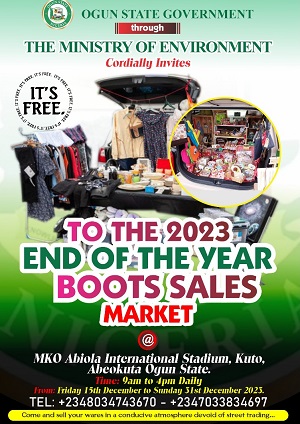
As part of efforts to eliminate illegal street trading during the festive period, the Ogun State Government has introduced “Boot Sales Markets” to address the perennial challenge in the state capital, Abeokuta.
The boot sales markets, an unconventional markets which allow seasonal traders to take advantage of the festival period to display their products and wares in the boots of their cars, vans and makeshift stalls to prospective and willing buyers in an organized, healthy and safe environment instead of selling illegally on roadsides.
The Commissioner for Environment, Mr Ola Oresanya, who announced this in Abeokuta said the markets located at the M.K.O. Abiola International Stadium Kuto and Farmers Market, Asero Abeokuta, would open from nine o’clock in the morning to four o’clock in the evening daily.
While praising seasonal traders who had taken advantage of the two markets to display and sell their wares, products, foodstuffs and other items, Mr Oresanya urged the traders to comport themselves in an orderly manner to justify the government’s decision to introduce the unconventional Car Boot Sales Markets.
He noted that the Boots Sales Markets would end on the eve of the New Year at the two venues and would reopen again in the two venues and other proposed venues in other major cities of the state during next year’s festive periods.
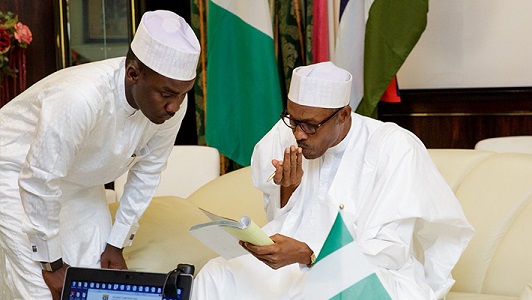
The Special Investigator on the Central Bank of Nigeria and Related Entities, Jim Obazee, has indicated that the recent naira redesign wasn’t expressly approved by former President Muhammadu Buhari.
Obazee had gathered that the approval came from Buhari’s aide, Sabiu Tunde ‘Yusuf’.
This was contained in the investigator’s final report tagged, ‘Report of the Special Investigation on CBN and Related Entities (Chargeable Offences) submitted to President Bola Tinubu on Wednesday.
Recall that Obazee, a former Executive Secretary of the Financial Reporting Council of Nigeria, was named by Tinubu as the CBN special investigator in a letter dated July 28, 2023, sighted by The PUNCH.
The report revealed that it was the embattled former CBN governor, Godwin Emefiele, who, in collaboration with Sabiu, implemented the naira redesign.
Sabiu is the former President’s nephew.
Emefiele, who is currently in Kuje Custodial Centre, is being prosecuted for N1.2bn in procurement fraud.
He has not been able to perfect the N300m bail granted him by the High Court of the Federal Capital Territory on November 22, 2023.
However, documents obtained by our correspondent on Thursday indicated that the former apex bank governor might face fresh criminal charges over the handling of the CBN naira redesign policy.
Emefiele could be “prosecuted for illegal issuance of currency under Section 19 of the CBN Act alongside Tunde Sabiu and the 12 top directors of the CBN.”
It was gathered that the naira redesign policy was sold to Buhari at the instance of Sabiu and that the initiative was done without the approval of the board of the CBN.
The investigator found that Buhari didn’t approve of the naira redesign. It was Tunde Sabiu who first told Emefiele in September 2022 to consider the redesign of the naira.
“On October 6, 2022, Emefiele wrote to Buhari that he wanted to redesign and reconfigure the N1000, N500, and N200 notes.
“The former president tagged along but did not approve the redesign as required by law. Buhari merely approved that the currency be printed in Nigeria. The redesign was only mentioned to the board of the CBN on December 15, 2022, after Emefiele had awarded the contract to Nigerian Security Printing and Minting Plc on October 31, 2022,’’ the documents noted.
Emefiele was said to have contracted the redesign of the naira to De La Rue of the UK for £205,000 under the vote of the head of the Currency Operations Department after Nigerian Security Printing and Minting Plc said it could not deliver the contract within a short timeframe.
It further showed that “the special investigator found that N61.5bn was earmarked for the printing of the new notes, out of which N31.79bn had been paid.
“As of August 9, 2023, findings revealed that N769bn of the new notes were in circulation.
“The probe of the CBN also revealed the fraudulent use of N26.627tn Ways and Means of the Apex Bank as well as the misuse of the COVID-19 intervention fund.
“For instance, the CBN under Emefiele at its 661st meeting held on October 27, 2020, approved that the Consolidated Revenue Fund Account should be debited with the sum of N124.860bn, and the decision was implemented on October 9.
“Similarly, the Committee of Governors, at its 670th meeting held on December 9, 2020, granted ‘anticipatory approval’ pending receipt of a formal request by Mr President and ratification by the board of directors for the payment of the sum of N250bn only to the Federal Government of Nigeria to address challenges as a result of low revenue inflow and the payment of salaries.
“The decision was implemented on December 15, 2020.”
The CBN investigator discovered that the CBN Ways and Means was abused under the Buhari administration.
Under the CBN Act, the Ways and Means provision allows the government to borrow from the apex bank if it needs short-term or emergency finance to fund delayed government expected cash receipts of fiscal deficits.
It costs the CBN and its subsidiary about N74.84bn to produce and roll out currencies, including new naira notes, in 2022.
Despite the scarcity of naira that plagued the country in the latter months of 2022, the CBN spent 40.42 per cent more than the N53.29bn it spent in the preceding year to roll out currencies.
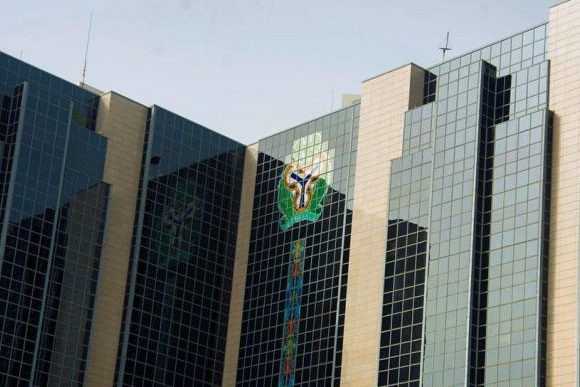
The Central Bank of Nigeria has cautioned Banks and POS operators against illegal actions affecting the circulation of naira.
This comes on the heels of public outcry that the Naira is not accessible to Nigerians.
Punch Newspaper
The CBN warned parties involved to immediately desist from such acts or face the law, saying there is over cash availability.
In a statement signed by the Acting Director of Communication and Public Relations, Sidi Ali, on Thursday, the CBN says that there is collusion between some Deposit Money Banks and Point-Of-Sale operators affecting the availability of cash and disrupting the seamless circulation of the Naira.
“The attention of the Central Bank of Nigeria has been drawn to alleged cases of collusion between some Deposit Money Banks and Point-of-Sale operators affecting the availability of cash and disrupting the seamless circulation of the Naira”. he noted
CBN has also advised Nigerians to use alternative payment platforms and channel their complaints via a digital platform provided in the statement.
Ondo State Government says it is fully committed to the completion of the Sunshine Food Processing Company.
Acting Governor, Lucky Aiyedatiwa announced this during a courtesy visit by the Chairman of Sunshine Food Processing, Mr Ife Oyedele,
The Sunshine Food Processing Factory is an egg powder plant inaugurated under a Public Private Partnership, PPP arrangement between the State government and the company.
Mr Ayedatiwa expressed his determination to ensure that the factory begins operations while the government creates an enabling environment for businesses to thrive.
Earlier, the Chairman of Sunshine Food Processing, Mr Ife Oyedele disclosed that when completed, the factory would require five hundred thousand eggs per day noting that this would boost farmers’ earnings.
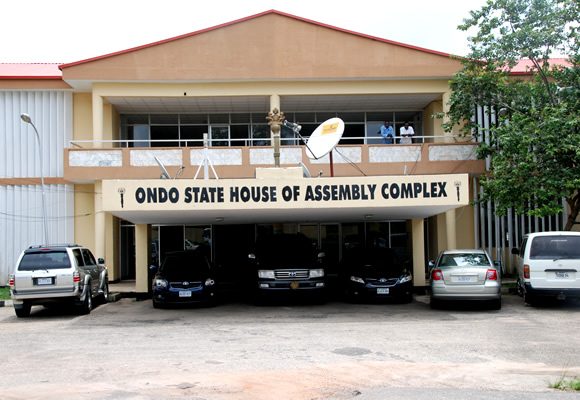
The Ondo State 2024 budget proposal has scaled through a second reading at the House of Assembly.
The budget was thereafter committed to the Committee on Finance and Appropriation.
The Speaker, Mr Olamide Oladiji then directed that all the Ministries, Departments and Agencies to liaise with the committee for budget defence.
Acting Governor, Lucky Aiyedatiwa had presented a budget proposal of 384.5 billion for the 2024 fiscal year to the state House of Assembly.
The budget is tagged BUDGET OF ECONOMIC RESILIENCE and infrastructural development.
It has one hundred and seventy-two billion, five hundred and eighteen million, three hundred and fifty-three naira only as recurrent expenditure while
two hundred and twelve billion, fourteen million, eight hundred and fifty-nine thousand, six hundred and forty-seven is for capital expenditures.
According to Mr Ayedatiwa, it will be funded majorly from the statutory allocation, VAT, grants, and IGR.
He reiterated that if the current drive by all revenue-generating agencies, spearheaded by the Ondo State Internal Revenue Service was sustained, the state would be able to attain the desired level of internal revenue generation.
A few days to Christmas, traders in Ibadan the Oyo State Capital have lamented low patronage of food commodities as a result of the hike in price.
Radio Nigeria correspondents who visited some major markets in Ibadan such as Bodija, Oja Oba and Apata observed that prices of bags of rice, vegetable oil, palm oil, yam flour and livestock had increased.
A rice seller, Mrs Betty Eze, who said a bag of rice is sold between 58,000 to 60,000 as against that of last year price of 32,000 decried low patronage of the goods.
While 25 litres of vegetable oil is now sold between 40,000 to 41,000 and five litres is between 7000 to 7500 Naira which is higher than that of last year.
Radio Nigeria gathered that the cost of broiler chicken has increased from 7000 to 12,000 and 15,000 depending on the size.
Also, a goat that was sold for 30,000 is now sold for 50,000.
In an interview, two livestock sellers, Mr Israel Atoyebi and Mr Damilola Ojo attributed the increase to the high cost of chicken feed and other livestock drugs.
A pepper seller, Mrs Dasola Lambe explained that the price of perishable items is on the average due to the season and an onion seller Mrs Nafisat Adesokan said a big bag of onions is sold between 120,000 to 150,000 attributed the high cost to transportation and lament low patronage.
A civil Servant Mr Adewumi Adebisi and a housewife. Mrs Ajibola who expressed worries over the high costs of food commodities said they could not purchase items as they wished for Christmas as they would celebrate moderately.
They called on the government to create a policy that would ensure price control of commodities to reduce hardship for the masses.
The Osun State House of Assembly has passed the 2024 appropriation bill of N273,908,997,410 appropriation bill into law.
This followed a motion by the Majority Leader, Mr Kofoworola Adewunmi who is also a member of the Finance and Appropriation Committee on Thursday, during plenary presided by the Speaker of the House, Prince Adewale Egbedun.
The Speaker, Prince Adewale Egbedun said the clean copy of the bill would be forwarded to the State Governor, Senator Ademola Adeleke for assent.
Prince Egbedun commended Principal officers and other Legislators for thier usual efforts at ensuring the success of the 8th Assembly.
The Chairman of the House Committee on Finance and Appropriation, Mr Olumide Fatunmise during last plenary presented the report of two weeks Budget Defence exercise.
Mr. Fatunmise recommended that all available means must be explored to generate more Revenue internally and enjoined the State Internal Revenue Agency to work with other agencies to complement activities of Field Officers in Tax Collection.
The lawmakers have, therefore proceeded for the annual recess.
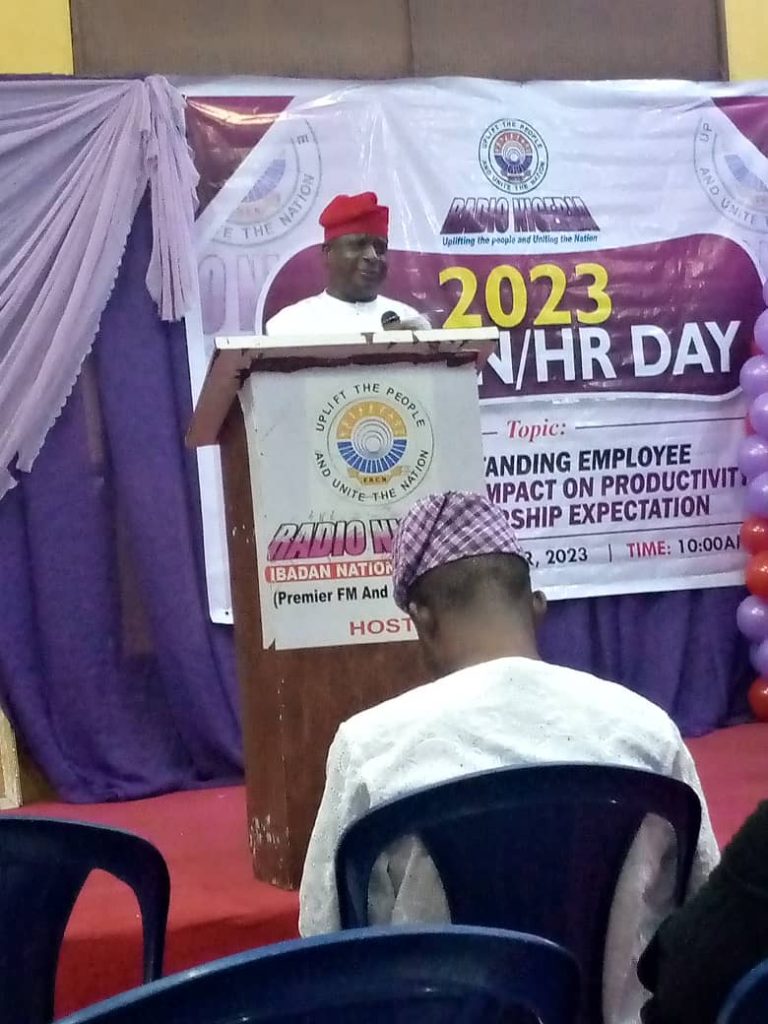
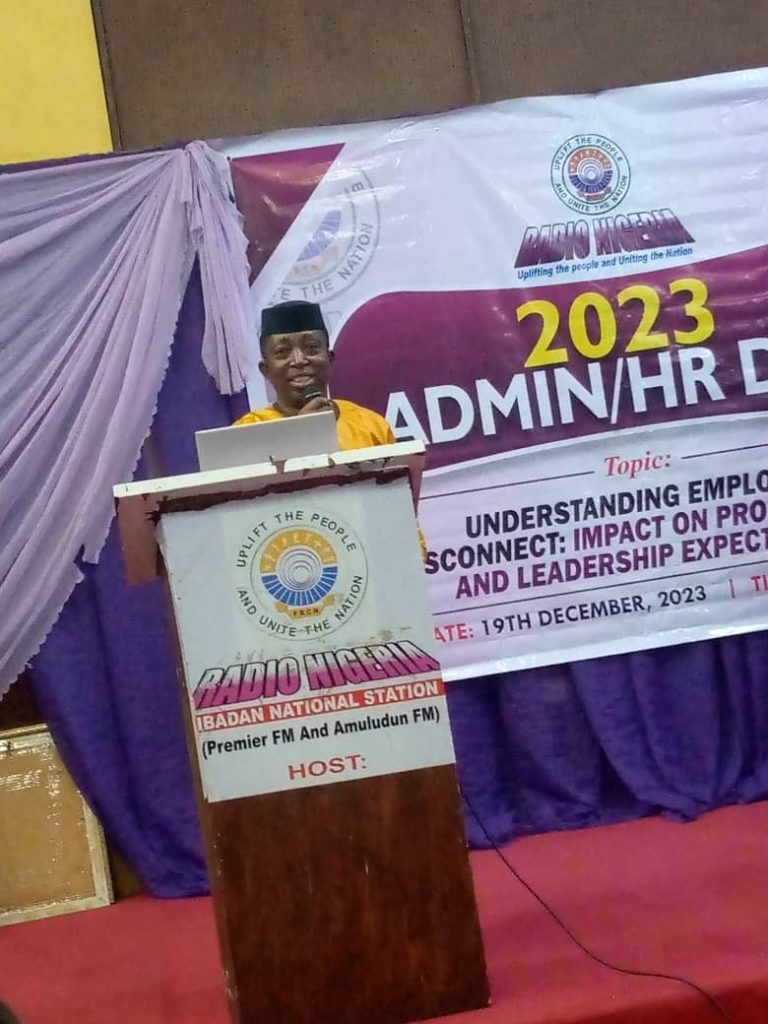
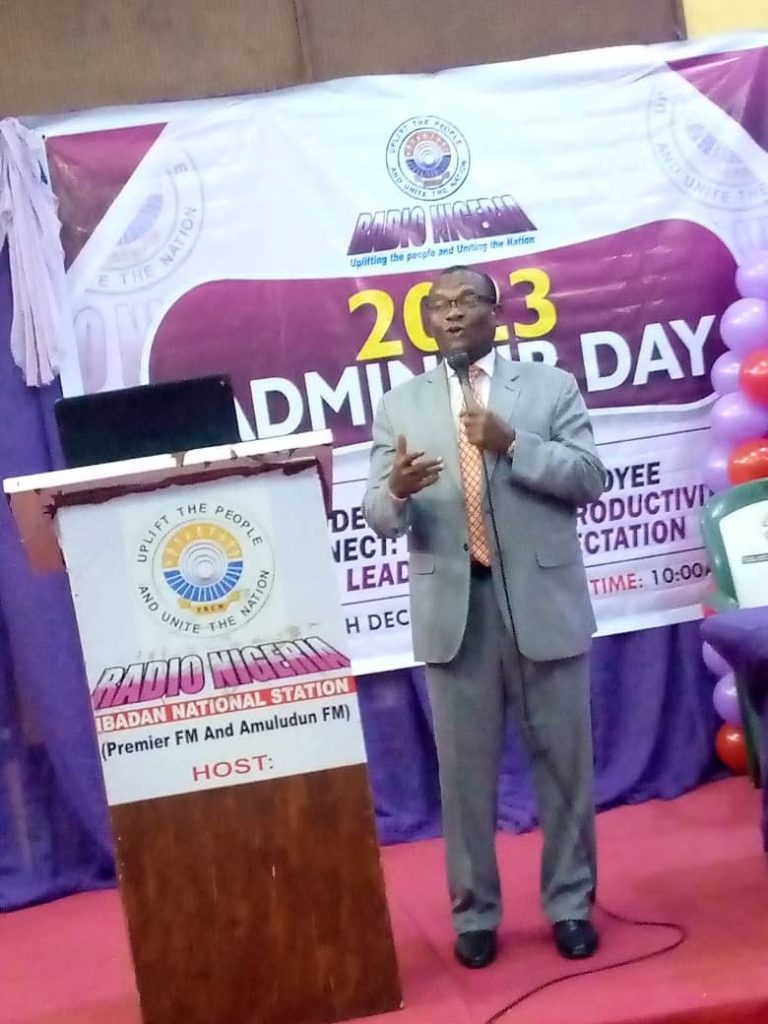
Employers of labour have been advised to recognize and appreciate members of staff to boost productivity in their organizations.
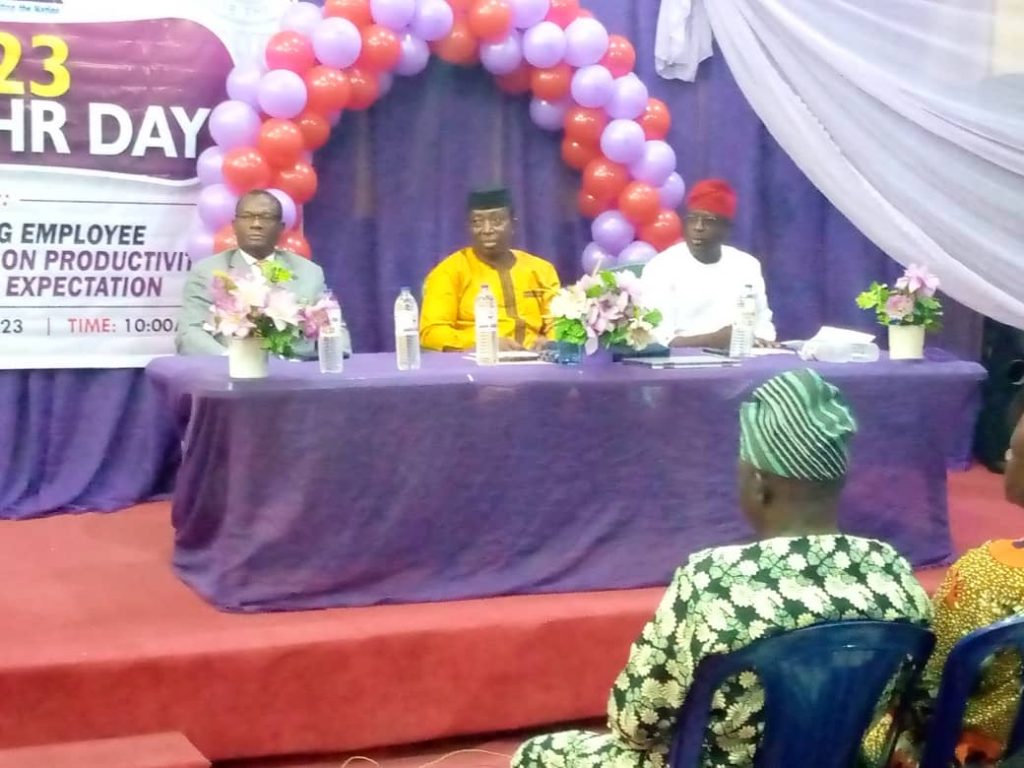
A trainer at the Industrial Training Coordinating Centre, University of ibadan, Mr Kolawole Fashola made this known during a paper presentation entitled “Understanding Employee Disconnect: Impact on Productivity and Leadership” at the 2023 Administration, Human Resource Day Organized by the Department Of Adminstration, Federal Radio Corporation Of Nigeria, Ibadan Zonal Station held at Studio One, Dugbe, Ibadan.
Mr Fashola explained that staff of organisations sometimes face challenges such as lack of recognition and motivation which lower their morale, thereby causing loss of passion for the job.
He urged managers at workplaces to create an atmosphere of easy communication with their subordinates for inputs that could move the organisation forward and provide working tools for effective service delivery.
In a remark, the Zonal Director, FRCN, Ibadan Zonal Station, Mr Dominic Mokikan described the event as necessary as it is always good to show appreciation to God for his mercies and to find time to relax.
Mr Mokikan also urged the staff of the department to see the event as a forum to broaden their knowledge.
Earlier in an address of welcome, Assistant Director, Administration Department, FRCN Ibadan Zonal Station, Reverend Adebayo Esho said the event was an avenue to relax, merry and reduce stress.
The colourful event saw members of staff dressed in their colourful attires accompanied by feasting and dancing.
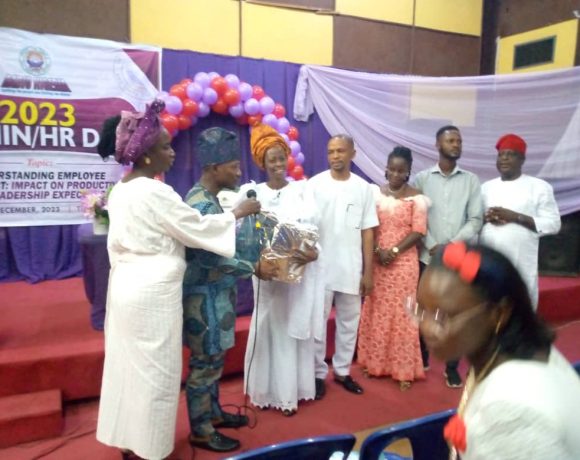
A high point of the event was the presentation of awards to three distinguished staff members, Mrs Omowumi Ohikhatemen, Mr Harrison Osayende and Mrs Mercy Adebiyi.
A gift was also presented to a retired staff of the department, Mrs Juliana Ponmile presented by the Deputy Director Programmes, Reverend Niyi Dahunsi.
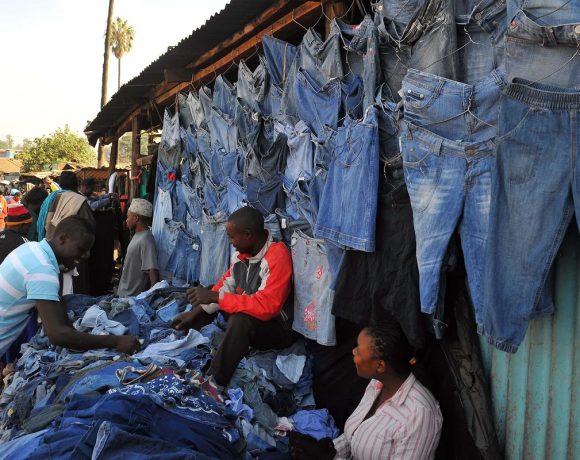
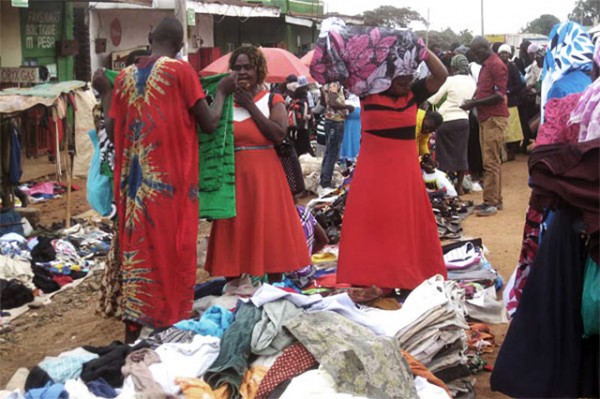
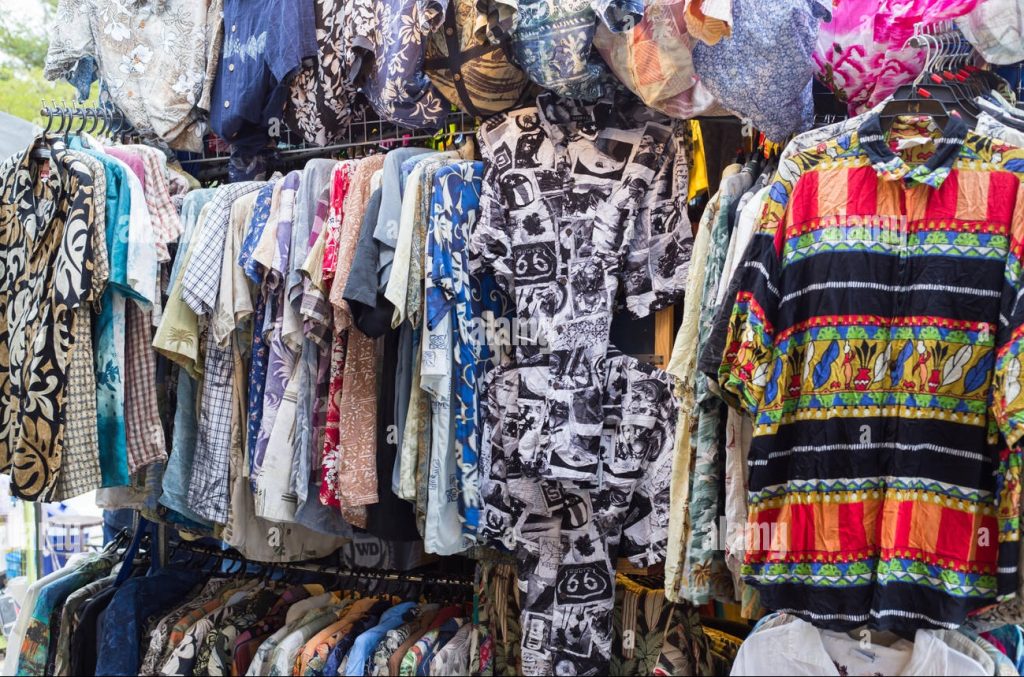
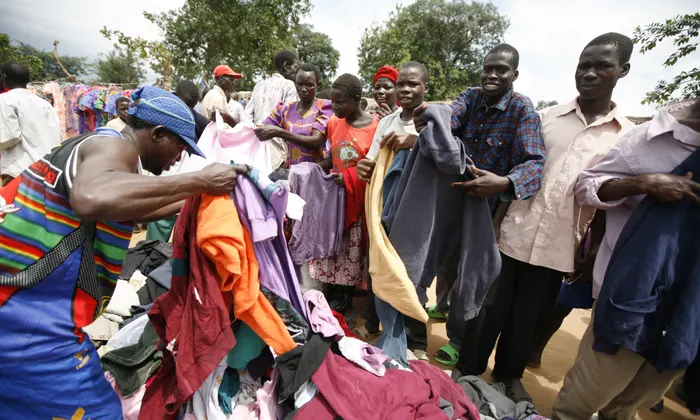
The Nigerian Customs Service announced its intention to place a ban on the sale of second-hand clothes, popularly called Okrika or Gwanjo in local parlance in Nigeria.
The move, ostensibly, is to protect local textile producers, according to the Nigeria Customs Service.
Imported used clothing, commonly known as second-hand clothing, is clothing that has been worn or discarded in rich countries and is then exported to third-world countries for resale.
Importing secondhand clothing has the potential to meet individual clothing needs while also putting food on vendor tables in impoverished countries.
Despite restriction by the Nigerian Customs, every nook and cranny of the country’s markets is filled with dozens of traders selling these clothes, from Lagos, Abuja, Kaduna, Jos, Onitsha, Enugu, Benin City, Akure, Minna, Oshogbo, Port Harcourt, Delta, Akwa-Ibom, and lots more.
A report by Al Jazeera estimated that 80 percent of Nigerians dress is illicit, used garments that are illegally moved into the country from neighboring countries.
Nigerians enjoys second-hand attire; Ivory Coast imports are estimated at 13,066 tons, according to the UN Comtrade database, while Ghana imports 79,963 tons.
It’s believed that many relatively poor people in the region prefer second-hand western clothing over new ones because it is often of better quality and has associations with the western cultural imperative.
Church Paul, a dealer of second-hand clothes at the Kaura market in Abuja, said, “It isn’t just the poor who shop here”; it cuts across the class of people that frequent the market looking for unique outfits.
He said the importation of used clothes provides these individuals with a cost-effective alternative by offering them access to quality apparel at considerably lower prices compared to new garments.
Paul, who started the business when he was in the US, said lots of people were into the trade of second-hand clothes, adding that “the number of dealers and vendors in Arena and Katangowa markets in Lagos were far above a thousand.”
I import three containers every 2–3 months at the rate of N30 million each, and a belt of grade one trousers sells for N500,000, while a T-shirt with a round neck sells for N320,000, Korean jeans sell for N330,000, and a shirt from London sells for N400,000, Paul added.
Paul said that the number of people involved in the second-hand clothing business between Kaura, Karmo, Yanya, Maraba, and Suleja markets cannot be quantified.
A vendor, Abdul Suleman, in the popular second-hand clothes market in Kasuwan Bacci, Kaduna, said the trade helps him to build a house and sustain his family and siblings.
Suleman, who said every day, hundreds of customers squeeze through the market to grab a bargain, noted that he makes a lot of profit out of the business.
He said clothes that people mostly buy include men’s shirts, ladies cotton dresses, men’s cotton pants, men’s underwear, ladies chiffon dresses, and ladies’ t-shirts.
The vendor estimated that more than 200 people were involved directly or indirectly in the business of second-hand clothing within the market alone.
A senior lecturer at the Department of Marketing at Kaduna Polytechnic, Malam Ibrahim Ala, said the trade of second-hand clothes often helps stimulate the local markets and generate employment opportunities as it requires handling, distribution, and retail operations.
He said that by embracing imported used clothes, individuals in Nigeria can improve their standard of living through increased access to affordable clothing options while contributing positively to their local economies.
Malam Ala explained that in Nigeria, the availability and affordability of new clothing are persistent challenges due to limited resources and economic constraints.
The lecturer added that economic debates about the effect of used clothes on domestic production are probably because enforcement allows used clothes to enter Nigerian markets on mass, regardless of the law.
Therefore, the impact of imported used clothing in Nigeria is complex and multifaceted, with both positive and negative consequences.
Positive effects
Used clothes are significantly cheaper than new garments, making them accessible to low-income populations. This can improve their living standards by reducing spending on clothing essentials.
The import and sale of used clothing create jobs in transportation, sorting, cleaning, repair, and retail. This can contribute to poverty alleviation and economic activity.
The trade can foster small-scale entrepreneurship, with individuals running market stalls or selling clothes from home.
Used clothes offer a wider variety of styles and brands than might be available locally, catering to diverse tastes and preferences.
Negative effects
The influx of cheap used clothing can stifle the growth of the domestic textile and garment industry. This can lead to job losses and reduce opportunities for local manufacturing and value creation.
Transportation and processing of used clothing generate greenhouse gas emissions and contribute to pollution. Textile waste from discarded clothes can also pose environmental challenges.
The quality of used clothing can vary considerably, with some items being worn out or containing harmful chemicals. This can pose health risks to consumers.
Over reliance on imported used clothing can discourage self-sufficiency and hinder the development of a sustainable clothing industry in the long term.
The government’s policies and regulations regarding used clothing imports can significantly impact the industry.
Restrictions on import volumes or minimum quality standards can help mitigate some negative effects.
A large portion of the used clothing trade in Nigeria operates in informal markets, making it difficult to track and regulate. This can create challenges for ensuring fair trade practices and protecting consumers.
Promoting the recycling and up cycling of used clothes within the country can help create a more sustainable model for the industry.
Overall, the impact of imported used clothing in Nigeria is mixed. While it offers some immediate benefits for individuals and communities, it also poses significant challenges for the long-term development of the local textile industry and the environment. Finding a balance between these competing interests is crucial for ensuring a sustainable and equitable future for the clothing sector in Nigeria.
The Delta State Government has commenced training one hundred and ten facilitators to enrol beneficiaries into the Federal Government’s Renewed Hope Conditional Cash Transfer Scheme.
The Delta State Head of the Cash Transfer Unit Mrs. Modupe Osharode, stated this in Asaba, at a One-Day Workshop for Cash Transfer facilitators from the twenty-five local government areas of the state.
Mrs. Modupe Osharode noted that the beneficiaries were expected to receive a monthly stipend of twenty-five thousand naira for three months.
The Head of the Cash Transfer Unit observed that the exercise focused on the over sixty thousand unbanked households in the state social register.
Some of the facilitators who spoke with Radio Nigeria expressed their readiness to accomplish the task of enumerating beneficiaries following the training by the state Cash Transfer Unit.
The Renewed Hope Conditional Cash Transfer Program is a partnership between the World Bank, the Federal Government and State governments to uplift fifteen million poor and vulnerable Nigerians.
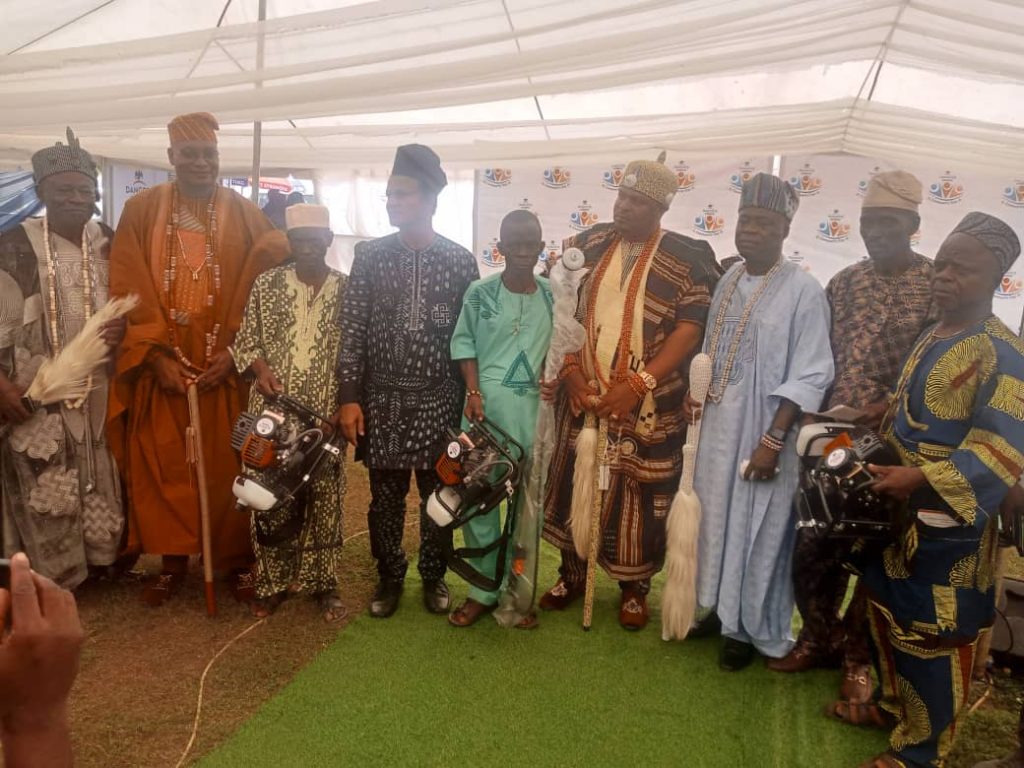
About three hundred and forty-nine, 349, residents of various communities around Dangote Cement Company, Ibese, Ogun State have received economic supports to improve their well-being as part of the company’s Corporate Social Responsibility to the host communities.
The Empowerment initiative unveiled during the 2023 Ibese Community Day celebration in the town featured the provision of scholarships 219 students in different Tertiary Institutions and Secondary Schools.
The event also featured the distribution of weeding machines to 50 farmers while freezers were given to another set of 50 Women apart from 30 youths who got got startup kits for different vocations on which they had earlier been trained.
Addressing the gathering, the Plant Director, Dangote Cement Plc, Ibese Plant, Mr. Nawabuddin Azad said the beneficiaries were drawn from seventeen communities in Ibese, Yewa North local government area of the state for the empowerment as part of the company’s contributions towards reducing unemployment in the country.
Mr Azad explained that, the company had also embarked on 23 social investment projects and revamped 10 other nonfunctional CSR projects across the seventeen host communities.
In a remark, the Commissioner for Industry, Trade and Investment, Mr. Adebola Sofela, represented by the Permanent Secretary in the Ministry of Dr Olu – Ola Aikulola described the gesture of Dangote cement as a good way of promoting Industrial peace with the host communities.
Also, The Aboro of Ibeseland, Oba Rotimi Mulero urged the company to sustain the gesture and prioritize youth employment in further initiatives while advising beneficiaries of the various empower programmes to make judicious use of the items.
Some of the beneficiaries who spoke with journalists commended Dangote Cement company for the help and promised to utilize items in adding value to the society.
Members of the Ogun State House of Assembly have begun a three-day budget retreat meant to interface with members of the state’s economic team and other financial experts towards dissecting the key elements and components of the State 2024 budget preparatory to its passage by the Assembly.
Declaring the retreat open at the WosAm Hotel, Awolowo Road, Ago-Iwoye, the Speaker of the house, Mr Olakunle Oluomo enjoined his colleague-lawmakers to take advantage of the interface to x-ray the key components and direction of the fiscal proposal, especially its socio-economic impacts on the people of the State.
According to him, the annual budget retreat being organised by the State Legislature had continued to offer a platform for the exchange of ideas and knowledge on budgeting and budgetary process for the lawmakers to be well equipped on how to ensure scrutiny of the financial proposal in line with their legislative assignments.
In his paper titled: “The Importance of Code of Conduct, EFCC and ICPC Acts in providing Accountability for Good Governance”, the State Director, Code of Conduct Bureau, Mr. Olusegun Rabiu, listed areas of contravention that must be avoided by public officials to include prohibition from operating foreign account and they must not receive a gift in whatever forms from contractors amongst others.
He equally warned that whoever was convicted by the relevant court on the contravention of the Code of Conduct law, and the same reaffirmed up to the Supreme Court, could not be granted a State pardon.
Delivering his paper titled: “How an Achievable State Budget Could be Realised by Honourable Members through Effective Budget Oversight “, the Executive Director, of Community Development Initiatives, Mr. Igbodipe Olumide, stated that the bottom-up approach being adopted by the State government in the budgetary process remained the most appropriate for the overall socio-economic development of the Gateway State.
He called for more initiatives towards strengthening the capacity and enhancement of institutional processes towards setting a common framework for the budget process.
Mr. Igbodipe equally stressed the need for the executive and legislative officials to explore joint initiatives to improve the information analytic foundation for budgeting, which he said included greater public disclosure of budget information to enable more informed and broader public participation in budget debates.
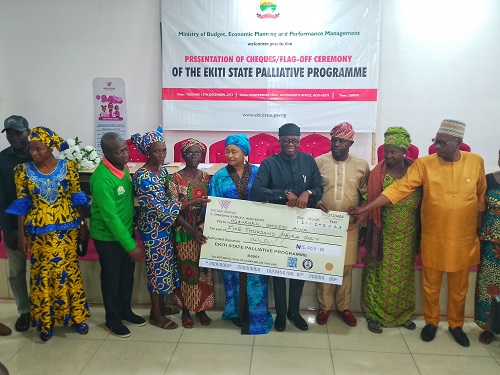
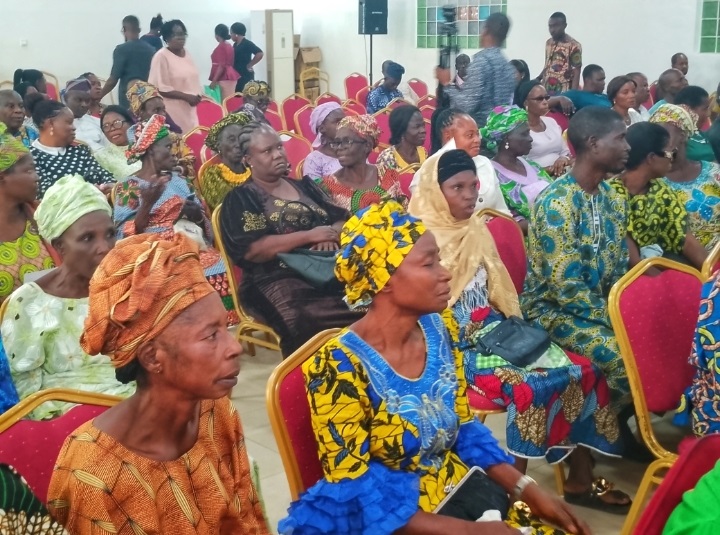
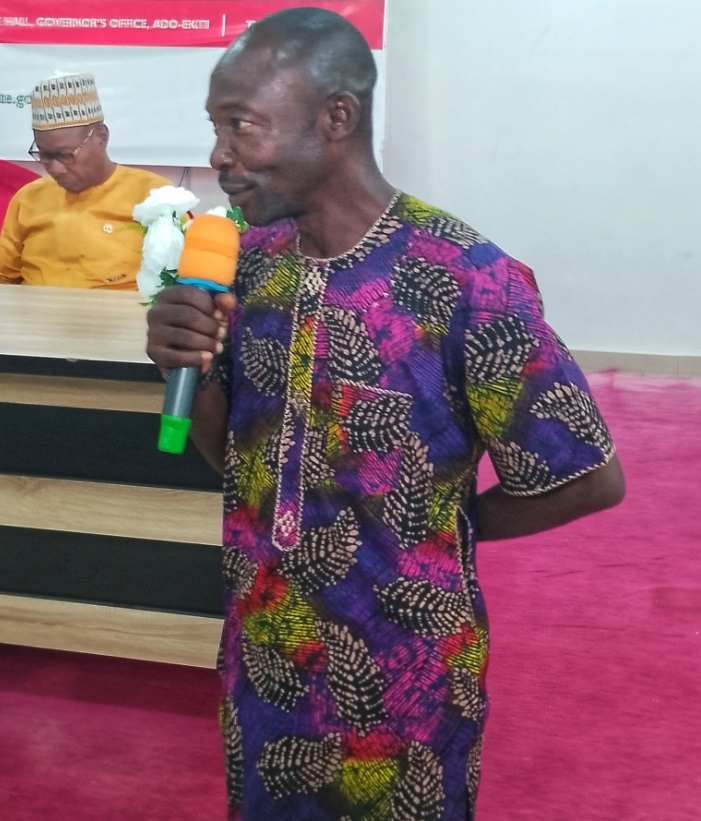
The Ekiti State Government has distributed N50 million to 10,000 vulnerable citizens across the Local Governments and LCDAs in the state as part of its palliative schemes to mitigate the impact of the fuel subsidy removal by the Federal Government.
The Commissioner for Budget, Economic Planning and Performance Management, Mr Niyi Adebayo, said the beneficiaries would receive N5,000 each for five months, adding that two payments had already been made in October and November.
He said the initiative was motivated by the governor’s concern for the welfare of the people of Ekiti State who were facing hardships and difficulties due to price increases and inflation.
“The beneficiaries are the people at the bottom of the pyramid, the widows, 65 years and above, physically challenged, those who have economic challenges or no income. That is where we feel that the shoes are pinching more because of the withdrawal of fuel subsidy, increase in price of petroleum products and the following inflation. So that’s why the government has put this in place”, he said.
Mr Adebayo explained that the beneficiaries were selected from a social register that contains names of vulnerable people that were compiled under the guidance of the Federal Government and World Bank in 2013 and that the state government has been updating the record since then.
He stressed that the programme was not based on political party affiliation but on merits and economic difficulties.
He also listed other social intervention programmes that the governor Oyebanji had implemented for the people of Ekiti State, such as the Social health insurance scheme, empowerment of farmers, and provision of soft loans to traders, among others.
He assured the people of the state that the government would continue to engage in meaningful ventures that would bring succour to them in the face of hardship and thanked the relevant partners who had contributed to the realization of the scheme in the state.
Earlier, the Permanent Secretary, Ministry of Budget, Economic Planning and Performance Management, Mr Shola Akinluyi, also commended the governor for his commitment to the welfare and wellbeing of the good people of Ekiti State, especially for approving the palliative programme for the indigent citizens.
He said the various developmental projects that the present administration had embarked upon since 2022, showed the governor’s determination to engender sustainable socio-economic development in Ekiti State.
Mr Akinluyi appreciated all stakeholders who had played a vital role in the success of the palliative scheme.