Agriculture

By Rotimi Famakin

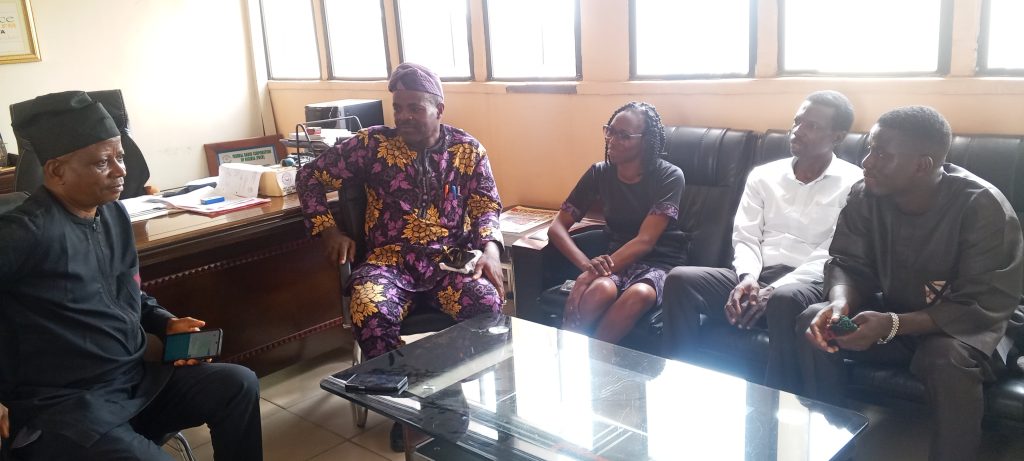
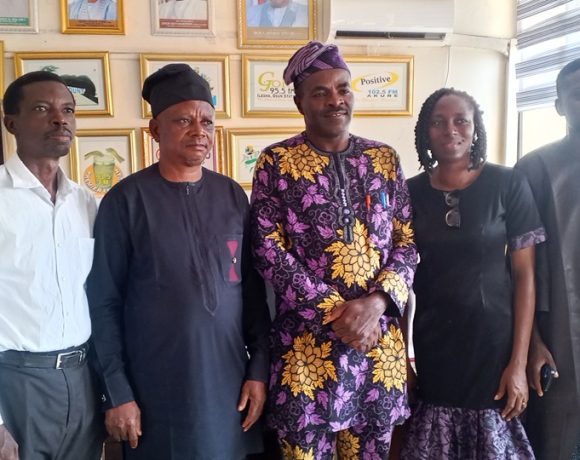
 The Society for Animal Rights Protection, in Oyo state has expressed readiness to sustain its collaboration with the Federal Radio Corporation of Nigeria, FRCN, to strengthen public awareness on the protection of animals.

 The President, Society for Animal Rights Protection, Oyo state chapter, Dr Ibikunle Faramade stated this during a courtesy visit  by the members of the society to the management of FRCN, Ibadan Zonal station.

Dr Faramade explained that the society has enjoyed a long-standing relationship with  Radio Nigeria in view of the outstanding and excellent operational standards in the nation’s media landscape.

While urging radio Nigeria to continue to maintain it’s flagship position, Dr Faramade said the society needed to partner FRCN so as to achieve the vision of keeping the rights of animals

Reacting, the Zonal Director, FRCN, Ibadan Zonal station, Mr Olufemi Fulani condemned the disposition of Nigerians to  domestic and wildlife animals saying constant campaigns is required to change the narrative; hence, the readiness of FRCN to partner the society.

Mr Fulani commended the society for considering animal  rights protection and urged them to continue with the vision.

Edited by Adetutu Adetule

Follow us on Telegram and YouTube, and join our WhatsApp Update Group for more updates.
Agriculture

By Oluwatoyin Adegoke

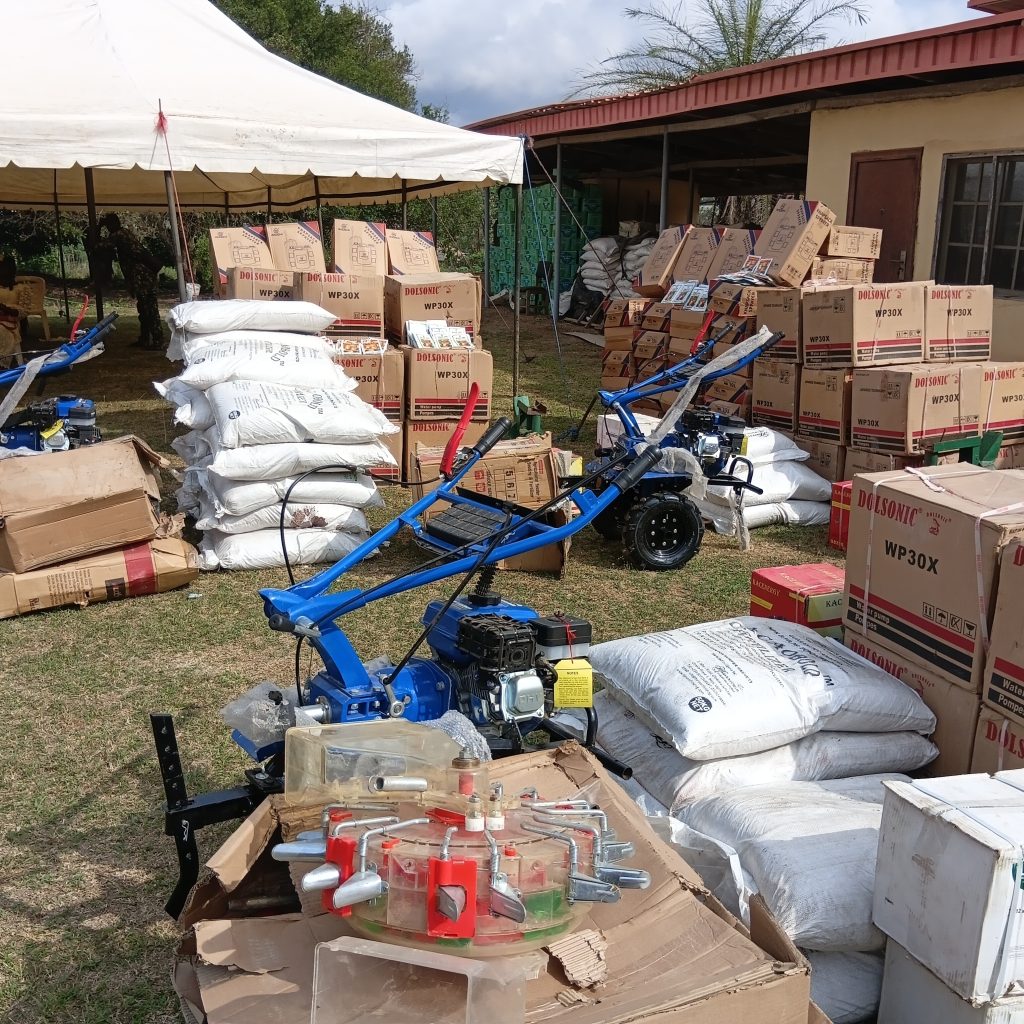
More than two thousand farmers drawn from seventy five farmers’ clusters across Ogun State have benefited from the Federal Government’s distribution of farm inputs, to enhance productivity and improve yields.

Items distributed to the beneficiaries include; improved seeds, power tillers, herbicides, liquid fertilisers, knapsack sprayers and water pumps.

At the distribution held at the Federal Ministry of Agriculture, Kotopo, Abeokuta, the Minister of Agriculture and Food Security, Senator Abubakar Kyari, said the intervention targeted small holder farmers nationwide with a view to boosting agricultural output, reducing production costs and ensuring steady food supply.

The Minister, represented by the Director of Extension Services in the Ministry, Mr Olawunmi Ayodele, affirmed the Federal Government’s commitment to collaborating with non-governmental organisations and the private sector as part of efforts  to drive economic growth, create jobs and reduce poverty.

In a remark, Ogun State Commissioner for Agriculture, Mr Bolu Owootomo, who spoke through the Permanent Secretary in the Ministry, Mrs Kehinde Jokotoye, advised the beneficiaries to utilize the inputs judiciously to ensure sustainable impact on the nation’s economy.

Also, the Ogun State Coordinator, Nigerian Agricultural Cooperative Organisation, Pastor Olatunji Abogunrin as well as the State Chairman, All Farmers Association of Nigeria, Alhaja Ganiyat Kushimo applauded the initiative and promised to ensure proper utilisation of the inputs.

Earlier, the State Ogun State Coordinator, Federal Ministry of Agriculture and Food Security, Mr Johnson Sotayo who described, had explained that the distribution was designed to enhance productivity and ensure sustainable food supply throughout the year.

Beneficiaries expressed appreciation to the Federal Government for the support and called for the sustenance of the programme for greater national impact.

Agriculture

By Oluseye Arowolo

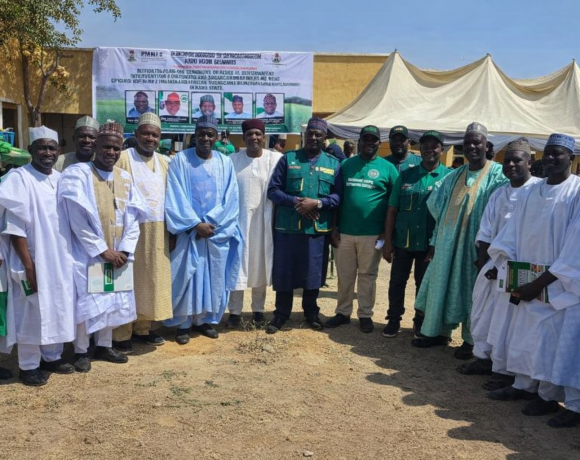
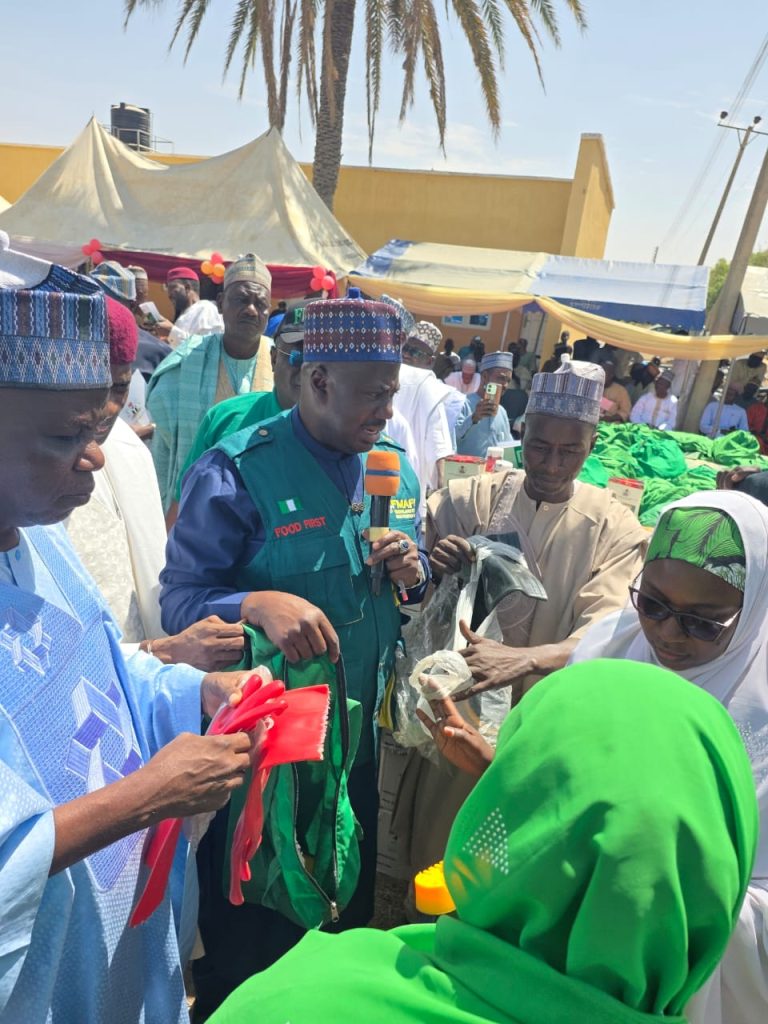
The Federal Government has intensified its fight against devastating tomato and sugarcane pests, declaring the outbreak a national agricultural emergency.

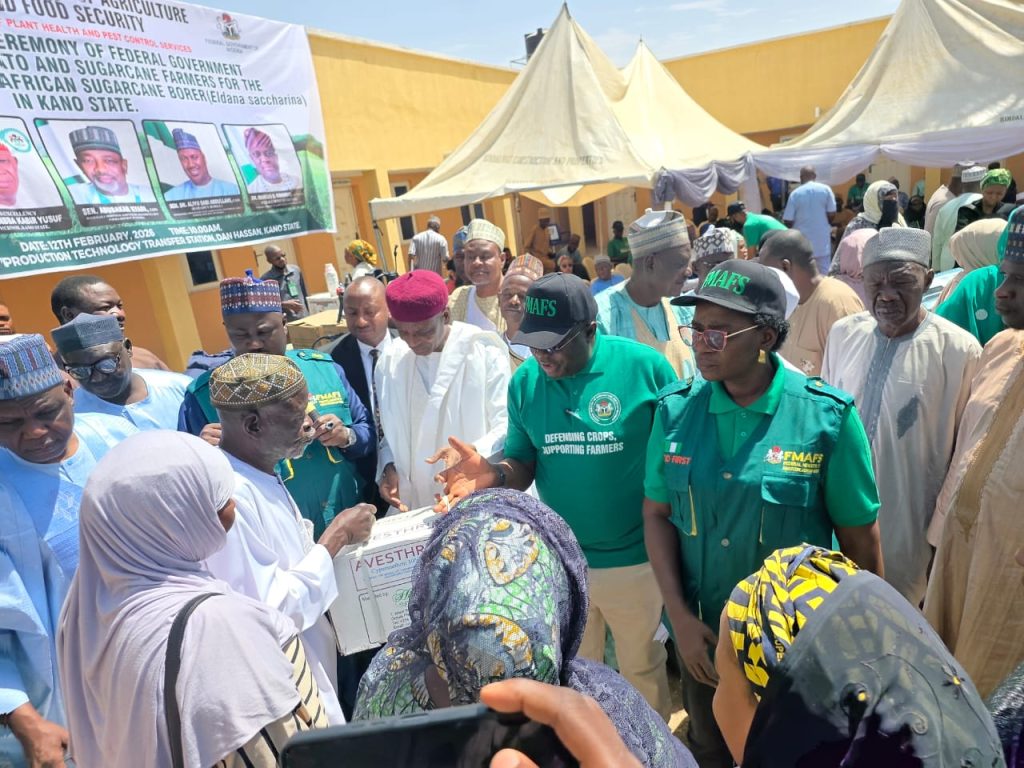
The Minister of State for Agriculture and Food Security, Senator Aliyu Abdullahi, made the declaration during the flag-off of an Emergency Intervention Programme at the Federal Crop Production Technology Transfer Station in Dan Hassan, Kano State.

The initiative targets the rapid spread of Tuta Absoluta and the African Sugarcane Borer, two destructive pests threatening food production nationwide.

Senator Abdullahi warned that the infestations have slashed harvests, weakened farmers’ incomes, and endangered agro-industrial investments across Nigeria.

We must act decisively,” the Minister stated, outlining a comprehensive response that includes farmer sensitisation, training of extension workers, distribution of approved pest control inputs, and deployment of integrated pest management strategies.

He emphasized that tomato farming sustains millions of Nigerians—from smallholder farmers to processors, transporters, and market operators—making swift intervention critical to national food security.

Senator Abdullahi assured stakeholders that only genuine farmers would benefit from the agricultural inputs under the programme.

He stressed that strong Federal-State collaboration and farmer education remain key to preventing further losses.

Commending President Bola Ahmed Tinubu’s Renewed Hope Agenda on food security, the minister revealed that the planned release of improved tomato varieties in 2025 forms part of broader efforts to build resilience in the sector.

In a major policy shift, Senator Aliyu Sabi Abdullahi announced the upgrade of the Pest Control Division to a full-fledged Federal Department of Plant Health and Pest Control Services, a move aimed at strengthening Nigeria’s rapid response to crop threats.

In his remarks, Kano State Governor, Abba Kabir Yusuf, represented by the Commissioner for Agriculture, Dr. Danjuma Mahmoud, affirmed that the state’s agricultural blueprint aligns with the Federal Government’s drive for food sovereignty and economic diversification.

Also speaking, the Permanent Secretary of the Federal Ministry of Agriculture and Food Security, Dr. Marcus Ogunbiyi, described the intervention as science-driven and strategic.

He explained that Kano was selected due to its pivotal role in irrigated agriculture and horticultural production.

Dr Ogunbiyi urged farmers to avoid indiscriminate pesticide use and strictly follow expert guidance to safeguard public health and the environment.

Edited by Maxwell Oyekunle

Follow us on Telegram and YouTube, and join our WhatsApp Group for more news updates.

Agriculture

By Olufisoye Adenitan

Governor Lucky Aiyedatiwa of Ondo State has commissioned a state-of-the-art palm oil and palm kernel production factory established by a private company in Akure, marking a major boost to the state’s agro-industrial drive.

The fully integrated, end-to-end facility, located along Irese Road in Akure, boasts a daily production capacity of 5,000 litres.

The plant runs a complete value chain that guarantees maximum utilisation of every component of the oil palm.

Beyond extracting high-quality crude palm oil and palm kernel oil, the factory converts all by-products into commercially valuable outputs, reinforcing its sustainability and economic impact.

Speaking at the commissioning ceremony, Governor Aiyedatiwa described local production facilities as critical engines of economic growth and industrial expansion in Ondo State.

Represented by the Deputy Governor, Dr Olayide Adelami, the governor reaffirmed his administration’s commitment to creating an enabling environment for small and medium-scale enterprises to thrive.

“This factory will do more than produce palm oil and palm kernel. It will create jobs for our youths, stimulate ancillary businesses, support local farmers, reduce dependence on external supplies, and strengthen our Internally Generated Revenue, IGR,” Governor Aiyedatiwa said.

He stressed that sustainable business growth depends on stability and security, noting that his administration has deliberately strengthened the state’s security architecture and deepened community policing.

Governor Aiyedatiwa also commended the management of the company for their confidence in Ondo State and for prioritising local skills across the factory’s operations.

In his remarks, the Chief Executive Officer of the company, Mr Lateef Audu, said his passion for agriculture and belief in a production-driven economy inspired the investment.

He thanked the Ondo State government for sustaining a business-friendly environment and supporting entrepreneurship.

Also speaking, the Senior Special Assistant to the Governor on Diaspora Affairs and Youth Advocate, Mr Oluyemi Fasipe, called on entrepreneurs in the Diaspora to invest in Ondo State, describing it as one of Nigeria’s most investor-friendly states.

Mr Fasipe applauded the company for locating the project in the state, noting that the investment would boost investor confidence and expand employment opportunities for young people.

The event climaxed with a guided tour of the facility, during which the lead engineer detailed the production process and operational capacity of the installed machinery.

Edited by Maxwell Oyekunle

Follow us on Telegram and YouTube, and join our WhatsApp Update Group for more news updates.

Agriculture

By Iyabo Adebisi

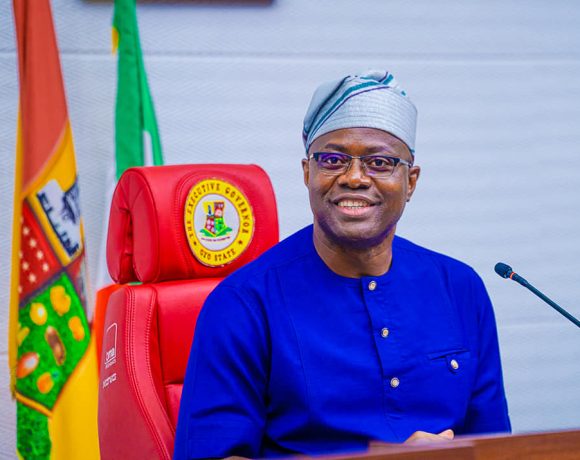
Oyo State Governor, Engineer Seyi Makinde, has declared that no ethnic, professional, or social group owns the state, insisting that the lingering crisis of open grazing and farmers–herders clashes must be resolved collectively through dialogue, inclusiveness, and the rule of law.

Governor Makinde stated this at a one-day stakeholders’ summit on the Oyo State Anti-Open Rearing and Grazing Law, organised by the Oyo State Rule of Law Enforcement Authority, OYRLEA in Ibadan.

The governor stressed that government existed to protect all residents, not to intimidate them.

He warned against politicising governance challenges, noting that while politics might be treated as a game by some actors, governance decisions carried real consequences for people’s lives and future.

Governor Makinde stressed that leadership choices could shape the destiny of generations, citing historical and global examples to underscore the far-reaching impact of policy decisions.

On open grazing, the governor reiterated that Oyo State belonged to farmers, herders, traders and professionals alike, warning that no group should claim exclusive ownership of land or resources.

While maintaining that the state’s anti-open grazing law was enacted to restore order, protect livelihoods and prevent avoidable conflicts, governor Makinde said challenges must be resolved lawfully.

He said his administration was open to reviewing aspects of the law if stakeholders identified areas requiring adjustment to reflect present realities.

In a remark, the Chairperson of  the Oyo State Rule of Law Enforcement Authority, OYRLEA, Justice Aderonke Aderemi (retired) said the summit was convened against the backdrop of persistent farmers–herders clashes, which she described as a threat to lives, food security and social harmony.

Justice Aderemi said the state’s agricultural policy was focused on modernising farming, boosting productivity and ensuring sustainable livestock management, stressing that unregulated grazing and criminal encroachment on farmlands could no longer be tolerated.

She noted that the Oyo State Anti-Open Rearing and Grazing Law was already in force, warning that ignorance of the law would not excuse violations.

The one-day stakeholders’ Summit Titled, “Navigating the Oyo State Anti-Open Rearing and Grazing Law: Ensuring Adherence and Advancing Sustainable Livestock Management” was held at The Le Chatteau Event Centre, Old Bodija, Ibadan.

Follow us on Telegram and YouTube, and join our WhatsApp Update Group for more news updates.

Agriculture

By Iyabo Adebisi

Governor Seyi Makinde of Oyo state says land is a key economic asset that must be handled responsibly to ensure equitable benefits for all citizens. 

Governor Makinde stated at the launch of the Framework for Responsible and Inclusive Land-Intensive Agriculture, FRILIA, held at the Executive Council Chamber of his office, Secretariat Ibadan. 

The governor, represented by his deputy, Chief Bayo Lawal noted that the misuse of allocated land poses a serious challenge to sustainable development, environmental management, and community stability. 

He urged residents of the state across the 33 local government areas to be watchful, vigilant and actively monitor land usage in their respective communities.

According to him, some individuals and organisations are in the habit of applying for lands under specific purposes but divert the same for unintended or unauthorised activities.

Governor Makinde explained that the FRILIA initiative represented his administration’s steadfast commitment “to inclusiveness, transparency, accountability, and responsible land governance. 

He noted that the initiative would help prevent exploitation, promote environmental sustainability and reduce land-related conflicts.

“It signifies the unwavering dedication to building a future that is underpinned by principles of responsibility, inclusiveness, transparency, and sustainability. 

“It embodies our commitment to fostering an environment in which land investment is managed with integrity and care for all stakeholders in our state.

“Moreso, FRILIA is just providing a platform for prospective investors in agri-development in our state. 

“But then, the state government must provide an enabling environment and that is why we are talking of responsibility.

“We will be responsible as an administration in land investment, recognising the right of landowners, farmers, local communities, and local government as well and any party involved in land acquisition,” he stated.

The governor further explained that land investment should not benefit a select few while eliminating the majority.

In a remark, Mr Akin-Fumilayo Williams, the Chairman of the FRILIA Technical Committee, who is also the Commissioner for Lands, Housing and Urban Development, said that the initiative was a flagship component of the State Action on Business Enabling Reforms (SABER).

According to Williams, SABER is a World Bank-supported programme implemented in partnership with the Nigeria Governors’ Forum.

He explained that the initiative was a three-year development project designed to strengthen land governance processes, empower stakeholders, and enhance the state’s capacity to manage land resources efficiently.

Also, the Commissioner for Economic Planning and Budget, Professor. Musibau Babatunde, emphasised that the initiative aims to create a stable and predictable environment for business growth in the state. 

Professor Babatunde explained that SABER focuses on reducing bureaucratic bottlenecks, improving transparency, and strengthening investment-friendly policies that support both local and foreign investors

Follow us on Telegram and YouTube, and join our WhatsApp Update Group for more news updates.
Agriculture

By Omolara Adasofunjo

Ogun State Government has commenced the rehabilitation of Odeda Farm Institute, Ajegunle Farm Settlement, Ikenne Processing Facility and Ado-Odo Farm Projects as part of efforts to boost food security and promote employment generation.

The State Commissioner for Agriculture and Food Security, Mr. Bolu Owootomo made this known during a meeting with the members of the State House of Assembly Committee on Agriculture led by Mr Waliu Owode.

The Commissioner explained that rehabilitation of the farm settlements across the state was part of the State Economic Transformation Project.

Responding, Mr Owode noted that the engagement was in response to a House Resolution calling for the urgent revitalization of Apoje Farms in Ijebu-Igbo and a comprehensive review of all government-owned agricultural estates.

The Committee Chairman directed the Ministry alongside Agricultural Development Corporation to submit a comprehensive report on all farm settlements in the State.

In his contribution, the Minority Leader, Mr Lukman Adeleye, called for stronger policy alignment between the Ministry and Agricultural Development Corporation, proposing the development of a unified framework that would clearly outline roles, responsibilities and measurable outcomes to ensure a synchronized approach to managing the state’s farm settlements.

Follow us on Telegram and YouTube, and join our WhatsApp Update Group for more news updates.

Agriculture

By Rotimi Famakin

The federal government has empowered farmers from seven zones in Oyo State with agricultural inputs to boost food production.

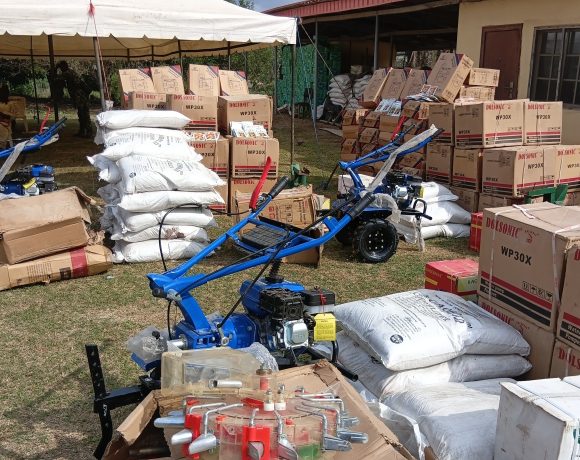
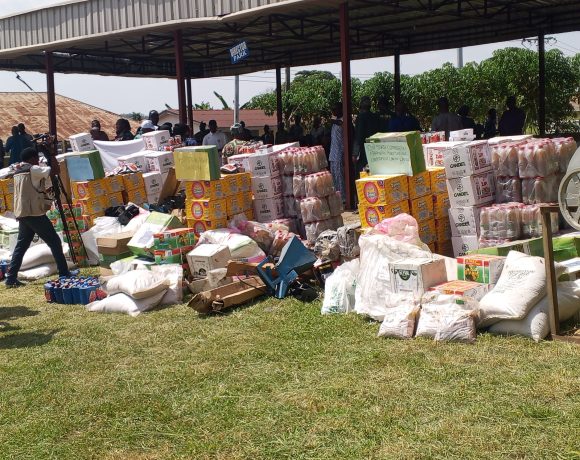
Farm inputs, including seedlings, crop processing machines, herbicides, pesticides, manual sprayers, vegetable and cash crop seedlings, were displayed at the Federal Ministry of Agriculture and Food Security field office, Moor Plantation, Apata, Ibadan, for onward distribution to the beneficiaries in their respective zones.
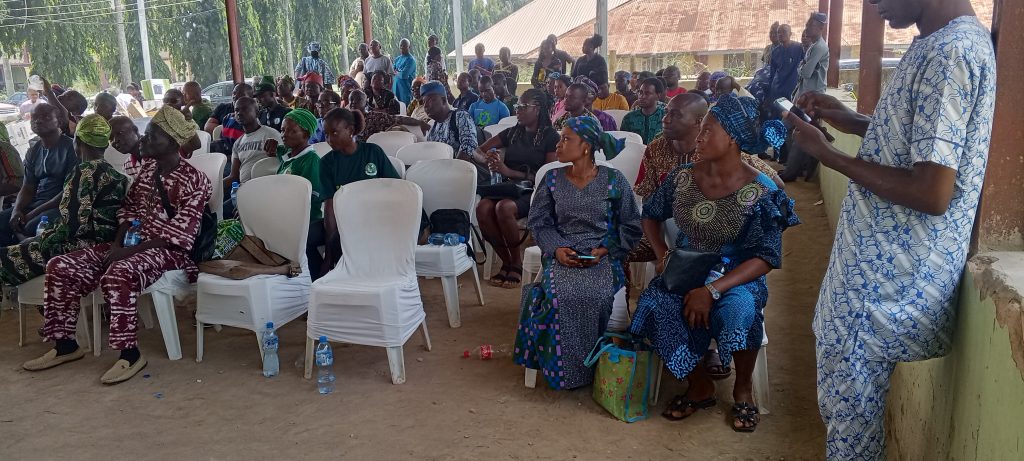
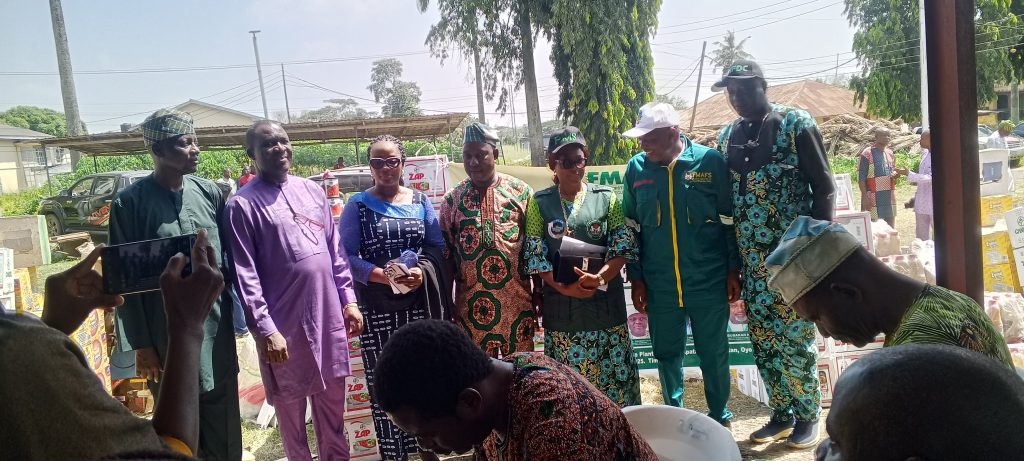
Addressing the farmers, the Minister of Agriculture and Food Security, Senator Abubakar Kyari represented by the Director of Extension, Mr Olawumi Ayodele said the distribution of the items was part of the federal government’s efforts to enhance agricultural productivity of farmers in Oyo State, thereby ensuring food sufficiency.

Senator Kyari enjoined the beneficiaries from Ibadan, Oke-Ogun zone one and two, Ogbomoso, Oyo, and Ibarapa zones to make judicious use of the inputs.

Oyo State Commissioner for Agriculture and Rural Development, Mr Olasunkanmi Olaleye represented by Director Planning, Research and Statistics, Mrs Adeniran Adediran, said the gesture had shown the commitment of both the state and federal governments to agriculture. 

Speaking on behalf of the farmers, Chairman, Southwest Zone and Oyo State All Farmers Association of Nigeria, Mr Abas Adekunle said the farm inputs would be utilized for agricultural practices in each zone of Oyo State.

Edited by Olaolu Fawole

Follow us on Telegram and YouTube, and join our WhatsApp Update Group for more news updates.

Agriculture

By Iyabo Adebisi

To boost agricultural productivity and ensure food security, the Oyo State Government has commenced a four-day training programme for 140 youth farmers on tractor driving and mechanized farming practices.

The initiative, launched across the state’s three agricultural zones, Ibadan/Ibarapa, Oyo/Ogbomoso, and Oke-Ogun simultaneously is being implemented by the Ministry of Agriculture and Rural Development.

Declaring the programme open for Ibadan/Ibarapa at the Ido local government, the Commissioner for Agriculture and Rural Development, Mr Olasunkanmi Olaleye, emphasized the present government’s commitment to agricultural transformation, youth empowerment, and rural development. 

He noted that the training was designed to equip participants from both rural and urban areas with practical knowledge in tractor operations, safety protocols, preventive maintenance, and mechanized farming techniques.

Mr Olaleye urged the participants to approach the programme with dedication and professionalism, stressing that the future of food production in the state depends on a skilled and motivated agricultural workforce.

Some of the participants in an interview expressed gratitude to the state government for the opportunity, promising to apply the skills learnt to improve their farming practices and contribute meaningfully to the agricultural sector.

The training is part of the government’s broader efforts under the Sustainable Actions for Economic Recovery (SAfER) initiative, which focuses on boosting productivity, reducing unemployment, and ensuring long-term food security through modern agriculture.

Subscribe to our Telegram and YouTube Channels, and also join our WhatsApp Update Group.

Agriculture

By Funmi Ojo

The Osun State Executive Council has  reviewed key government policies and issued new directives to ministries, departments, and agencies, MDAs. 

The meeting, presided over by Governor Ademola Adeleke lasted late into the night, provided a sector-by-sector appraisal of government activities and reaffirmed the administration’s commitment to delivering democratic dividends despite prevailing challenges.

Addressing cabinet members, Governor Adeleke expressed satisfaction with the widespread endorsements and commendations his government has received from different groups across the state.

He described the positive ratings as a validation of his administration’s performance, while charging his team not to relent.

“Despite the challenges facing us, we are fulfilling our obligations especially in critical areas of governance,” the Governor said.

On infrastructure, the Governor noted that the Ministry of Works is making steady progress on major road and flyover projects across the state.

He specifically mentioned the Ilesa dualisation, the Ile-Ife flyover, the Oke Fia/Lameco flyovers, and the Iwo dualisation, stressing that timelines for delivery must be met.

In the power sector, Governor Adeleke directed the Commissioner for Energy to immediately develop an implementation plan for the newly passed State Electricity Market law, with support from the National Electricity Regulatory Commission.

He tasked the Ministry of Science and Innovation with fast-tracking the rollout of the State ICT Policy and the State Tech Innovation Policy, instructing the ministry to design a roadmap for the application of emerging technologies such as Artificial Intelligence and Blockchain, while commending the Imole Wi-Fi initiative recently unveiled in parts of the state.

On agriculture, the Governor Adeleke ordered the immediate revival and expansion of the Statewide Youth Agropreneurship Project, urging the Ministry of Agriculture to commence full implementation across all local government areas.

The meeting concluded with the adoption of the Governor’s as council resolutions while a high-powered committee was set up to address manpower shortages in the health and education sectors.

The council approved the elevation of several minor chiefs, in a key traditional decision, Prince Adeleke Saheed Adeyemi was confirmed as the new Olokusa of Okusa in Egbedore Local Government.

Agriculture

By Olusegun Folarin

About eighteen thousand farmers across eight local government areas of Ogun State have been empowered under the IFAD-assisted Value Chain Development Programme, VCDP, to boost rice and cassava production. 

Acting State Co-ordinator of the Programme, Mrs. Abiola Adewole-Sobukola, who made this known during an assessment tour of some projects in four council areas of the state, said the government’s intervention had helped to stabilize food prices in local markets.

The tour of projects sites in Ijebu East, Ijebu North-East, Odeda and Yewa North local council areas was aimed at assessing the interventions of the federal government in collaboration with the International Fund for Agricultural Development, IFAD – Value Chain Development Programme and the Ogun State government in developing rice and cassava value chain initiatives.

Farmer’s records indicated that cassava yield has risen from between 8 and 12 metric tonnes per hectare in 2015 to between 25 and 40 metric tonnes per hectare ten years after as a result of government’s interventions. 

The VCDP Coordinator, Mrs. Adewole-Sobukola listed the areas of interventions to include access to training and support on good agronomic practices, improved access to markets and better prices for their products, as well as empowerment of farmers to specialise in their area of expertise.

She emphasized the need for increased support to overcome challenges and ensure the programme’s sustainability. 

Also, the VCDP Knowledge Management and Communication Officer, Mr. Ibikunle Faneye disclosed that a Memorandum of Understanding had been signed between smallholder farmers and off-takers to guarantee fair prices for cassava while aiming to meet the demands for local consumption and industrial use.

Some of the farmers, including Mr. Yusuf Kazeem and Elder Eweoba Timothy, told Radio Nigeria that the projects had helped to improve cassava value chain, particularly in the area of processing for derivatives such as garri, lafun and fufu.

Others, like Mr Onanuga Babatunde and Pastor Olaniyi Oluwaseyi also acknowledged a significant increase in the capacity of cassava processing factories, noting the availability of solar-powered boreholes as additional sources of revenue to the farmers. 

In a remark, the Chairman, Ijebu North East Local Government, Mr. Badejo Folusho, pledged the council’s continued collaboration with relevant bodies, especially the VCDP, to boost food production in the state.

Subscribe to our Telegram and YouTube Channels, and also join our WhatsApp Update Group.

Agriculture

By Iyabo Adebisi

Oyo State Governor, Engineer Seyi Makinde, has reaffirmed his administration’s commitment to leveraging modern technologies to enhance and transform agriculture across the state.

The governor made this known through the Deputy Governor, Chief Bayo Lawal, during a courtesy visit by a delegation of Chinese investors from the China Overseas Engineering Group Co. Limited at the Governor’s Office, Secretariat, Ibadan.

Governor Makinde emphasized that investments in agricultural development and value chain expansion are central to his administration’s vision for economic growth and investor attraction.

Highlighting the state’s comparative advantage in agriculture, the governor noted significant investments in enabling infrastructure and security.

He urged the Chinese investors to collaborate with the state government to ensure food security, increase agricultural productivity, and establish Oyo State as a hub for agro-industrial processing.

He assured the delegation of the government’s readiness to provide a conducive environment to support their investment vision.

In his remarks, the Director-General of the Oyo State Agribusiness Development Agency, Dr. Debo Akande, praised the Chinese team’s objectives, noting their alignment with the state’s agricultural strategies.

Dr Akande emphasized that ongoing initiatives—including rural transformation, industrial hub development, and agro-processing zones—are designed to harness the state’s agribusiness potential for economic expansion.

Earlier, the Team Lead and Director of Strategic Services at the Nigerian Investment Promotion Commission, Abuja, Alhaji Abubakar Yerima, commended Governor Makinde for transforming the state through impactful infrastructure projects and strategic investments in agribusiness.

The leader of the Chinese delegation, Ms. Dong Gwping, stated that their intervention aims to revolutionize the agricultural landscape by stimulating socio-economic growth through complete value chain development.

Ms Gwping highlighted plans to introduce Chinese technologies and expertise via partnership with the state.

Subscribe to our Telegram and YouTube Channels, and also join our WhatsApp Update Group.

Agriculture

By Abisola Oluremi

The Oyo State Commandant of the Nigeria Security and Civil Defence Corps, NSDC Augustine Padonu has reiterated the commitment of the corps to prioritise the safety of farmers, agricultural assets, and food infrastructure. 

He stated this while delivering his keynote address at the agriculture stakeholders seminar organised by the Agro-Ranger Unit of the  Corps held at the House of Chiefs, Parliament Building, Ibadan. 

The NSDC commandant while noting that agriculture , a vital sector for food security is being confronted with persistent clashes between farmers and herders expressed the corps’ mandate to serve with integrity, discipline, and professionalism.

He said the corps through its Agro Rangers Squad in Oyo State had remained steadfast in its commitment to bridging the gap between security and agriculture. 

The NSDC commandant disclosed that the corps had settled six hundred and three disputes between farmers and herders from January to June this year. 

In a goodwill message, the state’s Commissioner for Agriculture and Rural Development, Mr Olasunkanmi Olaleye reminded farmers that the anti-grazing law, environmental law among others are still in  existing in Oyo state to regulate and forestall peaceful co-existence between herders and farmers. 

Mr Olasunkanmi said the state would continue to train farmers on the best way to grow grasses to feed their animals. 

Speaking on the topic, “Checkmating the Menace of Food Insecurity  and Cattle Rustling;The Active Roles of the Agro Rangers Squad, Dr Atunwa Sunday advocated the establishment of mobile court by the federal government for quick prosecution of erring farmers and herders

Dr Atunwa also urged government to strengthen the Agro Rangers Squad by providing necessary equipment to the officers to perform optimally. 

Some of the participants including Ade Odebunmi,Alhaji Yakub Bello, Abubakar Bani  suggested ranches, establishment of grazing routes  and de-arming of both herders and farmers as way out of incessant farmers/herders clashes in the country

Earlier, the Head of Unit, Agro Rangers, Alone Isaac said the seminar was organised to bring together stakeholders to forge partnerships and explore sustainable solutions between farmers and herders

The mandate of Agro Rangers Unit of NSDC is to protect farmlands and agricultural investments, safeguard farmers and agro workers, mediate and prevent violent conflicts, and support peaceful coexistence in agrarian communities. 

Agriculture

By Lanre Omotoso

Governments at all levels should engage youths in beekeeping to reduce the country’s unemployment rate.

A bee-keeper, Mr Daramola Akinwale, advised while speaking with Radio Nigeria in Ado-Ekiti on the occasion of World Bee Day.

Mr Akinwale noted that, aside from employment generation, bee-keeping would help the country to diversify the economy from petroleum and generate more revenue.

The bee-keeper said that a litre of honey costs over six thousand naira, compared to petroleum products, which is less than one thousand naira, hence the need for aggressive investment in bee-keeping.

Mr Akinwale, who is also a retiree, identified by-products to be derived from bee rearing to include honey, wax, propolis and pollen, saying that the wax derived from bees could also be made into medicinal candles, shoe polish, as well as cream which clears body rashes.

The retiree who emphasised that beekeeping is not energy-sapping stressed that a keeper only needed a bee house, known as a hive, where he would be drawing income quarterly without stress.

He, however, identified bee-keeping challenges to include poaching, bush burning and finance, calling on the authorities to help create a bee-village to be equipped with necessary security gadgets in order to reduce vandalism.

The United Nations had in 2017 designated May 20 as World Bee Day to highlight the vital roles played by bees and other pollinators in Ecosystem Restoration, Food Security, as well as Sustainable Agriculture, and the theme for this year is “Be inspired by nature to nourish us all”.

Subscribe to our Telegram and YouTube Channels, and also join our WhatsApp Update Group.

Agriculture

By Abimbola Bamgbose

Ogun State Governor, Prince Dapo Abiodun, has announced that President Bola Ahmed Tinubu will soon perform the groundbreaking ceremony for what is set to become the world’s largest cotton and polyester processing facility.

The factory will be located within the Special Agro-Processing Zone near the Gateway International Airport, Iperu/Ilisan, Ogun State.

Governor Abiodun made this known while receiving the former Accountant General of the Federation, Mrs. Oluwatoyin Madein, along with members of the Iperu Development Association at his office in Oke-Mosan, Abeokuta.

According to the governor, the project which is part of the “Renewed Hope Cotton Resurgent Initiative”, will cover 400 hectares of land and is projected to create daily employment for approximately 250,000 individuals.

Governor Abiodun described the project as transformative, noting that it would significantly impact the economic landscape of Iperu, Remoland, Ijebuland, and the entire Ogun State.

In addition to the industrial initiative, the Nigerian Air Force , NAF, is also planning to establish a base in Iperu to bolster security around the airport and surrounding communities.

Highlighting other developmental efforts, Abiodun mentioned the rehabilitation of township roads, the renovation of public schools and primary healthcare centres, and the establishment of a mother-and-child hospital in the town.

Commending Mrs. Madein for her distinguished service, Governor Abiodun described her as a role model who rose through humble beginning in Iperu to serve the nation with integrity, and praised her for facilitating several projects in the town, including a women’s empowerment center, a mini stadium, and an erosion control initiative.

“You have made Ogun State proud. Your life’s journey from your education in Iperu and Abeokuta, through your work at OPIC, to the federal level is a testament to hard work, discipline, and focus. You are a shining example for all, especially women,” he said.

In her remarks, Mrs. Madein thanked the governor for his support during her tenure and for creating an enabling environment that has attracted investments to the state.

She noted that her visit was to report on her stewardship and reaffirm her contributions to National and State development.

The Ebi of Idena, Oba Lukman Salami, also expressed appreciation for the development strides in Iperu, noting that the town has evolved from a rural settlement into a thriving urban center.

Agriculture

By Mojisola Oladele

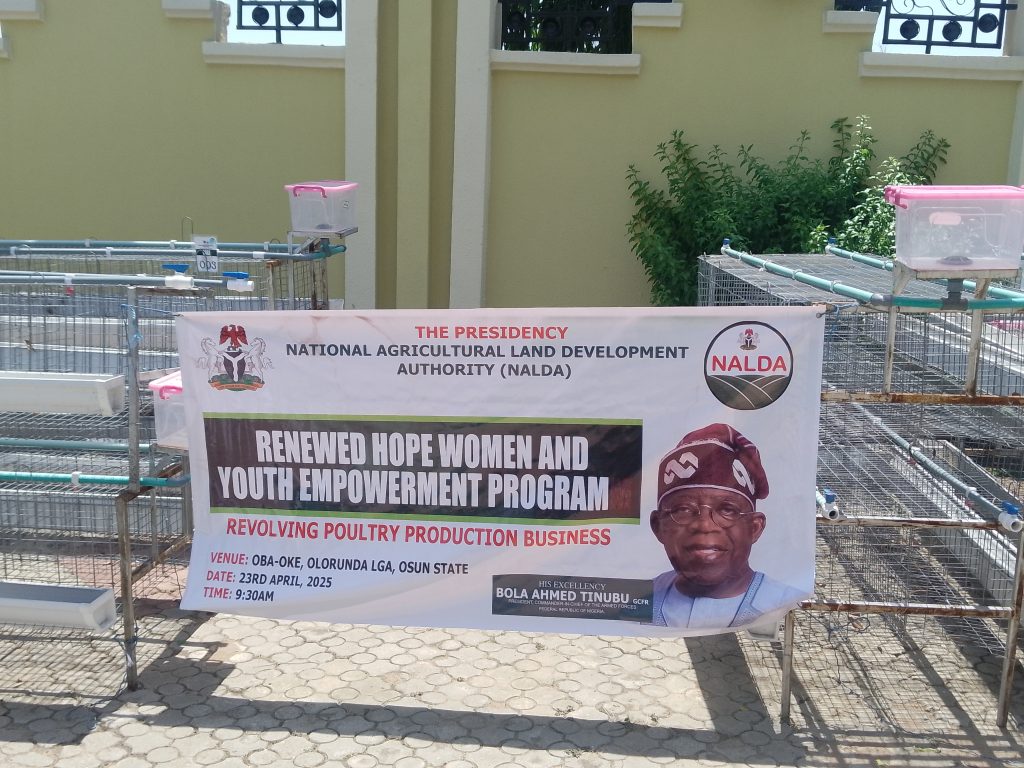
The Executive Secretary, National Agricultural Land Development Authority, NALDA, Engineer Cornelius Adebayo wants Nigerians to strengthen President Bola Tinubu’s Administration with their dedication and unraveling commitment.

Engineer Adebayo made the call at the launch of the Renewed Hope Women and Youth Empowerment Programme, organised in conjunction with Issa Adedotun Niniola Foundation, held in Oba Oke, Olorunda Local Government, Osun State.

Engineer Adebayo, represented by Engineer Olusegun Owolabi, emphasized that President Tinubu’s Renewed Hope Initiative transcends Politics and is aimed towards ensuring a better life for all Nigerians.

The Executive Secretary, NALDA, recalled that the agency began in 1992 and was revitalised in June 2022 during former President Muhammadu Buhari’s Administration.

He stressed that the core mandate of NALDA encompasses comprehensive agricultural land development, from bush clearing and land preparation to management, storage solutions and strategic marketing, achieved through collaborative partnerships of different categories.

Engineer Adebayo who explained that the Programme would be different from the past ones, assured that it would steadily expand across the state and extend to neighbouring States.

He lauded the Issa Adedotun Niniola Foundation for its collaborative efforts towards making the event possible.

Corroborating him, NALDA coordinator, Osun State, Alhaji Kazeem Yusuf who said the programme was designed to support the Renewed Hope Agenda of President Bola Tinubu emphasized that the Poultry Empowerment programme aimed to achieve self-sufficiency in agricultural production, and Osun State is the pioneer state.

Also speaking, the founder, Issa Adedotun Niniola Foundation, Ambassador Issa Niniola explained that the programme is aimed to eradicate poverty across the nation and lauded President Bola Tinubu for his various developmental policies geared towards alleviating the effects of subsidy removal.

Ambassador Niniola urged the beneficiaries to ensure judicious use of the items given to them and ensure they follow the procedures given to them.

In a remark, former deputy governor of the state, Otunba Titi Laoye-Tomori described the president as a God-sent who is bent on working tirelessly to lead the nation out of its various challenges to the promised land.

In separate goodwill remarks, former Commissioner for Information in the State, Chief Sunday Akere, and a former lawmaker, Engineer Olatunde Badamasi, described the event as a good initiative and assured that the APC would continue to formulate policies that would improve the lives of Nigerians.

Expressing their appreciation on behalf of other beneficiaries, Pastor Gbenga Orishajolu and Mr. Olalekan Saka who explained that poultry business is highly capital intensive noted that the support would help boost thier poultry business.

Radio Nigeria correspondent who witnessed the event reports that the empowerment programme came in form of support programme for poultry farmers.

The beneficiaries were given chicks, cages and feeds to support their poultry business.

Subscribe to our Telegram and YouTube Channels, and also join our WhatsApp Update Group.

Agriculture

By Olusegun Folarin

Ogun State government is to create 3 major farmers’ markets in parts of the state to enhance food distribution and provide a sustainable platform for farmers to sell their produce. 

The Commissioner for Agriculture and Food Security, Mr. Bolu Owootomo, stated this during a chat with journalists at his office at Oke Mosan, Abeokuta. 

The Commissioner said that establishing farmers’ markets at Ijebu Ode, Lusada would also enhance people’s access to sufficient, safe, and nutritious food. 

He announced plans for mass distribution of tractors and harvesters to farmers for the increase in productivity and efficiency, adding that over 5 billion naira worth of inputs had been distributed to farmers across the three senatorial districts of the state. 

Mr Owootomo explained that the interventions of Governor Dapo Abiodun’s administration, including zero percent interest loan facility for farmers and capacity building, were part of efforts to ensure an all-around farming system in line with the policy thrust of President Bola Tinubu towards attaining food sufficiency and security.

On the alleged deduction of personal funds from the accounts of subscribers to the Anchor Borrowers Programme, Mr Owootomo said efforts were ongoing to resolve the issue, with the assurance that subscribers would be refunded upon the completion of investigations.

The commissioner solicited continued support of relevant stakeholders, especially the media, in the efforts to making Ogun State the food basket of the nation.

Subscribe to our Telegram and YouTube Channels and, also join our WhatsApp Update Group

Agriculture

By Iyabo Adebisi

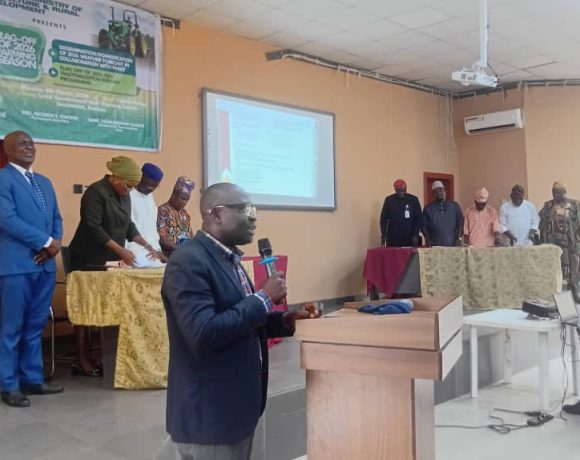
As the 2025 farming season kicks off, the Oyo State Government has announced the commencement of the second phase of the 50 per cent land ploughing subsidy, also known as the “Tractorisation Policy”, as part of its efforts to support smallholder farmers in the state.

Oyo State Commissioner for Agriculture and Rural Development, Mr Olasunkanmi Olaleye, gave this indication during a press conference held at the ministry’s office.

Mr Olaleye explained that the state could also boast of having become one of the food baskets of the country, as more than 9,569 tonnes of cassava, representing about 300 trailers, were moved out of only the Ibarapa zone of Oyo State into neighbouring states between December 2024 and March 2025.

The commissioner equally hailed Governor Makinde for approving the continuation of the 50 per cent tractorisation policy, which began in 2024, noting that the policy represented the governor’s commitment to progressive and sustainable agricultural development.

Mr Olaleye maintained that the state government reached about 1,487 farmers through the programme in 2024, with about 6,090.91 acres of farmland mechanically ploughed across the state.

The commissioner added that as a result of the policy, the state witnessed significant increases in productivity per hectare due to proper land preparation, as many small and medium-scale farmers transitioned from manual to mechanical farming methods.

He explained that the agriculture ministry has designated at least four extension officers to each of the 33 Local Government Areas of the state, calling on farmers to approach these officers, who would visit their proposed farm sites, take the measurements and send necessary information to the ministry.

The Chairman of the Agricultural Credit Corporation of Oyo State (ACCOS), Sheik Taofeek  Akeugbagold, declared that apart from the 50 per cent tractorisation policy, which would help farmers, they could also access agriculture credit and loans from the corporation.

Alhaji Akeugbagold lauded Governor Seyi Makinde for taking genuine interest in the development of agriculture and the well-being of the teeming farming population in the state.

Subscribe to our Telegram and YouTube Channels, and also join our WhatsApp Update Group

Agriculture

By Olusegun Folarin

About 5,000 farmers in Ogun State have been provided with farm equipment, inputs and financial grants to boost their production capacity in line with the renewed hope agenda on food security initiated by President Bola Tinubu.

Sponsor of the farmers’ empowerment programme and Chairman, Senate Committee on Appropriation, Senator Solomon Adeola, said the intervention would help to reduce poverty and tackle hunger among the people.

Senator Adeola said the empowerment, which included training the beneficiaries on modern agricultural practices at the Federal College of Agriculture, Isiagu, Ebonyi State and Federal Cooperative College, Eleyele, Ibadan, was to address poor access to funding, costly farm implements and seedlings, plus the lack of training among farmers.

The Ogun West Senator restated the federal government’s decision of ensuring all year-round farming with a target of three farming seasons annually, noting that over 384 billion naira had been approved for the programme towards achieving national food security and sufficiency.

Senator Adeola commended Governor Dapo Abiodun for complementing the federal government’s efforts through various policies and programmes, such as the allocation of free farmland to farmers in the bid to enhance massive production among farmers in the state.

Earlier, the Ogun State Coordinator, Federal Ministry of Agriculture and Food Security, Dr Oluwatoyin Ajayi, had affirmed that President Bola Tinubu was making conscious efforts to reduce poverty and ensure food availability and security in the country.

Dr Ajayi also acknowledged Senator Adeola’s support for small holder farmers in the senatorial district and across the state towards increasing their productivity and profitability.

The beneficiaries drawn from the six local government areas of the district were presented with tractors, fertilizers, water pumps, insecticides, sprayers, and cassava stems, among other items, with a grant of 100 thousand naira.

Subscribe to our Telegram and YouTube Channels, and also join our WhatsApp Update Group.

Agriculture

By Rotimi Famakin

As part of efforts to ensure food sufficiency and boost the nation’s economy through agriculture, sixty staff of the Federal Radio Corporation of Nigeria, FRCN, Ibadan, have been trained in urban farming techniques.

The Senior Staff Association of FRCN in the zone organised the training, which was held at Studio One, Radio Nigeria Broadcasting House, Dugbe, Ibadan.

Addressing the participants, the guest lecturer, who is also the pastor in charge of the Redeemed Christian Church of God, RCCG Jubilee Zonal headquarters, Ibadan, Pastor Okechukwu Nwankwo emphasized the need for farmers to be patient, use quality seeds and soil to nurture the growth of crops in an urban farming system.

Pastor Nwankwo said FRCN staff needed to develop the urban farming system to sustain themselves regardless of the prevailing situation in the economy.

“Hunger does not need prayer. You grow what you eat. So far, you have a compound, just get bags. Put sand on it. Water it. Plant your seed on it.  Go to work and come back and water it. They are not crying. They are not placing any demand on you. For you to succeed in urban farming or the main farm, you need four major things. First, you need quality seed. You need quality water. You need quality sand. You must be available through your quality time, and you have to be patient.” 

Earlier, the chairman of, FRCN Senior Staff Association, Ibadan Zonal Station, Mr Sunday Olowokere, said the training was considered necessary to keep staff afloat before and after their retirement.

“We decided to have this programme for the Senior Staff Association members so that our members will get prepared and established before their retirement, so that even if they retire, it will be easy for them to sustain themselves after retirement.”

Also speaking, the Zonal Director, FRCN, Ibadan Zonal Station, Mr Dominic Mokikan, said the lecture was an eye-opener to modern farming techniques.

1-3840×1742-1-0#

 Mr Mokikan, however, urged the staff to imbibe the farming system and adopt its principles as outlined by the lecturer.

“This is an eye-opening kind of workshop. Like I said in my address, workshops are meant to impact knowledge on people. It is another thing for a workshop to impact knowledge; it is another thing for people to allow the knowledge to have an effect. I will just advise that if our eyes have been opened to this opportunity which we never knew before now, I will just advise that we should imbibe it. Embrace this to yourself and don’t forget the formula he gave you to succeed in life. You have to be determined. You have to be patient.”

The highlight of the lecture was the display of samples of crops on disposable bags

Subscribe to our Telegram and YouTube Channels, and also join our WhatsApp Update Group.

Agriculture

By Rotimi Famakin

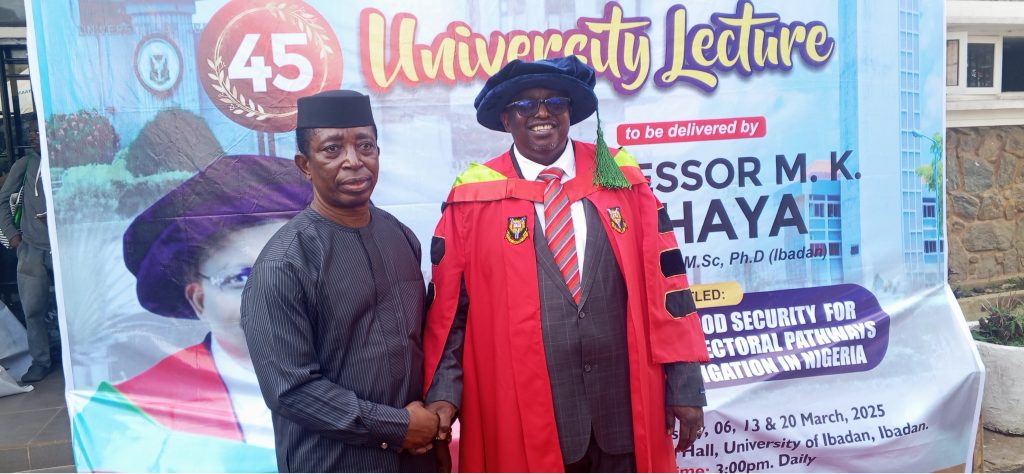
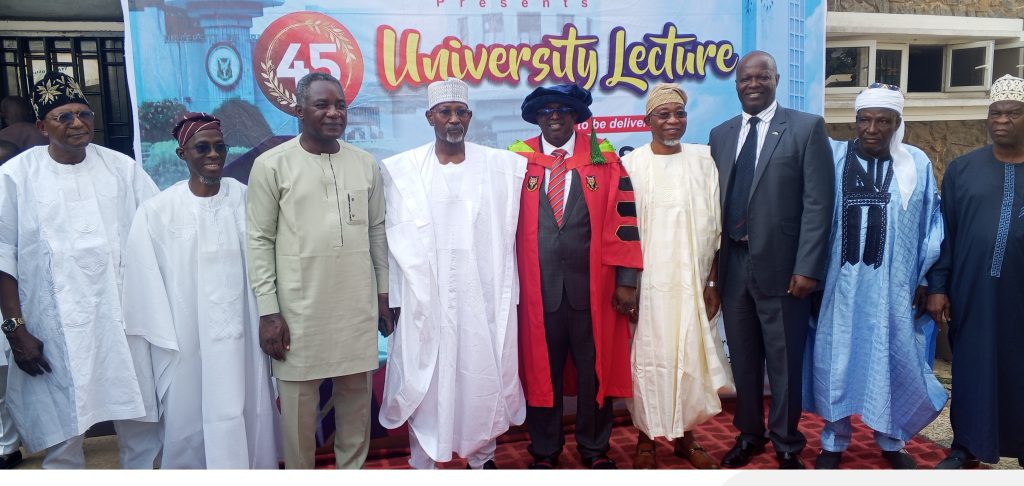
An agricultural Communication Professor at the University of Ibadan, Kuta Yahaya has concluded the third phase of University of Ibadan 45th University Lecture at the Trenchard hall of the institution with options and recommendations that will solve the problem of food shortage in Nigeria.

The first two lecture series had earlier provided a fundamental insight to the root causes of of Nigeria’s food crises and lessons that could be drawn from Nigerian states and developed countries already making headway in the sector.

Two options highlighted by Professor Yahaya were nutrition intervention which he said has to do with generating locally sourced crops and  improving them to meet international standards while harnessing livestock to boost the nations Gross Domestic Product.

 He maintained that poultry, swine farming, ranching and pasture hold greater potential in not only meeting Nigeria’s food demands but increasing employment opportunities for Nigerian population.

 “Swine farming system provides large range of benefits including food security, employment opportunities and ecosystem. Therefore, if we must improve productivity, the private sector must focus more on enhancing animal efficiency, through genetic preservation, improved feeding system practices and precision farming..

 “With increasing population and the the need to ensure food security, ranching provides an indigenous root to de-escalate food insecurity with potential to tap into the export market to enhance the GDP”.

Professor Yahaya noted that the crop and livestock sectors suffered setback due to over reliance on crude oil, dependence on food importation, lack of funds and infrastructure, influence of industrial agriculture and multinational corporations as well as shift in climate change among other factors.

Professor Yahaya explained that policy intervention such as President Bola Tinubu’s Livestock Reform Implementation Committee, had been attracting foreign investors to the country.

 “Mr Vice chancelor, the role of the Presidential Livestock Reform Implementation Committee has been extensively dealt with in the past presentation where Professor Jega was in attendance. They have already attracted key international trading partners”

Among the numerous recommendations given by the Agricultural Communication Professor are leveraging on technological innovation, empowering Nigerian women and youths in local and mechanized  farming, promoting livestock business, provision of infrastructural facilities, land tenure reform, investment in transport and storage infrastructure, strong and coherence agricultural policy and community involvement in smart agricultural practices

In an interview, some notable Nigerians at the event including Professor Ibrahim Babangana said the lecture was in-depth and thought provoking with up to date recommendations on Nigeria’s food sovereignty.

Also speaking on the lecture, the Vice Chancellor of University of Ibadan, Professor Kayode Adebowale, said Nigerian youths should see agriculture as a venture beyond food provision.

 ” We have youth population. So it is important for us to be able to harness and tell them that agriculture is no longer the agriculture they used to know. That agriculture is business. Agriculture can bring money into their pocket and I think that is the direction we need to go”

Commenting on the lecture, the Director General, Federal Radio Corporation of Nigeria, FRCN, represented by the Zonal Director, FRCN Ibadan Zonal Station Mr Dominic Mokikan said food sufficiency would be achieved in Nigeria when recommendations proffered by the lecturer were fully implemented.

 “He started by telling us where we got it wrong and at the middle he told us the state of affairs at the moment. In this final phase, he took us to where we should be and how to get there by making lots of  recommendations which I believe if the government keys into and implements, our story will be different”.

The University of Ibadan 45th lecture entitled, “Decolonizing Food Security in Nigeria” kicked off with the first phase held on Thursday, the 6th of March and second phase on Thursday, March 13.

It was rounded off with the third phase on Thursday, the 20th of March 2025.

Subscribe to our Telegram and YouTube Channels and also join our WhatsApp Update Group

Agriculture

By Rotimi Famakin

Adapting mechanized farming for food production, encouraging research and partnership, and implementing agricultural policies have been emphasized as the major factors that would help Nigeria achieve food security.

Professor of Agricultural Communication at the University of Ibadan, Kuta Yahaya, stated this during the second phase of his three-phase lecture for the Institution’s 45th lecture, held at the Trenchard Hall.

In the lecture entitled: Decolonization as a Golden Key to unlock Food Security, Professor Yahaya said the government needed to diversify food sources, promote social safety net, encourage collaboration across sectors and enhance the policy framework, as well as eliminate farmers-herders conflicts.

The Don noted that the challenges militating against food security in Nigeria include double taxation, insecurity, cattle rustling, and finance.

He commended President Bola Tinubu’s Agricultural Policies which he said are being felt in the country’s food sub-sector.

The Professor of Agriculture stressed the need for the government to learn from Niger, Borno, Osun and Oyo States that had initiated and transformed agricultural practices to business ventures.

He said the government needed to partner developed countries as done in Niger state which partnered China and can now boast of a mechanized farming system engaging male and female youths in the agricultural value chain.

In his response, the Niger State Governor, Alhaji Mohammed Bago said the lecture adequately addressed numerous challenges food security is grappling with in the country.

The third and final phase of the lecture, “Multi-Sectoral Options in the Decolonization of Food Security in Nigeria,” will take place on Thursday, March 20th.

Subscribe to our Telegram and YouTube Channels and also join our WhatsApp Update Group

Agriculture

By Rotimi Famakin

Addressing the challenges of food security in Nigeria formed the focus of the 45th lecture of the University of.
Ibadan held in Ibadan, with the theme, “Decolonizing food security for enduring multi-sectoral pathways to poverty mitigation in Nigeria” .

The lecture was delivered by a Professor of Agricultural Communication in the Department of Agricultural Extension, University of Ibadan, Professor Kuta Yahaya.

Professor Kuta Yahaya took an overview of agricultural practices in Africa in relation to the advent of colonial masters.

He was of the opinion that the colonial masters harnessed the continent’s rich agricultural resources at the detriment of the region.

Professor Yahaya however noted that poverty in Africa especially in Nigeria was caused by lack of vision for liberation and transition to a broader modern agricultural practices.

In the first part of the lecture entitled: “colonization of food in Nigeria”, Professor Yahaya said food challenges in the region were compounded by armed conflict which negatively impacted the agricultural sector

He noted with concern that the situation was worsened by epileptic power supply which should have helped to transform agricultural sector to an industrial hub.

“Energy deficit also plague the continent with significant energy shortages in meeting industrialization and development. As a result, “Africa now consumes what it does not produce and produces what it does not consume”.

Professor Yahaya criticized past administrations’ failed agricultural policies, including Operation Feed the Nation, OFN, Green Revolution, and Structural Adjustment Programme, SAP.

He attributed their failure to frequent policy changes, which harmed small-scale farmers lacking access to finance and infrastructure.”

Professor Yahaya observed that farmers in Nigeria still lacked access to modern facilities despite the advancement in technology.

He maintained that failure to address armed conflict and implement agricultural policies would continue to inflict poverty and food shortage on Nigerians.

In a remark, the Director General, Federal Radio Corporation of Nigeria FRCN, Dr Mohammed Bulama represented by the Zonal Director, FRCN, Ibadan, Mr Dominic Mokikan described the lecturer as an erudite scholar whose intellectual prowess was displayed in the well researched academic discourse.

“You cannot expect anything less than what you got. He is an erudite scholar. Professor Yahaya is a well made person and Nigeria is so blessed to have him”.

Dr Bulama said Federal Radio Corporation of Nigeria and University of Ibadan had long standing relations demonstrated in the dissemination of research findings to the public.

In a remark, a former Chairman of the Independent National Electoral Commission, INEC, Professor Attahiru Jega, emphasized the need for swift action from the Federal government in implementing Professor Yahaya’s well-researched solutions to unlock the agricultural sector’s potential.

“When people talk about livestock attention is focused on cattle and conflicts and others but there are alot more to potential in the livestock sector across the value chain that if carefully and appropriately handled could unlock tremendous wealth for our country both in terms of country’s vision for employment, business and also to add value to our Gross Domestic Product, GDP.”

Earlier, the Vice Chancellor, University of Ibadan, Professor Kayode Adebowale, said Professor Kuta Yahaya is a seasoned academician whose input was well felt in the academics within and outside University of Ibadan.

The lecture series continues with the second phase entitled: Decolonization of food security and champions holding on 13th of this month at the Trenchard hall, University of Ibadan.

Similarly, the third phase comes up on 20th of this month with focus on “multi-sectoral options in decolonization of food security in Nigeria”.

Subscribe to our Telegram and YouTube Channels and also join our Whatsapp Update Group.

Agriculture

By Iyabo Adebisi

Sierra Leone’s President, Dr. Julius Maada Bio, has criticized the $50 billion spent yearly by African nations on importing food that could be grown locally, urging a shift in the continent’s agricultural narrative.

He made these remarks during a panel discussion at the International Institute of Tropical Agriculture, IITA, in Ibadan, as part of his visit to Nigeria to explore collaborative opportunities between the two countries.

President Maada Bio while stressing the significance of innovation, technology, infrastructural development said Africa would be a great continent if it was investing 50 billion dollars yearly on agriculture instead of importing food that could be grown locally.

He said unless Africa act concertedly, its people will continue to suffer hunger in the midst of plenty, while urging leaders to allocate and efficiently utilise resources set aside for the agricultural sector.

Also, speaking, Oyo State governor, Engineer Seyi Makinde stressed the importance of exploring local solutions, while also calling for public-private partnerships, which could help to increase production and expand value chains.

On his part, Governor of Borno State, Professor Babagana Zulum explained that the suspension of USAID funds by the US government is a wake-up call for Nigerian leaders to enhance their capacity and strengthen Africa through local mechanization and technological deployment in the agricultural sector.

Former World Bank Vice President, Hafez Gbanem noted that low-income countries allocate insufficient funds to agriculture and food security.

Mr Gbanem then tasked African leaders to foster regional economic ties, create policies supporting local farmers, and mobilize domestic resources to reduce reliance on foreign financial assistance.

Subscribe to our Telegram and YouTube Channels and also join our Whatsapp Update Group.