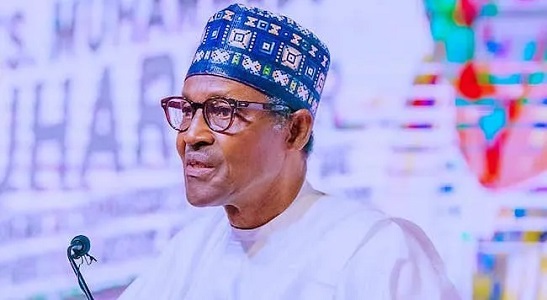
President Muhammadu Buhari has restated the determination of the Nigerian Government towards achieving the vision of 30 Gigawatts of energy by the year 2030.
The President said this in Washington during the discussion panel on Just Energy Transition at the ongoing US-Africa Leaders Summit.
President Buhari said as part of the National Renewable Energy and Energy Efficiency Policy, Nigeria set the vision 30:30:30, which aims at achieving 30 GW of electricity at that target period, with renewable energy contributing 30 percent of the energy mix.
He explained that last year, Nigeria became the first African country to develop a detailed Energy Transition Plan to tackle both energy poverty and climate change, and deliver SDG7 by 2030 and net zero by 2060.
“Our Federal Executive Council approved the plan earlier this year and adopted it as a national policy. As part of the plan, we intend to completely eliminate the use of petrol/diesel generators by 2060 and therefore need to deploy renewables, particularly solar, at an unprecedented scale. For instance, the Energy Transition Plan requires that 5.3 GW of Solar be deployed annually until 2060 to achieve our targets.”
The President stressed that Nigeria had embarked on several reforms, one of the best in Africa, on mini-grid regulations, as well as the integration of renewable energy into the national grid.
He said the aggressive power sector reforms had resulted in cost-reflective tariffs in the power sector for the first time since privatization.
The President told the summit that under the Nigeria Electrification Project, over 4 million people had been impacted through solar mini-grids and solar stand-alone systems.
With respect to hydro, the President said the Zungeru hydropower Project was nearing completion and will add an additional 700 mw capacity to the grid.
While stressing the resources that the administration has committed towards the realization of the vision, President Buhari called for considerable financial and technical support to achieve the goals.
“For instance, our analysis shows that delivering the Energy Transition Plan requires $1.9 trillion in spending up to 2060, including $410 billion above business-as-usual spending. This additional financing requirement translates to a $10 billion investment needed per annum. Between 2000 and 2020, just $3 billion per year was invested in renewable energy in the whole of Africa.
President Buhari also called on US businessmen and the global community to tap into the innovation and potential returns in Nigeria’s enormous market, which is yet to be fully optimized.
Abdulla Bello
Subscribe to our Telegram and YouTube Channels also join our Whatsapp Update Group