Judiciary

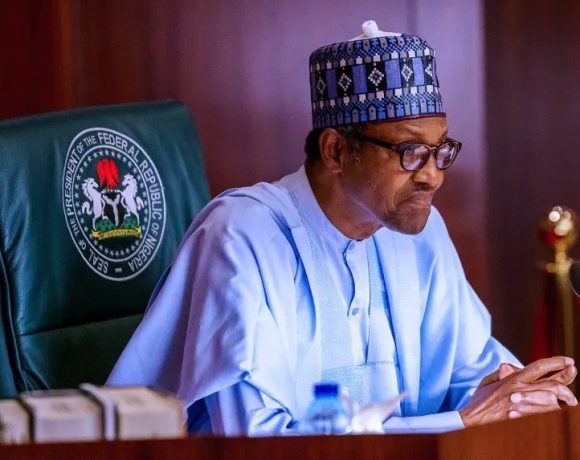
The Socio-Economic Rights and Accountability Project (SERAP) has filed a lawsuit against President Muhammadu Buhari over “the failure to publish copy and details of the agreement the Federal Government recently signed with the United States for the repatriation of $23 million stolen by the late dictator Sani Abacha”.

A statement released on Sunday by the Deputy Director of SERAP, Kolawole Oluwadare revealed the Attorney-General of the Federation and Minister of Justice, Abubakar Malami (SAN) was also included in the suit as respondent. 

‘’The United States government had in August signed an agreement with the Federal Government to repatriate $23 million Abacha loot to Nigeria. The $23 m adds to the $311.7 m Abacha loot repatriated from the U.S. to Nigeria in 2020’’, the statement read.

In the suit which was filed on Friday, September 23, 2022 at the Federal High Court, Abuja, SERAP is asking the court to “direct and compel President Buhari and Mr. Abubakar Malami to release and widely publish a copy of the agreement on the Abacha loot with the U.S.”

The Organization is also asking the court to “direct and compel President Buhari and Mr Abubakar Malami to publish details of the transparency and accountability mechanisms that have been put in place to ensure that the repatriated funds are not mismanaged, diverted or re-stolen.”

“The Nigerian Constitution 1999 [as amended], the Freedom of Information Act, and the country’s international obligations impose transparency obligations on the Federal Government to widely publish the agreement on the $23 m Abacha loot”, SERAP argued.

It also argued that “Publishing a copy of the agreement with the U.S. would allow Nigerians to scrutinize it, and to monitor the spending of the repatriated loot to ensure that the money is not mismanaged, diverted or re-stolen.”

According to SERAP, “the repatriated $23 m Abacha loot is vulnerable to corruption and mismanagement; alleging that a substantial part of the estimated $5 bn returned Abacha loot since 1999 may have been mismanaged, diverted, or re-stolen, and in any case, remain unaccounted for”.

The Organization further explained that the Federal Government has a responsibility to ensure transparency and accountability in how any repatriated stolen funds are spent, to reduce vulnerability to corruption and mismanagement.”

SERAP, therefore, urged the court to grant its application for the sake of public interest, and the interest of justice, stressing that Nigerians are entitled to their constitutionally and internationally recognized human right to information”.

Annabel Nwachukwu

Subscribe to our Telegram Channel and join our Whatsapp Update Group
News Analysis

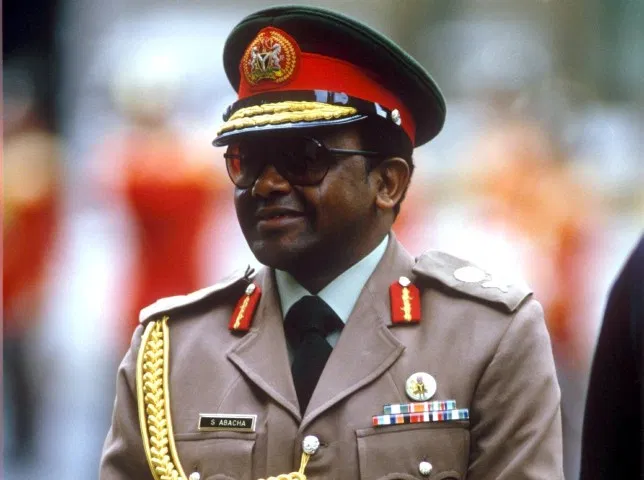
On May 4, 2020, the Attorney General of the federation and Minister of Justice, Abubakar Malami announced that the federal government has received over three hundred and eleven million dollars of the looted funds of former Head of State, late General Sani Abacha.

The money was from the United States and Bailiwick of Jersey.

The Attorney General of the federation and Minister Of Justice had in February travelled to the United States to represent Nigeria in the signing of the tripartite agreement between the governments of Nigeria, the United States and Bailiwick of Jersey for the repatriation of the looted funds.

The asset recovery agreement from the meeting was that the funds would be expended on the Lagos-Ibadan Expressway, second Niger Bridge and the Abuja-Kano expressway.

During the five-year regime of late General Sani Abacha, about five billion dollars were stolen and transferred to offshore accounts with the aid of some multinational companies.

However, since 1999, over two billion dollars had so far been recovered from diverse countries.

Some of the recovered looted funds had been expended on some projects and served as funds for the execution of Conditional Cash Transfers, CCT, the social intervention programme of the Muhammadu Buhari-led administration.

There is no doubt that Nigeria has suffered greatly from the effects of corruption.

Reports have it that ten to fifty per cent of public procurement funds are diverted and laundered abroad.

US Department of Justice is accusing the Nigerian government of planning to handover about one hundred million dollars to an alleged ally of the late head of state, though this has been denied by the federal government.

To this end, the United States Justice Department has warned that Nigeria must spend the repatriated funds on the agreed public projects or refund it.

Governments of countries where the looted funds were saved are still in shock that the allies’ of late General Abacha are still walking freely in the society and holding top political posts in Nigeria.

In line with the anti-corruption war of President Muhammadu Buhari, the federal government must be able to investigate, identify and prosecute those who looted public funds.

The government must be able to ensure and inform the world that recovered looted funds are not re-looted.

Nigeria is one of the one hundred sixty signatories to the United Nations Convention against Corruption that makes stolen assets recovery an international priority in the fight against corruption.

The practice of spending funds without parliamentary approval violates the constitution.

The National Assembly should approve all expenditure through supplementary appropriation bills, even where agreements are made to use the funds for specific projects.

The federal government must show more commitment to the fight against corruption by making it known that looters are punished and not rewarded.

Olaolu Fawole