Foreign

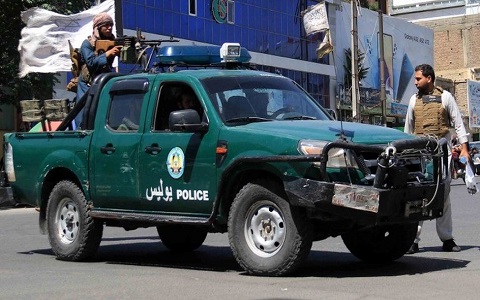
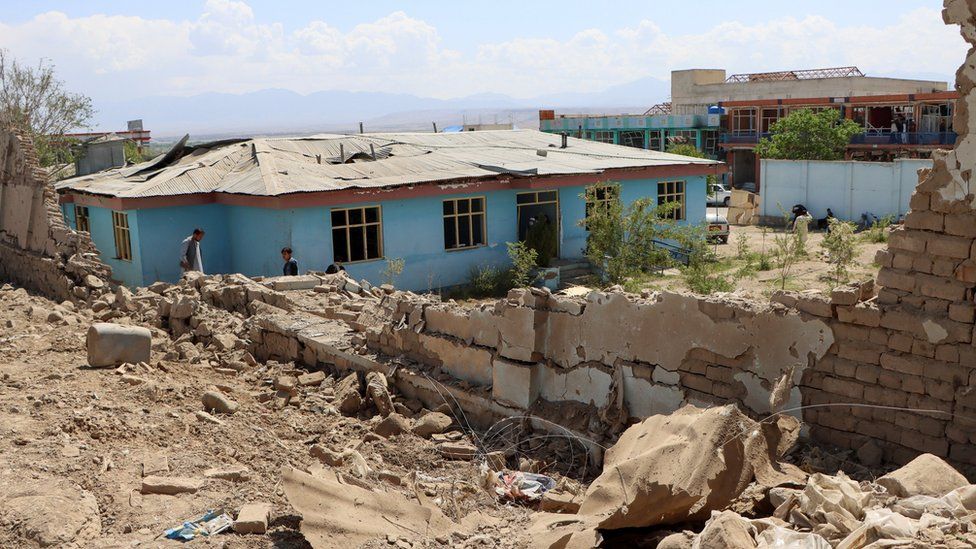
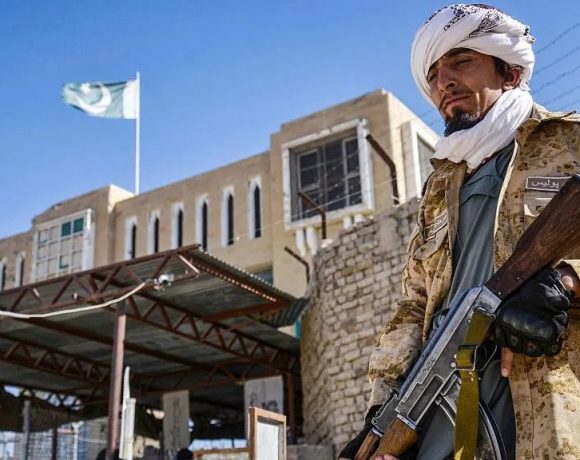
Fresh deadly border clashes have broken out between Pakistan and Afghanistan’s Taliban forces, with both sides accusing each other of breaking a fragile ceasefire.

Residents fled the Afghan city of Spin Boldak overnight, which lies along the 1,600-mile (2,574 km) border the two countries share.

A medical source in the nearby city of Kandahar told BBC Pashto a local hospital had received the bodies of four people. Three injuries have been reported in Pakistan.

Sporadic fighting has repeatedly broken out between the two in recent months, while Afghanistan’s Taliban government has also accused Pakistan of carrying out air strikes inside the country.

Both sides have confirmed they exchanged fire overnight but each blamed the other for beginning the four hours of fighting.

Mosharraf Zaidi, a spokesperson for Pakistan’s Prime Minister Shehbaz Sharif, accused the Taliban of “unprovoked firing”.

Meanwhile, a Taliban spokesperson said Pakistan had “once again initiated attacks” and said it was forced to respond.

Footage from the area showed a large number of Afghans fleeing on foot and in vehicles, with people in neighbouring towns also leaving in fear of the renewed fighting spreading.

The overnight clashes came less than two months after both sides agreed to a ceasefire mediated by Qatar and Turkey.

It ended the worst fighting between Pakistan and the Taliban since the group returned to power in 2021, though tensions have remained high.

The government in Islamabad has long accused Afghanistan’s ruling Taliban of giving shelter to armed groups which carry out attacks in Pakistan.

The Taliban government in Afghanistan denies the accusation and has accused Pakistan of blaming others for their “own security failures”.

Sources familiar with the talks told BBC News that both sides had agreed to continue with the ceasefire.

BBC/Adebukola Aluko

Foreign

Three Spanish tourists have been killed by gunmen in the central Afghanistan city of Bamiyan, the Spanish government says.

Afghan officials said an Afghan national was also killed, while another four foreigners and three Afghans were injured.

No group has said it carried out the attack, but Afghan interior ministry spokesman Abdul Mateen Qani said four people had been arrested.

In a statement Mr Qani said the Taliban government “strongly condemns this crime, expresses its deep feelings to the families of the victims and assures that all the criminals will be found and punished”.

Spanish Prime Minister Pedro Sanchez said in a post on social media he was “overwhelmed by the news of the murder of Spanish tourists in Afghanistan”.

Offering his condolences to the families and friends of the victims, he said he was following the situation closely and pledged consular support.

At least one Spanish national was also among those injured, Spain’s foreign ministry said.

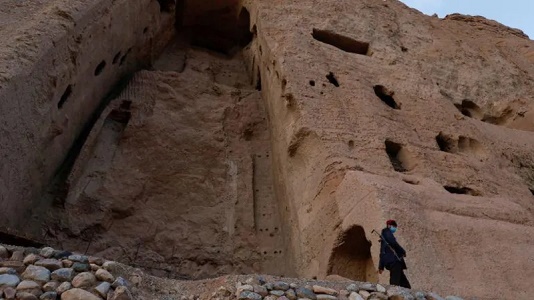
Mountainous Bamiyan is home to a Unesco world heritage site and the remains of two giant Buddha statues which were blown up by the Taliban during their previous rule in 2001.

Since retaking power in Afghanistan in 2021 the Taliban have vowed to restore security and encourage a small but growing number of tourists trickling into the country. The Taliban government sells tickets to access the site of the Buddha statues.

Though the country’s civil war ended with the Taliban takeover, the Islamic State group has carried out attacks on the Taliban and there is an anti-Taliban insurgency in some areas.

BBC/

Subscribe to our Telegram and YouTube Channels and also join our Whatsapp Update Group

Foreign

At least 14 people have been killed and 78 injured after an earthquake hit western Afghanistan, officials say.

The US Geological Survey said the 6.3 magnitude earthquake struck about 40km from the western city of Herat, close to the border with Iran, at around 11:00 local time (06:30 GMT).

A number of buildings were damaged, trapping people under rubble, Afghan officials said.

At least three powerful tremors followed the initial earthquake.

“We were in our offices and suddenly the building started shaking. Wall plasters started to fall down and the walls got cracks, some walls and parts of the building collapsed.” Herat resident Bashir Ahmad, 45, told the AFP news agency.

BBC / Titilayo Kupoliyi

Subscribe to our Telegram and YouTubeChannels also join our Whatsapp Update Group

Foreign

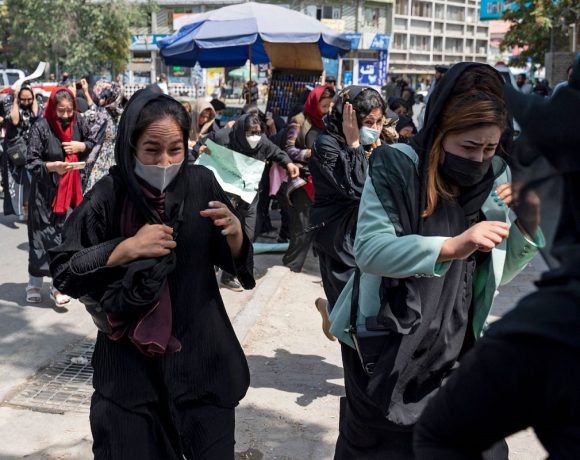
About 20 women have held a demonstration in a street in the Afghan capital, Kabul, calling on the international community to protect Afghans.

The Taliban, which swept back to power in August 2021, adheres to an austere interpretation of Islam and had imposed a slew of restrictions on girls and women since then.

In a statement to mark International Women’s Day, the head of the UN mission in Afghanistan, Roza Otunbayeva said It has been distressing to witness the Taliban’s methodical, deliberate, and systematic efforts to push Afghan women and girls out of the public sphere.

The UN mission said the crackdown was a colossal act of national self-harm” at a time Afghanistan faces some of the world’s largest humanitarian and economic crises.

Taliban authorities have removed women from all but essential government jobs.

Women are also barred from going to parks, funfairs, gyms, and public baths, and ordered to cover up in public with a burqa.

But the biggest crackdown has been on teenage girls and university students, with the authorities banning them from secondary schools and higher educational institutions. No country has officially recognised the Taliban government as Afghanistan’s legitimate ruler, with the right to education for women a sticking point in negotiations over aid and recognition.

The crisis was compounded late last year when the Taliban leadership banned Afghan women from working with NGOs, forcing several aid agencies to suspend their vital work.

Foreign aid had also declined dramatically since Afghanistan’s assets were frozen by the United States after the Taliban returned to power, further aggravating the crisis.

The United Nations’ special representative for women in Afghanistan, Alison Davidian said the implications of the government’s policies impact all Afghans and will resonate throughout generations”.

Fany Olumoye/Adetutu Adetule

Subscribe to our Telegram and YouTubeChannels also join our Whatsapp Update Group

Foreign

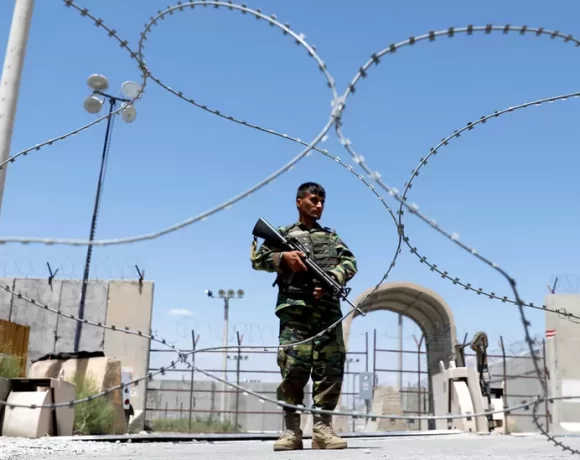
Afghanistan’s Taliban government says it will turn some former foreign military bases into economic zones for businesses.

Afghanistan has faced a deepening economic and humanitarian crisis since the Taliban regained control of the country in August 2021.

Foreign military forces had been in the country for two decades.

The decision was announced by the acting deputy prime minister for economic affairs Mullah Abdul Ghani Baradar.

“It was decided that the Ministry of Industry and Commerce should progressively take control of the remaining military bases of the foreign forces with the intention of converting them into special economic zones,” Mullah Baradar said in a statement on Sunday.

He added that the project will begin with sites in the capital of Kabul and the northern Balkh province but did not give further details.

“The Taliban desperately needs to boost its coffers if it is to govern better and attain some domestic legitimacy,” Muhammad Faizal Bin Abdul Rahman from the S Rajaratnam School of International Studies in Singapore told the BBC.

“More importantly, the Taliban needs to prove its commitment to economic planning. This includes establishing safe zones near the capital and borders for potential foreign investors such as the Chinese… and to revive regional trade with neighbouring countries,” he added.

Subscribe to our Telegram and YouTubeChannels also join our Whatsapp Update Group

BBC/Taiwo Akinola

Foreign

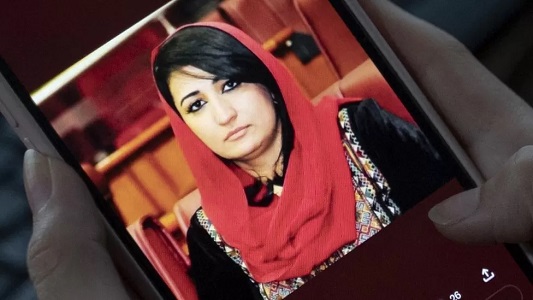
A former Afghan MP and her bodyguard have been shot dead at her home in the capital Kabul, Afghan police have said.

Mursal Nabizada, 32, was one of the few female MPs who stayed in Kabul after the Taliban seized power in August 2021.

Her brother and a second security guard were wounded in the attack on Sunday.

Former colleagues praised Ms Nabizada as a “fearless champion for Afghanistan” who turned down a chance to leave the country.

Since the Taliban returned to power in 2021, women have been removed from nearly all areas of public life.

Kabul police spokesman Khalid Zadran said security forces had started a serious investigation into the incident.

Former lawmaker Mariam Solaimankhil said Ms Nabizada was “a true trailblazer – a strong, outspoken woman who stood for what she believed in, even in the face of danger”.

“Despite being offered the chance to leave Afghanistan, she chose to stay and fight for her people,” she wrote on Twitter.

Ms Nabizada, from the eastern province of Nangarhar, was elected as a member of parliament from Kabul in 2018 and stayed in power until the Taliban takeover.

She was a member of the parliamentary defence commission and worked at the Institute for Human Resources Development and Research.

Hannah Neumann, a member of the European Parliament, said: “I am sad and angry and want the world to know!” in response to the killing.

“She was killed in darkness, but the Taliban build their system of gender apartheid in full daylight.”

Abdullah Abdullah, a former top official in Afghanistan’s former Western-backed government, said he was saddened by Ms Nabizada’s death and hoped the perpetrators would be punished.

He described her as a “representative and servant of the people”.

Many women who had prominent professional jobs in Afghanistan after the US-led invasion two decades ago fled the country after the Taliban returned to power.

BBC/Simeon Ugbodovon

Subscribe to our Telegram and YouTube Channels also join our Whatsapp Update Group

Foreign

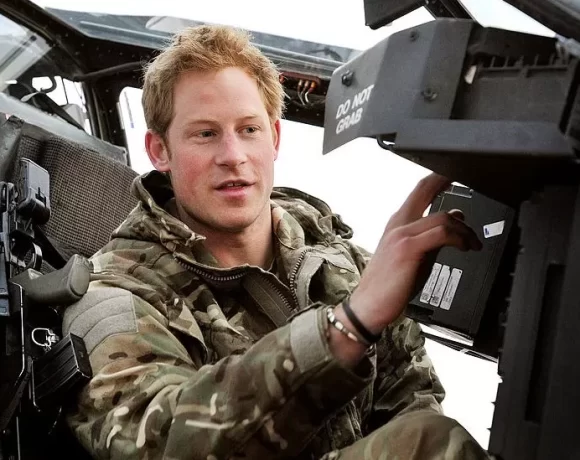
Prince Harry says, claims he boasted in his new book about killing 25 Taliban fighters while on duty in Afghanistan are a “dangerous lie”.

According to the report, Prince has been criticized for discussing killings in Spare, with some military figures saying it was wrong to refer to the dead as “chess pieces”.

But on US TV, Harry accused the press of taking his words out of context and said the spin endangered his family.

He also defended his remarks, saying he had wanted to reduce veteran suicide.

Spare, which was published on Tuesday, has become the fastest-selling non-fiction book ever in the UK.

Some 400,000 copies of the memoir have been bought, despite many excerpts being leaked in the press ahead of its official release.

In a wide-ranging interview with Stephen Colbert on The Late Show – the first conducted after details from the book were published – Harry suggested there had been attempts to undermine his book, spoke of his fractured relationship with his brother, and attacked the “bigoted” British press.

Harry said writing the book had been a “cathartic” experience and the “most vulnerable I have ever been in my life”, while also leaving him feeling stronger.

But he added: “The last few days have been hurtful and challenging, not being able to do anything about those leaks.”

In his condemnation of the media coverage, Harry claimed outlets had intentionally chosen to “strip away the context” of his account.

“Without a doubt, the most dangerous lie that they have told, is that I somehow boasted about the number of people I killed in Afghanistan,” he said.

“If I heard anyone boasting about that kind of thing, I would be angry. But it’s a lie.

“It’s really troubling and very disturbing that they can get away with it… My words are not dangerous – but the spin of my words are very dangerous to my family. That is a choice they’ve made.”

He said he had wanted to be honest about his experience in Afghanistan, and to give veterans the space to share their own “without any shame”.

“My whole goal and my attempt with sharing that detail is to reduce the number of [veteran] suicides,” he added.

Harry also claimed Buckingham Palace attempted to undermine the stories told in his memoir, assisted by the British press.

No names were mentioned but host Colbert asked if there had been attempts by the palace to undermine the book.

“Of course, and mainly by the British press,” he replied, without going into more detail.

In lighter moments during the interview, Harry drank Tequila with Colbert, joked that it felt like “group therapy” and performed a skit introducing the show with Hollywood actor Tom Hanks.

In Spare, Prince Harry reveals for the first time that he killed 25 enemy fighters during two tours in the Helmand region of Afghanistan.

“It wasn’t a statistic that filled me with pride but nor did it make me ashamed,” he writes.

“When I was plunged into the heat and confusion of battle, I didn’t think about those as 25 people. You can’t kill people if you see them as people.

“In truth, you can’t hurt people if you see them as people. They were chess pieces taken off the board, bad guys eliminated before they kill good guys.”

Subsequent media coverage of the comments, which were leaked to the press ahead of the book’s publication, drew criticism from figures in the military.

Ex-army officer Col Richard Kemp, who oversaw forces in Afghanistan, told the BBC he was concerned at references to dead Taliban insurgents as chess pieces, saying such descriptions could give “propaganda to the enemy”.

And Ex-colonel Tim Collins, who gained worldwide fame for an eve-of battle speech to troops in Iraq, said: “He has badly let the side down. We don’t do notches on the rifle butt. We never did.”

BBC/Taiwo Akinola

Subscribe to our Telegram and YouTube Channels also join our Whatsapp Update Group
Foreign

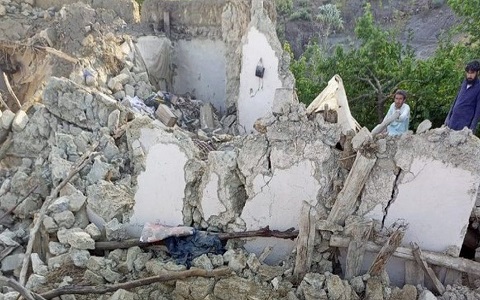
A powerful earthquake has killed at least 280 people and left scores injured in Afghanistan, according to the country’s state news agency.

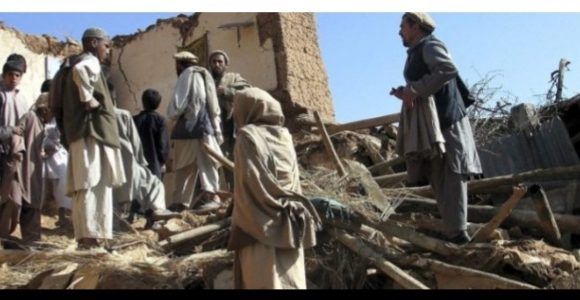
Pictures show landslides and ruined homes in eastern Paktika province, where rescuers are scrambling to treat the injured.

In remote areas, helicopters have been ferrying victims to hospitals.

The local Bakhtar News Agency said the death toll was likely to rise, adding more than 600 people were injured.

The quake struck about 44km (27 miles) from the south-eastern city of Khost shortly after 01:30 local time (21:00 Tuesday GMT).

“Unfortunately, last night there was a severe earthquake in four districts of Paktika province, which killed and injured hundreds of our countrymen and destroyed dozens of houses,” government spokesman Bilal Karimi tweeted.

“We urge all aid agencies to send teams to the area immediately to prevent further catastrophe.”

Taliban officials have called for aid agencies to rush to the affected areas in the nation’s east.

Most of the casualties so far were in the Gayan and Barmal districts in Paktika, a local doctor told the BBC. Local media site Etilaat-e Roz reported a whole village in Gayan had been destroyed.

Tremors were felt across more than 500km of Afghanistan, Pakistan and India. Witnesses reported feeling the quake in Afghanistan’s capital, Kabul, as well as Pakistan’s capital, Islamabad.

However, there have been no immediate reports of casualties, and the earthquake caused little damage in Pakistan, according to BBC Urdu.

The earthquake – which hit the mountainous country during the early hours as many people slept – was a magnitude 6.1 quake at a depth of some 51km, according to seismologists.

Afghanistan is prone to quakes, as it’s located in a tectonically active region, over a number of fault lines including the Chaman fault, the Hari Rud fault, the Central Badakhshan fault and the Darvaz fault.

Earthquakes tend to cause significant damage in Afghanistan, where there are many rural areas where dwellings are unstable or poorly built.

Decades of conflict have made it difficult for the impoverished country to improve its protection against earthquakes and other natural disasters – despite efforts by aid agencies to reinforce some buildings over the years.

In the past 10 years, more than 7,000 people have been killed in earthquakes in the country, the UN’s Office for the Coordination of Humanitarian Affairs reports. There is an average of 560 deaths a year from earthquakes.

BBC/Simeon Ugbodovon

Foreign

An assault on a temple of Afghanistan’s tiny Sikh community has left one worshipper and a Taliban member dead as well as the unidentified attackers.

The temple in the capital Kabul was hit by a bomb early in the morning when up to 30 people were inside.

It is the last remaining Sikh temple in the capital.

Community leaders recently estimated that just 140 Sikhs remained in predominantly Muslim Afghanistan, down from 100,000 in the 1970s.

India, which is home to most of the world’s Sikh population, said it was “deeply concerned” at the news of the attack.

A local official at the scene, Gornam Singh, told Reuters news agency that the Taliban were not allowing Sikhs to enter the temple after the attack.

TV footage showed grey plumes of smoke rising from the area.

A Taliban spokesman told Reuters news agency the attackers had attempted to drive a car laden with explosives into the area but they detonated before they reached their target.

The Taliban, which took control of Afghanistan last year, said a clearance operation was still underway although the attack had ended.

The BBC’s Secunder Kermani was interviewing relatives of victims outside a hospital when two Taliban militants stopped his crew, trying to delete their footage.

Since the Taliban took power, the country has seen continuing attacks by rival Sunni Muslim militant group Islamic State:

BBC/Simeon Ugbodovon

Foreign

Dozens of people have been killed or injured in four explosions across Afghanistan on Thursday, local officials and journalists have said.

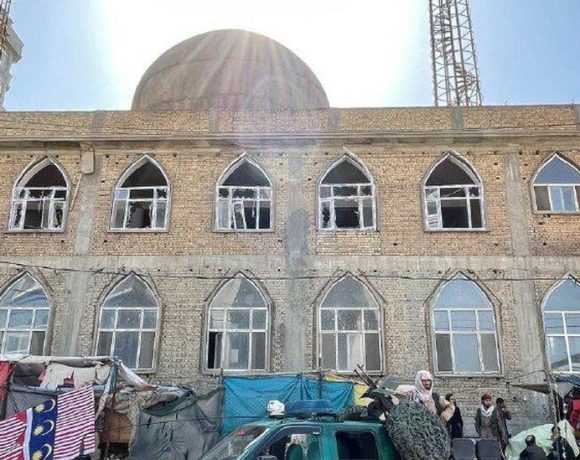
The first explosion tore through a Shia mosque in the city of Mazar-i-Sharif.

At least 31 people were killed, and 87 were wounded, the BBC has been told.

The Islamic State group (IS) admitted to carrying out the attack. The Taliban say they have defeated the IS but the group remains a serious security challenge to Afghanistan’s new rulers.

The attack on the Mazar-i-Sharif mosque was carried out using a remotely detonated booby-trapped bag when the building was packed with worshippers, the IS jihadists said.

The group called the attack part of an ongoing global campaign to “avenge” the deaths of its former leader and spokesman.

IS has not said it was behind the three other explosions, and it is not clear if they are connected.

The second blast saw a vehicle blown up near a police station in Kunduz, leaving four dead and 18 injured, a police spokesman said.

The BBC has also received reports of a Taliban vehicle being hit by a roadside mine in eastern Nangarhar province, killing four Taliban members and wounding a fifth.

A fourth blast was caused by a mine planted in the Niaz Beyk area of Kabul, Afghanistan’s capital, and wounded two children.

Thursday’s bloodshed comes days after two bomb blasts at Abdul Rahim Shahid high school in a mostly Shia area of the Afghan capital, Kabul. At least six people were killed and more than 20 wounded, officials said. IS militants have attacked the area in the past but did not say they were behind that incident.

‘Everyone started to run’

Local reports and witnesses say the explosion in Mazar-i-Sharif happened at Seh Dokan, one of the biggest mosques used locally by the Hazara minority group.

The number of casualties remains fluid at this stage and is liable to change.

Afghanistan’s Hazara community is often targeted by Sunni militant groups, including the Islamic State.

The blast is said to have happened while worshippers were preparing to perform prayers. Images shared on social media, which the BBC has not verified, showed the site littered with broken glass and victims being carried.

One Mazar-i-Sharif woman told news agency Reuters she had been shopping at a nearby market when she heard a large explosion near the mosque.

“The glass of the shops was broken and it was very crowded and everyone started to run,” she said, asking for her name not to be used.

Richard Bennett, the United Nation’s Special Rapporteur for Afghanistan on human rights, condemned the attacks.

“Today more explosions rocks Afghanistan […] and again the Hazara community is a victim. Systematic targeted attacks on crowded schools and mosques call for immediate investigation, accountability and end to human rights violations,” he wrote on Twitter.

BBC/Simeon Ugbodovon

Foreign

The US has started formally withdrawing troops from Afghanistan, beginning the end of what President Joe Biden called “the forever war”.

The US and Nato have had a presence in Afghanistan for almost 20 years.

But the withdrawal, which runs until 11 September, comes amid escalating violence, with Afghan security forces on high alert for reprisal attacks.

The Taliban have warned they are no longer bound by an agreement not to target international troops.

Under a deal signed last year between the militants and then-President Donald Trump, foreign forces were to have left by 1 May while the Taliban held off attacking international troops.

Officials told Reuters during this time the Taliban has been protecting western military bases from rival Islamist groups. That has not stopped Taliban attacks on Afghan forces and civilians.

US General Scott Miller warned against attacks on foreign troops as they start to withdraw.

“Make no mistake, we have the military means to respond forcefully to any type of attacks against the coalition and the military means to support the Afghan security forces,” he said in a video posted on Twitter.

US President Joe Biden last month pushed back the 1 May pullout, saying some troops would stay on until 11 September this year, the 20th anniversary of the 9/11 attacks, citing the security situation.

A Taliban spokesman said “this violation in principle has opened the way for [Taliban fighters] to take every counter-action it deems appropriate against the occupying forces”.

But he also said Taliban fighters would await instructions from leaders before mounting attacks. Some analysts suggested with a US deadline for withdrawal in place large-scale attacks could be averted.

Meanwhile the US faces the logistical challenge of packing up and leaving. The AP report the military has been taking inventory, deciding what will be shipped back and what will be sold as junk on Afghanistan’s markets.

Why are US forces in Afghanistan?

On 11 September 2001, attacks in America killed nearly 3,000 people. Osama Bin Laden, the head of Islamist terror group al-Qaeda, was quickly identified as the man responsible.

The Taliban, radical Islamists who ran Afghanistan and protected Bin Laden, refused to hand him over. So, a month after 9/11, the US launched air strikes against Afghanistan.

As other countries joined the war, the Taliban were quickly removed from power. But they didn’t just disappear – their influence grew back and they dug in.

Since then, the US and its allies have struggled to stop Afghanistan’s government collapsing, and to end deadly attacks by the Taliban.

‘Dark days of the Taliban era’

The withdrawal of US troops begins against a backdrop of fierce clashes between the Taliban and government forces, in the absence of a peace deal.

A flare up of violence in Ghazni province overnight left an unknown number of people dead.

And on Friday, a car bombing in Pul-e-Alam, Logar province, killed up to 30 people and wounded 110 – mostly school pupils.

US President Joe Biden says the US pull-out is justified as US forces have made sure the country cannot again become a base for foreign jihadists to plot against the West.

And Afghan President Ashraf Ghani says government forces are fully capable of keeping insurgents at bay.

He has argued that withdrawing US and Nato forces will remove the Taliban’s reason for fighting, saying to the Taliban: “Who are you killing? What are you destroying? Your pretext of fighting the foreigners is now over.”

But many do not share the optimism.

“Everyone is scared that we might go back to the dark days of the Taliban era,” Mena Nowrozi, who works at a private radio station in Kabul told news agency AFP.

“The Taliban are still the same; they have not changed. The US should have extended their presence by at least a year or two.”

BBC Pakistan and Afghanistan correspondent Secunder Kermani says that with peace talks between the militants and Afghan government stalled, despite the drawing down of international involvement, it seems inevitable the conflict will continue.

BBC