Foreign

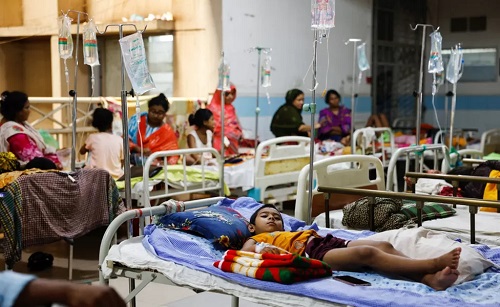
Nearly 1,000 people have died of dengue in Bangladesh in recent weeks, in what authorities say is the country’s most severe outbreak of the disease yet.

Extraordinarily wet monsoons have made it easier for mosquitoes that carry the dengue virus to breed in dirty and stagnant water.

Officials have struggled to contain the spread of the disease and hospitals have been critically overwhelmed.

In severe cases, dengue causes internal bleeding which can lead to death.

Its symptoms include headaches, nausea, joint and muscle pain.

Dengue is endemic in tropical countries and outbreaks often occur in urban areas with poor sanitation that allow virus-carrying mosquitoes to multiply.

It used to be a seasonal disease in Bangladesh, but due to hotter and wetter monsoons brought about by climate change, it has been occurring more frequently since the first recorded outbreak in 2000.

Public health officials say the current wave of infections caught the country off guard, as it is caused by a stronger strain of the virus.

Doctors have noted that the condition of current dengue patients deteriorates much faster compared to the last few years.

Bangladesh has launched public awareness campaigns to prevent mosquito breeding grounds from forming.

But more needs to be done, according to Dr Mushtaq Hussain, a public health expert.

“Those concerned think that it may be a temporary disease, and that it will go away after a few days, so no effective or long-term measures are being taken,” he told the BBC Bengali service.

Dengue infections have been reported in all of Bangladesh’s 64 districts, according to the World Health Organization.

Hundreds of dengue patients have swarmed hospitals in the capital of Dhaka seeking treatment but most of the facilities are at overcapacity.

Hospitals are also running short of intravenous fluids, which is crucial to treatment as dengue patients often suffer from dehydration.

Subscribe to our Telegram and YouTube Channels also join our Whatsapp Update Group
Foreign

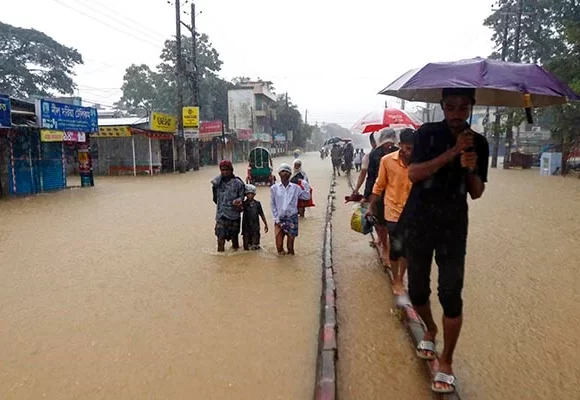
Monsoon storms in Bangladesh and India have killed at least 41 people and unleashed devastating floods that left millions of others stranded, officials said on Saturday.

Floods are a regular menace to millions of people in low-lying Bangladesh, but experts say climate change is increasing their frequency, ferocity and unpredictability.

Relentless downpours over the past week have inundated vast stretches of Bangladesh’s northeast, with troops deployed to evacuate households cut off from neighbouring communities.

Schools have been turned into relief shelters to house entire villages inundated in a matter of hours by rivers that suddenly burst their banks.

“The whole village went under water by early Friday and we all got stranded,” said Lokman, whose family lives in Companiganj village.

“After waiting a whole day on the roof of our home, a neighbour rescued us with a makeshift boat. My mother said she has never seen such floods in her entire life,” the 23-year-old added.

Asma Akter, another woman rescued from the rising waters, said her family had not been able to eat for two days.

“The water rose so quickly we couldn’t bring any of our things,” she said. “And how can you cook anything when everything is underwater?”

Lightning triggered by the storms has killed at least 21 people around the South Asian nation since Friday afternoon, police officials told AFP.

Among them were three children aged between 12 and 14 who were struck by lightning on Friday in the rural town of Nandail, said local police chief Mizanur Rahman.

Another four people died when landslides hit their hillside homes in the port city of Chittagong, police inspector Nurul Islam told AFP.

At least 16 people have been killed since Thursday in India’s remote Meghalaya, the state’s chief minister Conrad Sangma wrote on Twitter, after landslides and surging rivers that submerged roads.

Next door in Assam state, more than 1.8 million people have been affected by floods after five days of incessant downpours.

Assam chief minister Himanta Biswa Sarma told reporters he had instructed district officials to provide “all necessary help and relief” to those caught in the flooding.

Punch/Olaolu Fawole