Foreign

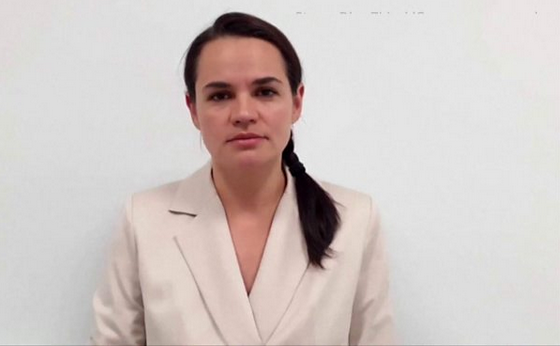
Belarus opposition leader Svetlana Tikhanovskaya has called for peaceful rallies across the country after she was forced to leave for Lithuania in the wake of a disputed election.

“Don’t stay on the sidelines,” she said, proposing a broad council to work on the transfer of power.

Alexander Lukashenko has ruled Belarus since 1994 but Sunday’s presidential vote was condemned by the EU and US.

Thousands of Belarusians have been protesting, urging Lukashenko to quit.

Some 6,700 people were arrested in the wake of the election, and many have spoken of torture at the hands of the security services.

Accounts have emerged since authorities began releasing detainees, including from the notorious Okrestina detention centre in Minsk, and Amnesty International said detainees’ stories suggested “widespread torture”.

Ms Tikhanovskaya was held for seven hours herself on Monday night, when she went to register a complaint about the election, before she was forced into exile.

As protests went into a sixth day and walkouts from state factories grew, EU foreign ministers considered imposing new sanctions on Belarus during an emergency meeting on Friday.

Neighbouring Poland promised to loosen visa restrictions to help support civil society.

What is opposition leader proposing?

Ms Tikhanovskaya, who arrived in Lithuania on Tuesday, said in her video message that Belarus authorities should stop violence and “engage in dialogue” and her supporters should sign an online petition calling for a vote recount.

In a separate message she praised Belarusians for showing “we are a majority and this country belongs to us, to the nation rather than one man”. She then called for:

  • a co-ordinating council made up of “civil society activists, respected Belarusians and professionals” to secure a transfer of power
  • involvement from personnel from industrial companies, trade unions and other civil society organisations
  • the international community and European states would help organise dialogue with Belarus authorities
  • authorities should free all detainees, remove riot police and troops from the streets and prosecute those who ordered violence.

Ms Tikhanovskaya, 37, only entered the presidential race after her husband was arrested and blocked from registering for the vote. Her statements on Friday were a far cry from her last message on Tuesday, when she said she had left Belarus for the sake of her children and spoke of herself as “a weak woman”.

Culled from BBC
Foreign

Detainees have emerged from a notorious detention centre in Belarus giving horrific details of attacks and beatings during days in custody since Sunday’s widely disputed election.

Amid mounting reports of police brutality, Amnesty International said it indicated “widespread torture”.

As EU foreign ministers prepared to meet to consider new sanctions, Belarus promised to free the 6,700 detainees.

Belarus is seeing a sixth day of protests since its presidential vote.

Alexander Lukashenko was declared the victor by election authorities, but supporters of the main opposition figure, Svetlana Tikhanovskaya, insist she won. The EU and US have condemned the election as neither free nor fair.

In a statement on state television, Senate speaker Natalya Kochanova said the president had ordered an investigation into the mass detention of protesters, and that more than 1,000 had been freed.

All the remaining detainees were to be released on Friday morning, Deputy Interior Minister Alexander Barsukov said, while denying that prisoners had been abused.

‘Torture chambers’

The BBC has spoken to several people, including teenagers, who have described being beaten.

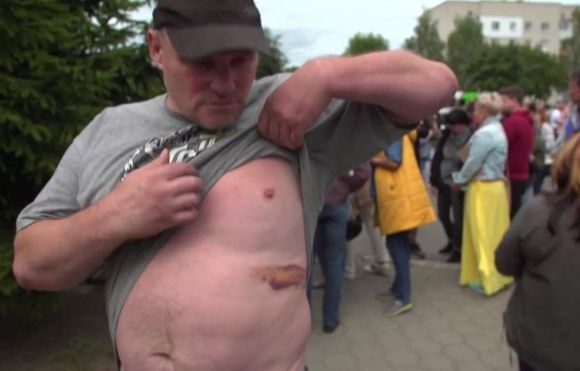
“They beat people ferociously, with impunity, and they arrest anyone. We were forced to stand in the yard all night. We could hear women being beaten. I don’t understand such cruelty,” one man said as he showed the BBC his bruising.

Released prisoners shared pictures on messaging app Nexta showing their bruised and swollen bodies, including injuries to backs and buttocks that they alleged were caused by police.

Amnesty International said detainees described being stripped naked, beaten and threatened with rape.

“Former detainees told us that detention centres have become torture chambers, where protesters are forced to lie in the dirt while police kick and beat them with truncheons,” said Marie Struthers, Amnesty International’s Director for Eastern Europe and Central Asia.

In audio shared by a BBC journalist, screams could be heard from inside the Okrestina detention centre in the capital Minsk.

Separately, a group of five UN human rights experts said the response of the security forces to peaceful protests had been harsh, with frequent use of excessive, unnecessary and indiscriminate force.

“Authorities only seem interested in quickly dispersing the protests and arresting as many people as possible,” they said in a joint statement.

What will the EU do?

EU foreign ministers are meeting on Friday to consider possible sanctions on Belarus because of the crackdown. The bloc has imposed sanctions before but eased the measures several years ago when President Lukashenko released other detainees.

Czech Prime Minister Andrej Babis said sanctions should be imposed “until free and transparent elections are held in Belarus with the participation of international observers”. He said he had the support of Poland’s Mateusz Morawiecki, who said he would put forward a “solidarity with Belarus” plan on Friday in the Polish parliament.

The EU has already dismissed the presidential vote as “neither free nor fair”, an assessment backed by US Secretary of State Mike Pompeo. Lithuania’s president has said Mr Lukashenko is no longer Belarus’s legitimate leader.

Earlier, Belarus Interior Minister Yuri Karayev said he took responsibility for people being injured during the protests, and that he wanted to apologise to those who got caught up in the violence.

BBC

Foreign

Women have formed human chains in Belarus to condemn a crackdown on protests over the disputed election.

Many dressed in white and carried flowers as they called for an end to police brutality.

Unrest erupted across the country after long-time leader Alexander Lukashenko was declared winner of Sunday’s presidential election, sparking allegations of vote rigging.

Thousands of people have been arrested and at least two have died.

In the latest official figures, the interior ministry said police had detained 700 people during protests on Wednesday, bringing the total number to 6,700.

Some detainees were released on Thursday. Tearful relatives have been gathering outside a jail north of the capital Minsk, hoping to be reunited with their loved ones or for information on their whereabouts.

As a fifth day of protests got under way, hundreds of women formed “solidarity chains” in Minsk. Participants told reporters they wanted a peaceful resolution, as they called for all detained protesters to be freed.

It was the second day in a row that women in Minsk had organised such action. Similar scenes were also reported elsewhere in the country.

Video footage shared on social media showed opposition figure Maria Kolesnikova joining the female protesters in Minsk, holding a bunch of flowers.

She was one of three women who pooled their resources to spearhead the opposition. The other two have left the country.

Veronika Tsepkalo fled Belarus on the day of the vote while the main opposition candidate in the election, Svetlana Tikhanovskaya, was briefly detained on Monday before fleeing to Lithuania.

An associate said Ms Tikhanovskaya was escorted from the country by the authorities as part of a deal to allow the release of her campaign manager, who was arrested on the eve of the election.

Ms Tikhanovskaya, 37, released a video saying she made the “very difficult decision” to leave because of her children.

The opposition candidate was a stay-at-home mother until she entered the race after her husband was arrested and blocked from registering for the vote.

She became Mr Lukashenko’s toughest opposition challenge in years, leading large rallies in the lead up to the vote.

But Mr Lukashenko dismissed her bid, saying a woman could not lead Belarus.

“Our constitution is not for women,” he said earlier this year. “Our society has not matured enough to vote for a woman. This is because by constitution the president handles a lot of power.”

Mr Lukashenko, 65, has ruled the former Soviet country since 1994. He has described opposition supporters as “sheep” controlled from abroad.

As protests continued on Thursday, some workers organised strikes.

Russian internet giant Yandex said armed individuals had entered its offices in Minsk and barred employees inside from leaving. The company said it was trying to get more information about the incident.

Election officials said Mr Lukashenko won 80% of the vote on Sunday, but protests erupted amid widespread allegations of vote rigging. The result was condemned by the European Union as “neither free nor fair”.

Hundreds of people have been injured in a police crackdown on protests, some seriously. A BBC crew was attacked by police on Tuesday evening.

Officials have confirmed the deaths of two people.

BBC