Foreign

Israel’s security cabinet has approved a plan to expand its military offensive against Hamas which includes the “capture” of Gaza and the holding of its territory, according to an Israeli official.

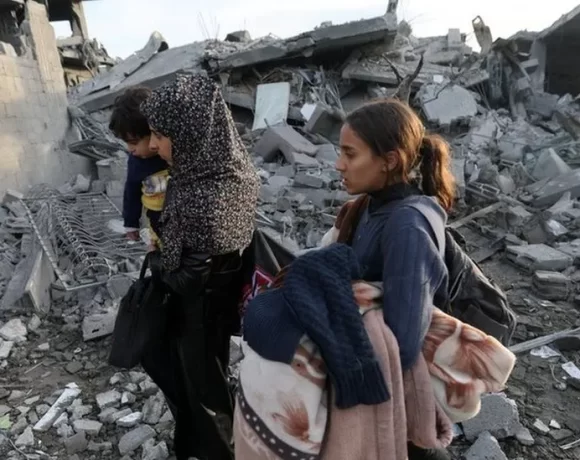
It is also said to include moving the 2.1 million Palestinians in Gaza towards the south, which could worsen the humanitarian crisis.

Prime Minister Benjamin Netanyahu called it a “good plan” because it would achieve the goals of defeating Hamas and returning its remaining hostages, the official said.

The cabinet also approved, in principle, a plan to deliver and distribute humanitarian aid through private companies, which would end a two-month blockade the UN says has caused severe food shortages.

The UN and other aid agencies have said the proposal would be a breach of basic humanitarian principles and that they will not co-operate.

Hamas said Israel’s proposal amounted to “political blackmail”.

Prime Minister Benjamin Netanyahu’s security cabinet met on Sunday evening to discuss the Gaza offensive, which resumed when Israel ended a two-month ceasefire on 18 March.

An Israeli official who briefed the media on Monday said that ministers voted unanimously to approve a plan proposed by the Israeli military’s Chief of Staff Lt Gen Eyal Zamir to “defeat Hamas in Gaza and return the hostages”.

“The plan will include, among other things, the capture of the Strip and holding the territories, moving the Gazan population south for its defence, denying Hamas the ability to distribute humanitarian supplies, and powerful attacks against Hamas,” the official said.

Israeli media reported that the plan would take months and that the first stage included the seizure of additional areas of Gaza and the expansion of the Israeli-designated “buffer zone” running along the territory’s borders. It would aim to give Israel additional leverage in negotiations with Hamas on a new ceasefire and hostage release deal.

Security cabinet member, Zeev Elkin told public broadcaster Kan that there was “still a window of opportunity” for a new hostage release before the end of President Trump’s 13-16 May trip to the Middle East “if Hamas understands we are serious”.

During a visit to a naval base on Sunday, Lt Gen Zamir told special forces that tens of thousands of reservists were being called up “in order to strengthen and expand our operations in Gaza”.

“We are increasing the pressure with the aim of bringing our people home and defeating Hamas. We will operate in additional areas and destroy all terrorist infrastructure – above and below ground,” he said.

However, critics say this is a failed strategy, as none of the 59 remaining hostages has been freed since the offensive resumed six weeks ago.

The Hostages and Missing Families Forum, which represents hostages’ relatives, said the plan was an admission by the government that it was “choosing territories over the hostages” and that this was “against the will of over 70% of the people” in Israel.

BBC / Titilayo Kupoliyi

Subscribe to our Telegram and YouTube Channels, and also join our WhatsApp Update Group.
Foreign

The office of Israeli Prime, Minister Benjamin Netanyahu has released a statement in Hebrew welcoming the return of the three hostages today.

It says the government is continuing to work with the US to secure the release of those still held in Gaza.

The statement also reiterates the claim that Hamas “tried to violate the agreement” this week, saying the group caused a “fake crisis with false claims”.

It says that it is thanks to Israel’s forces in and around the Gaza strip and US President, Donald Trump’s “clear and unequivocal statement” that hostage releases are continuing.

It ends by saying Israel is working with the US with the aim of getting all the hostages out of Gaza as quickly as possible.

BBC/ Titilayo Kupoliyi

Subscribe to our Telegram and YouTube Channels and also join our Whatsapp Update Group

Foreign

Benjamin Netanyahu sits with his hands on his knees in the oval office, wearing a blue tight and dark suit. Joe Biden sits to his left, wearing a navy suit with clasped hands.
The White House is pushing for a deal as Biden ends his term in office this week.
US President, Joe Biden and Israeli Prime Minister Benjamin Netanyahu have spoken by phone – Biden’s final week in office – as momentum builds towards a Gaza ceasefire and hostage release deal.

Israel and Hamas are understood to be making progress but uncertainty remains over key aspects of the potential agreement.

The White House said Biden discussed the “fundamentally changed regional circumstances” following Israel’s ceasefire with Hezbollah in Lebanon, the fall of the Assad regime in Syria, and the weakening of Iran’s power in the region.

Netanyahu’s office said he had updated Biden on instructions he had given to senior negotiators in Doha “in order to advance the release of the hostages”.
During Sunday’s call, which was the first to be publicly announced since October, Biden “stressed the immediate need for a ceasefire in Gaza and return of the hostages with a surge in humanitarian aid enabled by a stoppage in the fighting under the deal”.

It came a day after Netanyahu sent a top Israeli security delegation, including the directors of the Mossad spy agency and Shin Bet security service, to indirect negotiations in Qatar’s capital mediated by Qatari, US and Egyptian officials.

Israeli media reported that Netanyahu was meeting members of his cabinet opposed to a ceasefire deal to persuade them not to resign.

And UK Foreign Secretary, David Lammy met his Israeli counterpart in Jerusalem to discuss progress on a deal.

On Saturday, Donald Trump’s Middle East envoy Steve Witkoff met the Israeli prime minister amid efforts to try to reach a deal before the president-elect’s inauguration on 20 January.

Trump has previously said that “all hell would break loose” if the hostages were not released before he returned to the White House.

Last Thursday, US Secretary of State Antony Blinken said an agreement was “very close” and that he hoped to “get it over the line” before Trump took office. Any deal would be based on the proposals Biden set out in May, he added.

Despite the apparent heightened activity, a lack of clarity on several key issues – including whether an initial truce will lead to a permanent ceasefire and whether the Israeli military will agree to fully withdrawing from Gaza – remain.

Anshel Pfeffer, Israel correspondent for The Economist, said he was doubtful that a deal would be achieved quickly.

“We’ve been here so many times before,” he told the BBC’s Today Programme.

“There is a bit more room for optimism, but until there is an official announcement or a truce or ceasefire and we start seeing hostages coming out, I’m going to remain sceptical.”

But he added that it was in both Israel and Hamas’s interest to strike a deal before Trump entered office.

“There is a fear [from Hamas] that Trump will somehow give Israel permission to unleash devastation that hasn’t yet been unleashed on Gaza.”

“Both sides feel so invested, they’ve suffered so much.”

The war was triggered by Hamas’s attack on southern Israel on 7 October 2023, in which about 1,200 people were killed and 251 others taken back to Gaza as hostages. Israel launched a military offensive in Gaza to destroy Hamas in response.

Gaza’s Hamas-run health ministry says more than 46,500 people have been killed during the war.

Israel says 94 of the hostages remain in Gaza, of whom 34 are presumed dead, as well as another four Israelis who were abducted before the war, two of whom are dead.

BBC/ Titilayo Kupoliyi

Subscribe to our Telegram and YouTube Channels and also join our Whatsapp Update Group

Foreign

US President, Joe Biden has said civilians who are “packed” into Rafah in the Gaza Strip are “exposed and vulnerable” and must be protected.

Israel must make “credible” efforts to protect the more than one million Palestinians sheltering in the southern Gazan city, he said.

Rafah has come under heavy Israeli air strikes in recent days, with a number of casualties reported.

A Palestinian doctor told the BBC people in Rafah were living in fear.

Last week, Israel’s Prime Minister, Benjamin Netanyahu announced that he had ordered troops to prepare to expand its ground operation to Rafah. He vowed to defeat Hamas gunmen hiding in the city.

UN human rights chief Volker Türk said any assault would be “terrifying” and many civilians “will likely be killed”.

More than half of the Gaza Strip’s population of 2.3 million is now crammed into the city on the border with Egypt, which was home to only 250,000 people before the war between Israel and Hamas erupted in October.

Many of the displaced people are living in makeshift shelters or tents in squalid conditions, with scarce access to safe drinking water or food.

On Sunday, Israel’s military said two male Israeli-Argentine hostages had been rescued during a raid in Rafah.

President Biden again appealed for the protection of Rafah civilians after his meeting with Jordan’s King Abdullah in Washington on Monday.

He said any major military operation in the city “should not proceed without a credible plan for ensuring the safety” of those living there.

“Many people there have been displaced, displaced multiple times, fleeing the violence to the north and now they’re packed into Rafah, exposed and vulnerable.

“They need to be protected. And we’ve also been clear from the start, we oppose any forced displacement of Palestinians from Gaza.”

Last week, the White House said it would not support major Israeli operations in Rafah without due consideration for the refugees there.

Many people have fled Israel’s ground operation in the rest of the Gaza Strip, a Palestinian enclave run by Hamas.

BBC / Titilayo Kupoliyi

Subscribe to our Telegram and YouTube Channels and also join our Whatsapp Update Group

Foreign

The Israeli army says 24 of its soldiers were killed in Gaza on Monday, the deadliest day for its forces since their ground operation began.

That includes 21 reservists who died in an explosion likely caused by mines that Israeli forces had placed in two buildings to demolish them, the Israeli Defense Forces (IDF) said.

It is thought a missile fired by Palestinian armed fighters hit a tank near the buildings.

The IDF is investigating what happened.

Its Chief Spokesman, Rear Admiral Daniel Hagari, said the reservists were killed in central Gaza at around 16:00 (14:00 GMT) on Monday close to the kibbutz of Kissufim on the Israeli side of the border.

He said they were involved in an operation to allow for residents of southern Israel to safely return to their homes after tens of thousands were evacuated after the Hamas attack on 7 October.

On Monday, Israel’s military had already confirmed that three officers were killed in a separate attack in southern Gaza.

Israeli Prime Minister, Benjamin Netanyahu described the deaths on Monday as “one of the most difficult days since the war erupted”.

“In the name of our heroes, for the sake of our lives, we will not stop fighting until absolute victory,” he wrote on X, formerly Twitter.

Israeli President, Isaac Herzog said it had been an “unbearably difficult morning” learning about the extent of the death toll.

“On behalf of the entire nation, I console the families and pray for the healing of the wounded,” he said.

Israel launched the war with the declared aim of destroying Hamas after waves of its gunmen killed 1,300 people mostly civilians and took about 250 others hostage in the unprecedented attack.

According to the IDF website, 217 soldiers have been killed since the beginning of Israel’s ground invasion on 27 October out of a total of 545 killed since 7th October.

At least 25,295 people mainly woman and children have been killed in the Israeli military campaign in Gaza since then, according to the Hamas-run health ministry.

BBC / Titilayo Kupoliyi

Subscribe to our Telegram and YouTube Channels and also join our Whatsapp Update Group

Foreign

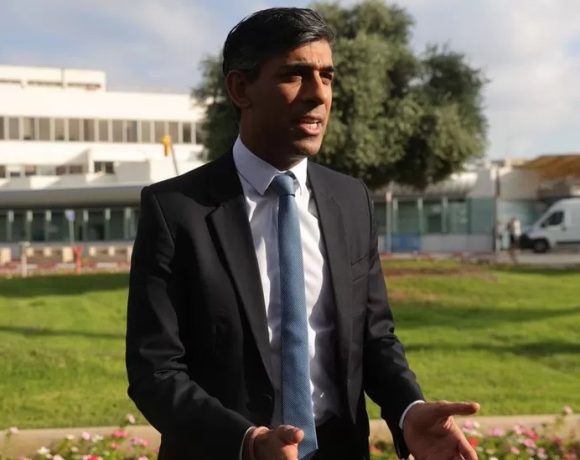
Rishi Sunak has pledged to stand with Israel, as he arrived in the country ahead of meetings with Israeli leaders.

Upon landing in Tel Aviv, the UK prime minister said Israelis had suffered a “horrific act of terrorism” at the hands of Hamas earlier this month.

Mr Sunak will meet Israeli PM Benjamin Netanyahu and President Isaac Herzog later as part of a two-day visit to the region.

He will also use the trip to press for humanitarian aid in Gaza.

The visit comes right after US President Biden’s, as world leaders step up efforts to prevent the conflict with Hamas spilling into the wider region.

Speaking upon arrival, Mr Sunak told reporters he hoped for “productive” meeting with Israel’s leaders.

“Above all, I’m here to express my solidarity with the Israeli people,” he added.

“You have suffered an unspeakable, horrific act of terrorism and I want you to know that the United Kingdom and I stand with you”.

BBC / Titilayo Kupoliyi

Subscribe to our Telegram and YouTubeChannels also join our Whatsapp Update Group

Foreign

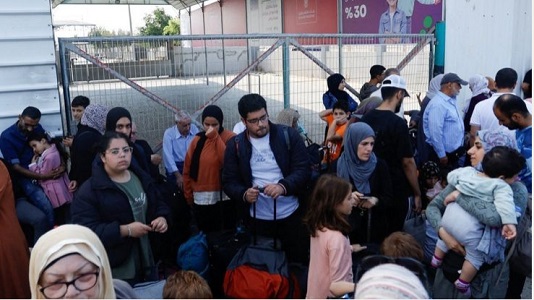
Israel appears to deny reports of a truce in southern Gaza, half an hour after security sources in Egypt told Reuters a ceasefire had been agreed to coincide with the reopening of the Rafah crossing.

A statement from Prime Minister, Benjamin Netanyahu’s office says: “There is currently no truce and humanitarian aid in Gaza in exchange for getting foreigners out.”

However, Israel’s military has announced a plan to evacuate communities in northern Israel near the border with Lebanon.

Residents of 28 communities that lie within 2 kilometres (1.24 miles) of the border will be moved “state-funded guesthouses”, the Israel Defense Forces said.

One Israeli civilian was killed in a Hezbollah missile attack on one of the villages near the border on Sunday, according to the Israeli military.

Israel has carried out overnight strikes on Lebanon, targeting military infrastructure belonging to Lebanese militant group Hezbollah. No casualties have been reported.

BBC / Titilayo Kupoliyi

Subscribe to our Telegram and YouTube Channels also join our Whatsapp Update Group

Foreign

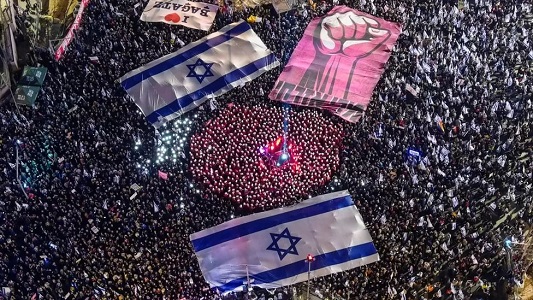
Hundreds of thousands of Israelis have taken part in what some are calling the biggest protest in the country’s history.

Protests against government plans for a radical overhaul of the judicial system have been running for 10 weeks.

Record numbers of demonstrators turned out in cities such as Haifa, while about 200,000 are believed to have taken to the streets in Tel Aviv.

Critics say the reforms will undermine democracy.

But Benjamin Netanyahu’s government says planned changes are better for the electorate.

Organisers said as many as 500,000 pro-democracy protesters took to the streets nationwide on Saturday, in what the Israeli Haaretz newspaper called “the largest demonstration in the country’s history”.

Opposition leader Yair Lapid told crowds in the southern city of Be’er Sheva that the country was facing “the greatest crisis in its history”.

“A wave of terrorism is hitting us, our economy is crashing, money is escaping the country. Iran just signed yesterday a new agreement with Saudi Arabia. But the only thing this government cares about is crushing Israeli democracy,” he said.

Tamir Guytsabry, a protester in Tel Aviv, told Reuters: “It’s not a judicial reform. It’s a revolution that [is] making Israel go to full dictatorship and I want Israel to stay a democracy for my kids.”

The protests against the judicial reforms have brought hundreds of thousands of people on to the streets.

The reforms aim to give the elected government decisive influence over the choice of judges and limit the ability of the Supreme Court to rule against the executive or strike down legislation.

The issue has caused deep divides in Israeli society and, significantly, has seen reservists – the backbone of Israel’s military – threatening to refuse to serve as a way of showing their opposition.

On Monday, in an unprecedented move, dozens of reserve fighter pilots in an elite Israeli Air Force squadron said they would not report for training. They later reversed course and agreed to attend and hold talks with their commanders.

On Thursday, protesters blocked roads and attempted to stop Mr Netanyahu from flying out of the country. He later took off for Rome.

The government has stood firm in the face of the uproar, claiming the protests are being fuelled by political opponents.

Critics say the planned reforms, which are already making their way through parliament, will politicise the judiciary and could lead to an authoritarian government.

Mr Netanyahu says the reforms are designed to stop the courts from overreaching their powers and that they were voted for by the Israeli public at the last election.

BBC/Simeon Ugbodovon

Subscribe to our Telegram and YouTubeChannels also join our Whatsapp Update Group