Foreign

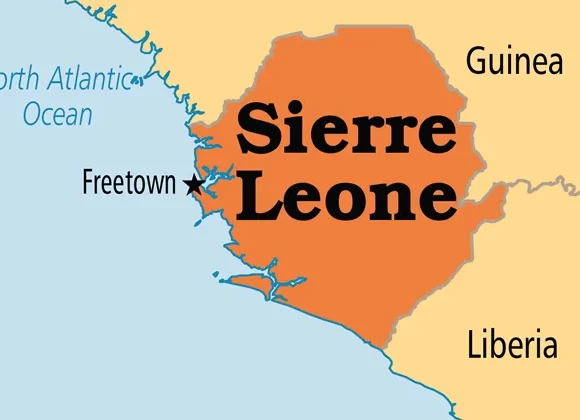
Sierra Leone’s former President, Ernest Bai Koroma, has been charged with four counts of treason in connection to an attempted coup.

He was in court in the capital, Freetown, as the charges were read to him. He has previously denied involvement.

Last November, gunmen broke into a military armoury and several prisons, freeing almost 2,000 inmates.

Twelve others were on Tuesday charged over the attempted coup, including one of Mr Koroma’s former bodyguards.

BBC/Simeon Ugbodovon

Subscribe to our Telegram and YouTube Channels and also join our Whatsapp Update Group 

Foreign

Twelve people have been charged in Sierra Leone for their alleged role in November’s failed coup attempt.

They include former police and correctional officers as well as the former bodyguard of ex-President Ernest Bai Koroma.

Mr Koroma is also a suspect in the coup attempt and has been under house arrest since he was questioned by police last month.

The suspects are facing several charges, including treason, concealing treason and “harbouring, aiding and abetting the enemy”, Information Minister Chernor Bah said in a statement

.

Other suspects “are expected to be charged in the coming days”, he added.

On 26 November, gunmen broke into a military armoury and several prisons in the capital city of Freetown, freeing almost 2,000 inmates.

At least 19 people, including 13 soldiers, died in the violence, which was labelled as a failed coup attempt by the army.

In December, the government announced that it had held 80 suspects in the coup attempt, including civilians and active and former police and military officers.

Mr Koroma’s daughter, Dankay Koroma, was also named among 54 other wanted suspects.

BBC/Simeon Ugbodovon

Subscribe to our Telegram and YouTube Channels and also join our Whatsapp Update Group 

Politics

Niger Republic coup leader, General Abdourahmane Tchiani has agreed to dialogue with the Economic Community of West African States (ECOWAS) after his meeting with Nigerian Islamic Scholars led by the national leader of Jama’atu Izalatil Bid’ah Wa Iqamatus Sunnah (JIBWIS), Sheikh Abdullahi Bala Lau in Niger Republic.

According to Niger Republic’s Prime Minister, Ali Mahamane Lamine Zeine, General Tchiani gave the green light for talks with ECOWAS and was optimistic the talks with ECOWAS would take place in the next few days.

‘’We have agreed and the leader of our country has given the green light for dialogue. They will now go back and inform the Nigerian President what they have heard from us…. we hope in the coming days, they (ECOWAS) will come here to meet us to discuss how the sanctions imposed against us will be lifted,’’ he said.

Meanwhile, a report published in Voice of Nigeria (VON) stated how the Nigeria’s Intervention Team, which included notable Islamic scholars from the country, met with the coup leaders in Niger over the weekend, and all parties decided to strengthen the option of dialogue in resolving the country’s political problem.

The Islamic Ulammas led by Sheik Bala Lau was said to have met with General Abdourahmane Tchiani for several hours in Niger’s capital Niamey during which they deliberated on all the issues including the demand by ECOWAS leaders that former President Bazoum be reinstated.

Bala Lau, who is the National Chairman of Jamatul Izalatu Bida Waikamatu Sunnah, said the clerics were in Niger on behalf of President Bola Tinubu who accepted their request to intervene.

Sheik Lau said the team had earlier told President Tinubu who is also the Chairman of Authority of ECOWAS Heads of State and Government that their position is that the political impasse in Niger is resolved through dialogue.

He, therefore, told General Tchiani that the visit to Niger was to engage in constructive dialogue to encourage him and other military leaders behind the coup to toe the path of peace instead of war to resolve the crisis. Responding, General Tchiani who accorded the team warm reception welcomed their intervention. He said their doors were open to explore diplomacy and peace in resolving the matter.

General Tchiani, however, said it was painful to the coup leaders that the ECOWAS leaders did not hear their side of the matter before issuing ultimatum to them to quit office.

He claimed the coup was well intended, stating that they struck to starve off an imminent threat that would have affected not only Niger Republic but also Nigeria.

He also apologised for not according the team sent by President Tinubu led by former Head of State, General Abdulsalami Abubakar (rtd) the required attention because they were angry about the ECOWAS ultimatum.

Vanguard/Simeon Ugbodovon

Subscribe to our Telegram and YouTube Channels also join our Whatsapp Update Group

Security

Northern Senators Forum has cautioned against the use of military power toward tackling the military coup in Niger Republic, calling for diplomatic options to address the situation.

Senator Suleiman Kawu(NNPP-Kano), the spokesperson for the forum, said this when he briefed newsmen in Abuja on Friday.

“The forum under the leadership of Sen. Abdul Ningi (PDP-Bauchi), has noted with concern and condemn in entirety the unfortunate development in Niger Republic, where the military forcefully upstaged a democratically elected government of President Mohamed Bazoum.

“The Northern Senators also take cognisance of the efforts of the ECOWAS leaders under the chairmanship of our dear President, Bola Tinubu, in resolving the situation in Niger Republic.

“The emphasis however, is that we should be focused on political and diplomatic means to restore democratic government in Niger Republic,” he said.

Kawu added: “We also take exception to use of the of military force until other avenues as mentioned above are exhausted as the consequences will be casualties among the innocent citizens who go about their daily business.

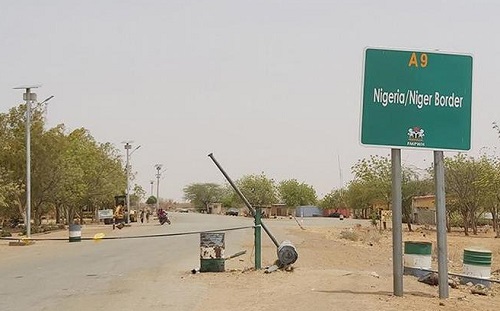
“Besides, about seven northern states who share border with Niger Republic namely Sokoto, Kebbi, Katsina, Zamfara, Jigawa, Yobe and Borno will be negatively affected.

“We are also aware of the situation of Mali, Burkina Faso and Libya, which may affect the seven northern states, if military force is used.”

Meanwhile, the ECOWAS Chief of Defence Staff on Friday resolved to place dialogue at the forefront of the regional body’s approach to resolving the crisis in Niger Republic.

This is as the committee said it acknowledged the need for a comprehensive approach that encompasses political, security, and diplomatic dimensions.

The Chairman of the region’s Defence Chiefs, General Musa Christopher stated this while reading the communiqué from the meeting to select journalists in Abuja.

 Defence Chiefs from Nigeria, Benin, Ghana,Togo, Sierra Leone, Liberia, The Gambia, Côte D’Ivoire,Cape Verde, Senegal, and Guinea Bissau had arrived in the country for a meeting on the military junta in Niger.

Musa noted that the committee recognised the gravity of the situation and the urgent need for a well-coordinated response.

He added that the committee acknowledged the need for a comprehensive approach that encompasses political, security, and diplomatic dimensions and that it was imperative that it translated deliberations into concrete actions that can effectively address the crisis and prevent a recurrence in the future.

Punch/Simeon Ugbodovon

Subscribe to our Telegram and YouTube Channels also join our Whatsapp Update Group
Foreign

West African leaders have threatened military action against Niger’s military junta after it took power in a coup last week

The leaders gave the junta seven days to reinstate President Mohamed Bazoum, who is being held captive.

Earlier, the junta warned it would resist any “plan of aggression against Niger” by regional or Western powers.

Meanwhile hundreds of coup supporters protested outside the French embassy in the capital Niamey.

Leaders from Ecowas, the bloc of West African nations, held crisis talks in Nigeria on Sunday to discuss the latest coup – which follows army takeovers in neighbouring Mali and Burkina Faso.

A statement read out after the summit said that Ecowas had “zero tolerance” for coups.

The regional bloc would “take all measures necessary to restore constitutional order” if its demands were not met within a week.

“Such measures may include the use of force”, and military chiefs are to meet “immediately” to plan for an intervention, the statement added.

The West African leaders also announced the immediate enforcement of a no-fly zone over Niger for all commercial flights, the closure of all land borders with the country, and the imposition of financial sanctions against the junta.

Ahead of their meeting, Gen Abdourahmane Tchiani – the head of the presidential guards unit who has declared himself Niger’s new leader – warned Ecowas and unnamed Western nations against stepping in.

“We once again reiterate to Ecowas or any other adventurer our firm determination to defend our fatherland,” the statement, which was read out on TV, said.

The coup has prompted concern that Niger, a former French colony, could pivot towards Russia.

The ousted president had worked closely with both regional and Western nations to fight militant Islamists in Niger.

Meanwhile Burkina Faso and Mali both moved closer to Russia after their own coups.

In Niamey, some of the protesters outside the French embassy chanted “Long live Russia”, “Long live Putin” and “Down with France”, AFP news agency reports.

France would not tolerate any attack on its interests in Niger, and would respond in an “immediate and intractable manner”, President Emmanuel Macron’s office said in a statement.

Niger’s coup has been condemned by Western nations, but welcomed by the leader of Russia’s Wagner mercenary group Yevgeny Prigozhin, who has reportedly described it as a triumph.

“What happened in Niger is nothing other than the struggle of the people of Niger with their colonisers,” he was quoted as saying on a Wagner-affiliated Telegram channel, although his comments have not been independently verified.

In Mali, the junta has brought in Wagner to help it fight militant Islamists.

France, the former colonial power, announced the withdrawal of its troops last year amid growing hostility from the junta.

It subsequently moved its regional military headquarters to Niger.

In June, Mali’s junta said the UN’s 12,000 peacekeepers also had to leave following a decade of countering Islamist militants.

The UN agreed, saying the withdrawal would be completed by the end of the year.

On Saturday, France said it had suspended all development aid and budgetary support to Niger. The European Union and the US have made a similar decision.

BBC/Simeon Ugbodovon

Subscribe to our Telegram and YouTube Channels also join our Whatsapp Update Group

Foreign

The European Union, in a statement on Saturday, said it would not recognise Niger’s putschists who seized power last week and that it was suspending security cooperation with the jihadist-hit country.

The presidential guard had detained democratically elected President Mohamed Bazoum and confined him to his official residence in the capital, Niamey, on Wednesday, in the latest coup to strike Africa’s Sahel region.

“The European Union does not recognise and will not recognise the authorities from the putsch in Niger,” the bloc’s chief diplomat, Josep Borrell, said in a statement.

“All cooperation in the security field is suspended indefinitely with immediate effect,” in addition to the end to budgetary aid, he added.

Bazoum “remains the only legitimate president of Niger,” the statement said, calling for his immediate release and holding the coup leaders to account for the safety of him and his family.

Borrell said the EU was ready to support future decisions taken by West Africa’s regional bloc, “including the adoption of sanctions”.

Meanwhile, a human rights organisation under the aegis of Citizens Action for Good Governance, on Saturday, called on leaders of the Economic Community of West African States and the international community to impose targeted sanctions on the leaders of the recent military coup in Niger Republic.

While condemning the coup d’etat carried out by the military in the Republic of Niger, the organisation described it as an attempt to subvert democracy and the rule of law.

The National Coordinator of CAGG, Mallam Nazir Galadanchi, at a press conference in Abuja, applauded the steps taken so far by the Chairman of the ECOWAS Authority of Heads of State and Government, President Bola Tinubu.

He said, “This coup d’etat is an affront to the existing democracy in the country because President Mohammed Bazoum who has been held by troops from the presidential guard since early on Wednesday was duly elected and recognised by the international community, and whoever that topples his government forcefully is an enemy of the people and democracy.

“We at CAGG stand with the people of Niger Republic and demand that President Mohamed Bazoum be released immediately along with his family and calls for the immediate restoration of democracy in Niger Republic.

“Furthermore, CAGG calls on the international community to impose targeted sanctions on individuals and entities involved in the coup to demonstrate the collective commitment to protect democracy and deter any future attempts to undermine it.”

Meanwhile, the Foundation for Peace Professionals also known as PeacePro also condemned the latest coup in the Niger Republic.

The group, in a statement by its Executive Director, Mr Abdulrazaq Hamzat, said the coup and the initial public excitement it generated in the country might be a temporary feeling.

Hamzat maintained that while a military coup is condemnable, the constituted civil authorities in the continent must demonstrate the capacity to protect the human and territorial integrity of the continent.

The group also urged the African Union and ECOWAS to make it a mission to end the presence of foreign military forces in the continent within the next 24 months.

The military in Niger sacked the civilian government of President Mohammed Bazoum who was elected in 2021 in the first civilian handover of power.

Punch/Simeon Ugbodovon

Subscribe to our Telegram and YouTube Channels also join our Whatsapp Update Group
 

Foreign

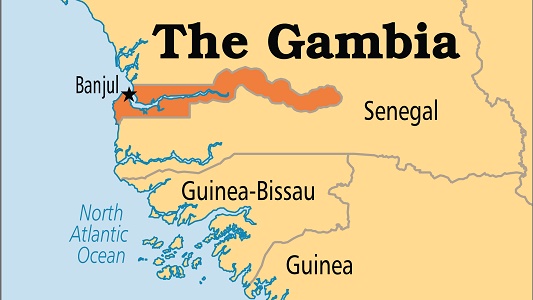
A navy officer has been named by The Gambia’s government as the alleged ringleader of a failed coup plot.

Lance Corporal Sanna Fadera had been detained, along with four other officers, in an operation underway since Tuesday, a statement said.

The main opposition party and the West African regional bloc condemned the attempted coup.

A retired military officer said he doubted the plot was serious, as all the officers were junior.

The government statement said that loyalist troops were still searching for two alleged accomplices, following the arrest of officers from the navy, military police, state guards and first infantry battalions.

The Gambia is a largely stable country in West Africa which is popular with holidaymakers because of its beaches and wildlife.

Life has continued as normal in the capital, Banjul, since the government said on Wednesday that it had foiled a coup plot the previous day.

The Economic Community of West African States (Ecowas) condemned the attempted coup, saying the regional body “stands firmly” by President Adama Barrow’s government.

Meanwhile, the campaign manager of the main opposition party, Momodou Sabally, has been detained by police over a widely circulated TikTok video which suggests that Mr Barrow would be unseated before next year’s local government elections.

The police statement did not link Mr Sabally, who was a presidential affairs minister in former leader Yahya Jammeh’s regime, to the alleged coup plot.

Mr Sabally’s United Democratic Party (UDP) said it condemned, “without any reservations”, the attempted coup.

It also demanded Mr Sabally’s immediate release, saying the “short edited” video did not accurately reflect his views.

“There is no indication that Mr Sabally in any way stated or suggested that there will be a change of government through any unlawful or illegal means,” it added in a statement.

Mr Barrow defeated Mr Jammeh, whose 22-year rule was marked by state repression and brutality, in December 2016, and won a second term last year.

Shocked by the turn of events, Mr Jammeh was forced into exile in Equatorial Guinea, though he remains an influential figure in The Gambia, one of Africa’s smallest countries.

Many senior officers left the army after Mr Barrow took office.

He has been distrustful of the military, with troops from neighbouring Senegal in charge of his personal security, while the main international airport and sea port are guarded by troops from Nigeria and Ghana respectively.

This has made him unpopular with many Gambians, who feel that he has undermined the country’s sovereignty by relying on foreign forces.

Mr Barrow also drew criticism after he broke away from the UDP, which propelled him to power in 2016, and formed the National People’s Party (NPP) to contest last year’s election.

His popularity plummeted further when he announced that he had formed an alliance with Mr Jammeh’s old party, in what was seen as an attempt to boost his chances of securing a second term.

On the other hand, some of Mr Jammeh’s allies, like Mr Sabally, crossed over to the UDP.

BBC/Simeon Ugbodovon

Subscribe to our Telegram and YouTubeChannels also join our Whatsapp Update Group 
Foreign

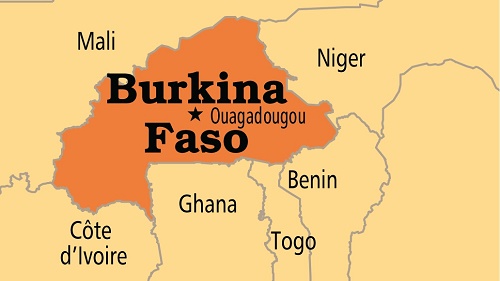
A coup attempt appears to be underway in Burkina Faso.

Gunshots have been heard near the presidential palace and access to major buildings, including the national assembly, the national broadcaster and the residence of the prime minister have been blocked by military vehicles.

It was only in January that the current head of state, Lt Col Paul-Henri Damiba, ousted President Roch Kaboré through a coup.

The democratically elected president was deposed for failing to contain violence by Islamist militants. Now Lt Col Damiba seems to be suffering a similar fate.

On Thursday hundreds of protesters took to the streets of the western city of Bobo Dioulasso to demand his resignation, blaming him for the ongoing insecurity in the country.

Eyewitnesses are reporting a heavy military presence around the city.

Schools are closed and residents are staying indoors, waiting for updates on the latest news.

Since 2015, authorities in Burkina Faso has been struggling to contain attacks by insurgent groups.

On Monday, 11 soldiers were killed in a militant attack in the northern Soum province, 50 civilians were reported missing.

BBC/Simeon Ugbodovon

Subscribe to our Telegram Channel and join our Whatsapp Update Group
Foreign

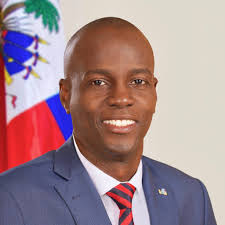
Haitian authorities have detained twenty-three people, including a Supreme Court judge, for their role in an alleged plot to overthrow President Jovenel Moise.

Announcing the arrests on Sunday, Prime Minister Joseph Jouthe told a news conference that a senior police official was also among those taken into custody, alongside money, guns and ammunition.

“These people had contacted national palace security officials, high-ranking officers of the national palace whose mission was to arrest the president… and also to facilitate the installation of a new president,” Mr. Jouthe said.

President Moise, speaking later at the Port-Au-Prince airport on his way to launch the annual carnival in the coastal town of Jacmel, said the plotters’ aim was to make an “attempt on my life”.

Sunday’s arrests come after leading opposition figures announced a plan to replace Mr. Moise with a new head of state, accusing the president of being authoritarian and presiding over economic chaos.

Anti-government demonstrators in the national capital, Port-Au-Prince, had earlier clashed with police, who responded with tear gas. There were also street protests against Mr. Moise in some other towns.

According to the opposition plan, members of civil society and opposition leaders were to pick a new president from one of the sitting Supreme Court judges, instead of waiting for general elections scheduled for September.

Mr. Moise, who has ruled the small Caribbean island-nation by decree since mid-January, has said he would hand over power to the winner of the elections, but would not step down until his term expires on February 2, 2022.

He has also put in place plans to hold a referendum on amending Haiti’s constitution in April, with the opposition voicing concerns the vote will neither be free nor fair and could give Mr. Moise too much power.

Haiti, a former colony of France, has remained a trouble-spot since gaining independence in the mid-19th-century.  The latest coup plot there has only but exacerbated its lingering political tensions, in addition to its status as the poorest country in the Western hemisphere.

FRCN, ABUJA

Foreign

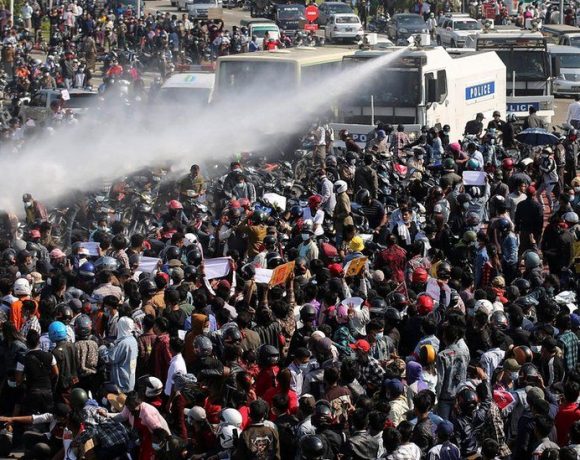
Police in Myanmar’s capital, Nay Pyi Taw have used water cannon on workers conducting a nationwide strike against a military coup.

Thousands are taking part in a third day of street protests, calling for the release of elected leader, Aung San Suu Kyi and for democracy to be restored.

State TV has warned protesters that action will be taken if they threaten public safety or the “rule of law”.

It comes a day after Myanmar saw its largest protest in more than a decade.

Last week the military seized power after claiming without evidence that an earlier election was fraudulent.

They also declared a year-long state of emergency in Myanmar, also known as Burma, and power has been handed over to commander-in-chief Min Aung Hlaing.

Ms Suu Kyi and senior leaders of her National League for Democracy Party (NLD), including President Win Myint, have been put under house arrest.

BBC NEWS

Foreign

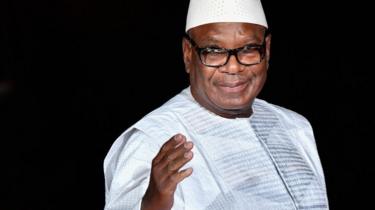
West African leaders have called for the ousted President of Mali, Ibrahim Boubacar Keïta, to be reinstated.

The Economic Community of West African States (Ecowas) said it would send envoys to ensure the return of constitutional order.

This comes after the UN’s Security Council called for the immediate release of all government officials.

The leaders of Tuesday’s coup say elections will be held in what they describe as a reasonable time.

They have also promised to respect international agreements on fighting jihadists.

There is an increased military presence outside government ministries in the capital, Bamako, but shops and businesses have been open.

Mali, a vast country stretching into the Sahara Desert, is among the poorest in the world and has experienced several military takeovers. It is currently battling to contain a wave of jihadist attacks and ethnic violence.

Mr Keïta won a second term in elections in 2018, but since June has faced huge street protests over corruption, mismanagement of the economy and disputed legislative elections.

There has also been anger among troops about pay and the conflict with jihadists.

“We have decided to immediately send a high-level delegation in order to ensure the immediate return of constitutional order,” the 15-member Ecowas said at the end of a video summit.

“We call for the restoration of President Ibrahim Boubacar Keïta as president,” it said in a closing statement read by the President of Niger, Mahamadou Issoufou.

“Mali is in a critical situation, with serious risks that a collapse of the state and institutions leads to reversals in the fight against terrorism and organised crime, with every consequence for all our community.”

Nigerian President Muhammadu Buhari said in a statement that Mali had “descended into political chaos” with “potential tragic consequences to Mali and the sub-region”.

Culled from BBC

Foreign

Mali’s President Ibrahim Boubacar Keïta has been arrested by mutinying soldiers, a government spokesman has confirmed to the BBC.

Prime Minister Boubou Cissé has also been arrested, despite earlier appeals for “brotherly dialogue”.

The apparent coup attempt in the West African nation began with gunfire at a key military camp near the capital, Bamako, on Tuesday morning.

In the city young men set a government-owned building on fire.

The arrest of President Keïta and his prime minister has sparked widespread international condemnation.

It came hours after disgruntled junior officers detained commanders and took control of the Kati camp, about 15km (nine miles) from Bamako.

The unrest coincides with calls for more protests to demand that the president resign.

What do we know about the mutiny?

It is led by Col Malick Diaw – deputy head of the Kati camp – and another commander, Gen Sadio Camara, BBC Afrique’s Abdoul Ba in Bamako reports.

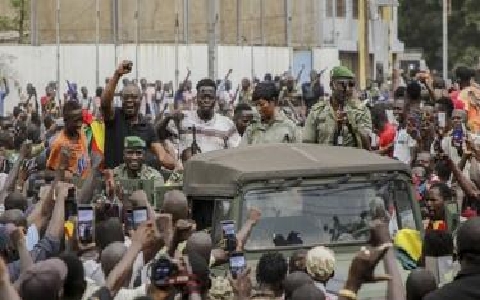
After taking over the camp, the mutineers marched on the capital, where they were cheered by crowds who had gathered to demand President Keïtas’s resignation.

In the afternoon they stormed his residence and arrested the president and his prime minister – who were both there.

The number soldiers taking part in the mutiny is unclear – as are their demands. Some reports say it was fuelled by a pay dispute.

Kati camp was also the focus of a mutiny in 2012 by soldiers angry at the inability of the senior commanders to stop jihadists and Tuareg rebels taking control of northern Mali.

Footage from AFP news agency showed a building owned by the justice ministry in Bamako ablaze on Tuesday.

BBC News