News

Whooping cough is on the rise across Europe, and the Czech Republic is no exception. However, a week marked by confusion surrounding official guidance and a controversial public appearance by Prague’s mayor has left some wondering if anything was learned from Covid-19.

In the first week of January, say the Czech authorities, there were 28 registered cases of whooping cough.

That figure now stands at 3,084 – a number not seen since 1963.

Sufferers include the 80-year-old mayor of Prague, Bohuslav Svoboda, who is an MP as well as an eminent gynaecologist.

Coughing and spluttering his way through a parliamentary health committee meeting, a clearly irritated Dr Svoboda questioned why he had to be there in the first place.

He said he was recovering from whooping cough, but was on day six of an antibiotic course “so I’m no longer infectious… or at least that’s what they taught me at school”.

Most colleagues in the room chortled. One, however, said he could at least have worn a face mask.

For the Prague branch of the Green Party it was no laughing matter. Public health regulations dictate that those with whooping cough must stay at home until the end of their antibiotic treatment.

The party has filed criminal charges against the mayor for “spreading a contagious disease”.

As cases continued to rise, the Prague public health authority took matters into its own hands. It sent out a letter to the capital’s schools, saying in the event of a confirmed case of whooping cough in a class, any unvaccinated children must be sent home.

This was immediately shot down by the head of the national public health authority, who admonished her Prague colleagues at a press conference. Schools had no authority to send home unvaccinated children as a precaution, she said.

Instead, all cases should be judged individually, based on how long the infected child had spent in the classroom, and so on.

Epidemiologists, including one who led the government’s measures against Covid, shook their heads in disbelief. Recently amended health ministry guidelines called for exactly the approach recommended by the Prague authority, they said.

But the confusion over the official guidance obscured a curious conundrum; what unvaccinated children?

Vaccination for whooping cough, known in Czech as “black cough”, is mandatory in the country.

It is meant to be administered, alongside inoculation for diphtheria, tetanus, polio and others, from the very first weeks of life.

Yet according to official figures, immunization for whooping cough is estimated at 97% of the infant population, suggesting there are thousands of unvaccinated babies in the Czech Republic.

Health Minister Vlastimil Válek told Czech Television the current rise in cases is down to a combination of two things: a resurgence in respiratory diseases as society abandons strict Covid measures; and incomplete immunization in children.

The whooping cough vaccine is applied in five stages, the first three in the first 12 months of life. Almost all children receive these initial doses.

However, only 90% end up receiving the final two, administered around the ages of six and ten.

This, said Mr Válek, would explain why the greatest rise is among Czech teenagers.

Parents have been urged to check their children’s vaccination history. Adults are encouraged to go for booster shots.

In years gone by, dozens if not hundreds of babies and young children died in what was then Czechoslovakia from whooping cough each year, until the introduction of mandatory vaccination in 1958.

Experts say the modern population is still well protected by mass, state-administered compulsory vaccination.

The resurgence in cases, however, still carries dangers.

Those infected teenagers may suffer nothing more serious than a persistent cough. But they can still pass on what can be a fatal disease to their younger siblings – whose immunity is still forming – or indeed their grandparents, whose immunity may have faded.

BBC/Adebukola Aluko
News

Czech police are working to uncover the motive behind the country’s worst-ever mass shooting, which saw a student open fire at a university in central Prague, killing 14 and wounding 25 others.

Czech President Petr Pavel has appealed for unity and said the killings should not be used to launch political attacks or spread misinformation.

The victims, who have not yet been named, include the gunman’s father.

Saturday has been declared a national day of mourning.

Mr Pavel expressed his “great sadness” and “helpless anger at the totally unnecessary” loss of life.

The shooting began at around 15:00 local time (14:00 GMT) on Thursday at the Faculty of Arts building of Charles University off Jan Palach Square in the centre of the Czech capital.

The gunman opened fire in the corridors and classrooms of the building, apparently killing at random, while staff and students used furniture to barricade themselves into rooms.

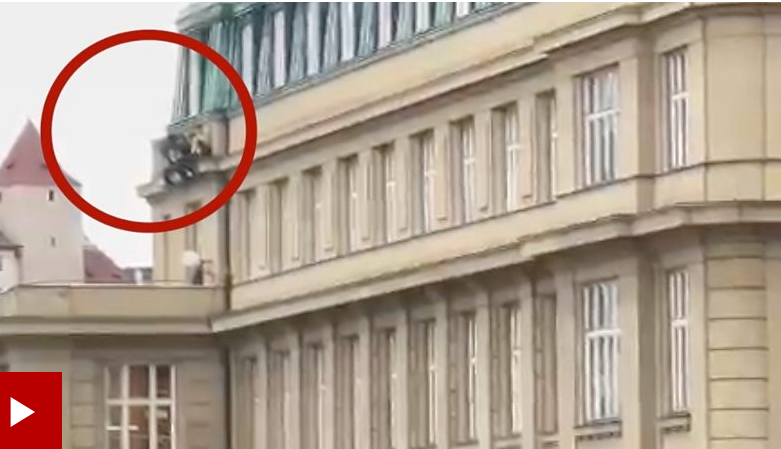
Dramatic footage shared on social media shows people dangling from the outside ledge of the university building before jumping to another part of the roof several metres below. Gunshots can also be heard.

In a separate video, terrified crowds are seen fleeing the city’s historic Charles bridge, a major tourist attraction.

Inside the building, student Jakob Weizman used chairs and desks to barricade the door to the classroom he was in with a teacher when the shooting started.

Soon after blocking it, Mr Weizman said he heard someone trying to open the door. “He was going through each classroom to see if people were there to shoot them,” he told the Guardian newspaper.

Eventually Mr Weziman and the teacher were evacuated by police. “As we were walking out, there was just blood all over the faculty,” he said.

US tourist Hannah Mallicoat told the BBC that she and her family had been on Jan Palach Square during the attack.

“A crowd of people were crossing the street when the first shot hit. I thought it was something like a firecracker or a car backfire until I heard the second shot and people started running,” she said.

“I saw a bullet hit the ground on the other side of the square about 30ft (9m) away before ducking into a store. The whole area was blocked off and dozens of police cars and ambulances were going towards the university.”

Joe Hyland, 18 and from the UK, told the BBC he had heard four gunshots.

“Everyone was sprinting and running for cover. I have a bad knee, am on a crutch. So I hobbled as quickly as possible,” added Mr Hyland, who was on his first holiday with friends. “We got to the metro and went down there because we thought it would be safest.”

Police say the gunman was a 24-year-old student at the university and had no prior criminal record, though they add that a “huge arsenal of weapons and ammunition” was found.

He has been named by local media as David Kozak.

Before the shooting, police had received a report that the suspect was believed to be heading to Prague from a nearby town with the intention of killing himself.

Officers evacuated a different university building where the gunman had been expected to attend a lecture, but a short time later were called to the faculty’s main building nearby.

The gunman, who police said had been “eliminated”, is thought to have killed his father at a separate location.

Police said they had unconfirmed information from a social media account that the attack had been inspired by a similar incident in Russia, though did not provide further details.

They said the gunman was also suspected in the killing of a young man and his two-month-old daughter who were found dead in a forest on the outskirts of Prague on 15 December.

Of the 25 people wounded in the shooting, 10 were injured seriously, police said, adding that no officers had been hurt.

In a statement, Czech Prime Minister Petr Fiala said the country had been shocked by this “horrendous act”.

“It is hard to find the words to express condemnation on the one hand and, on the other, the pain and sorrow that our entire society is feeling in these days before Christmas.”

He said Saturday would be a day of mourning, adding that flags would be flown at half-mast on all public buildings and that a minute’s silence would be observed at midday. Many sports and cultural events have been called off.

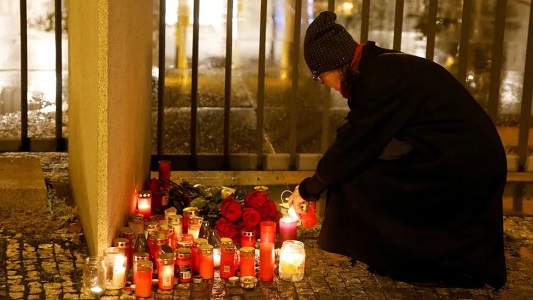
On Thursday evening, people lit candles and left flowers near the scene of the shooting.

The attack had one of the largest death tolls of any mass shooting by a lone gunman in Europe this century:

  • Norway, July 2011 Anders Behring Breivik killed 77 people by planting a car bomb that killed eight at an Oslo government building and then shot dead 69 more, most of them teenagers, at an island summer camp run by the ruling Labour Party’s youth wing
  • Germany, April 2002 Robert Steinhauser, 19, killed 16 people – 13 teachers, two pupils, and a policeman – at the Gutenberg Gymnasium secondary school in the city of Erfurt. He had been expelled from the school the previous autumn
  • Germany, March 2009 Tim Kretschmer, 17, killed 15 people in a shooting that began at his former school in the town of Winnenden, near Stuttgart. He shot dead nine students and three teachers at the school before going on to the nearby town of Wendlingen, where he shot another three passers-by.
  • Switzerland, September 2001 Friedrich Leibacher entered the regional parliament building in the city of Zug dressed in a police uniform and shot dead 14 people and injured another 10
  • Serbia, April 2013 Ljubisa Bogdanovic shot dead thirteen people, including a two-year-old boy, and injured his wife in a village outside Belgrade. Bogdanovic was a military veteran who had fought with Serb forces in the Croatian War of Independence in the early 1990s.

Founded in 1347, Charles University is the oldest and largest university in the Czech Republic and one of the oldest such institutions in Europe.

BBC/Simeon Ugbodovon

Subscribe to our Telegram and YouTube Channels and also join our Whatsapp Update Group 

Foreign

The European Union presidency has called for an international tribunal over Russia’s invasion of Ukraine.

The call, from the Czech Republic which currently holds the rotating presidency of the bloc, came after the discovery of hundreds of graves in Izyum, a town recently liberated by Ukrainian troops.

Many are said to be civilians, women and children among them.

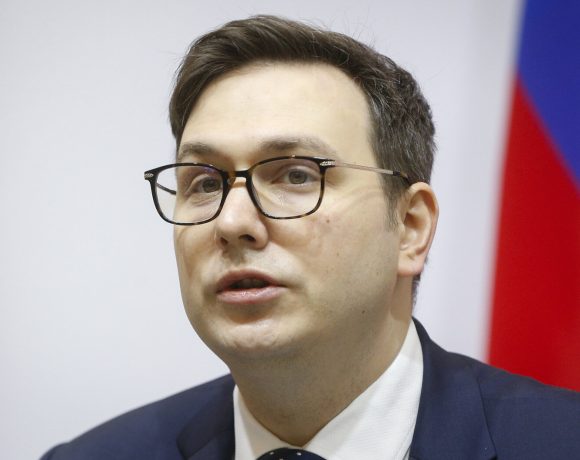
We stand for the punishment of all war criminals,” Czech Foreign Minister Jan Lipavsky said.

Ukraine says it believes war crimes have been committed in Izyum, where 59 bodies have been exhumed so far – with more expected from the graves in a forest at the edge of the city.

In the 21st Century, such attacks against the civilian population are unthinkable and abhorrent,” Mr Lipavsky said.

“We must not overlook it. We stand for the punishment of all war criminals,” he said.

I call for the speedy establishment of a special international tribunal that will prosecute the crime of aggression.”

The discovery of the burial sites came as Ukrainian troops continue their counter-offensive in the country’s north-east, after successfully recapturing territory from Russia in recent days.

Russian President Vladimir Putin said on Friday that Ukrainian counter-offensives would not change Russia’s military plans in the east of Ukraine.

BBC/Maxwell Oyekunle

Subscribe to our Telegram channel