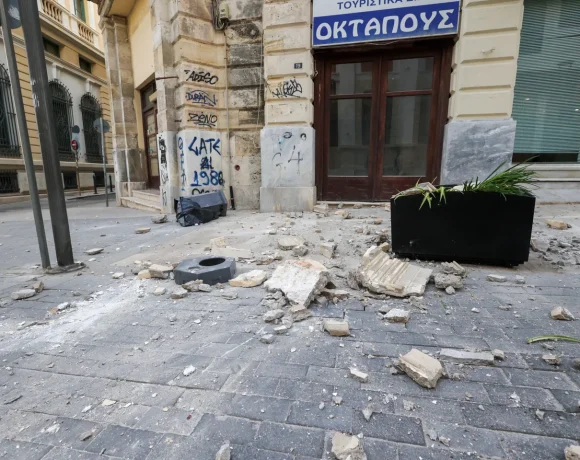
A magnitude 5.4 earthquake struck off the Greek island of Evia early on Tuesday and was felt in Athens, authorities said.
The National Observatory of Athens says the quake hit around half past midnight local time (2130 GMT), 45 kilometres (28 miles) northeast of the Greek capital,
According to reports, the epicentre was four kilometres off the resort of Nea Styra in southwest Greece’s second-largest island, Evia, also known as Euboea.
There were no reports of casualties or damage.The observatory had initially reported the magnitude at 5.3 but later revised its reading.
The mayor of the nearby city of Marathon, Stergios Tsirkas, described the quake as “very intense”, in comments on ERT television.
In May, a strong earthquake of magnitude 6.1 struck off the Greek island of Crete and was felt as far as Egypt as well as in the Greek capital.
In January and February, the island of Santorini in the Aegean Sea, a major Greek tourist destination, suffered exceptional seismic activity.
Thousands of tremors there caused several thousand residents to flee, but they have since returned home. Situated on several fault lines in the southeastern Mediterranean, Greece is regularly hit by earthquakes.
The last deadly quake there struck in October 2020 on the island of Samos, in the Aegean Sea, with a magnitude of seven, killing two people in Samos and over 100 in the Turkish port city of Izmir.
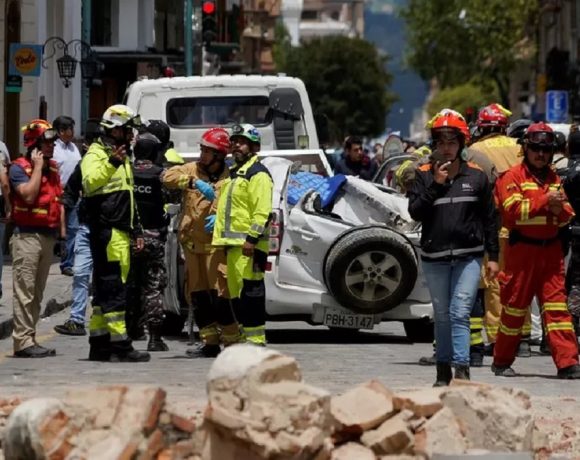
At least 12 people have died after a powerful earthquake struck the southern coast of Ecuador. Buildings have been damaged in several cities following the 6.7 magnitude quake, which hit at around midday local time (17:00 GMT).
The southern province of El Oro was the worst affected, where emergency services have reported people remain trapped inside collapsed houses.
Eleven deaths were in El Oro and one in Azuay province, authorities said.
Machala and Cuenca were among the cities that suffered damage to buildings and vehicles, as emergency services rushed to help people.
The epicentre was near Balao, about 50 miles (80km) from Ecuador’s second-largest city, Guayaquil, where about three million people live.
President Guillermo Lasso asked Ecuadoreans to remain calm as officials assess the damage.
“Emergency teams are mobilising to offer all their support to those who have been affected,” he said.
Mr Lasso’s office also confirmed that injured people were being treated in hospital, but did not offer any further details.
Several roads have been blocked by landslides, while several homes, educational buildings and health centres have been damaged, authorities said.
One person was reported killed in the city of Cuenca after a wall collapsed onto their car, while three persons died when a security camera tower came down on Jambelí Island.
There have also been reports of the earthquake being felt in several other cities, including Manabi, Manta and the capital Quito.
This is the strongest quake to hit Ecuador since 2016, when nearly 700 people died and thousands were injured.
Officials in Peru say the quake was felt in northern regions of the country, but there were no immediate reports of casualties or damage.
Bbc/Adebukola Aluko
Subscribe to our Telegram and Youtube Channel, also to our Whatsapp Update group
It has been a week since a deadly earthquake struck Turkey and Syria, killing thousands. But amid the despair, there have been stories of “miracles”. This is one of them.
When Necla Camuz gave birth to her second son on 27 January, she named him Yagiz, meaning “brave one”.
Just 10 days later, at 04:17 local time, Necla was awake feeding her son at their home in southern Turkey’s Hatay province. Moments later, they were buried under mounds of rubble.
Necla and her family lived on the second floor of a modern five-storey building in the town of Samandag. It was a “nice building”, she says, and she had felt safe there.
She did not know that morning that the area would be torn apart by the earthquake, with buildings damaged and destroyed at every turn.
“When the earthquake started, I wanted to go to my husband who was in the other room, and he wanted to do the same thing,” she says.
“But as he tried to come to me with our other son, the wardrobe fell onto them and it was impossible for them to move.
“As the earthquake got bigger, the wall fell, the room was shaking, and the building was changing position. When it stopped, I didn’t realise that I had fallen one floor down. I shouted their names but there was no answer.”
The 33-year-old found herself lying down with her baby on her chest, still held in her arms. A fallen wardrobe next to her saved their lives by preventing a large slab of concrete from crushing them.
The pair would remain in this position for almost four days
Lying in her pyjamas beneath the rubble, Necla could see nothing but “pitch black”. She had to rely on her other senses to work out what was going on.
To her relief, she could tell immediately that Yagiz was still breathing.
Because of the dust, she struggled at first to breathe but said it soon settled. She was warm in the rubble.
She felt as though there were children’s toys beneath her but could not manoeuvre herself to check or make herself more comfortable.
Other than the wardrobe, the soft skin of her newborn son, and the clothes they wore, she could feel nothing but concrete and debris.
In the distance, she could hear voices. She tried to shout for help and banged on the wardrobe.
“Is there anyone there? Can anyone hear me?” she called.
When that didn’t work, she picked up the small bits of rubble that had fallen next to her. She banged them against the wardrobe, hoping it would be louder. She was scared to hit the surface above her in case it collapsed.
Still, no one replied.
Necla realised there was a possibility nobody would come.
“I was terrified,” she says.
In the darkness beneath the rubble, Necla lost all sense of time.
This wasn’t what life was supposed to be like.
“You plan lots of things when you have a new baby, and then… all of a sudden you’re under rubble,” she says.
Still, she knew she had to look after Yagiz, and was able to breastfeed him in a confined space.
There was no source of water or food that she could access for herself. In desperation, she tried unsuccessfully to drink her own breast milk.
Necla could feel the rumble of drills overhead and hear footsteps and voices, but the muffled sounds felt far away.
She decided to save her energy and remain quiet unless the noises from outside came closer.
She thought constantly of her family – the baby on her chest, and the husband and son lost somewhere in the debris.
She also worried about how other loved ones had fared in the earthquake.
Necla did not think she would make it out of the rubble, but Yagiz’s presence gave her a reason to remain hopeful.
He slept much of the time, and when he woke crying, she would silently feed him until he settled down.
After more than 90 hours underground, Necla heard the sound of dogs barking. She wondered if she was dreaming.
The barks were followed by the sound of voices.
“Are you OK? Knock once for yes,” one called into the rubble. “What apartment do you live in?”
She had been found.
Rescuers carefully dug into the ground to locate her, as she held Yagiz.
The darkness was broken by a torchlight shining into her eyes.
When the rescue team from the Istanbul Municipality Fire Department asked how old Yagiz was, Necla couldn’t be sure. She only knew that he was 10 days old when the earthquake struck.
After handing Yagiz to the rescuers, Necla was then carried away on a stretcher in front of what seemed to be a large crowd. She couldn’t recognise any faces.
As she was moved to an ambulance, she sought confirmation that her other son had also been saved.
When she got to the hospital, Necla was greeted by family members who told her that her husband of six years, Irfan, and her three-year-old son, Yigit Kerim, had been rescued from the rubble.
But they had been transferred hours away to a hospital in Adana province, having sustained serious injuries to their legs and feet.
Remarkably, Necla and Yagiz had suffered no serious physical injuries. They were kept in the hospital for 24 hours for observation before being discharged.
Necla had no home to return to, but a family member brought her back to a makeshift blue tent crafted from wood and tarpaulin. There are 13 of them there in total – all have lost their homes.
In the tent, the families support each other, making pots of coffee over a small stove, playing chess and sharing stories.
Necla is “trying” to come to terms with what happened to her. She says she owes Yagiz for saving her life.
“I think if my baby hadn’t been strong enough to handle this, I wouldn’t have been either,” she explains.
Her only dream for her son is that he never experiences anything like this again.
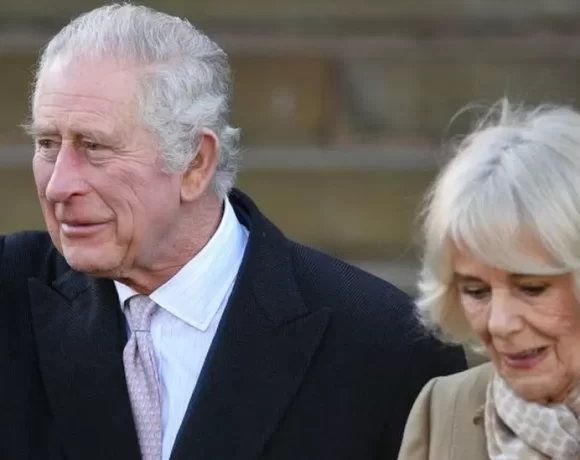
The King and Queen Consort have been appreciated for a “generous donation” by the UK’s Disasters Emergency Committee, DEC, which is helping earthquake survivors in Turkey and Syria.
The Prince and Princess of Wales also tweeted that they were supporting the appeal.
William and Kate said they were “horrified to see the harrowing images” in the aftermath of the earthquakes.
Funds will provide medical aid, shelter, food and water to thousands.
UK aid agencies – including the British Red Cross, Oxfam and Action Aid – are joining together to raise money.
The aid appeal was launched by the DEC and broadcast on TV on Thursday evening.
More than 20,000 people have died, with that number expected to rise.
The UK government has announced a support package to help survivors of the earthquake.
On Thursday evening a military transport plane was due to leave the UK for Turkey carrying humanitarian aid including thousands of thermal blankets.
Further emergency aid will include a field hospital with a 24/7 operating theatre, as well as high dependency and general ward patient beds.
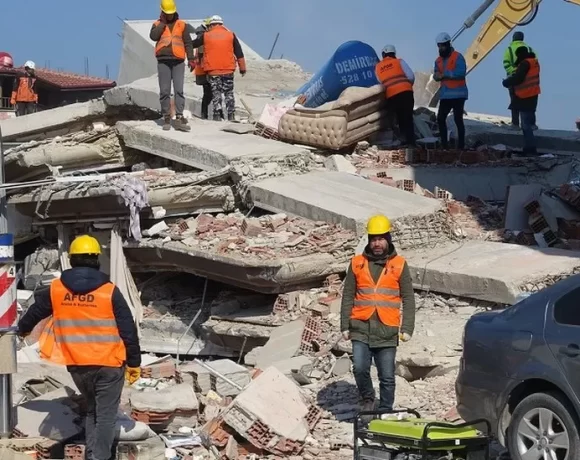
The disaster has destroyed thousands of buildings and responders have been searching the rubble for survivors. Many people have lost homes, leaving them without shelter in freezing, wintry conditions, the DEC says.
In Syria, some people who were already living in tents after fleeing conflict in the country are now hosting those whose homes have been destroyed by the quake.
The charities say access to clean water is going to be difficult in the coming days, and waterborne diseases will be a hazard.
The UK government will match the first £5m of donations from the public. Money raised will also provide blankets, warm clothes and heaters for safe spaces.
The Scottish government is also contributing £500,000 and the DEC Scotland officially launched its appeal on Thursday.
First Minister Nicola Sturgeon described the scenes in Turkey and Syria as “heart-wrenching”, adding that: “This earthquake has caused a huge amount of damage and significant loss of life that will be felt for some time to come.”
She said there was an urgent need to help the humanitarian efforts being made and emergency services had already been deployed.
The money donated to the DEC appeal would “support those affected with medical care, shelter, food and clean water”, added Ms Sturgeon.
DEC chief executive Saleh Saeed described the scenes in Turkey and Syria as “heartbreaking”, with thousands “losing loved ones suddenly in the most shocking of ways”.
He said: “We know that money is tight for many people here in the UK as the cost of living crisis continues but, if you can, please do donate to support people caught up in this deadly disaster.”
Mr Saeed told BBC Breakfast that DEC members had been working in Syria for 10 years because of the civil war which has engulfed the country.
“Despite the challenges they are all experiencing now… aid is getting through and they are scaling up,” he said.
Salah Aboulgasem, from the Islamic Relief charity, based in Gaziantep, Turkey, added: “The priority right now is saving lives by clearing the rubble. The next priority is supporting people who have lost their homes and gone through huge trauma.
“People need medicines and warmth. There is a lot of screaming, people are trying to find relatives. A lot of people are sleeping in cars because they are scared to go back into the buildings due to aftershocks.”
He later told BBC Breakfast that rescue teams were losing a “race against time” having gone passed the “critical” 72 hour-mark, but said there was “still hope” and “miracles are happening”.
Dr Hans Kluge, World Health Organization regional director for Europe, told BBC Radio 4’s Today programme that just 22% of people trapped in rubble survive 72 hours after an earthquake.
“Every minute counts now because the window to save lives is fast running out,” he said.
Okke Bouwman, Save The Children director of advocacy and media communications, said child victims of the disaster “need to access learning as soon as possible”.
He told BBC Breakfast: “Children need to return to some sense of normality sooner rather than later. For the first couple of days, it’s about providing a safe space and something to eat.”
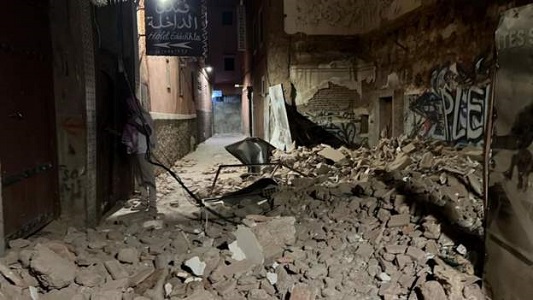
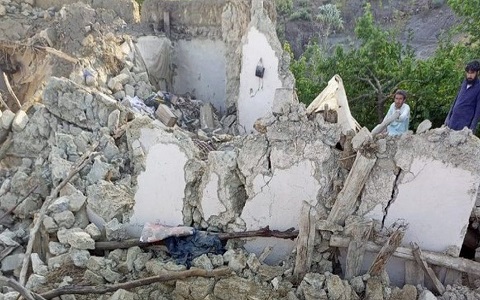
A powerful earthquake has killed at least 280 people and left scores injured in Afghanistan, according to the country’s state news agency.
Pictures show landslides and ruined homes in eastern Paktika province, where rescuers are scrambling to treat the injured.
In remote areas, helicopters have been ferrying victims to hospitals.
The local Bakhtar News Agency said the death toll was likely to rise, adding more than 600 people were injured.
The quake struck about 44km (27 miles) from the south-eastern city of Khost shortly after 01:30 local time (21:00 Tuesday GMT).
“Unfortunately, last night there was a severe earthquake in four districts of Paktika province, which killed and injured hundreds of our countrymen and destroyed dozens of houses,” government spokesman Bilal Karimi tweeted.
“We urge all aid agencies to send teams to the area immediately to prevent further catastrophe.”
Taliban officials have called for aid agencies to rush to the affected areas in the nation’s east.
Most of the casualties so far were in the Gayan and Barmal districts in Paktika, a local doctor told the BBC. Local media site Etilaat-e Roz reported a whole village in Gayan had been destroyed.
Tremors were felt across more than 500km of Afghanistan, Pakistan and India. Witnesses reported feeling the quake in Afghanistan’s capital, Kabul, as well as Pakistan’s capital, Islamabad.
However, there have been no immediate reports of casualties, and the earthquake caused little damage in Pakistan, according to BBC Urdu.
The earthquake – which hit the mountainous country during the early hours as many people slept – was a magnitude 6.1 quake at a depth of some 51km, according to seismologists.
Afghanistan is prone to quakes, as it’s located in a tectonically active region, over a number of fault lines including the Chaman fault, the Hari Rud fault, the Central Badakhshan fault and the Darvaz fault.
Earthquakes tend to cause significant damage in Afghanistan, where there are many rural areas where dwellings are unstable or poorly built.
Decades of conflict have made it difficult for the impoverished country to improve its protection against earthquakes and other natural disasters – despite efforts by aid agencies to reinforce some buildings over the years.
In the past 10 years, more than 7,000 people have been killed in earthquakes in the country, the UN’s Office for the Coordination of Humanitarian Affairs reports. There is an average of 560 deaths a year from earthquakes.
The people of New Zealand are marking ten years since an earthquake struck its South Island city of Christchurch, killing 185 persons and injuring thousands more.
At 12:51 pm on February 22, 2011, the 6.3 magnitude earthquake struck close to Christchurch city at a depth of 5 km. Although not as strong as a magnitude 7.1 quake which hit the area less than six months earlier, its shallow depth and proximity to the city centre resulted in widespread damage.
Earlier today, Monday, hundreds of New Zealanders gathered at a memorial wall in Christchurch to observe a minute’s silence as flags flew at half-mast.
Prime Minister Jacinda Ardern said it was time to look ahead with hope for the future of the country’s second-largest city.
“It’s been a hugely difficult decade for this city – at times I’m sure it’s felt impossible,” Mrs. Ardern said in a speech at the memorial.
“But as we look ahead to the coming decade, I see hope and energy and optimism, and I see Christchurch taking its rightful place amongst New Zealand’s best and brightest cities,” she added.
Some eighty-seven people who died in the quake were foreign nationals from countries including Australia, China, Japan and the US.
A recent Reuters report said the earthquake damaged thousands of buildings and homes in Christchurch, forcing the authorities to embark on reconstruction projects that continue a decade later.
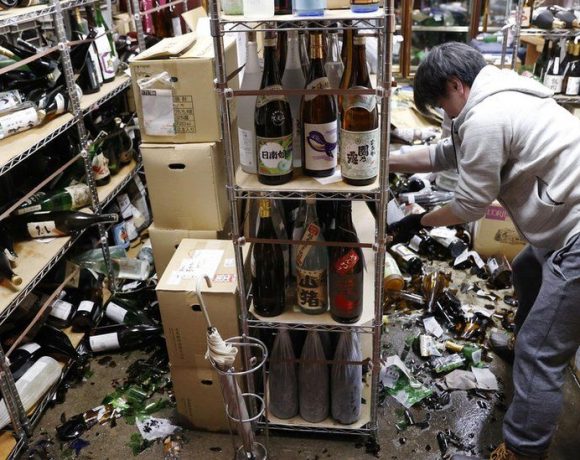
A strong earthquake struck off the coast of Fukushima, Japan, on Saturday, just weeks before the 10-year anniversary of the deadly 2011 tsunami.
The 7.3-magnitude quake was felt strongly in Tokyo, but a tsunami warning has not been issued.
There are reports of about 50 people injured, officials say, and almost one million homes are without power.
The quake struck near the epicentre of a 2011 earthquake which triggered a tsunami and killed over 18,000 people.
That tsunami caused a nuclear accident at the Fukushima Daiichi Nuclear Power Plant – the world’s most severe nuclear accident since the Chernobyl disaster in 1986.
Japan’s meteorological agency (JMA) said Saturday’s earthquake was believed to be an aftershock of the massive 2011 quake. Aftershocks after a large earthquake can continue over a period of many years.
Saturday’s quake hit at 23:08 local time (14:08 GMT) at a depth of 60km (37 miles) in the Pacific, off Japan’s eastern coast, JMA said. Aftershocks have continued to hit the region since.
Chief Cabinet Secretary Katsunobu Kato told reporters that evaluations were under way, including of the region’s nuclear plants.
“Casualties and structural damage are being assessed,” he told a press conference, but added that parts of the high-speed bullet train network had been suspended because of power outages.
“Surveys are being done at Fukushima Daiichi nuclear pant… We have received reports that Onagawa nuclear plant and Fukushima Daichi nuclear plant are not showing any abnormality.”
Fukushima nuclear plant operator Tepco also tweeted that there were “currently no abnormalities” found at its plants.
Despite reassurances from officials, many residents on the coast are evacuating their homes and heading for higher ground, Japanese news agency Kyodo reports.
“”Even if people say we don’t need to worry about a tsunami, I won’t buy it,” one 50-year-old man told the publication. “I learned from my bitter experience 10 years ago, and that’s why I evacuated.”