Economy

By Oluwatoyin Adegoke

The Federal Government is collaborating with the Food and Agriculture Organization, FAO and the European Union to empower fish farmers and ensure the sustainability of Nigeria’s fishery resources.

The intervention also included the launch of  a 200 million naira support initiative to boost aquaculture towards meeting the country’s annual fish demand of more than 3 million tonnes.

At the official launch of the Scaling Fish Farming Fund Project in Ogun State, 40 fish farmers at the Eriwe Fish Cluster in Odogbolu Local Government Area of the State were provided with grants to enhance their production capacity. 

Speaking at the event, the Director, Fisheries and Aquaculture at the Federal Ministry of Marine and Blue Economy, Mr. Wellington Omorogbon, represented by Mr. Paul Opuama said the project was aimed at ensuring better livelihoods for the farmers. 

Representative of the Food and Agriculture Organization in Nigeria, Mr. Koffy Kouacou explained that the project funded by the European Union, the GIZ and other development partners in conjunction with both the federal and state governments would ensure the availability of adequate funding for fish farmers, with a view to boosting fish production in the country.

The FAO Country Representative affirmed that the set of 40 beneficiaries, under the pilot scheme, would receive between 2.5 and 5 million naira each to upscale their fish farming business and production.

The Agriculture Programme Manager of the European Union Delegation to Nigeria and ECOWAS, Mr Hugh Briggs pointed out that Nigeria was given the lion share of the grant, totalling 5 million Euros to boost fish production in the country through project being implemented in 12 countries of the world. 

The Ogun State Commissioner for Agriculture and Food Security, Mr Bolu Owotomo represented by the Director of Fisheries department, Princess Victoria Ojelade, while applauding the intervention also called for the extension of the kind gesture to other fish clusters across the state.

Other partners and stakeholders in separate contributions renewed their commitment to continuous collaborations with the Nigerian Government and the Fish farmers to further strengthen the aquaculture industry for food security, nutrition, and economic growth.
Agriculture

By Olaolu Fawole

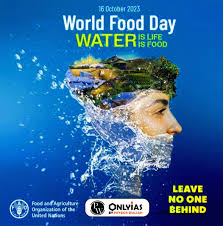
16th of October every year is set aside to commemorate World Food Day. It is an International day marking the creation of the United Nations Food and Agriculture Organization in 1945, with a view to ending hunger and food security .

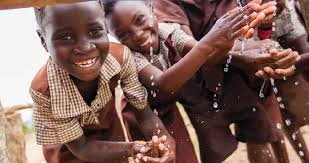
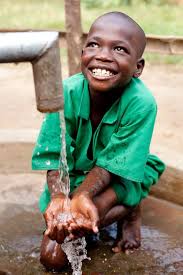
The theme “Water is Life, Water is Food. Leave No One Behind” for 2023 World Food Day showcases the importance of water in food production and, also, in ensuring the well-being of children.  It is worthy to note that growing nutritious crops and raising healthy livestock,  require clean water, while access to safe drinking water is equally important for children’s health and growth.

Water is essential to life and it makes up over 50% of our bodies and covers about  71% of the Earth’s surface while agriculture accounts for 72% of global freshwater withdrawals and water is a driving force for people, economies and nature and the foundation of our food.

Certainly, nutritious food is related to the well-being of children and adequate water resources are essential for agriculture, therefore water is necessary for irrigation, which helps farmers grow a variety of crops, including fruits, vegetables, and grains. These crops will promote growth and development of children. Parents should also know that shortage of clean water can lead to malnutrition as waterborne diseases can compromise children’s abilities to absorb nutrients from the food they consume, they must therefore ensure safe water sources for children.

In food processing and preparation, safe water is essential, and it is duty of parents and guardians that the food children consume is free from contaminants and safe for their health.

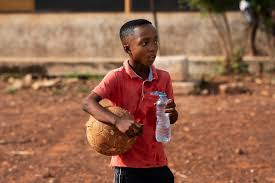
Also, access to safe drinking water is fundamental to maintaining children’s overall health, therefore, staying properly hydrated is necessary for their well-being and can help prevent seizures, urinary tract infections, kidney stones and even kidney failure, which are some dehydration-related illnesses.

Provision of clean water sources and adhere to proper sanitation and hygiene practices, can significantly reduce cases of waterborne diseases such as diarrhoea, dysentery, typhoid fever, shigellosis, cholera, human enteritis, and cryptosporidiosis among children who are vulnerable to the diseases.

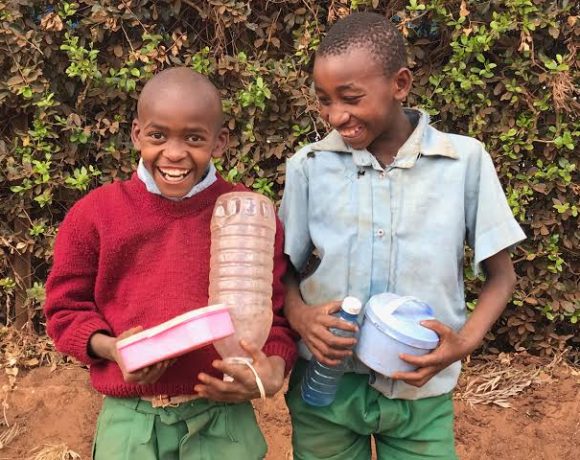
We should also note that children must have a consistent supply of clean water for their daily needs and agriculture, which contributes to long-term food security, therefore, we should manage water resources. In addition, access to adequate water for agriculture can reduce the need for child labour in many parts of the world. Agriculture has the highest number of child labourers globally and when there are functional water sources for irrigation, this can check child labour and children can attend schools regularly to achieve their dreams.

There should be more educative and enlightenment programmes for children on sustainable water management and agricultural practices.

The theme for the 2023 World Food Day points out the need for collective responsibilities in providing clean water, nutritious food, and education to children, and highlights the importance of sustainability and equity in managing water resources to ensure that no child is left behind in their access to these fundamental necessities.

Subscribe to our Telegram and YouTube Channels also join our Whatsapp Update Group

Health

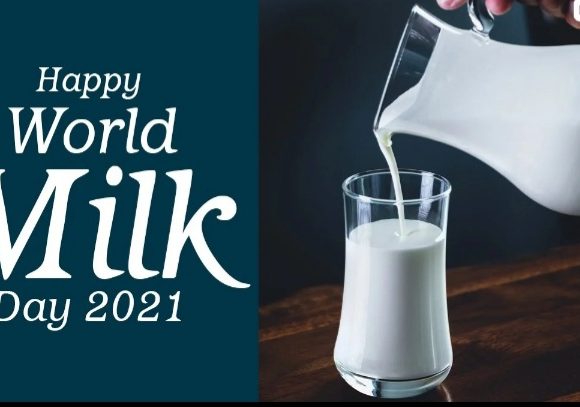
World Milk Day was introduced by the Food and Agriculture Organisation (FAO) of the United Nations to recognize the importance of milk as a global food, and to celebrate the dairy sector, on 1 June Every.
The essence of the day is to spread more awareness every year about including milk and dairy products in the diet regularly.
How often do people take milk, a cross section of respondents said they took milk occasionally depending on their economic strength.
A nutritionist, Dr. Rachael Fakunle while emphasizing the significance of milk noted
that it should not be left out of the diet at any point in time.
The nutritionist said milk contained basic nutrients including protein, calcium, vitamin c and iron among others.
Dr.Fakunle also cautioned people as they age to avoid milk with fats and embrace skimmed milk noting that fat was not good for Health.
The theme for this year is sustainability in the dairy sector along with empowering the environment, nutrition and socio economy.

Adedayo Adelowo

Agriculture

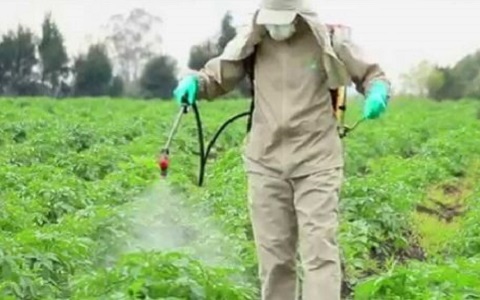
Two agricultural projects have been inaugurated to address the problem of Tomato pests in Nigeria.

The projects sponsored by the Food and Agriculture Organization, FAO of the United Nations was executed by the National Horticultural Research Institute, NIHORT.

Radio Nigeria correspondent, Rotimi Famakin who was at NIHORT, Idi Ishin, Ibadan reports that the projects are aimed at providing organic and local methods of controlling tomato pest known as “Tuta Absoluta”.

His report.

Rotimi Famakin

Health

The number two goal of the Global Sustainable Development, SDGs, to improve people’s lives by 2030 is zero hunger.

The goal is targeted at ending hunger, achieving food security, improving nutrition and promote sustainable agriculture.

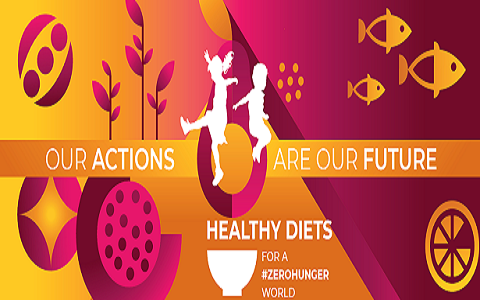
Little wonder then, why the 2019 World Food Day has, as its theme “Healthy Diets for a Zero-Hunger World”.

The Food and Agriculture Organization, FAO, of the United Nations noted that, urbanisation and available income had affected the diets and eating habits of people across the globe.

It is observed that many people had shifted from eating plant-based and fibre-rich meals to processed foods, and they prefer delicacies from fast food outlets to foods prepared at home.

The country representative of FAO in Nigeria, Suffyan Koroma, while reaffirming the organisation’s commitment to zero hunger, described the day as an opportunity “to reflect on what to eat, how we eat it and where we get it from”.

While commenting on the theme of the 2019 World Food Day, a dietician, Mrs. Oluwatooni Opelami said, good eating habits help prevent frequent visits to hospitals.

She said healthy foods help to keep fit and boost the immune system especially of the young children.

Mrs. Opelami submitted that, nutritious foods are available and affordable, contrary to the belief of some people that, only the wealthy can access them.

Similarly, a nutritionist, Mrs. Oluwatoyin Bolarinwa explained that poor quality diets could make the brain weak and lead to many disorders such as obesity, type-2 diabetes, and cancer.

Mrs. Bolarinwa therefore advised the people to consume foods from natural sources such as legumes, cereals, fruits and vegetables.

Meanwhile, the federal government has reiterated its commitment to ensure food sufficiency and healthy living.

The permanent secretary, Federal Ministry of Agriculture, Mohammed Bello-Umar at a rally to mark the World Food Day, in Abuja, said the ministry would open up lands for agricultural activities.

He noted that there was no need to import rice, because the country had attained self-sufficiency in rice production.

Statistics reveals that, globally, more than 670 million adults are obese, in addition to 120 million children between the ages of 5-19 years in similar condition, while ironically, over 820 million people still suffer from hunger.

The 2019 World Food Day is calling for action across sectors to make healthy and sustainable diets, affordable and accessible to everyone.

Afolasade Osigwe