One disease which has continued to
record recurrence in Nigeria over the years is Yellow Fever.
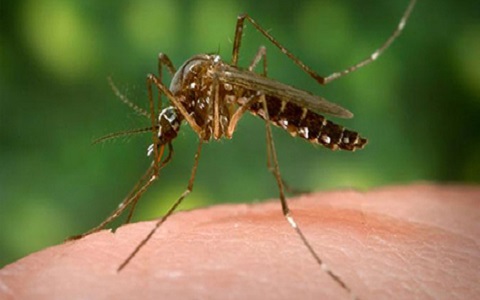
Yellow Fever is an acute viral haemorrhagic disease spread by a
particular species of mosquito common in areas of Africa, Central and South America.
The mosquito, aedes aegypti species is believed to transmit the virus from person
to person while the “yellow” refers to the jaundice that affects some patients.
Some of the symptoms of yellow fever
include jaundice, sudden fever, headache, muscle and body pains, nausea, vomiting
and fatigue.
Early this month, three people were
reported to have died from an outbreak of yellow
fever in Alkaleri and Tafawa Balewa Local Government areas of Bauchi State.
This prompted the state governor to
embark on reactive vaccination for over five hundred thousand residents
scattered across the twenty local government areas of the state.
Also, following the outbreak of the
disease in eight local government areas of Ebonyi state.
In May this year, twenty of the
fifty five suspected cases have reportedly died.
The Nigeria Centre for Disease Control,
NCDC, deployed a rapid response team to support Ebonyi state with contract
tracing and case finding.
Available records show that from an
outbreak in 2017 to December 2018, three thousand, nine hundred and two
suspected cases were reported from all thirty-six states and the Federal
Capital Territory, FCT, in Nigeria.
This is a wakeup call to states to
increase surveillance in this regard.
Commendably, the eliminate yellow fever epidemics strategy launched
in 2017 with more than fifty partners has been working assiduously to reduce
the impact of the disease in forty at risk countries in Africa and the Americas.
The partnership is committed to
preventing international spread and containing outbreaks rapidly.
It is expected that by 2026 more
than one billion people will be protected against the disease.
Also, the federal government in
collaboration with World Health Organisation, WHO, and GAVI, the Vaccine
Alliance, recently launched the Yellow Fever Reactive Vaccination Campaign in
three states of Ebonyi, Benue and Cross River to contain the outbreak in
affected areas.
More still needed to be done to
combat this disease.
It is imperative to invest more in
vaccines which have been proven to be very effective.
A single dose of yellow fever vaccine is sufficient to
confer sustained immunity and lifelong protection against the disease.
This is important as there is no
specific anti-viral drug for yellow fever currently.
Since diagnosis may be difficult at
the early stage, it is recommended that people having symptoms related to the
aforementioned report to the hospital for proper testing, diagnosis and
treatment.
The yellow fever vaccine is
available for free in Primary Health Care Centres across the country as part of
the routine immunization schedule, mothers should avail themselves of this
opportunity for their babies.
People should maintain proper
hygiene at all times, clear stagnant waters from their environment, wear
protective clothing and use repellent against these mosquitoes which are more
active during the day time.
There should be adequate mapping by
epidemiologists to identify high risk areas and constantly monitor them to
forestall outbreak.
States should embark on regular
aerial spraying of aedes mosquitoes identified as the vector that transmits
yellow fever disease.
There should also be increased
surveillance at the country’s borders to ensure that people with yellow fever and other infectious
diseases are prevented from entering the country.
Most importantly, strong commitment at all level of governance is necessary if the country wants to be free from yellow fever.
Anthonia Akanji