Economy

By Olawale Asake

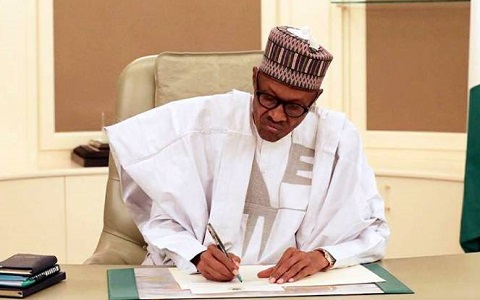
President Bola Tinubu has assured Nigerians that the new tax laws scheduled to take effect next year will ease financial pressures by exempting food, medication, education, agriculture and shared transportation from taxation.

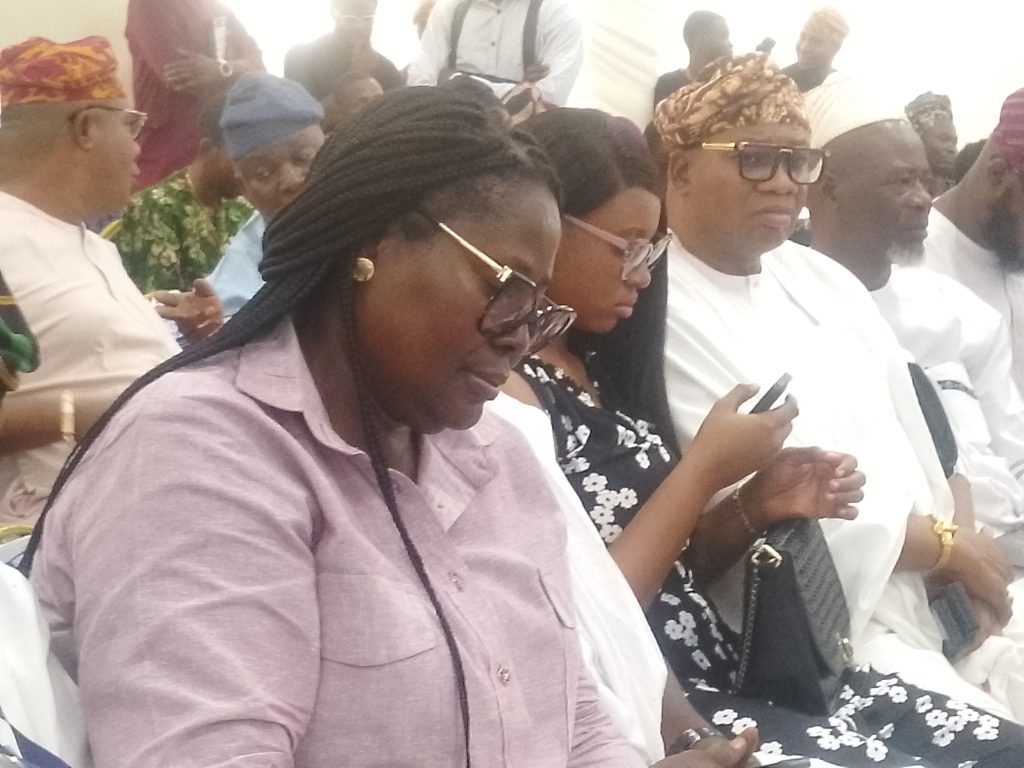
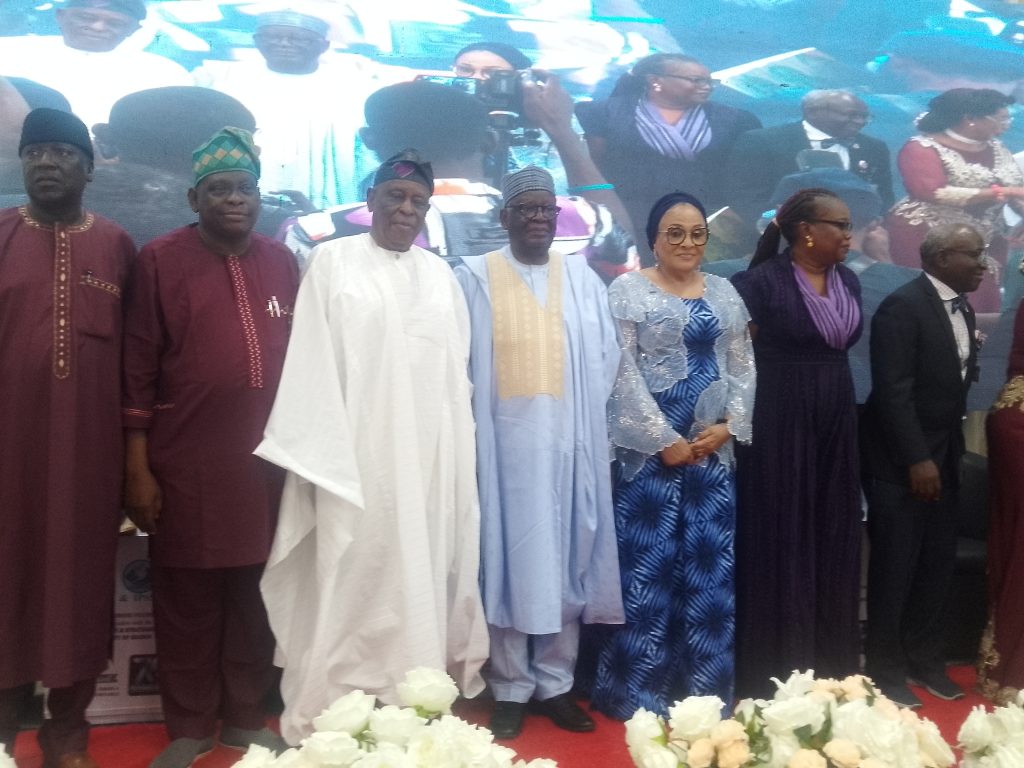
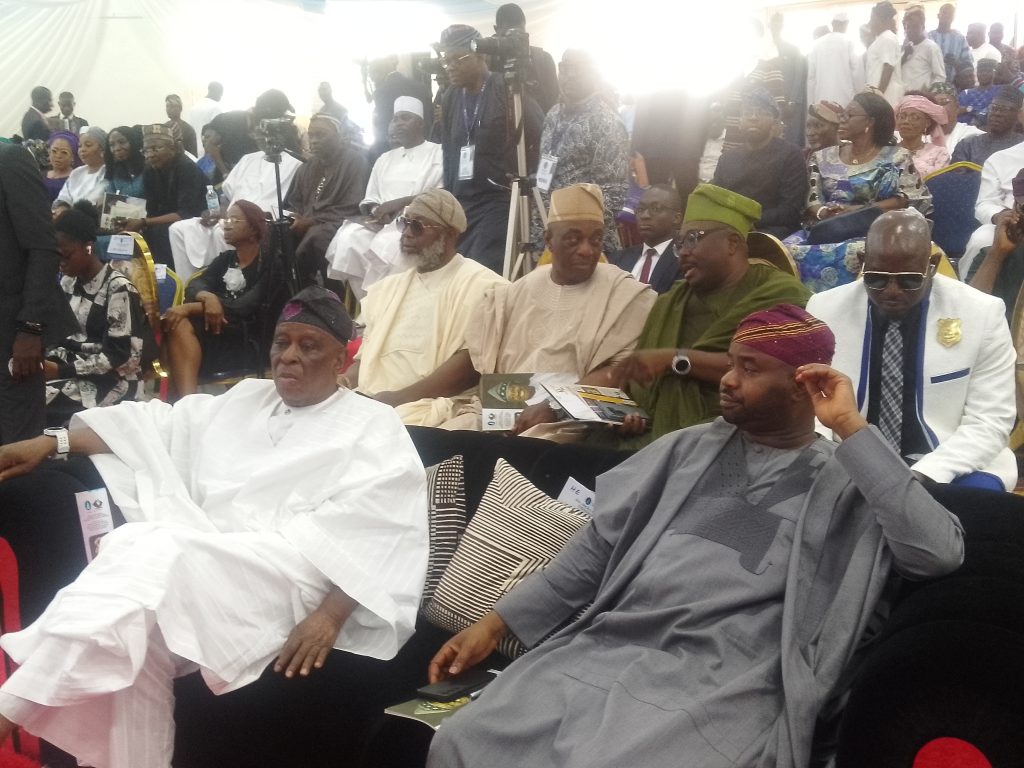
The assurance was given at the 8th Annual Senator Abiola Ajimobi Roundtable and 76th Posthumous Birthday, held in Ibadan and organised by the Senator Abiola Ajimobi Foundation, SAAF in collaboration with the Institute for Peace and Strategic Studies, University of Ibadan.
Represented by the Chairman of the Federal Inland Revenue Service, Dr Zacch Adedeji, the President said the reforms would eliminate multiple taxation and provide relief for low-income earners, small businesses and the poor.

Speaking on the theme, “Pathways to Electoral Credibility: Reforming Political Parties, Re-engaging Citizens, and Restoring Trust in Democracy in Nigeria,” former Chief of Staff to ex-President Muhammadu Buhari, Prof. Ibrahim Gambari, said a stable and democratic Nigeria remains critical to West Africa’s growth and stability.

In her welcome address, President of the Foundation, Chief Florence Ajimobi, eulogised her late husband, noting that his legacy in Oyo State, Nigeria and humanity endures.

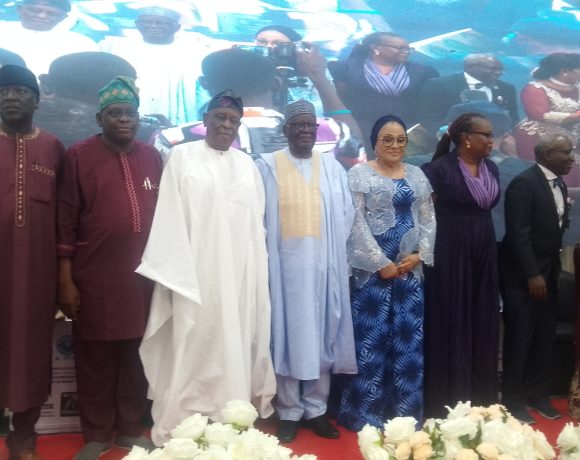
Dignitaries at the event included Imo State Governor, Senator Hope Uzodimma; former Ogun State Governor and APC chieftain, Chief Olusegun Osoba; the Olubadan of Ibadanland, Oba Rashidi Ladoja, represented by the Osi Olubadan, Oba Abiodun Kola-Daisi; the Soun of Ogbomosoland, Oba Ghandi Olaoye; as well as politicians, academics and the Vice-Chancellor of the University of Ibadan, Professor Kayode Adebowale.

Edited by Maxwell Oyekunle

Follow us on Telegram and YouTube, and join our WhatsApp Update Group for more news updates.

Economy

By Iyabo Adebisi

Governor Seyi Makinde of Oyo State has urged members of the Joint Tax Board, JTB and other stakeholders in the revenue generation sector in the country to adopt a humane strategy and understanding before co-opting the informal sectors into its tax net.

Declaring open the 157th meeting of the JTB held in Ibadan, with the theme – Taxation of the Informal Sector: Potentials and Challenges, Governor Makinde explained that the informal sector is the backbone of the local economy and should be engaged technologically for meaningful impact. 

The governor called for an increase in production, knowledge, and skills to galvanise Nigerians toward transforming the nation’s natural resources and potential into economic prosperity. 

Governor Makinde enjoined the stakeholders to consider modalities to deepen partnership with the informal sector, such that dragging them into the tax net would be based on understanding rather than enforcement. 

Addressing the participants, the Chairman of the Joint Tax Board and Executive Chairman of the Federal Inland Revenue Service, FIRS, Dr Zach Adedeji, warned against any attempt to add a tax burden on the poor and charged the meeting to focus on conceiving strategies to formalise the informal sector before any taxation attempt.

Earlier, Chairman of the Oyo State Internal Revenue Service Femi Awakan disclosed how the Seyi Makinde-led administration has drastically boosted the state’s internally generated revenue (IGR), noting that with the Oyo experience, there is no challenge too tough to surmount in widening the tax net of any economy.

The meeting of the Joint Tax Board of Nigeria, JTB, is usually a convergence to address tax-related matters, evolve a workable, effective and efficient tax system across the state and the federal government. 

Subscribe to our Telegram and YouTube Channels, and also join our WhatsApp Update Group.

Judiciary

Oyo State Government wants the Court of Appeal sitting in Port Harcourt, Rivers State for joinder in the suit instituted by the Rivers State Government against the Attorney-General of the Federation in respect to the bid by the state to take over the collection of the Value Added Tax, VAT, from the federal government.

The suit, instituted by the Attorney-General of Oyo State, Professor Oyelowo Oyewo is seeking an order of the Appellate Court to enable Oyo State to join the suit as an interested party.

In the suit, the government of Oyo State is seeking two orders, viz: an order of the Honourable Court joining the Attorney-General of Oyo State as a respondent on the appeal with suit number FHC/PH/CS/149/2020 and appeal number CA/PH/282/2021, and any other order the Court may deem fit.

According to the Attorney-General of Oyo State, the government of Oyo State was unaware of the suit between the Attorney-General of Rivers State and the Federal Inland Revenue Service, FIRS, at the Federal High Court until the judgment was delivered.

Other grounds upon which the application was based include, that the decision of the Appellate Court will affect the collection of VAT by the government of Oyo State is one of the states which the judgment of the lower court recognised as entitled to collect VAT within its territorial jurisdiction.

The grounds claimed by the Oyo State government include that: “The Applicant is a necessary party to this suit being a party who will be bound by the judgment of this Honourable Court in this Appeal.

In a motion on notice also attached to the proceedings already filed before the court, Oyo State said it relied on eight grounds and declared that the state is a necessary party to be joined since it has sufficient interest in the outcome of the appeal.

The state further argued that after going through its processes, the Appellate Court will find that the application is necessary and that it has sufficient interest in the determination of the appeal as one of the states of the Federation.

It quoted several legal authorities and concluded thus: “We, therefore, urge the honourable court to resolve the sole issue raised in this application in favour of the Applicant and hold that the Applicant is a proper, desirable and necessary party to be joined in this appeal.

“In conclusion, we humbly urge your Lordships to grant this application in the interest of justice and effective determination of the issues before the Court”.

Iyabo Adebisi

News Analysis

As a way of addressing the country’s dwindling economy and heavy debt burden, the federal government moved to boost its resources by directly taking control of revenue management of its ten most lucrative enterprises.

These enterprises include Nigerian National Petroleum Corporation, NNPC, Nigerian Ports Authority, NPA, Nigeria Maritime Administration and Safety Agency, NIMASA, Federal Inland Revenue Service, FIRS and Nigeria Customs Service, NCS.

Others are Corporate Affairs Commission, CAC, Department of Petroleum Resources, DPR, Nigerian Communications Commission, NCC, Federal Airports Authority of Nigeria, FAAN and Nigeria Shippers’ Council, NSC.

Commenting on the development, the Minister of Finance, Budget and National Planning, Mrs Zainab Ahmed noted that the initiative was in compliance with the presidential approval conveyed through the Secretary to the Government of the Federation’s circular on the approved revenue performance management Framework for Government-Owned Enterprises, FGOEs.

Mrs Ahmed expressed optimism that the presence of Directors of Revenue at the enterprises will ensure strict adherence to extant rules and regulations in the areas of approved budget as well as due process mechanism in procurement and payments.

Furthermore, the directors would be involved in the revenue operations of the agencies, have a better understanding of business processes and operations leading to improved transparency and accountability in the revenue reporting of the FGOEs.

In addition, they are expected to seek opportunities and avenues for revenue improvements which is the ultimate aim of the government.

It will be recalled that the federal government introduced the Treasury Single Account, TSA, ostensibly to ensure effective monitoring and collection of its revenue.

The minister added that, the duties of the directors would be aided with the deployment of Information Technology to ensure transparency and accountability.

Accountant General of the federation, Mr Ahmed Idris opined that the initiative is to achieve transparency and accountability of government revenue with special focus on FGOEs, improved revenue performance and ultimately provide a sustainable source of funding for government budget execution.

The policy is a reform initiative aimed at generating more revenue and associated remittances into the government coffers and also improve the operational performances of all FGOEs.

Unfortunately, it has been discovered that a number of government owned enterprises remitted less than the operating surplus to the consolidated revenue fund as required by law of financial regulations.

To ensure the success of this measure, auditors both internal and external should be proactive by ensuring that the government does not lose any revenue through leakages, wastages and corrupt practices.

It is of utmost importance that the Directors of Revenue in the FGOEs, discharge their duties as expected which will in turn translate to economic growth for the nation.

Titilayo Kupoliyi