Politics

As part of major condition for the implementation of financial autonomy for State Legislatures across the Country, the Oyo State House of Assembly has passed its Funds Management Bill, 2021 into Law. 

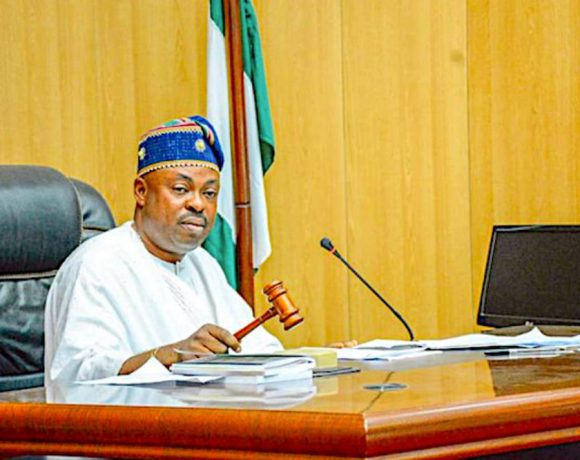
The Bill tagged Oyo State House of Assembly Funds Management Bill, 2021 was passed Thursday at a plenary session presided over by the Speaker Oyo State House of Assembly, Mr Adebo Ogundoyin. 

The Chairman House Committee on Finance and Appropriation, Mr Akeem Mustapha, (Kajola) had earlier presented and submitted the report of the Committee on the bill before the House. 

The Speaker after the passage of the Bill said it was meant to ensure accountability, transparency and efficient utilization of funds accruing to the Oyo State House of Assembly from the consolidated funds of the State.

Mr Ogundoyin stated further that the Legislature was optimistic that the Bill will be assented to by Governor Seyi Makinde very soon.

The Bill which is meant to enhance and ensure proper management of the income and expenditure of the Legislature is being deliberated and considered by State Houses of Assembly across Nigeria.

When it becomes operational, the Funds Management Law wi give total freedom to the State Legislatures and put an end to their dependence on the Executive arm of Government.

It will also guarantee the rule of law, and enhance the concept of separation of power.

Mosope Kehinde

News Politics

The Speaker, Osun House of Assembly, Mr. Timothy Owoeye  has described agitation for financial autonomy of the state Legislature as a weapon to curb the excesses of Executive arm of government.

Mr. Owoeye who stated this during the plenary at the State House of Assembly, Osogbo, frowned at the non implementation of the financial autonomy by the Executive arm of government as contained in the Constitution section 121 (3) of the Federal Republic of Nigeria.
He noted that the issue of financial autonomy had been a national issue since 2018, stressing that the financial autonomy for legislature is a way to liberate Houses of Assembly financially.
Reading the Policy Trust of the Bill, the Majority Leader, Mr. Maruf Olanrewaju enumerated benefits of the bill to include provision of legal framework for various committees and improve legislative workers Welfare’s.
In their various comments, the Lawmakers noted that the bill if passed into law would enhance every activity of the House of Assembly positively and less dependent on the Executive arm of government.
They maintained that the Bill would allow House of Assembly to be more focus on their constitutionally assignments adding that the Bill would deepen democracy and enable each arm of government to run it’s affairs independently.
The Bill scale through the second reading after the motion moved by Majority Leader of the House, Mr. Maruf Olanrewaju and seconded by member representing Ayedire State Constituency, Mr. Gbenga Ogunkanmi.

FUNMI ADEKOYA

News Analysis

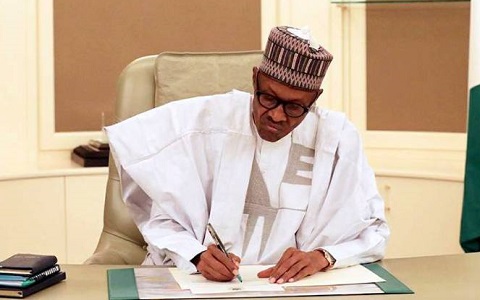
Last month, President Muhammadu Buhari signed an Executive Order granting financial autonomy to state assemblies and judiciary.

The order followed a report of a presidential committee set up to map out strategies for the implementation of financial autonomy for state legislatures and judiciary in accordance with Section 121(3) of the Constitution of the Federal Republic of Nigeria.

The Executive Order provides that the Attorney-General of the Federation and Minister of Justice, authorise the deduction from source of Federation accounts allocation from the money allocated to any state of the Federation that fails to release allocation meant for the state legislature and judiciary in line with the financial autonomy guaranteed by Section 121(3) of the Constitution of the Federal Republic of Nigeria 1999.

According to the Attorney-General and Minister of Justice, Abubakar Malami, the Executive Order no. 10 of 2020, makes it mandatory that all states of the Federation should include the allocations of both the legislature and the judiciary in the first-line charge of their budgets.

As expected, the Executive Order has drawn mixed reactions. There are some who believe it is not necessary since the provision is enshrined in the Constitution and that the National Assembly had already made laws in that regard.

Some also believe the order is a usurpation of the powers of the National Assembly.

On its part, Nigeria Labour Congress, NLC, said the autonomy of state judiciary and legislature is in the interest of good governance, strengthening of the principle of separation of powers, national stability and overall development of Nigeria.

Speaking through its national president, Ayuba Wabba, NLC urged political leaders at every level to respect the wishes of Nigerians and allow the full exercise of financial autonomy for the judiciary and legislatures in the states. 

Mr. Wabba urged governors of the thirty six states of the Federation to retrace their steps and accept the process in the interest of democracy and good governance while stressing that strong legislative and judicial institutions are pillars of democracy and good governance.

In a related development, Chief Judge of Akwa Ibom, Justice Godwin Abraham noted that financial autonomy of the judiciary would enhance quick dispensation of justice in the country as well as engender far reaching consequences for the institution in terms of infrastructure development and capacity building.

Justice Abraham solicited the cooperation of stakeholders towards realizing the objective of the new financial regime.

Despite the provision of the Constitution and the laws enacted by the National Assembly in this regard, state governors have not allowed their state legislatures and judiciary the necessary financial autonomy to perform their functions as required under our democratic practice.

Against this background, President Buhari’s Executive Order on financial autonomy for state legislatures and judiciary would not have been necessary if state governors had adhered to the Constitution.

While supporting the president in this move, we must caution that the state legislatures and judiciary, now granted financial autonomy, should not seek to abuse it, but rather see it as a challenge to help deliver the dividends of democracy to the people at that tier of government.

Autonomy must go hand-in-hand with accountability. It is likely that autonomy will be abused. Civil society must be up and doing at the state level to draw attention to the excesses of the three arms of government.

Also, the media have an important role to play in reporting abuses of powers by the different arms of government.

Furthermore, as the president’s action has strengthened and consolidated the foundation of democracy at the state level, the input of executive order 10 is therefore to ensure that governors allow the houses of assembly and judiciary in their states operate independently as provided by the 1999 Constitution.

Titilayo Kupoliyi

Politics

Head, Department of Political Science University of Ilorin, Dr Gbade Ojo has stressed the need for the state assemblies and the judiciary to be transparent in handling finance when autonomy granted them fully becomes operational.

He stated this in an interview with Radio Nigeria while speaking on the executive order signed by President Muhammadu Buhari.

Dr Ojo who was the former Oyo State Chief of Staff, maintained that the head of the two arms of government must be wary of mismanagement in order not to soil their hands due to the large sum of money that would be in their custody.

Dr Ojo while lauding President Buhari on the executive order noted that the development would help the nation’s democracy to grow.

He however advised state governor’s to look inward to generate more revenue as the finances of those arms would no longer be in their care.

It would be recalled that President Buhari had last week signed executive order granting autonomy to the state assemblies and the judiciary to operate for effectiveness.

Iyabo Adebisi

Politics

The signing of an Executive Order for the implementation of financial autonomy for state houses of assemblies and judiciary by President Muhammadu Buhari has been described as a victory for democracy which indicates further sustenance of democratic rule in the country. 

Deputy Speaker, Oyo State House of Assembly, Hon Abiodun Fadeyi made this known while reacting to the new order by the president, following a Presidential Implementation Committee constituted to fashion out modalities for the implementation of financial autonomy for states’ legislature. 

While commending the president for the giant step towards strengthening the nation’s democracy, the Oyo State deputy speaker expressed joy that another history is being made during the present dispensation in the Oyo state 9th assembly.

Hon Fadeyi who believed the development would bring about quality legislation at the state levels advised the Nigerian Governors Forum, NGF to look into the workability of the Order in each state for the full implementation of the autonomy, considering the present economic downturn occasioned by COVID -19 pandemic. 

Also reacting, a constitutional lawyer, Mr Kazeem Olaniyan who commended the president’s initiative said it is good news for the state judiciary and legislature who had been incapacitated for many years despite their constitutional independence. 

Recall that President Buhari had constituted a Presidential Committee on the autonomy of State Legislature and Judiciary, in accordance with the fourth alteration to the 1999 Constitution, and it is to assess and review the level of compliance by all the 36 states of the Federation. 

Mosope Kehinde

Politics

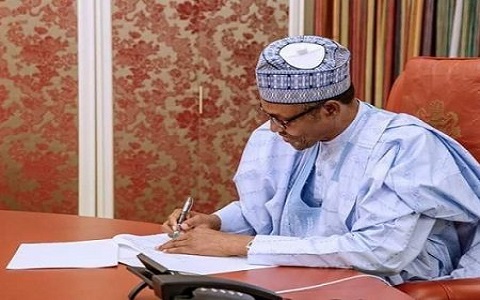
President Muhammadu Buhari has signed an Executive Order granting financial autonomy to the legislature and judiciary across the 36 states of the country.

The Attorney-General of the Federation and Minister of Justice, Abubakar Malami, said these in a statement by his Special Assistant on Media and Public Relations, Umar Gwandu on Friday.

He explained that the order also mandates the accountant-general of the federation to deduct from source amount due to state legislatures and judiciaries from the monthly allocation to each state for states that refuse to grant such autonomy.

Mr Malami said the Executive Order No. 10 of 2020, made it mandatory that all states of the federation should include the allocations of both the legislature and the judiciary in the first-line charge of their budgets.

According to the AGF, “a Presidential Implementation Committee was constituted to fashion out strategies and modalities for the implementation of financial autonomy for the State Legislature and State Judiciary in compliance with section 121(3) of the Constitution of the Federal Republic of Nigeria, 1999 (as Amended).”

He said consideration was given to all other applicable laws, instruments, conventions and regulations that provided for financial autonomy at the states.

Mr Malami maintained that the implementation of financial autonomy of the state legislature and state judiciary would strengthen the institutions at the states and make them more independent and accountable in line with the tenets of democracy as enshrined in the Nigerian Constitution.

The statement added that, “The President signed the Executive Order number 10 into law based on the power vested in him as the President of the Federal Republic of Nigeria under Section 5 of the Constitution of the Federal Republic of Nigeria 1999 (as Amended), which extends to the execution and maintenance of the Constitution, laws made by the National Assembly (including but not limited to Section 121(3) of the 1999 Constitution (as Amended), which guarantee financial autonomy of the State Legislature and State Judiciary.”

FRCN Abuja