The Nigerian Midstream and Downstream Petroleum Regulatory Authority (NMDPRA) says the Federal Government has no intention of increasing the price of Premium Motor Spirit (PMS) during the festive period.
The General Manager, Corporate Communications, NMDPRA, Mr Kimchi Apollo said this through an advisory which addressed speculations on the increase in price and availability of PMS
He said the Nigerian National Petroleum Corporation Limited (NNPCL) had imported PMS with current stock levels sufficient for 34 days.
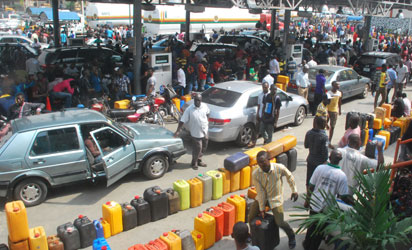
“Consequently, marketers and the general public are advised to avoid panic buying, diversion of products and hoarding.
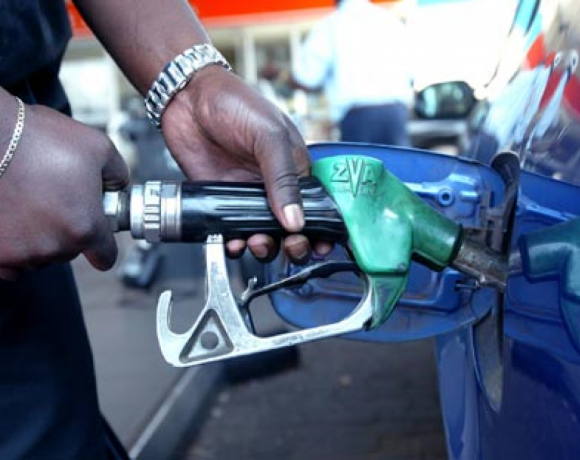
Recall reports that the pump price of PMS is being sold currently between N178 and N180 per litre inside Abuja city centre while the outskirt retail stations dispense fuel between N200 to N250 per litre.
Residents of Ibadan have continued to commend the Federal Government and the Nigeria Labour Congress for reaching a meaningful resolution by reducing the fuel pump price by five naira effective from Monday next week.
Some of them, who spoke to Radio Nigeria correspondent, while lauding the development, said it would bring relief to the yearnings of Nigerians and douse their tension over the unstable fuel pump price amid the economic instability.
A businessman, Mr Toluwase Adedayo noted that the prior notice of the reduction to the citizens was very essential as it would help both customers and markets.
Mr Adedayo, however, called on marketers to support the goal by complying with the new reduction by the given date.
A lecturer at the Department of Mechatronics, the Polytechnic Ibadan, Mr Bukky Yussuf, who noted that though five naira reduction in fuel pump price was small, said it would in essence lead to reduction in every aspect of the country’s economic.
They however urged the Federal Government to work towards respairing the country’s refineries.
The National Executive Council of the Nigeria Labour Congress has approved the 28th of this month for a nationwide protest and industrial action against the hike in the pump price of petrol and electricity tariff.
Briefing newsmen at end of its meeting in Abuja, NLC President, Comrade Ayuba Wabba said the NEC of NLC has reviewed the prevailing local and global petroleum prices and the impact of its hike as well as electricty tariff on workers and Nigerian masses.
He stated that NEC having analyzed the socioeconomic realities arising from govt decision has therefore adopted the ultimatum already served the govt to reverse its decision.
Comrade Wabba who frown at what he described as desperate attempts by government to force the new pump price of petrol and electricty tariff on Nigerians, stressed that the organised labour and its civil society allies would embark on massive nationwide protest at the expiration of the ultimatum on the 28th of this month.
Similarly, the Trade Union Congress of Nigeria, TUC after a meeting held to review its mobilisation strategies on the planned protest over the same issues, said the Congress was going to to collaborate with the Nigeria Labour Congress, NLC to execute the protest and the strike.
A statement by TUC President, Comrade Quadri Olayele explained that though the ultimatum earlier given to the Federal Government by TUC expired midnight of 22nd September but has resolved to shift it to the 28th of this month for effective and maximum impact.
The statement appealed to Nigerians to get ready for the unprecedented mass action and called on those especially in the informal sector to bear with the organised labour while the industrial action last.
Recently the Federal Government increased the depot price of premium motor spirit, PMS, from about one hundred and forty-eight naira to one hundred and fifty-one naira, fifty-six kobo per litre.
However, the development was indeed a bitter pill to swallow for the citizens going by the reactions that trailed the decision.
In the word of the Minister of State for Petroleum Resources, Timipreye Sylva, there is nothing the government can do to intervene in the new petrol price as it is a direct fall out of the deregulation policy announced in the petroleum sector in March.
Though, most filling stations sell the commodity between one hundred and fifty nine naira and one hundred and sixty two naira.
Some couples of months ago, the government had increased the pump price at different times from one hundred and twenty-one naira fifty kobo to one hundred and thirty-eight naira eighty kobo and one hundred and forty-five naira per litre, on the advice of the Petroleum Product Pricing Regulatory Agency, PPPRA, after reviewing market fundamentals and operating costs.
Fuel price only crashed to one hundred and twenty-five naira in March due to the global coronavirus pandemic which led to a fall in demand, and subsequently a fall in price.
It was at this point that the government effectively removes fuel subsidy since the landing costs had dropped below the pump price, and there was no longer need to subsidize the price for Nigerians.
According to Federal Government, prior to the global crash, they paid the difference between the expected open market price and the approved retail price of petrol, known as fuel subsidy, to make the product available to the populace at an affordable price, irrespective of the prevailing market forces.
It was alarming to Nigerians that the recent increase was done two days after the new tariff in electricity was announced,
Consequently, Nigerians are troubled that the increase in petrol price and electricity tariff amounts to festering their sore of untold hardship, especially in the midst of the covid-19 pandemic.
While it is evident that Nigeria is far from the era of queuing for long hours to buy fuel, which citizens appreciate, it is perhaps the timing of the current steps that the masses felt was wrong.
Nevertheless, there is the need for government to put in place measures to address the adverse effects its current decision is having on the socio economic life of the citizens.
It is necessary for government to take the bull by the horn and revamp the country’s moribund refineries, which accounts for the unnecessary importation of petroleum products.
This will stem the outward flow of much needed foreign exchange.
The take-off of private refineries next year may not translate to a reduction in the price of petrol as the processing plant will be selling at the international price.
Also, Nigerian National Petroleum Corporation, NNPC, should ensure that oil marketers have access to foreign exchange at a uniform price so that product prices will be largely uniform across the country to protect the common man.
There is need for the security agencies to strengthen collaborative efforts to put an end to vandalism of oil pipelines, which sabotage fuel availability.
Indeed the nation is going through a trying time, thus it is imperative for government to do all in its power to bring succour to the people whose purchasing power have been eroded through the hike in petrol price.
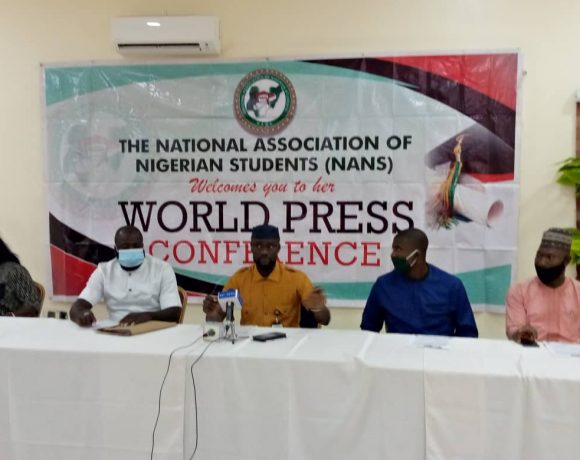
The National Association of Nigerian Students, NANS, has called for a reversal of the hikes in the petrol pump price and that of electricity as it is impacting negatively on the people.
The President of the Association, Comrade Danielson Akpan made the call during a news conference in Abuja.
He explained that such increase was coming amidst earlier increments in the value added tax and multiple taxations on goods and services with unbearable consequences on Nigerians.
Comrade Akpan noted that prices of food items, consumables, transportation and other essential services had skyrocketed.
Comrade Akpan also announced that students would engage in mass protest across the six-geo political zones and the FCT if the increased prize was not reversed.
Motorists in Ibadan have reacted to the immediate implementation of the new increase in fuel price by filling stations.
Federal Government had yesterday announced an increase in pump price of premium motor spirit,also known as petrol from n123.50kobo per litre to n143.80 per litre.
Some of the motorists, who spoke with our correspondent, frowned at the slow pace of implementation when fuel pump price was reduced some months ago.
The motorists urged the Federal Government to urgently ensure that nation’s refineries are functioning optimally for the betterment of all.
Some residents have however expressed divergent opinions on the development, pointing out that the initial reduction was Government’s response to the fall of oil price on the world market.
Radio Nigeria observed that few major marketers had not adjusted their meters to the current price.
One of the marketers, who spoke on the condition of anonimity, said he was waiting for directive from the headquarters.
The Petroleum Pump Price Regulatory Agency, PPPRA, on May 31st this year announced a reduced price band of 121.50kobo to 123.50kobo for the product.