Politics

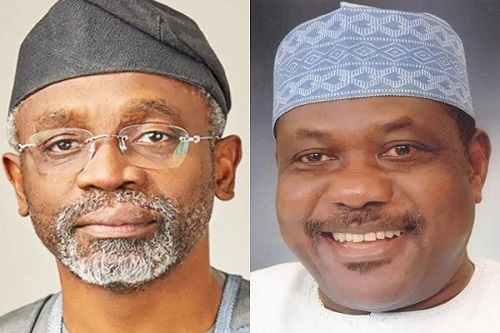
President Bola Ahmed Tinubu has announced the appointment of Speaker of House of Representatives, Rt. Hon. Femi Gbajabiamila as his Chief of Staff.

The appointment was contained in a statement issued on Friday by the Director of Information at the State House, Abiodun Oladunjoye.T

The president also appointed Sen. Ibrahim Hassan Hadejia, a former deputy governor of Jigawa State as the Deputy Chief of Staff.

In the same being, he named former governor of Benue State and immediate past Minister of Special Duties, George Akume, as Secretary to the Government of the Federation (SGF).

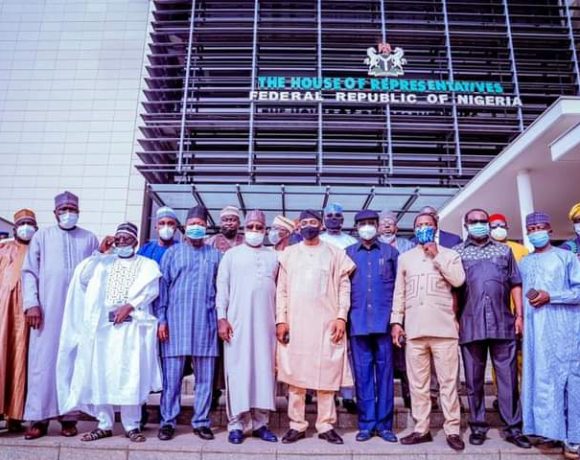
According to Oladunjoye, Tinubu made the announcements in a meeting with the Progressives Governors Forum (PGF

NewsSpeak/Yemisi Owonikoko

Subscribe to our Telegram and YouTube Channels also join our Whatsapp

Security

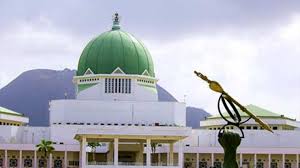
Lawmakers have been notified of a possible attack by Boko Haram insurgents on the National Assembly complex and other public buildings in Abuja,

Several members of the House of Representatives, on Wednesday, confirmed to our correspondent that they had been notified of the imminent attack by the terrorist group.

One of them, who is from a state in the South-West, said his presence would henceforth be limited on the premises.

“That is the security alert I saw today. I’m already moving out of here. I’ll only be around when there is a major reason to do so. Nowhere is safe in the country anymore,” he said.

Already the notice on the impending attack has been made available to the lawmakers.

The notice, a copy of which our correspondent obtained, was sent to the Speaker, Femi Gbajabiamila, other principal officers and all members of the House.

The ‘security alert’, dated May 4, 2021, was issued by Chairman of the House Committee on Internal Security, National Assembly, Mr Usman  Shiddi.

It was titled ‘Re: planned insurgent attacks on VIP locations, government facilities and assets in Abuja.’

The alert read, “I refer to the above subject of which a copy of the intelligence report from the Force Intelligence Bureau of the Nigeria Police Force in the National Assembly Complex has been made available to my office.

“The report indicates planned insurgent attacks by some elements of Boko Haram on some VIP locations, government facilities and assets in Abuja, including the National Assembly complex.

“In view of the above intelligence, I have considered it paramount to advise that all members should, henceforth, use the presidential gate for ingress and egress.

“This is to avoid the unforeseen congestions that are sometimes encountered at the main gates, since such congestions could easily be the targets for these insurgent elements.

“Security agencies are, however, actively on top of the issue to unravel and to contain the intended menace. Accept the assurances of my highest regards, please.”

Security has been beefed up in and around the complex since Thursday last week.

For the first time, security operatives on that day  checked vehicles entering the premises, causing traffic congestion especially at the third (and last) gate, a process that has continued till date.

Before now, the security operatives were only after the identities of  drivers and passengers to confirm that they were staff members, legislative aides, journalists or persons working in private businesses in the complex.

It is observed that soldiers joined the regular sergeants-at-arms and men of the Nigeria Police Force, Department of State Services, Nigerian Security and Civil Defence Corps and the Federal Road Safety Corps that manned the gates.

The Chairman of the Committee on Rules and Business, House of Representatives, Abubakar Fulata, confirmed the development in plenary.

The Speaker  called on Chairman of the House Committee on Treaties, Protocols and Agreements, Nicholas Ossia, to lay the report on the ‘Bill for an Act to Repeal Treaties (Making Procedure, Etc.) Act, Cap. T20 Laws of the Federation of Nigeria, 2004, and Enact Treaties (Making Procedure) Bill.’

Fulata, however, notified the Speaker that Ossai was not in the chamber, saying several lawmakers were still stuck in the traffic because of the security checks.

“It is very difficult today to get in, so a lot of members are stranded at the gate because of the very serious check-in process that the security men are conducting. A lot of members are there stranded at the gate,” Fulata said.

Gbajabiamila had asked, “For what reason? Stranded for what?”

Fulata had said, “This morning, it is very difficult to come in. It has been very difficult to come in today. They are doing security checks.”

Recall that the Governor of Niger State, Sani Bello, had on April 26, 2021, raised the alarm over Boko Haram terrorists taking over a part of the state, hoisting their flag in Kaure village from where they had made incursions into more than 50 villages.

Bello said Abuja was not safe, with Boko Haram’s presence in Kaure – a two- hour journey from the Federal Capital Territory.

He said, “I am confirming that there are Boko Haram elements here in Niger State. Here in Kaure, I am confirming that they have hoisted their flags here.”

Same day,  Gbajabiamila, had met with the President, Major General Muhammadu Buhari (retd.), at the Presidential Villa, in company with the Majority Leader, Alhassan Ado-Doguwa.

The House the next day held a long executive (closed-door) session to discuss the rising spate of insecurity across Nigeria, calling on Buhari to declare a state of emergency on security.

At the secret session that lasted over three hours, the lawmakers unanimously adopted a series of resolutions, one of which was that “the Federal Government should ensure the protection of national infrastructure and assets, particularly the Shiroro and Kainji Dams in Niger State.”

PUNCH
Economy

The House of Representatives will not do anything to hurt Nigerian workers as the Green Chamber will always work in tandem with the yearnings and aspirations of the people, Speaker Femi Gbajabiamila has said.

Speaking during a meeting with a delegation from the Nigerian Labour Congress (NLC) and the Trade Union Congress (TUC) led by NLC President, Comrade Ayuba Wabba on Tuesday in Abuja, the Speaker called on the organised labour to use advocacy and lobbying as tools to register its disagreement with legislative decisions and actions.

Gbajabiamila said those were the most potent tools deployed by labour in advanced democracies to score high points as against street protests or the casting of aspersions on members of the legislature.

He said the dust being raised by the Minimum Wage Bill could be addressed successfully during the public hearing, where all stakeholders, including labour unions, would have the opportunity to kick against the draft legislation.

“The fact is that I’m a labour friendly Speaker, and I represent a labour friendly House.

“I want us to agree, first of all, that whatever was debated on the issue of minimum wage, the contributions by each member, were well-intended.

“When we begin to castigate members like that, it doesn’t pay us. No member will come up with something that he knows will be against the people.

“I want to tell you that we will do what we ought to do. You know me, and you know some of our members. If this hurts the Nigerian people, we’ll do the right thing,” he said.

The delegation paid a courtesy visit to the Speaker over the proposed bill to transfer the National Minimum Wage from the Exclusive-Legislative List to the Concurrent List.

The bill, initiated in the House, had already passed second reading.

On Wednesday last week, the labour leadership led workers on a protest match to the National Assembly, demanding the withdrawal of the Bill on the grounds that it would “enslave” workers and erode the gains achieved in the over 40 years of wage negotiations in Nigeria.

However, meeting with the labour delegation on Tuesday, Gbajabiamila reassured workers that the House would never be anti-people, but would always take decisions to serve the best interests of all Nigerians.

He explained that the proponents of the bill were also concerned about the welfare of workers and sought how to resolve the age-long problem of irregular or non-payment of salaries by many states in the country.

Gbajabiamila informed the delegation that the fact of a bill being debated on the floor did not mean that the Legislature would pass it without “fully taking into account, the totality of the merits and demerits of the bill.”

He noted that where the demerits weighed heavily against a bill, the House had the only option of stopping such a bill.

The Speaker said he had expected labour to deploy advocacy in the media or lobbying through public hearing on the bill to register its disagreement as against casting aspersions on the image of lawmakers.

He spoke more: “In arresting a piece of legislation, because are talking democracy here, you can do it through advocacy; you can do it at the public hearing.

“I had a bill as the Speaker of the House that suffered the same fate – the Infectious Diseases Bill. It went through a public hearing and now we have removed some things from the bill; we listened to Nigerians and now you won’t find some of those things anymore.

“I would have loved a situation where you made your case at the public hearing or through advocacy in the media.”

He added that the Minimum Wage Bill, being a constitutional amendment bill, will take a very long journey through the House, the public hearing, the Senate and the State Houses of Assembly before eventually making its way to the Presidency for possible assent by Mr President.

Gbajabiamila assured the delegation that at whatever point it became clear that the bill did not receive the support of the majority of lawmakers and Nigerians, it would “definitely” be stood down.

He appealed to the labour leadership to shelve its plan for further street protests or calling out workers to embark on industrial action.

Speaking earlier, Wabba told Gbajabiamila that the NLC and the TUC leaderships started mobilising workers against the bill because they believed it would erode the over 40 years of progress made in minimum wage negotiations in the country.

He said if allowed to pass, the bill would ridicule Nigeria before the international community, being a signatory to Convention 26 of the International Labour Organisation on wage issues.

The NLC President argued that minimum wage was a standard embraced by most countries as the minimum take-home-pay for a worker.

He noted that the minimum wage was always determined by the national parliament, but employers at the sub-national levels were free to negotiate with their workers to pay higher, according to the resources available to them.

Wabba maintained labour’s position that the problem was not the inability of states to pay the minimum wage, but a case of “misplaced priorities.”

Politics

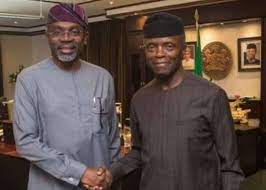
The Speaker of the House of Representatives, Mr Femi Gbajabiamila, has felicitated with Vice President Yemi Osinbajo, as he clocks 64 years today.

Mr Gbajabiamila said Osinbajo has been a patriot and democrat, whose services to his fatherland have been commendable, particularly since he became the Vice President in 2015.

He noted that the VP has for many decades dedicated himself to serving humanity, serving variously as a teacher (lecturer), pastor and a politician of repute.

The Speaker said as a lawyer, Prof. Osinbajo has distinguished himself and rose to become not only a professor of law but also a Senior Advocate of Nigeria (SAN), which is the pinnacle of law practice in the country.

Mr Gbajabiamila, recalled the fond memories of Prof. Osinbajo’s laudable contributions to the development of Lagos State when the VP served as the Attorney General and Commissioner for Justice for eight years – from 1999 to 2007.

According to him, the younger generations of Nigerians have a lot to learn from the life of the VP.

Frcn, Abuja