By Maxwell Oyekunle
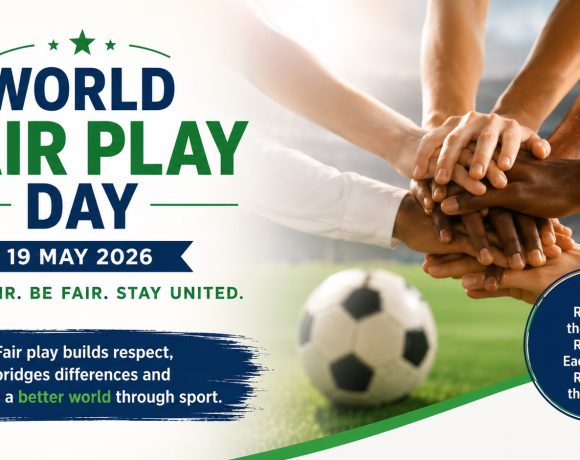
On May 19, the world marks the World Fair Play Day, a global celebration established by the United Nations General Assembly to promote sportsmanship, integrity, inclusion, tolerance, solidarity, and non-discrimination through sports.
Observed for the first time in 2025 following the adoption of Resolution A/RES/78/310 on July 1, 2024, the day highlights the importance of fairness both in sports and in everyday human interactions.
Fair play goes beyond obeying the rules of a game.
It embodies respect for opponents, discipline in victory, dignity in defeat, and rejection of violence, cheating, and doping.
It teaches individuals and societies the values of honesty, equality, teamwork, and mutual respect.
The United Nations also notes that fair play contributes to the achievement of several Sustainable Development Goals, SDGs, including good health and wellbeing, quality education, gender equality, reduced inequalities, and peaceful and inclusive societies.
At a time when Nigeria’s political environment is gradually heating up ahead of the 2027 general elections, the message of World Fair Play Day is particularly relevant.
Political contests, like sports competitions, are expected to be conducted within clearly defined rules, guided by integrity, mutual respect, and acceptance of outcomes.
Unfortunately, political activities in Nigeria are often characterized by intolerance, hate speech, manipulation, violence, desperation for power, and refusal to accept defeat.
As political parties begin consultations and preparations for party primaries, politicians and their supporters can draw valuable lessons from the spirit of sportsmanship.
In sports, opponents compete fiercely but still shake hands after the final whistle.
Winners celebrate without humiliating others, while losers accept defeat and prepare for another opportunity.
Rules are respected because without them, competition loses credibility.
The same principles should apply in politics.
Party primaries should not become battlegrounds fueled by intimidation, vote-buying, blackmail, or violence.
Aspirants should campaign based on ideas, competence, and vision rather than personal attacks and divisive rhetoric.
Equally important is the conduct of supporters, who must avoid inflammatory statements and actions capable of creating tension within political parties and the larger society.
Fair play in politics also means respecting democratic institutions, allowing transparent electoral processes, and accepting legitimate outcomes instead of inciting unrest.
Nigeria’s democracy can only grow stronger when political actors understand that opponents are not enemies, and that leadership is ultimately about service, not warfare.
The spirit behind World Fair Play Day therefore extends beyond stadiums and sporting arenas.
It is a reminder that fairness, tolerance, respect for rules, and peaceful competition are values every society needs — especially during politically-sensitive periods.
As Nigeria moves closer to another election cycle, embracing fair play and sportsmanship in politics may help reduce tensions, strengthen democratic culture, and promote peaceful coexistence among citizens regardless of political affiliation.
Follow us on Telegram and YouTube, and join our WhatsApp Update Group for more updates