Economy

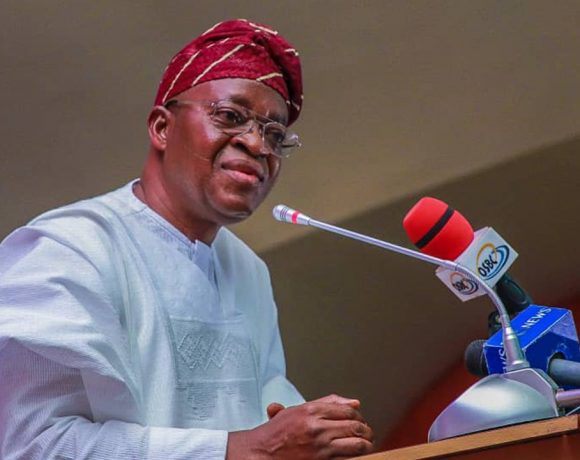
Osun State Governor, Mr Gboyega Oyetola, has presented 109.8 billion Naira budget to the State House of Assembly for the 2021 fiscal year.

Presenting the budget tagged, “Budget of Providence”, M.r Oyetola said the budget was dedicated to post COVID-19 pandemic recovery.

He harped on the need to boost Internally Generated Revenue, IGR of the state.

The Speaker, Mr Timothy Owoeye had earlier commended the executive for making the 2020 budget lived up to expectations even in the face of the novel Coronavirus pandemic.

The Budget estimates of 109.8 Billion Naira has as Capital expenditure of 59.2 Billion Naira while 50.6 Billion Naira was earmarked for Recurrent expenditure.

Education and Health sector is to take the larger percentage of the the budget which is 18.08% and 17.98% respectively.

Governor Oyetola explained that the budget would be funded by Federal allocation which will make up  45.75% of the budget, 24.26% from Internally Generated Revenue, 22.88% from Aids and Grants of as well as 7.11% from Other Capital Receipt.

The Governor who noted that bulk of government revenue for the year 2020 came form Federal Allocation highlighted the need to boost Internally Generated Revenue of the State.

Earlier, the Speaker of the Assembly, Mr. Timothy Owoeye had commended the executive for making the 2020 budget lived up to expectations even in the face of the novel coronavirus pandemic.

The Speaker urged the executive to increase ease of doing business and remove bottlenecks that could scare investors away from the State.

Mr. Owoeye said the State House of Assembly would continue to embark on effective oversights to ensure timely completion of government projects in the State.

Also Speaking, the Chairman, House Committee on Finance and Appropriation, Mr. Taiwo Olodo assured that the budget would be given speedy consideration and passage.

It will be recalled that Osun State Appropriation Amendment Bill 2020, the state budget was reviewed downward from 119.5 billion naira to 82.2 billion naira.

Funmi Adekoya
Economy

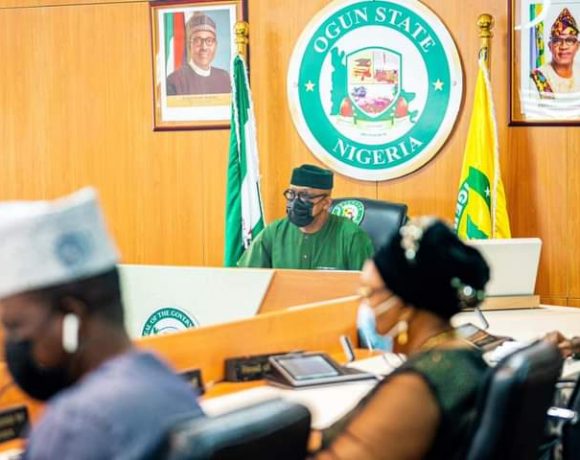
Ogun State Governor, Prince Dapo Abiodun has said that his administration would rely more on the state’s Internally Generated Revenue, IGR, as the primary source of financing its budget next year.

Prince Abiodun made this known at the virtual consultative meeting with the representatives of the people of Ogun East Senatorial District on the 2021-2023 Medium Term Expenditure Framework and 2021 budget.

The governor pointed out that the state government would give utmost priority to education, health, agriculture and road infrastructure in next year’s budget.

While noting that the recent payment of the new minimum wage was in line with the agreement reached with labour unions, Governor Abiodun urged the labour unions in the state to be considerate in their demands at a time government was also struggling with finances.

The chairperson, Ogun State Association of Women Entrepreneurs, Mrs Oluwakemi Olude and her counterpart in the Women Support and Care Initiative, Dr Omolara Quadri called for the creation of more jobs, execution of more capital projects and empowerment of the youths and women in the coming fiscal year.

Bolanle Adesida

News Analysis

Tourism over the years has proven to be a strong and resilient economic activity and a fundamental contributor to economic growth of any nation.

As it generates billions of dollars in exports and creating millions of jobs.

Acknowledging these facts, many developing and developed countries today rely on tourism as an option for sustainable development of their nations.

Though Nigeria is richly blessed and endowed with both physical and cultural tourism potentials it has been relatively insignificant on the world tourism map.

This is because the nation’s economy has been mainly petroleum-driven, with the result that tourism does not play any significant role in the economy.

Much prominence has been given to oil production as the major source of revenue, particularly, foreign exchange at the expense of other industries including tourism.

Factors that affect the nation’s tourism sector include poor implementation of tourism plans, absence of defined measures to encourage participation in tourism, policy formulation and implementation, and poor infrastructural development.

It was also discovered that successive administrations have not shown commitment to tourism development beyond mere rhetoric.

Unless tourism is seen as strategically important to the economy of Nigeria and the necessary plans, policies, actions and resources to support this initiative are put in place, tourism will continue to be a missed opportunity.

For instance, in Ondo state, much concentration is still on cultural tourism which is promoting the culture through festivals and celebrities.

The state is also endowed with natural resources which if developed, will help to generate employment for the people and boost the local economy.

The time has come for the country to harness the potential in the tourism sector to protect its culture and heritage.

To do this, government at all levels should commit a lot of resources to the development of tourism sector.

Also, federal government needs to create a conducive environment so that visitors could be attracted to the nation’s tourist sites.

The provision of efficient transportation, stable power supply, water and telecommunications will make Nigeria a tourism destination for foreign nationals.

Above all, there should be attitudinal change by states and local government to improve their Internally Generated Revenue, IGR, through tourism development thereby reducing dependence on federal allocation.

Abisola Oluremi