Economy

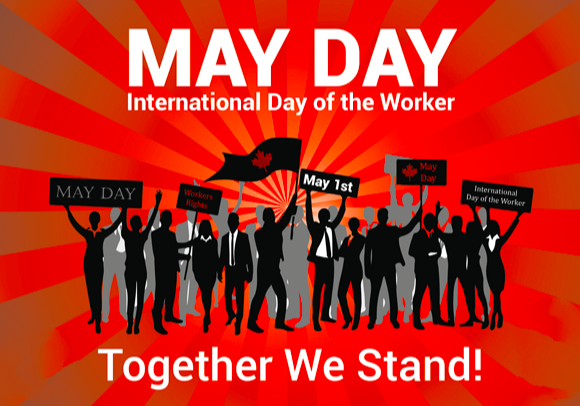
Every first of May is set aside to commemorate International Workers Day also known as labour day.

It is a day to mark freedom of workers across the world.

For centuries, workers around the world have always had to struggle to earn living wages, and ensure safe working conditions.

The day was chosen due to an event on the other side of the Atlantic.

In 1884 the American federation of organized trades and labor unions demanded an eight-hour workday, to come in to effect as of may 1st 1886.

As a result of the workers agitations for improved wages and better welfare, the first May Day celebrations took place on may 1st 1890 after its proclamation by the first International Congress of Socialist Parties in Europe on July 14th 1889 in Paris, France, to dedicate May 1st every year as the “Workers day of International Unity and Solidarity.”

In Nigeria, May Day as a public holiday was first declared by the People“s Redemption Party (PRP) government of Kano State in 198o and became a national holiday on May 1, 1981.

 It is most commonly associated as a commemoration of the achievements of the labour movement.

The holiday also known as International Worker’s Day or May Day  is marked with a public holiday in over 80 countries.

However, it is obvious that this year’s celebration would be low key, as the country is battling with insecurity and Covid 19 pandemic, which had created problems for Nigeria.

The pandemic has killed thousands of people worldwide including

essential workers who died on duty.

Security of lives and property have turned to dream as kidnapping and abduction for money is  becoming alarming.

For instance, an aids workers abducted by Boko Haram terrorists on a major highway in north east Borno State while some civil servants were also  kidnapped while going to work in Ekiti State.

Apart from insecurity Nigerian workers have been faced with other problems in the discharging of their duties, mention should be made of the  present socio economic problems, leading to high cost of living .

It is imperative for all and sundry to take responsibility of safety of lives and property of workers as it should not be left in the hand of government alone.

Government should step up effort in protecting the security of lives and create enabling environment in the workplace for optimal performance.

 The Nigeria Labour Congress and the trade union congress must equally rise to the struggles of Nigerian workers more than before.

The two labour unions must ensure job and wage protection by working round the clock to support incentives are provided for all workers in the formal and informal sectors.

It is essential that governors raise their internally generated revenues, igr, in their domain by tapping into local resources to provide for workers welfare.

To mark this year workers day, the Federal Government has declared monday May 3 as public holiday to mark this year’s International Workers Day celebration.

The minister of interior, Ogbeni Rauf Aregbesola commended workers for their patience, understanding and support in driving the policy and programmes of President Mohammadu Buhari, saying government is putting all strategies in place to curb the challenges of insecurity to make the country safe and peaceful for all Nigerians including workers.

Olukemi Akintunde
News Analysis

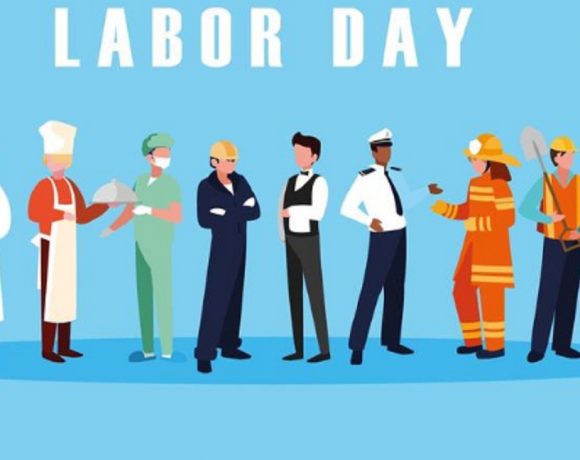
Every First of May is set aside to commemorate International Workers Day also known as Labour Day.

It is a day to mark the freedom of workers.

For centuries, workers around the world have always had to struggle to earn living wages, and ensure safe working conditions.

In the 1860’s they campaigned for shorter working hours in many countries, while on May 1, 1886, workers in Canada and the United States, embarked on a protest to demand an eight-hour work day.

Two days later, in the United States, Chicago police killed some civilians during a workers’ protest which resulted to another violent protest at Hay Market Square, Chicago where seven policemen died and many protesters injured.

Consequently, eight leaders of the Chicago Workers Movement were charged with the death of the policemen and were all convicted.

Later, four were executed, one died in custody, and three were given life imprisonment, but were eventually pardoned.

In memory of this struggle and the struggle of all workers for better conditions, May 1 was declared an eight-hour holiday in 1889, by the International Workers’ Congress in Paris, France.

Since May 1, 1981, Labour Day has always been a public holiday in Nigeria.

Nigerian workers both from the formal and informal sectors usually gather at various designated places across the country to celebrate the day.

However, it is obvious that this year’s celebration would be low key, due to Covid-19 pandemic, which has wreaked havoc worldwide.

The pandemic has killed thousands of people worldwide among whom were essential workers who died on duty.

Since the entrance of Covid-19 into the country few months ago, Nigerian workers have been faced with so many socio-economic problems.

While the minimum wage of thirty thousand naira was fully implemented in November, 2019 for Federal Government workers, some states and employers in the private sector are yet to commence payment of the minimum wage to their workers even with the payment of the wage to some workers, many still find it difficult to live a standard life let alone now that Covid-19 is ravaging lives.

Suffice to note that, for some weeks now, federal government workers and those on essential duties have been at their duty posts to make sure the economic wheel and the safety of Nigerians are not jeopardised.

Also, many employees in the private sector have been told to stay at home as a result of poor patronage of goods and services due to the pandemic.

The situation has continued to take its toll on many workers especially in the private sector who any salary at all, only received half salaries for the months of March and April.

In developed nations, struggling companies and self-employed workers were offered financial help by their government, to strengthen their businesses while their staff were also paid during the lockdown occasioned by the coronavirus outbreak.

However, this is not the case in Nigeria.

Although government had been distributing palliatives to some categories of citizens, Nigerian workers seem not to be taken care of in the scheme.

While still hopeful that government would come up with some palliatives for Nigerian workers during this period, the federal government should be commended for acknowledging the fact that the labour force is contributing positively to the fight against coronavirus.

The Nigeria Labour Congress, NLC and the Trade Union Congress, TUC, must equally rise to the struggles of the Nigerian workers more than before.

The two labour leading unions must ensure job and wage protection by working round the clock that fiscal stimulus, financial aids and other macro-economic support incentives are provided for all workers in the formal and informal sectors.

Associations affiliated with the two labour unions should be saddled with the responsibility of distributing grants to their members, especially market men and women, commercial drivers, artisans and other categories of workers who are involved in involuntary lockdown to enable them to cope during the Covid-19 period.

Nigerian workers on the other hand, should remain dedicated to duty and continue to justify the reasons some workers laid down their lives.

They should remember that people were killed so they could have the 8-hour working hours being enjoyed today.

They should acknowledge that homes with families in them were burnt so that Saturday would be part of the weekend.

Workers must realise that people fought for the rights and dignities they enjoy today, but there is still a lot more to fight for.

The sacrifices of so many workers cannot be forgotten if not, the nation’s workforce will end up fighting for those same gains all over again.

Olaolu Fawole