Judiciary

By Funmi Ojo

Osun state Governor, Senator Ademola Adeleke says his administration is not responsible for the ongoing strike by the Judiciary Staff Union of Nigeria, JUSUN, in Osun State.

‎In a statement by his Spokesperson, Mallam Olawale Rasheed, the Governor while reacting to allegations made by the Forum of Nigerian Bar Association, NBA, branches in Osun State, said the paralysis of the state judiciary was caused by the alleged failure of the Chief Judge to convene statutory meetings of the Judicial Service Commission, JSC.

‎The NBA, in a petition dated December 8, had accused the Governor and his appointees to the JSC of contributing to the crisis within the judiciary.

‎The government described the allegations as misrepresentations, stating that Governor Adeleke remains committed to constitutional governance and the smooth functioning of the judiciary.

‎According to the statement, the shutdown in the judiciary was not due to a refusal by government-appointed members of the JSC to participate in meetings, but rather the Chief Judge’s persistent refusal for two years to convene any meeting of the Commission as required by law.

‎The statement recalled the Governor’s intervention during the last JUSUN strike in February 2024, when he met with the JUSUN national leadership to resolve their grievances, which led to a tripartite Memorandum of Agreement (MOA) signed on February 16, 2024, between JUSUN, the State Government, and the Judiciary.

‎The MOA included commitments to reinstate suspended staff, convene JSC meetings, process promotions, pay robe allowances, withdraw pending litigations, and develop a new scheme of service for judiciary staff.

Follow us on Telegram and YouTube, and join our WhatsApp Update Group for more news updates.


Judiciary

Ogun State Chapter of the Judiciary Staff Union of Nigeria, JUSUN, has suspended the industrial action embarked upon over two months ago over cut in salary.

The Chairman of the Union, Comrade Tajudeen Edun, announced that there were series of meetings before the issue was finally resolved. 

He said the union had reached an agreement with the government and the union will resume work.

Comrade Edun said the state government had accepted the union’s demand and promised that members will partner the government in achieving greater heights.

The union chairman addressed the newsmen flanked by the Secretary to the State Government, SSG, Mr. Tokunbo Talabi and the Head of Service, Alhaja Selimot Otun.

Wale Oluokun

Judiciary

Following the suspension of the industrial action by members of the Judiciary Staff Union of Nigeria, JUSUN and the Parliamentary Staff Association of Nigeria, PASAN, judicial activities have resumed in some courts visited in Ibadan.

At the State High Court, Ring Road, courts were opened for cases while other rooms for judicial and administrative events were opened.

At Court Four, sittings were held while three sittings were held in Court Five of the State High Court, Ring Road in Ibadan.

One of the court officials, Mrs Kehinde Olalere said the court sat as expected, adding that complainants were already approaching the courts for new dates on pending cases.

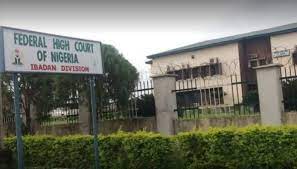
Our correspondent who visited some federal courts along new Adeoyo road, in Ibadan, reports that the situation was not different as some sittings were held on some cases at National Industrial Court as confirmed by the court’s JUSUN representative, Mr Festus Ajiboro.

Mr Ajiboro expressed optimism that the union’s demands would be met as government had already set up a committee to look into them.

JUSUN members began their strike on April 6, demanding for financial autonomy, salary increment among other issues.

Rotimi Famakin

Judiciary

Court premises in Abeokuta the Ogun State capital have been opened following the resumption to duties of members of the Judiciary Staff Union of Nigeria, JUSUN who have been at loggerheads with the government.

The entrance gate to the Federal High Court at Oke Mosan which had been locked since the commencement of the industrial action was opened while staff were seen discussing in the early hours of the day.

The situation was not different at Isabo State High and Magistrate court.

The two entrances to the court premises which were locked throughout the duration of the strike were opened.

Some residents were seen around the Isabo Court premises entering with excitement to transact business.

Efforts to speak with the union leaders at both Oke Mosan and and Isabo met brick wall as the union officials were said to be outside Abeokuta on official engagements.

Wale Oluokun

Economy

Nigeria in recent times had witnessed pockets of industrial action by unions that are demanding better pay and welfare for their workers.

This incessant strike is capable of threatening the social life and economic recovery of the country

Last month alone, the country witnessed strike in key sectors of the economy including health, judiciary and education   

On the first day of this month, the National Association of Resident Doctors resumed an industrial action, which lasted ten days.

The Judiciary Staff Union of Nigeria embarked on its own strike over service conditions while the Academic Staff Union of Polytechnics declared a nationwide strike.

Earlier in March, the union had given the government a twenty-one day ultimatum for the nationwide implementation of financial autonomy in the Judiciary.

In December last year, the Nigerian Identity Management Commission workers disrupted the National Identity Number registration of Nigerians by declaring a trade dispute over poor welfare and poor working condition.

Also, the Maritime Workers Union of Nigeria gave the Federal Government a seven-day notice to address its grievances or have port operations shut down.

Academic Staff Union of Polytechnics, ASUP, declared strike over non-implementation of a new salary structure for polytechnic lecturers.   

At the state level, teachers and magistrates in Cross River State are locked in a bitter feud with their governments over salary default.

Strike in the country’s fragile education sector is a huge setback, which suffered badly last year from the covid-19 lockdowns, while industrial action in the judiciary, health and education will not augur well for the economy and should be prevented at all costs.

Despite the recession experienced as a result of covid-19 pandemic, several countries have been working hard to minimize the damage to their economies.

For instance, in July 2020, British Prime Minister, Boris Johnson, initiated a thirty billion pounds covid-19 stimulus to save jobs.

 The package included one thousand pounds for firms to take on trainees, and two billion pounds to subsidize placements for sixteen to twenty-four year-olds from lower income families.

At this juncture, it is necessary that government should stop negotiating unrealistic agreements with unions, and invest massively in the health, education, judiciary and social infrastructure.

This is what obtains in Ghana where the government assisted medical practitioners with generous incentives and tax rebates.

Government needs to think along that line by giving resident doctors a decent hazard allowance.

Unions should avoid going on strike at any slight provocation; rather other actions such as ‘go-slows’ or ‘working to rule’ can be employed when dialogue appears not to be yielding any positive result.   

 Government officials should make sacrifices by shunning medical tourism and expensive lifestyles for the development of the country.

There is also the need to review allowances of political office holders downward to meet financial needs of all sectors of the nation.   

It is important that government ought to retool the economy by improving the revenue profile through privatizing of the state-owned enterprises, improving tax collection and plug fiscal leakages.

With this, government will have more income to maintain its workforce and resuscitate the battered economy.

Fawzeeyah Kasheem