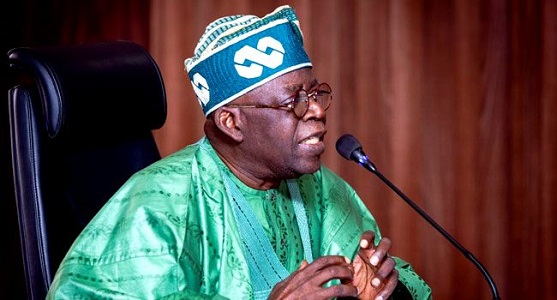
President Bola Tinubu has approved the immediate upgrade of 16 health institutions across all six geo-political zones in the country.
The president directed that the infrastructure and equipment of the institutions should be immediately upgraded.
The institutions include the Lagos University Teaching Hospital, Surulere and the Ahmadu Bello University Teaching Hospital, Zaria.
Among them are six teaching hospitals marked for the establishment of oncology and nuclear medicine centres per facility all to be delivered within 12 – 18 months.
The modernisations are “in line with his administration’s vision of overhauling the health and social welfare sector…to ensure that world-class cancer diagnosis and care is accessible…to all Nigerians,” said the Presidency in a statement signed by Tinubu’s Special Adviser on Media and Publicity, Ajuri Ngelale.
The statement is titled, ‘President Tinubu approves immediate upgrade of key health infrastructure across Nigeria’s six geo-political zones.’
Aside from LUTH and ABUTH, the four other teaching hospitals are the University of Benin Teaching Hospital, Edo State, University of Nigeria (Nsukka) Teaching Hospital, Enugu State, Federal Teaching Hospital, Katsina, University of Jos Teaching Hospital, Plateau State.
Tinubu also approved critical health care service expansion projects across the fields of radiology, clinical pathology, medical and radiation oncology and cardiac catheterisation in 10 hospitals across all geo-political zones.
They are Reference Hospital, Kaduna (North-West) — (Radiology, clinical pathology, medical and radiation oncology), Medical Diagnostic Centre Complex, Enugu (South-East) — Radiology, clinical pathology, medical & radiation oncology), Usman Danfodiyo University Teaching Hospital, Sokoto (North-West) — Diagnostic and intervention radiology, clinical pathology, and cardiac catheterisation, University College Hospital, Ibadan (South-West) — Diagnostic and intervention radiology, clinical pathology, and cardiac catheterization and University of Uyo Teaching Hospital (South-South) — Radiology and clinical pathology.
Others are Abubakar Tafawa Balewa University Teaching Hospital, Bauchi (North-East) — Radiology and clinical pathology, Federal Medical Centre, Asaba (South-South) — Radiology and clinical pathology, Harmony Advanced Diagnostic Centre Complex, Ilorin (North-Central) — Radiology and clinical pathology, Jos University Teaching Hospital (North-Central) — Radiology and clinical pathology and Federal Medical Centre, Nguru (North-East) — Radiology and clinical pathology.
Ngelale said the Ministry of Health and Social Welfare in collaboration with the Nigeria Sovereign Investment Authority will carry out the comprehensive upgrade of the cancer-treatment infrastructure and other critical developments, in addition to the full renovation and expansion of prior investments to improve broad-based access to high-quality healthcare nationwide.
“These critical projects, set to be delivered within 12-18 months, will improve screening and diagnostics for communicable and non-communicable diseases; reduce mortality rates and improve outcomes for non-communicable diseases,” he added.
They are also expected to create considerable employment opportunities for clinical, administrative, and managerial personnel across Nigeria’s six geo-political zones, all while building the capacity of clinical personnel in advanced procedures, diagnostics, and treatment modalities, in accordance with the administration’s eight priority areas.
Punch/Simeon Ugbodovon
Subscribe to our Telegram and YouTube Channels and also join our Whatsapp Update Group