Feature

By Khadijat Uthman

People can’t agree on what it is exactly because it looks like a cat but has some features of Viverrids. Recent genetic research suggests that it is an animal of its kind.

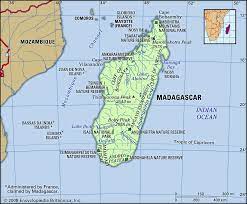
The name is fossa described as one of the strangest mammals in the whole world. It is called Fossa, cat-like in look yet not a member of the cat family.

Fossa is a member of the Eupleridae, closely related to the mongoose family, Herpestidae.

It is a carnivorous mammal, the largest mammalian carnivore in Madagascar and has been compared to a small cougar. The fossas are classified as a vulnerable species, with only about 2,500 in the wilderness.

The Fossa and the modern Mangoose come from the same ancestor, one which arrived on the island of Madagascar around 21 million years ago.

It has a slender body and muscular limbs and a tail nearly as long as the rest of the body. It has a mongoose-like head, relatively longer than that of a cat.

Some of them can be almost 7 feet long, from their nose to the end of their long tail. Their tails are as long as their bodies and help them stay balanced when they jump through trees.

Moreover, Fossas have short fur that can be red to dark brown.

They have cat-like eyes and sharp, retractable claws. Their faces are slightly webbed, which helps them move around in the trees.

Both males and females have short, straight fur that is relatively dense and without spots and patterns.

They also use vibrations, noise and even body odours to get to know each other, in this species, males and females have different body odours.

Fossas eat small mammals, birds, amphibians, reptiles and insects. They also prey on lemurs. Fossa hunt during the day, especially when they lack food, but prefer to spend the daylight hours resting in a hollow tree, cave or an abandoned termite mound.

Subscribe to our Telegram and YouTube Channels and also join our Whatsapp Update Group 
Foreign

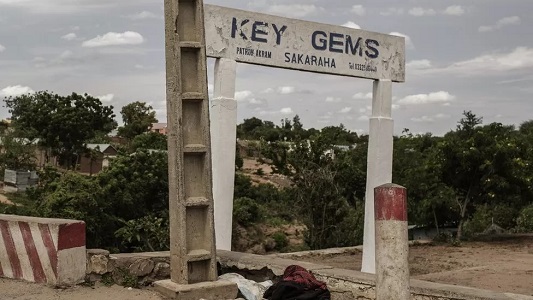
The Madagascan president’s chief-of-staff has been charged in the UK with seeking a bribe from a gem mining firm.

Romy Andrianarisoa and an associate are accused of offering the British firm Gemfields licences in Madagascar in return for around £225,000.

She and her associate, Philippe Tabuteau, have been charged with requesting, agreeing to receive or accepting a bribe.

Both were remanded in custody after a brief court appearance on Saturday,

Ms Andrianarisoa, 46, and French national Mr Tabuteau, 54, are also accused of trying to land a 5% equity stake in any Gemfields Madagascar projects, according to the National Crime Agency (NCA).

The agency said that the pair were arrested in the Victoria area of central London on Thursday afternoon, at a meeting where they were suspected of having attempted to solicit a bribe.

Andy Kelly, the NCA’s head of international corruption, said: “I am grateful to Gemfields for bringing this matter to our attention and for their ongoing co-operation with the investigation.”

Ms Andrianarisoa and Mr Tabuteau appeared in court on Saturday and have both been remanded in custody to next appear at Southwark Crown Court on 8 September.

The NCA did not specify what licences the alleged offences related to.

BBC/Simeon Ugbodovon

Subscribe to our Telegram and YouTube Channels also join our Whatsapp Update Group
Foreign

Madagascar Island Maritime Authorities say no fewer than 22 migrants died when their boat sank off the coast of Madagascar over the weekend.

“Forty-seven people had clandestinely taken a boat headed to (the French territory of) Mayotte, but that sank,” the Madagascar maritime authority APMF said in a statement.

“Twenty-three of the passengers were able to be saved. Twenty-two bodies were found,” it said, adding that the accident occurred on Saturday and that search-and-rescue operations were continuing for the two people who remained missing.

Many migrants try each year to reach the French territory of Mayotte, which lies north of Madagascar in the Indian Ocean.

In 2021, more than 6,500 people were detained trying to enter the territory clandestinely, according to French authorities.

There are no viable statistics on how many people have lost their lives in attempting such crossings. A French senate report published in the early 2000s estimated that, at that time, around 1,000 people were dying each year.


AFP / Titilayo Kupoliyi

Subscribe to our Telegram and YouTube Channels also join our Whatsapp Update Group

Foreign

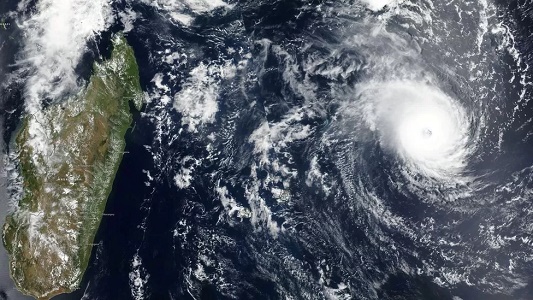
At least one person has died after a tropical cyclone battered Madagascar’s east coast, with heavy rain and powerful winds tearing roofs off houses and triggering a storm surge.

Cyclone Freddy made landfall on Tuesday, weeks after another tropical storm killed 33 and left thousands without shelter.

Schools have been shut and traffic has been suspended.

Earlier, Freddy caused some damage in Mauritius, flooding beachside hotels.

The Indian Ocean island nation is particularly vulnerable to cyclones. It is hit by an average of 1.5 cyclones every year, the highest rate in Africa, according to the United Nations Office for the Coordination of Humanitarian Affairs.

The cyclone slightly weakened once it made landfall on Madagascar, situated off the southeast coast of Africa, with wind gusts exceeding 130km/h (81mph). The country’s meteorological service warned that torrential rains would continue along its path.

“The sea remains very rough… and a significant risk of coastal flooding will continue overnight,” it said.

A 27-year-old man drowned near the port of Mahanoro before the storm made landfall, officials said.

Officials also said 7,000 people had been pre-emptively evacuated from the coastal region directly in Freddy’s path, and warnings waves could reach over 8m (26ft) were issued by the International Federation of Red Cross.

Some people used sandbags to weigh down their roofs as a precaution.

“All the doors and windows started shaking,” said Tahina, a resident of Mananjary, a coastal town of around 25,000 people 30km from where the cyclone first made landfall.

She had fled her home with her parents and three children to shelter in her husband’s office.

“Next to us, at least five houses have lost their roofs,” Tahina told AFP news agency.

Pascal Salle sobbed as he surveyed the damage caused by Freddy – which had ripped a window off of his home and turned his garden into a “sandy field”.

“It’s a repeat performance. I can’t take this every year, it’s not possible. Batsirai and Emnati in 2022, Freddy in 2023… Who’s to say that in 15 days another one won’t fall on us?” he said.

Last month the powerful storm Cheneso smashed into north-eastern Madagascar bringing in heavy winds and triggering downpours that caused extensive flooding, and killing at least 33 people and forcing tens of thousands of people from their homes.

Mananjary is still recovering from devastation caused by last year’s Cyclone Batsirai, which killed more than 130 people across Madagascar.

Cyclone Freddy is forecast to cross the ocean from Madagascar and make landfall in Mozambique, before potentially moving further inland to hit Zimbabwe, UN officials say.

BBC / Titilayo Kupoliyi

Subscribe to our Telegram and YouTube Channels also join our Whatsapp Update Group 

Foreign

Madagascar has placed one of its main regions, which covers the capital, Antananarivo, back under a strict lockdown following a surge in coronavirus infections.

The government announced that the lockdown would come into effect on Monday and end on 20 July.

It will include a ban on traffic in and out of the region and a curfew on the movement of people on the street.

“Only one person per household is allowed to go out into the street between 06:00 and 12:00,” the government said in a statement.

The lockdown is meant to slow the spread of the virus, authorities explained.

There are 2,941 confirmed cases, and 32 people have died since the virus was first detected on the island in March.

Close to 24,000 tests have been done so far.

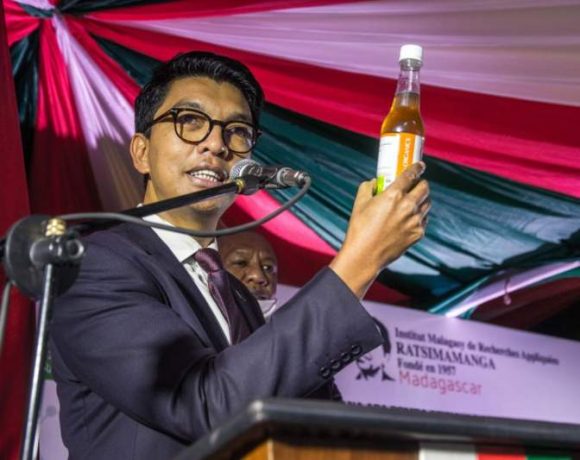
Madagascar made international news in May when President Andry Rajoelina launched a herbal tonic known as CovidOrganics, which contains the anti-malarial artemisia plant, saying it could cure and prevent coronavirus

It has been widely distributed and is being given freely to pupils in schools across the country.

Although its efficacy has not yet been scientifically established, a number of African countries have since ordered it to try it for themselves.

The African Union said in May that it wanted to see the scientific data on the “safety and efficacy” of the product.

The World Health Organization has issued a warning against people using untested remedies for coronavirus.

BBC