Environment

By Oluwatoyin Adegoke

Ensuring the sustainable protection and management of natural resources for the benefit of the environment and its inhabitants was in focus as experts engaged stakeholders on the conservation of national biodiversity at a workshop in Abeokuta, Ogun State. 

The event marked the launch of the Global Environment Facility Project, GEF, with emphasis on Sustainable Use of Lowland Forest Mosaic landscapes in 4 focal states of Ogun, Ondo, Edo and Delta States.

The project being implemented by the Food and Agriculture Organisation, FAO, in collaboration with the National Park Service of Nigeria, was aimed at enhancing the conservation, sustainable use and restoration of lowland forest landscapes to protect biodiversity and strengthen the livelihood of local communities.

Participants deliberated on addressing a range of biodiversity challenges across the land and sea, with a focus on the sustainability of local communities, a healthy environment, poverty reduction and food security. 

Stakeholders were reminded that Nigeria remained one of Africa’s richest biodiversity hubs, boasting more than 4700 plant species, 285 mammal species, as well as hundreds of birds, reptiles, amphibians and fish species.

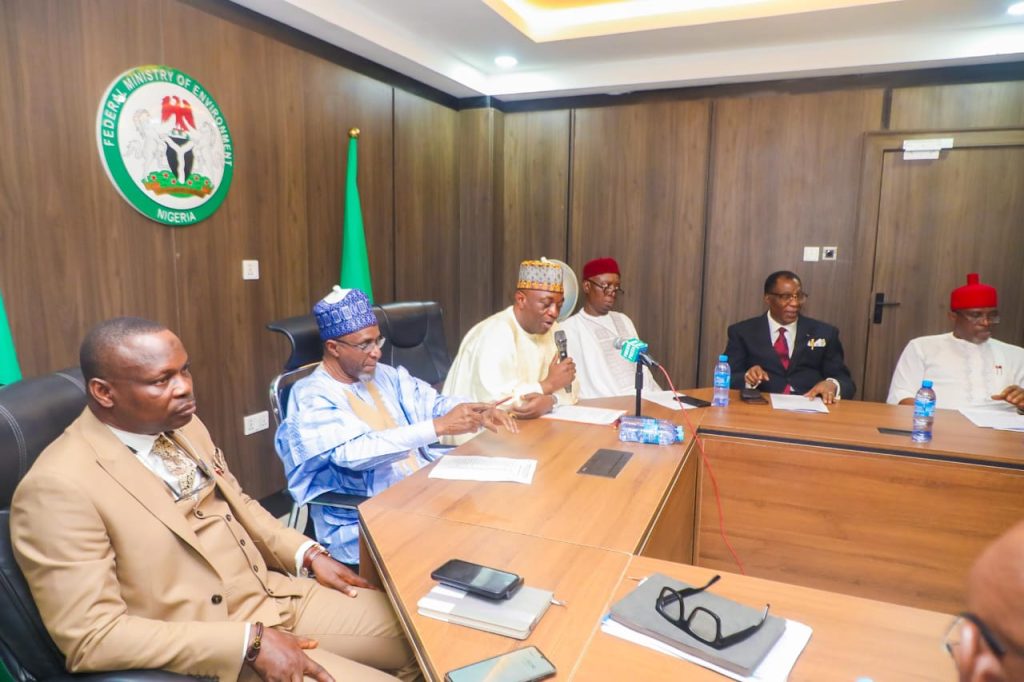
The Minister of Environment, Malam Balarebe Lawal, who spoke through Mr Simeon Ezinkwo at the workshop, described the project as timely and a great step towards safeguarding the forest ecosystem and biodiversity.

Malam Lawal said the government was working assiduously with relevant agencies to strengthen the enforcement of relevant environmental laws while also increasing public awareness efforts on protecting the environment.

In the same vein, Country Representative of the Food and Agriculture Organisation, Mr. Koffy Kouacou, said the workshop would help to strengthen collaborations among stakeholders to promote integrated and sustainable management of lowland forests.

Represented by a Climate Change Specialist, Miss Nifesimi Ogunkua, the FAO Country Representative said the move was in line with Nigeria’s national environmental goals and its global commitments under the Convention on Biological Diversity, to protect and conserve the country’s vital forest reserves.

Similarly, the Conservator-General of the National Park Service, Dr. Ibrahim Goni, reaffirmed the agency’s commitment to sustainable conservation and urged the participants to come up with innovative and practical solutions to the growing challenges of biodiversity loss and ecosystem degradation.

Other contributors equally affirmed that the gathering was an opportunity to validate implementation plans, assess institutional readiness and build shared understanding of short and long-term priorities to preserve natural resources and address the challenge of environmental degradation.

Subscribe to our Telegram and YouTube Channels, and also join our WhatsApp Update Group.
Environment

By Osamudiamen Idemudia (Abuja)

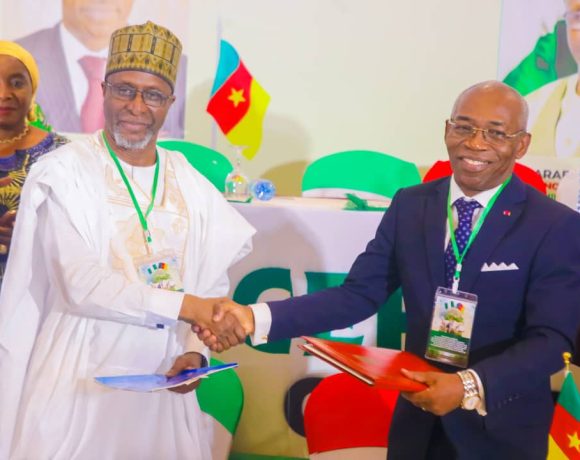
Nigeria and Cameroon have signed a cooperation framework agreement on trans-boundary ecosystems conservation and sustainable management to enhance protection of endangered animals, like gorillas and chimpanzees, preserve critical habitats and tackle illegal wildlife trade across the border.

The Cooperation Framework Agreement signed in Abuja, by representatives from both countries, is to address the urgent challenges of habitat loss, widespread illegal hunting, and wildlife trafficking.

It also represents a strong joint commitment to collaborate closely on various fronts related to wildlife conservation and sustainable management of natural resources.

Minister of Environment, Balarabe Abass said both countries will continue to engage in constructive dialogue, and remain steadfast in ensuring that shared natural resources are sustainably managed and conserved for the benefit of present and future generations.

“The agreement underscores the commitment of both countries to work together to manage and conserve shared natural resources and also demonstrates the importance of bilateral cooperation in tackling global challenges”, the minister noted.

In a keynote address, the Minister of Forestry and Wildlife, Cameron, Mr. Jules Doret Ndongo,who expressed concern on smuggling of illegal wildlife particularly elephants tusks and pangolin scales across the Nigerian-Cameroon border, urged all parties involved to be more committed in the implementation of the agreement.

In a remark, one of the stakeholders who is the Executive Director at Africa Nature Investors (ANI) Foundation, Mr Tunde Morakinyo, said, “the agreement will enable national parks such as Gashaka-Gumti and Cross River in Nigeria to work closely with their counterparts in Cameroon to protect the incredible biodiversity they share including chimpanzees, gorillas and elephants, for future generations.”

“It is hard to explain how excited I am by this historic agreement. The idea of trans-boundary collaboration on conservation was proposed as far back as 2008 recognising the spectacular national parks on both sides of the Nigeria-Cameroon border”, he said.

Mr Morakinyo explained that his organisation been pushing for this trans-boundary cooperation for a while alongside others, including the Nigeria Programme of the Wildlife Conservation Society (WCS), Ministry of Environment, National Park Service and their counterparts in Cameroon.

Also, the Executive Director of the Environmental Investigation Agency UK, Mary Rice, noted that, “This isn’t a problem that can be tackled by one country alone,” “Wildlife trafficked from Africa to Asia invariably crosses several land borders before being exported, so international cooperation to enforce those borders is essential”.

From being the epicentre of wildlife smuggling in Africa, Nigeria is now making great strides, such as this agreement and the pending new wildlife law, to show leadership in protecting biodiversity,” said Peter Knights OBE, CEO of Wild Africa Fund.

Other international partners congratulated Nigeria and Cameroon, emphasizing that stronger collaboration along the border is necessary especially to combat wildlife trafficking.

A new Endangered Species Conservation and Protection Bill 2024, which would update and greatly improve current Nigerian laws and support international cooperation, recently passed first reading in the House of Representatives while a public hearing on the bill is scheduled for May.

Nigeria, Cameroon Wildlife Conservation Efforts

Our correspondent reports that Nigeria and Cameroon share a 1,975-kilometre border.

This region with beautiful landscape, forests and mountains, is home to Africa’s most endangered ape, the Cross River gorilla, as well as the Nigeria-Cameroon chimpanzee, drill monkey, forest elephants, leopards, crocodile, and hundreds of butterflies and bird species that cannot be found anywhere else in the world.

Yet, the survival of these unique species is threatened by livestock grazing, illegal logging, artisanal mining, expanding agriculture, poaching, and growing human population.

Fortunately, the international border between the two countries is lined with several contiguous national parks on either side.

The Cross River National Park in Nigeria, with a total area of around 4,000 square kilometres, is adjacent to Takamanda National Park and Korup National Park in Cameroon.

Similarly, Nigeria’s 6,731-square-kilometre scenic Gashaka Gumti National Park, home to one of the largest populations of the Nigeria-Cameroon chimpanzee, is right on the border of Faro National Park and the proposed Tchabal Mbabo National Park in Cameroon.

In the north, the Chad Basin National Park is almost adjacent to Cameroon’s Waza National Park.

This trans-boundary agreement will enable these parks to work across the international border on joint protection activities.

Smuggling of illegal wildlife products, particularly elephant ivory and pangolin scales, across the Nigeria-Cameroon border is a serious challenge.

In February this year alone, the Nigeria Customs Service, NCS, arrested a suspected wildlife trafficker and seized 52 elephant tusks weighing 200 kilograms in the southern Nigerian border town of Mfum near Cameroon.

Subscribe to our Telegram and YouTube Channels and also join our Whatsapp Update Group

Environment

By Osamudiamen ldemudia

The Federal Government will work with the National Assembly to come up with a roadmap that would assist the environment sector achieve its mandate.

The Minister of Environment, Mr Balarabe Lawal disclosed this during a working visit by the Senate Committee on Environment led by the Chairman, Senator Yunus Akintunde and other members of the committee to the Ministry in Mabushi, Abuja.

Mr Lawal solicited the support and cooperation of the members of the committee in the area of funding, stressing that the National Assembly is very key for the ministry to deliver optimally on its mandate.

He promised to operate an open-door policy to the members of the National Assembly and all relevant stakeholders on issues relating to the environment sector.

The minister assured the Senate Committee on Environment of the ministry’s cooperation, while emphasising that it will soon unveil what it intends to do in order to achieve the “Renewed Hope” agenda of President Bola Ahmed Tinubu.

In his remark, the Minister of State for Environment, Dr. Iziaq Salako stated that of the eight point Renewed Hope Agenda of the Mr. President, five of them are Ministry of Environment-related issues.

Earlier, the Chairman, Senate Committee on Environment, Senator Yunus Akintunde had reassured the ministry of the committee’s support.

“This working visit is to familiarize the committee with the ministry and its agencies with a view to evolving a synergy and effective formulation, processing, implementation and monitoring of government programmes and projects to excellently deliver on the “Renewed Hope” of the current administration in which we are integral stakeholders”, Senator Akintunde said.

As part of its legislative oversight functions, the senator stressed that: “the committee will want to know your level of preparation, constraints, policy direction, programmes and projects in the 2024 Appropriation Bill (2024 Budget), and the processes and actions your ministry and agencies have undertaken so far in these regards”.

Senator Yunus tasked the ministry and its agencies to carry the committees along on the consultation, conferment, involvement and collaboration with the National Assembly on programmes/projects choice, formulation and location in the execution of critical intervention constituency projects in the various senatorial districts across the country.

The Senate Committee Chairman further disclosed that the legislative chamber will continue to collaborate with the ministry for effective management of the environment to ensure a safe and healthy ecosystem.

Subscribe to our Telegram and YouTube Channels and also join our Whatsapp Update Group