Foreign

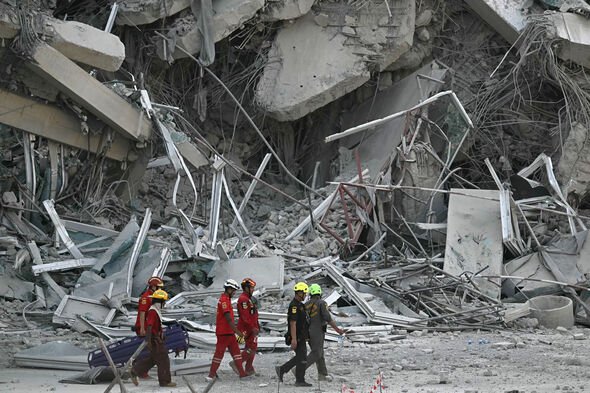
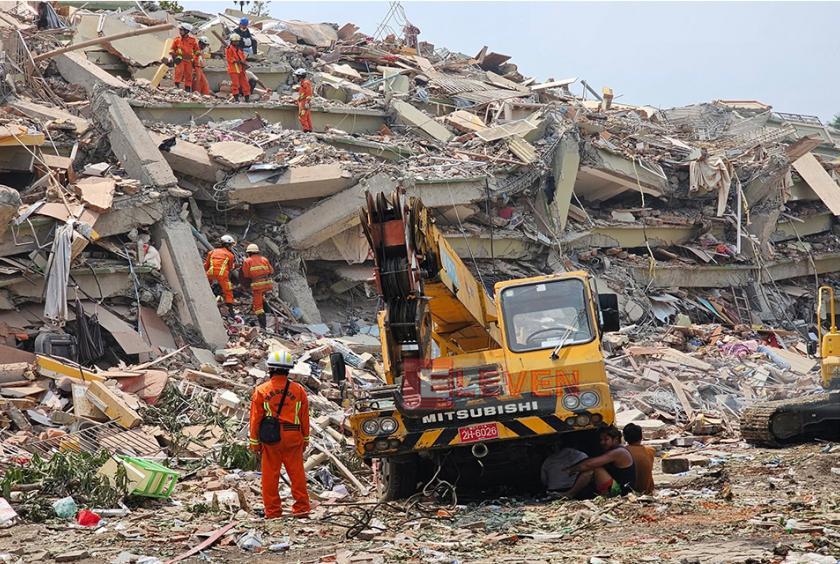
Myanmar has observed one minute of silence to mourn those who died from last week’s magnitude 7.7 earthquakes that killed more than 2,700 people in the country.

Friday’s earthquake was felt in neighbouring countries like Thailand, hundreds of miles away, where the death toll stands at 21.

Rescuers in both countries are still searching for survivors, though hopes are fading as the critical window – the first 72 hours after a quake – has passed

The UN says the earthquake has compounded “an already dire crisis” in Myanmar, which is in the midst of a four-year civil war.

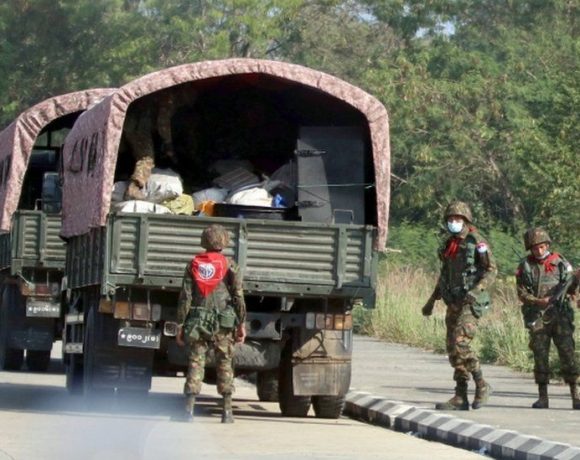
Despite the destruction, reports suggest the country’s military leaders are still carrying out air strikes against pro-democracy rebel groups

More images of destruction have emerged from Mandalay, Myanmar’s former capital, which is near the earthquake’s epicentre.

BBC/Adetutu Adetule

Subscribe to our Telegram and YouTube Channels, and also join our WhatsApp Update Group.

Foreign

Eleven people, including eight children, have been killed in Chin State, Myanmar after a military jet bombed a school.

Locals say the strike on the remote village of Vuilu in the mountainous region happened on Wednesday.

Myanmar is currently in the grip of a civil war with numerous armed groups fighting the military junta which deposed an elected government in 2021.

Chin State is a stronghold of resistance against the junta.

This week, its grassroots insurgency saw ethnic Chin fighters recapture the town of Rikhawdar, on the border with India.

According to accounts posted on social media by residents of Vuilu, a hilltop community of fewer than 80 households in the south of the state, military aircraft dropped at least two bombs on them on Wednesday evening.

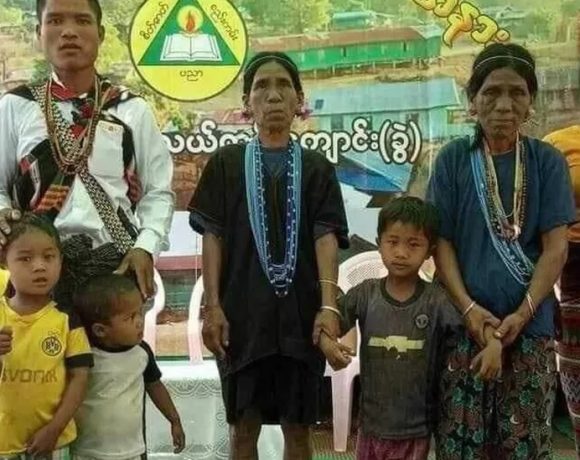
One destroyed a house which was being used as an improvised school, killing the eight children and three adults who were studying there.

The victims included 34-year-old teacher, Ha Luang and his mother, as well as his two children.

The children killed were aged between seven and 11 years old while the bombs also damaged several other houses and the village’s two churches.

Earlier in the week, UN Secretary-General Antonio Guterres expressed his deep concern over the escalating conflict in the country – where two million people have now been displaced by fighting.

BBC/Maxwell Oyekunle

Subscribe to our Telegram and YouTube Channels and also join our Whatsapp Update Group

Foreign

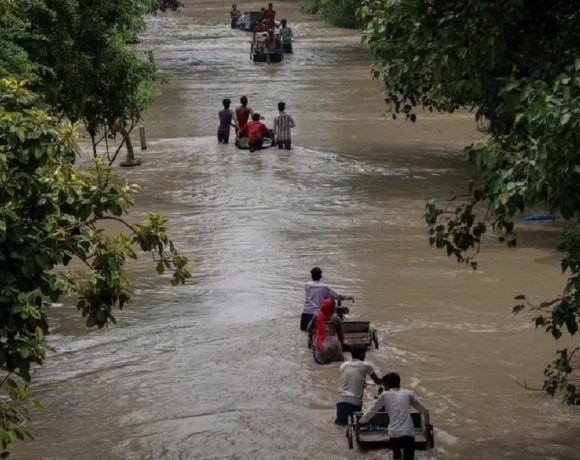
Residents of Myanmar’s flood-hit Bago city salvaged food and belongings from their waterlogged homes on Tuesday after record rainfall triggered floods that authorities said have displaced 14,000 people.

The rainy season typically brings months of heavy downpours to the Southeast Asian country, but scientists say man-made climate change is making weather patterns more intense.

In eastern Bago city residents waded down streets through waist-deep water or floated along in boats or on rubber tyres, as ripples lapped at shuttered shops and houses.

“This is the first time my house has been flooded in my life,” Phwar Than Hme, 101, told AFP from the monastery where she was taking shelter.

“I was standing on a chair while my house was being flooded.

“My neighbour and rescue people told me not to stay at home and to go to the camp. They carried me on their backs and brought me here.”

On Sunday authorities reported that 200 mm (almost eight inches) of rain had fallen in the previous 24 hours in Bago region northeast of commercial hub Yangon, a record for October.

Heavy rain continued through Monday night.

“I didn’t expect this level of water here,” said Chit Nyunt, 69, told AFP as he waded down the street holding a pair of sandals and an umbrella.

“I have never seen anything like this.”

State broadcaster MRTV said 14,000 people had been displaced across Bago region, northeast of commercial hub Yangon.

Almost 5,600 people were being accommodated in local government temporary relief centres, according to the state-backed Global New Light of Myanmar.

The lower floors of Bago’s general hospital had been flooded, a resident told the newspaper, and three of Myanmar’s four telecoms providers were not working in the area.

Flooding began in July and has affected nine of Myanmar’s states and regions, including Rakhine, Kachin, Karen, Mon and Chin.

Myanmar is in the grip of a bloody civil conflict between the junta, which ousted the government of Aung San Suu Kyi in February 2021, and armed groups opposed to its coup.

Punch / Titilayo Kupoliyi

Subscribe to our Telegram and YouTube Channels also join our Whatsapp Update Group

Foreign


A bomb blast in southeastern Myanmar killed one person and wounded 12 others on Monday, an official said.

Violent clashes have ramped up since the military deposed Aung San Suu Kyi’s civilian government in February 2021, unleashing a bloody crackdown on dissent that has left thousands dead.

The junta has been battling anti-coup “People’s Defence Force” (PDF) militias, as well as long-established ethnic rebel armies that control large areas of territory close to the country’s borders.

The blast from a vehicle detonated near Thanlwin bridge checkpoint at around 6:50 am local time (0020 GMT), a government official from the Karen State administration council told AFP.

Punch / Titilayo Kupoliyi

Subscribe to our Telegram and YouTube Channels also join our Whatsapp Update Group

Foreign

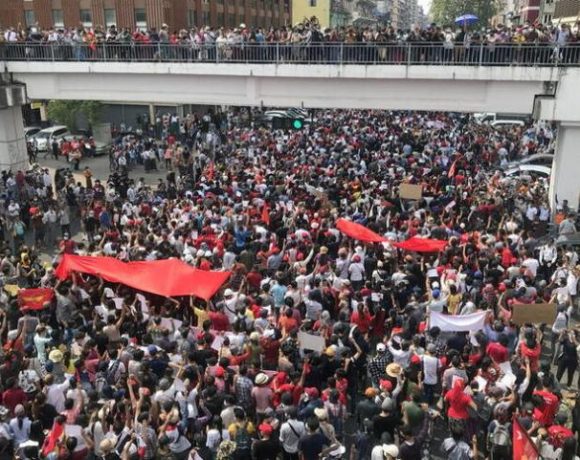
Most businesses are closed in troubled Myanmar in a general strike that has been called on Monday to oppose the military coup of February 1.

Early in the day, protesters had already gathered in their thousands, despite a veiled threat from the junta that confrontation could lead to deaths.

Three weeks since the coup, the Myanmar military has not succeeded in stopping daily protests and a civil disobedience movement calling for the reversal of the army take-over and release of elected leader Aung San Suu Kyi.

In the largest city of Yangon, which has become the rallying-point for the protests, thousands of demonstrators noted the significance of the date 22.2.2021, comparing it to protests on August 8 1988 when a previous generation staged anti-military marches which were bloodily suppressed.

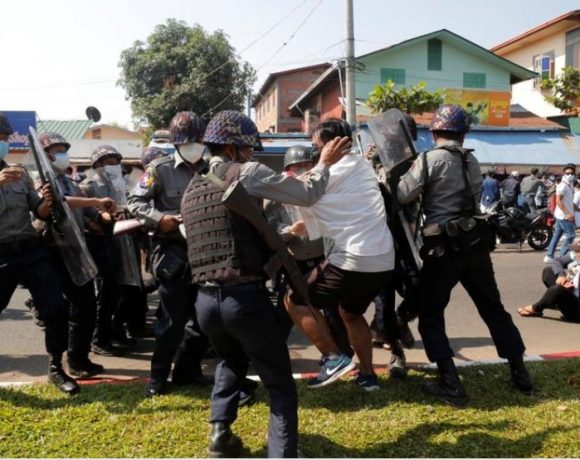
This time, the response of security forces has been less deadly, but at least three protesters have now been killed after two were shot dead in the second city of Mandalay on Saturday. One policeman reportedly died of injuries in protests.

The deaths in Mandalay did not discourage protesters on Sunday, when they turned out again in tens of thousands there and in Yangon.

On Monday, state-owned media MRTV warned protesters against further action.

“Protesters are now inciting the people, especially emotional teenagers and youths, to a confrontation path where they will suffer the loss of life,” it said.

On Monday, February 1, Myanmar’s military, which has been the de facto ruler in the SouthEast Asian nation for fifty years, overthrew the democratically elected government of Ms. Suu Kyi, accusing it of rigging last November’s national election.

Almost immediately, the coup leaders arrested scores of government officials and pro-democracy activists, including Ms. Suu Kyi, President Win Myint and other senior members of the then-governing National League for Democracy party. Frcn, Abuja

Foreign

Opponents of Myanmar’s military coup sustained mass protests for an eighth straight day on Saturday as continuing arrests of junta critics added to anger over the detention of elected leader Aung San Suu Kyi.

Thousands assembled in the business hub, Yangon, while protesters took to the streets of the capital Naypyitaw, the second city Mandalay and other towns a day after the biggest protests so far in the Southeast Asian country.

“Stop kidnapping at night,” was among the signs held up by protesters in Yangon in response to arrest raids in recent days.

The United Nations human rights office said on Friday more than 350 people, including officials, activists and monks, have been arrested in Myanmar since the Feb. 1 coup, including some who face criminal charges on “dubious grounds”.

Anger in Myanmar has been fuelled by videos showing more arrests of government critics – including a doctor who was part of the civil disobedience movement. Some arrests have taken place during the hours of darkness.

Internet memes captioned “Our nights aren’t safe anymore” and “Myanmar military is kidnapping people at night” have circulated widely on social media.

The government did not respond to requests for comment on the arrests.

The Assistance Association for Political Prisoners, a watchdog group for political prisoners, voiced concern.

“Family members are left with no knowledge of the charges, location, or condition of their loved ones. These are not isolated incidents, and nighttime raids are targeting dissenting voices. It is happening across the country,” it said in a statement.

The army said it had seized power because of alleged fraud in a November election that Suu Kyi’s National League for Democracy party had won in a landslide. The army’s complaints were dismissed by Myanmar’s electoral commission. Slideshow ( 2 images )

TRANSITION HALTED

The coup halted a tentative transition to democracy that began in 2011 after nearly half a century of isolation and stagnation under military juntas.

Suu Kyi, for decades the standard bearer of the fight for democracy in Myanmar, faces charges of illegally importing and using six walkie-talkie radios found in a search of her house.

The 47-member U.N. Human Rights Council adopted a resolution on Friday calling on Myanmar to release Suu Kyi and other officials from detention and refrain from using violence on protesters.

Thomas Andrews, the U.N. rights investigator for Myanmar, told a special session of the rights council in Geneva that the U.N. Security Council should consider imposing sanctions and arms embargoes.

Myint Thu, Myanmar’s ambassador to the United Nations in Geneva, told the session that Myanmar did not want “to stall the nascent democratic transition in the country,” and would continue international cooperation.

The United States this week began imposing sanctions on the ruling generals and some businesses linked to them.

Airline staff, health workers, engineers and school teachers were among groups that joined the protest marches on Saturday and which have rallied to a civil disobedience campaign that has shut down a swath of government business.

“We are preschool teachers, Every child our future, We don’t want dictatorship,” said one banner.

The state-run Global New Light of Myanmar newspaper said thousands of people had joined pro-military demonstrations in parts of Myanmar on Friday. Reuters was not immediately able to verify the report.

The junta remitted the sentences of more than 23,000 prisoners on Friday, saying the move was consistent with “establishing a new democratic state with peace, development and discipline” and would “please the public”.

Reuters


Foreign

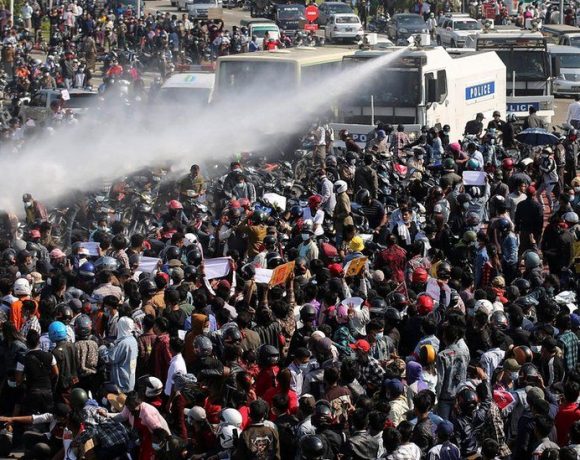
Police in Myanmar’s capital, Nay Pyi Taw have used water cannon on workers conducting a nationwide strike against a military coup.

Thousands are taking part in a third day of street protests, calling for the release of elected leader, Aung San Suu Kyi and for democracy to be restored.

State TV has warned protesters that action will be taken if they threaten public safety or the “rule of law”.

It comes a day after Myanmar saw its largest protest in more than a decade.

Last week the military seized power after claiming without evidence that an earlier election was fraudulent.

They also declared a year-long state of emergency in Myanmar, also known as Burma, and power has been handed over to commander-in-chief Min Aung Hlaing.

Ms Suu Kyi and senior leaders of her National League for Democracy Party (NLD), including President Win Myint, have been put under house arrest.

BBC NEWS

Foreign

Myanmar’s military has seized power after detaining civilian leader Aung San Suu Kyi and other senior members of her governing party.

All authority has been given to the top army commander and a one-year state of emergency has been declared, a statement on military TV said.

The coup follows a landslide win by Ms Suu Kyi’s party in an election which the army claims was marred by fraud.

She urged her supporters to “not accept this” and “protest against the coup”.

In a letter written in preparation for her impending detention, she said the military’s actions put the country back under dictatorship.

Myanmar, also known as Burma, was ruled by the armed forces until 2011, when democratic reforms spearheaded by Aung San Suu Kyi ended military rule.

She spent nearly 15 years in detention between 1989 and 2010. She was internationally hailed as a beacon of democracy and received the Nobel Peace Prize in 1991.

BBC News