Economy

The availability of timely, reliable and politics-free data is the bedrock of development in any nation or society.

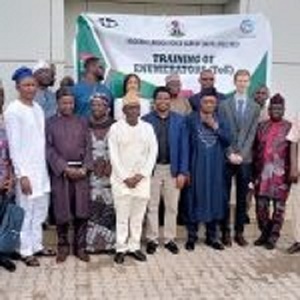
This was the view of stakeholders at a training organized for enumerators for the conduct of the Nigeria Labour Force Survey held at Ibadan Business School, Bodija.

Statistician-General of the Federation and Chief Executive, National Bureau of Statistics, Prince Adeyemi Adeniran, said the nation needed an enhanced National Labour Force Survey, NLFS, which would provide insight into the level of unemployment in the country, thus enabling the government to tackle it headlong.

Prince Adeyemi Adeniran explained that NBS had been releasing data on unemployment on a quarterly basis but over the years it had not been consistent.

Similarly, Oyo State Statistician-General, Mr Adekunle Ajuwon explained that a gulf existed between the labour force and working population and that the report of the labour force survey would assist the government in identifying gaps in the use of available resources.

The Oyo State Statistician pointed out that the unemployment situation in the country was discouraging, stressing that the survey would enhance policy formulation, planning, monitoring and evaluation of government programmes.

Mr Ajuwon while pointing out that the survey would equally contribute towards poverty reduction, said the Oyo State government was quite that statistical data was crucial to achieving the 2040 State Development Plan and 2023 Sustainable Development Goals, said the State Bureau of Statistics would continue to partner with NBS in order to the data generated in the state.

 World Bank representative, Mr Jonathan William, said from the surveys in Nigeria, the bank has found that even if some people were working, they were still suffering at these jobs as the jobs are insecure, unreliable, low-pay, low-profit or informal.

Mr Jonathan, it was unfortunate that this was a reflection of what was obtained in many other countries on the continent.

He added that to help people find and create jobs that could lift them out of poverty, there was a need for timely, reliable, accurate and proven labour market data.

Funmilola Obagbayegun

Subscribe to our Telegram Channel and join our Whatsapp Update Group
News

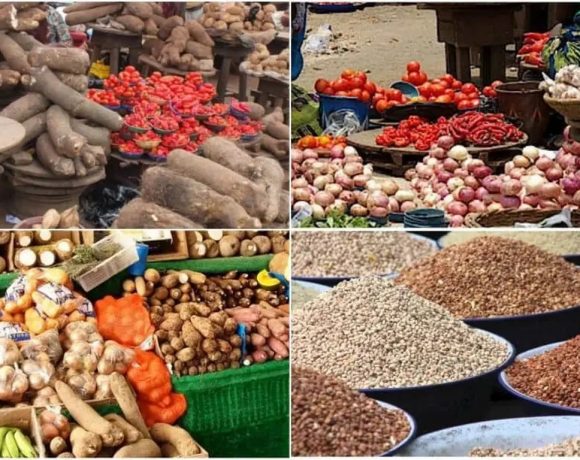
Food prices have continued to surge in the last year with the latest data from the National Bureau of Statistics, NBS, showing that the Composite Food Index rose by 22.72 per cent this year from 15.03 per cent.

Now that Yuletide is here, Tosin Aderibigbe in this special report went to do a market survey of commodities prices especially foods in high demand.

Her report.

Tosin Aderibigbe

Energy

Some residents of Ibadan have expressed worry over the rising cost of cooking gas.

 They voiced their concern in an interview with Radio Nigeria.

Three of them, Mr Adunola Ojo, Mrs Martha Olaojesu and Mrs Esther said the rise in the cost of cooking gas was adding to the burden placed on the masses by hike in the prices of food stuffs.

The residents appealed to government to look into the issue as the cost of cooking gas was rising beyond the means of the masses.

The average price for refilling a 5kg cylinder of cooking gas increased by 0.56% from N2,057.71 in March 2021 to N2,069.21 in April this year and further to N2,330 according to the National Bureau of Statistics (NBS).

 Funmilola Obagbayegun

News Analysis

In a recent report by the National Bureau of Statistics on food security and analysis about nine million Nigerians are expected to be in hunger crisis between November and December this year as a result of the high cost of food in the country.

Also, Nigeria’s food inflation rose by one hundred and ten percent in five years, between September 2015 and September 2020.

A comparison of the Composite Food Index within that five years indicated that food inflation rose from over one hundred and eighty–one index points to over three hundred and eighty-two index points.

This means that the price of food items has not only increased, but more than doubled in the last five years.

Factors that could be responsible for this include flooding, the cost of transportation and storage as a large quantity of perishable food items spoil before they get to the market and farmers will want to recover the cost of production from whatever remains which then reflects in the price of the product in the market.

To deal with the situation, the federal government has, in line with its ease of doing business mantra, avoided imposing stockholding restrictions, in order not to discourage investments in modern warehousing and cold storage.

President Muhammadu Buhari has also approved the release of food items from the strategic reserves, including thirty thousand tons of maize to animal feeds producers to ease the high cost of poultry production.

Despite these efforts of the government, more still needs to be done.

There is an imperative need for the use of modern farming techniques in the country; this will go a long way in enhancing food production, boost the food production value chain and reduce the cost of food items.

Agricultural commodities that are required for industrial use should cost less for the products to penetrate not just the domestic market, but also the international market.

There is the need for re-orientation and attitudinal change as well as enlightenment of the youths to make them have interest in agriculture.

Graduates of agricultural sciences should be giving automatic employment by the federal government upon graduation.

Urgent action needed to be taken to avert pervasive hunger while the federal government should prioritise mechanised farming and train farmers subsequently on the use of mechanised equipment.

It is incumbent on the government to intensify efforts at improving the security, particularly in inaccessible and partially accessible areas, to ensure the safety of farmers.

To further mitigate the effect of the COVID-19 pandemic and flood on food production, the government should sustain the implementation of relief measures among the populace.

Olubunmi Agboola

Economy

Residents of Osun State have reacted to the recent economic rating by Nigeria Bureau of Statistics, NBS placing Osun as the third state with the least poverty index in Nigeria.

Correspondent Adenitan Akinola engaged a cross section of stakeholders on the ranking in Osogbo, the state capital.

His report.

Adenitan Akinola