News Analysis

Those who brought the Power Holding Company of Nigeria, PHCN, and turned it into electricity distribution companies owe Nigerians one vital explanation.

They must tell the people what has happened with the discos since the ownership changed hands.

Yes, this has become imperative because the cry of ‘give us electricity’, ‘restore power supply’, ‘we are tired of darkness’ and ‘where is electricity‘ are some of the popular slogans in the mouth of Nigerians.

Successive governments in Nigeria have spent billions of naira to fix the power sector without any tangible result.

Up to this moment, in almost all parts of Nigeria, supply of electricity is epileptic and nothing to write home about.

Lack of regular electricity supply has brought sadness to millions of Nigerians and paralysed socioeconomic activities.

While some countries like Ghana are giving good testimony about constant supply of electricity, it is not the same in Nigeria.

Yet, electricity distribution companies keep bringing crazy and highly inflated bills every month for services not provided to the consumers.

Yet, year in, year out, the federal government is fond of increasing electricity tariff making Nigerians pay more for the inefficiency of some stakeholders in the power sector.

Recently, the Nigerian Electricity Regulatory Commission, NERC, hinted at another hike in electricity tariff to commence in July this year.

This is uncalled for as additional hike on Nigerians who have been traumatised by lack of electricity for so long.

Efforts should rather be concentrated to improve power supply and save Nigerians from total darkness.

Nigerians felt highly relieved with the privatisation of the energy sector not knowing that unending agony and lamentation over poor electricity supply had just begun.

This is quite unfortunate.

Nigerians deserve the right to be served well.

As citizens, they should have equal access to power like citizens of other countries.

Corruption in the power sector which has been a clog in the wheel of progress should be tackled for a stable electricity supply in the country.

Nigerians are yet to adequately benefit from democratic dispensation, especially the power sector which is key to industrialization.

If the federal government fixes the country’s electricity problem, seventy-five percent of unemployed graduates will have jobs and become employers of labour.

Solar energy as an alternative source of electricity should be pursued vigorously and made available to the people at an affordable price. 

Tayo Sanni
Energy

The Nigerian Electricity Regulatory Commission, NERC, has approved a review of electricity tariff for Ibadan Electricity Distribution Company, IBEDC, increasing electricity cost for consumers under the franchise area.

IBEDC franchise area includes Oyo, Ogun, Osun, Kwara and parts of Niger, Ekiti and Kogi states.

The NERC in an order signed by its Chairman, Sanusi Garba and Commissioner Legal, Licensing and Compliance, Dafe Akpeneye signed on the last day of 2020, the tariff increases will commence from July 1, 2021.

According to the order, tariff for customers in Band A with minimum supply of 20hrs daily will increase by #6.85 to N69.18 per kilowatt, a #10.98 percent rise.

Customers in Band B minimum supply of 16hrs daily will increase by #7.65 to N66.04/kilowatt from the present N58.9/kilowatt.

For customers in Band C with a minimum supply of 12hrs daily, the increase is N14.19 to N62.92/kilowatt.

The highest tariff increase will be for consumers in Band D with a minimum supply of 8hrs daily with N32.79 hike to N55.76/kilowatt from N26.97/kilowatt.

The NERC explained that the review was necessary following changes in inflation rate, foreign exchange, available generation, gas price, collection losses from ministries, departments and agencies of government, and Capex adjustments.

The NERC ordered that IBEDC shall be liable for service improvements in accordance with commitments under its universal service obligations for providing an electricity supply to customers.

The commission added that where there is a failure to deliver on committed service level over a period of 60 days, the rates shall be adjusted in line with the service delivered over the same period, upon verification by the Commission.

Net

News Analysis

Electricity distribution companies, DISCOs, across the country this month implemented a new tariff regime.

This was as a result of the Nigerian Electricity Regulatory Commission’s, NERC, directive that DISCOs is to maintain a four naira tariff for all customers consuming less than fifty kilowatt of energy per month.

Under the new regime, consumers will now pay sixty-six naira per kilowatt unit of energy consumed in an hour.

Before now consumers were paying thirty naira, twenty three kobo per kilowatt.

President Muhammadu Buhari had emphasised that the review must translate to improved service delivery while poor and vulnerable Nigerians should not pay more in all cases.

Also, the president had ordered mass metering in the country to put an end to estimated billing which had been exorbitant and unbearable for Nigerians.

As expected, the hike in electricity tariff has been generating protests from all over the country.

Among the group that protested are National Association of Nigerian Students, workers, and different civil society groups.

The protesters condemned the policy as they believed the policy will bring untold hardship to the citizens.

Both Nigeria Labour Congress and Trades Union Congress accused the Federal Government of being hard on Nigerians.

President, Nigeria Labour Congress, Mr. Ayuba Wabba, noted that government was taking Nigerians for granted, describing the action as most insensitive and outrageous to the citizens who are currently bearing heavy burden of the covid-19 pandemic.

Also, President, Trades Union Congress, Mr. Quadri Olaleye, stated that increasing electricity bills at a time people were losing jobs and when businesses were adversely affected by Covid-19 was uncalled for.

It is disheartening that most Nigerians are not enjoying twenty four hour electricity supply, especially in the Southwest Nigeria after the fire incident that gutted the Transmission Company of Nigeria, TCN, office which supplies Oyo metropolis and parts of Ogun and Lagos states.

DISCOs should perform optimally by ensuring that the billing is commensurate with energy being supplied to the consumers.

It is obvious that Nigerians need power for the socioeconomic development of the society.

The multi-year tariff order (MYTO) was introduced to take care of different people but the structure seems to have failed. 

Therefore, the sector needs to be revamped to accommodate serious investors to move it forward.

States should also take step through legislation in removing generation of power from the exclusive list so as to generate and distribute power to its residents.

It is hoped that the Federal Government will listen to the yearnings of the people by reversing the new electricity tariff to the old one to make life bearable for the citizens.

Titilayo Kupoliyi

News Analysis

Recently, President Muhammadu Buhari directed the commencement of a nationwide mass-metering programme as part of efforts to end estimated and arbitrary billings for electricity.

In a statement by the chairman of the Nigerian Electricity Regulatory Commission, NERC, James Momoh, the president’s directive was in response to the yearnings of Nigerians.

President Buhari also approved a waiver of the import levy on metres, so that those without metres can be supplied at reasonable costs as early as possible.

Consumers have been groaning under the burden of estimated billing as a result of insufficient metering which has been attributed to the thirty-five percent levy imposed on imported items, forcing the electricity distribution companies, discos, to abandon meters at the ports.

 This development has stalled the implementation of the meter asset providers, MAP, scheme.

The government in a bid to improve the power situation in the country has continually implemented different strategies to solve the problem of unstable power supply.

This gave rise to the enactment of the Electric Power Sector Reform Act of 2005, which calls for unbundling of the national power utility company into a series of eighteen successor companies: six generation companies, twelve distribution companies covering all the thirty six states, and a national power transmission company.

Also in 2013, PHCN was dissolved by the Federal Government which left eighteen successor companies to run the affairs of the power sector.

These successor companies were located across the country with the mandate to reorganise the power management sector to allow for easier and efficient communication with consumers of the electricity produced.

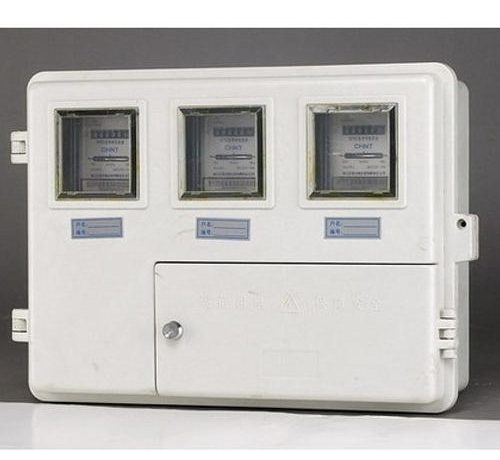
To further improve the power sector in Nigeria, prepaid meters were introduced in the country.

These types of meters do not need to be analysed by officials of the power companies to know the amount payable by a consumer.

The power sector also has the National Electricity Regulatory Commission (NERC) with the mandate to look into consumer complaints and the protection of their rights.

However, despite the fact that there are existing laws and regulatory bodies established to protect consumers’ interest, consumers have hardly approached them to enforce their rights.

Some of the problems faced by consumers include overcharging of bills, delay in delivery and installation of prepaid meters.

National Electricity Regulatory Commission, NERC, instructed consumers who have requested and paid for the prepaid meters and have still not received the prepaid meters not to pay for any statutory bills brought forth by the Electricity Distribution Companies, DISCOs.

This directive is intended to put the DISCOs on their toes and ensure they make the prepaid meters available to consumers.

To curb the challenges faced by Nigerian electricity consumers require bold step to be taken by government and other stakeholders.

 The bill initiative by the House of Representatives to criminalise estimated billing is a welcome development.

The bill seeks to protect the right of every electricity consumer to be metered within thirty days of applying for the device.

 It also proposes different categories of penalties, ranging from five hundred thousand to one million naira fines and a jail term of six months, for failure to comply or for illegally disconnecting a consumer on the grounds of estimated billing.

Many deadlines for mass metering of customers have been set and disobeyed by the DISCOs, to which NERC has not had any effective response. Thus, providing meters to customers has become a privilege instead of a matter of routine.

Providing customers with prepaid meters in the country is therefore, an option that the discos have to embrace for efficiency and ease of revenue collection.

Discos should live up to their responsibility by responding swiftly to reports of complaints by consumers.

Fawzeeyah Kasheem

News

Electricity consumers have called on Ibadan Electricity Distribution Company, IBEDC, to make prepaid metres available for the company to generate more funds.

They made the call at a public hearing tagged “Investment towards Improvement of Power Supply and the Quality Service in the Electricity Supply Industry” organized by Nigerian Electricity Regulatory Commission, NERC, held at Jogor Centre, Liberty Road Ibadan. 

Some of the customers who attended the event, Mr. Adebayo Adegbite, Mr. Abiodun Bamigboye and Princess Adedolapo Odugade frowned at proposed tariff increase by the IBEDC, adding that provision of prepaid metre would protect the consumers from estimated billing and extortion.

Reacting, IBEDC Chief Operating Officer, Engineer John Ayodele said as from next week there would be a change from analogue to digital metering for the optimal performance free of charge.

He stressed that it was the responsibility of the company to produce transformers for the community, urging them to safeguard the company’s property.

Earlier in an address, NERC Commissioner for Energy, Mr. Musiliu Oseni, said the programme was aimed at reviewing electricity market structure.

Olukemi Akintunde