Foreign

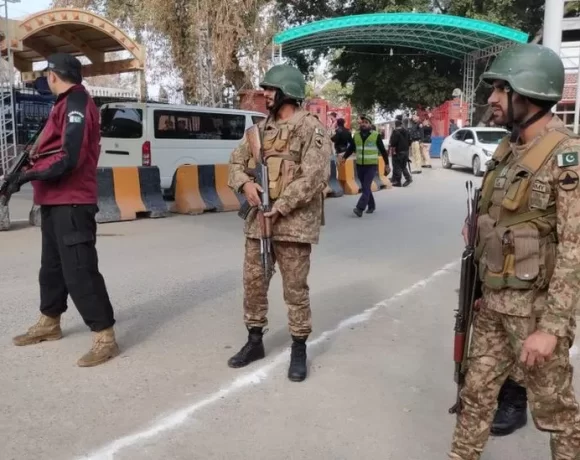
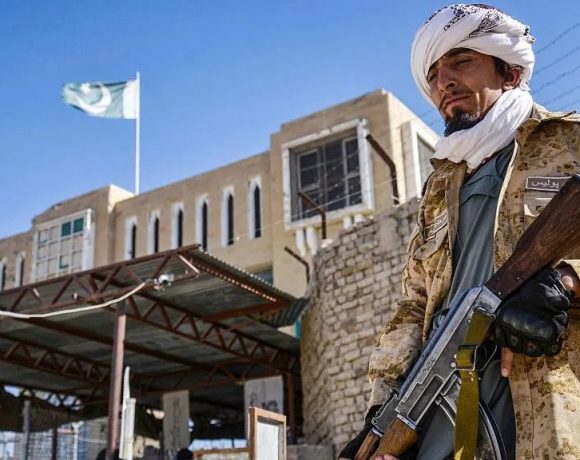
Fresh deadly border clashes have broken out between Pakistan and Afghanistan’s Taliban forces, with both sides accusing each other of breaking a fragile ceasefire.

Residents fled the Afghan city of Spin Boldak overnight, which lies along the 1,600-mile (2,574 km) border the two countries share.

A medical source in the nearby city of Kandahar told BBC Pashto a local hospital had received the bodies of four people. Three injuries have been reported in Pakistan.

Sporadic fighting has repeatedly broken out between the two in recent months, while Afghanistan’s Taliban government has also accused Pakistan of carrying out air strikes inside the country.

Both sides have confirmed they exchanged fire overnight but each blamed the other for beginning the four hours of fighting.

Mosharraf Zaidi, a spokesperson for Pakistan’s Prime Minister Shehbaz Sharif, accused the Taliban of “unprovoked firing”.

Meanwhile, a Taliban spokesperson said Pakistan had “once again initiated attacks” and said it was forced to respond.

Footage from the area showed a large number of Afghans fleeing on foot and in vehicles, with people in neighbouring towns also leaving in fear of the renewed fighting spreading.

The overnight clashes came less than two months after both sides agreed to a ceasefire mediated by Qatar and Turkey.

It ended the worst fighting between Pakistan and the Taliban since the group returned to power in 2021, though tensions have remained high.

The government in Islamabad has long accused Afghanistan’s ruling Taliban of giving shelter to armed groups which carry out attacks in Pakistan.

The Taliban government in Afghanistan denies the accusation and has accused Pakistan of blaming others for their “own security failures”.

Sources familiar with the talks told BBC News that both sides had agreed to continue with the ceasefire.

BBC/Adebukola Aluko

Foreign

Two teenage sisters were arrested in Pakistan for killing their father by setting him on fire in revenge for rape, police said Wednesday.

The father was attacked in the Punjabi city of Gujranwala on January 1 and taken to hospital where he died on Tuesday.

“The girls said that they decided betweent them to find a ‘permanent solution’,” Rizwan Tariq, a senior police official in the city, told AFP.

They then took petrol from a motorcycle and set their father on fire as he slept, he added.

The pair, who are step-sisters, said their father had been raping the eldest girl for a year and had twice attempted to rape the younger girl.

Their mothers — who are both married to the man — knew about the abuse but did not know of the revenge plan.

AFP has not named the man in order to protect the identities of the girls, one of whom is from a previous marriage.

One of the wives has also been arrested while the second is being questioned.

“We expect to present them before the court in a few days, as soon as we finish the investigation,” Tariq added.

AFP/Channels/Simeon Ugbodovon

Subscribe to our Telegram and YouTube Channels and also join our Whatsapp Update Group
Foreign

With most of the results now declared in Pakistan’s general elections, no political force has a clear majority.

Jailed former Prime Minister Imran Khan is claiming victory in Thursday’s poll, as independent candidates linked to him have won most seats so far.

But another ex-PM, Nawaz Sharif, says his party has emerged as the largest and urges others to join him in coalition.

There are reports that coalition talks between Mr Sharif’s PML-N party and other groups are already underway.

The final official results are yet to be announced.

In a staunch video message posted on X that was generated using AI, a message credited to Mr Khan said his Pakistan Tehreek-e-Insaf (PTI) party had won a landslide victory – defying what he has called a crackdown on his party.

“I congratulate each and everyone of you for winning the 2024 election… you have made history,” the message said.

Mr Khan is currently in jail having been convicted in cases he says are politically motivated.

The success of the PTI-linked candidates was unexpected, with most experts agreeing that Mr Sharif – believed to be backed by the country’s powerful military – was the clear favourite.

But the PTI is not a recognised party after being barred from running in the election, so technically Mr Sharif’s Pakistan Muslim League (Nawaz), or PML-N, is the largest official political group.

The political horse-trading has begun in earnest, which means it could still be a while before anyone is able to claim outright victory.

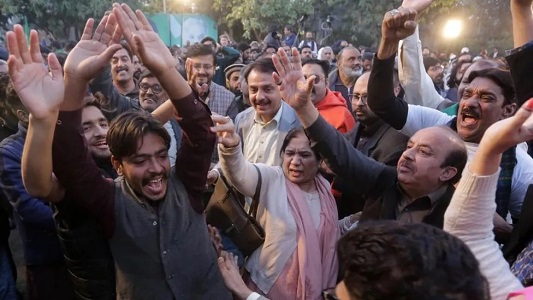
In a speech on Friday, Mr Sharif acknowledged that he did not have the numbers to form a government alone. But addressing supporters outside his party’s headquarters in the city of Lahore, he urged other candidates to join him in a coalition and said he could remove the country from difficult times.

Speaking to the BBC’s Newsnight programme on Friday, Mr Khan’s former special assistant Zulifkar Bukhari said: “Knowing Imran Khan and knowing the ethos of our political party PTI, I don’t think we’ll be making any coalition, forming a government with any of the main parties.

“However, we will be forming a coalition… to be in parliament – not as an independent but under one banner, one party”.

And asked about whether Mr Khan could potentially be released, Mr Bukhari said: “I think the minute we go to the high court and the supreme court we are extremely confident that he will be released, and a lot of the charges – if not all – will be thrown out on legal merit and procedural merit.”

The third biggest party appears to be the Pakistan People’s Party (PPP) led by Bilawal Bhutto, the son of PM Benazir Bhutto who was assassinated in 2007.

Burzine Waghmar, a member of the Centre for the Study of Pakistan at SOAS University of London, told the BBC that the elections “may well prove to be one of the most divisive and dangerous this chronically unstable, episodic democracy has ever confronted”.

As results trickled in, the UK and US voiced concerns over restrictions on electoral freedoms during the vote.

British Foreign Secretary David Cameron said the UK urged authorities in Pakistan “to uphold fundamental human rights including free access to information, and the rule of law”.

In a statement, he went on to express “regret that not all parties were formally permitted to contest the elections”.

Meanwhile, US State Department spokesman Matthew Miller criticised what he described as “undue restrictions on freedoms of expression, association, and peaceful assembly” during Pakistan’s electoral process.

He also cited “attacks on media workers” and “restrictions on access to the internet and telecommunication services” as reasons to worry about “allegations of interference” in the process.

Many analysts have said this is among Pakistan’s least credible elections.

Voters in Lahore told the BBC that the internet blackout on polling day meant it was not possible to book taxis to go and vote, while others said they could not co-ordinate when to head to polling stations with their family members.

An interior ministry spokesman said the blackouts were necessary for security reasons.

Support from the military in Pakistan is seen as important to succeed politically, and analysts believe Mr Sharif and his party currently have their backing, despite their differences in the past.

Maya Tudor, associate professor at the University of Oxford’s Blavatnik School of Government, said the lead taken by Imran Khan’s PTI was “shocking” in the context of the country’s past.

“A win would be remarkable – in every single other election in Pakistan’s recent history, the military’s preferred candidate has won,” Dr Tudor explained.

As many as 128 million people were registered to cast their votes, almost half of whom were under the age of 35. More than 5,000 candidates – of whom just 313 are women – contested 266 directly-elected seats in the 336-member National Assembly.

Pakistan’s former ambassador to the United States, Maleeha Lodhi, said Pakistan “desperately” needs political stability to address what she described as “the worst economic crisis in its history”.

But, in a hopeful note, Ms Lodhi said Pakistan’s voter numbers show a “belief in the democratic process”.

BBC/Simeon Ugbodovon

Subscribe to our Telegram and YouTube Channels and also join our Whatsapp Update Group

Foreign

Pakistan has launched missile strikes into Iran, reportedly killing nine people, after Iran carried out strikes in Pakistan late on Tuesday.

Pakistan said its strikes had hit “terrorist hideouts” in Iran’s south-eastern Sistan-Baluchestan province.

Three women, two men and four children were killed, Iran’s state TV said.

The reciprocal air strikes come as tensions in the Middle East are high with several overlapping crises.

Israel is fighting the Palestinian group Hamas in Gaza and exchanging fire with Iran-backed Hezbollah in Lebanon, Iran-backed groups in Iraq and Syria are targeting US forces, and the US and UK have struck the Iran-backed Houthis in Yemen, who have been attacking shipping.

Pakistan and Iran have long accused each other of harbouring militant groups that carry out attacks from regions along their shared border.

On Thursday, Pakistan’s foreign ministry confirmed its strikes, which Iranian media said took place around the city of Saravan.

Pakistan said it had acted in light of “credible intelligence of impending large-scale terrorist activities” and said a number of “terrorists” were killed.

It added that it “fully respects” Iran’s “sovereignty and territorial integrity” but its action on Thursday was “a manifestation of Pakistan’s unflinching resolve to protect and defend its national security against all threats”.

Pakistan’s army said the “precision strikes” were conducted with drones, rockets and long-range missiles.

It said they were targeting “terrorist organisations”, namely the Balochistan Liberation Army and the Balochistan Liberation Front.

Both groups are part of a decades-long struggle for greater autonomy in Balochistan, a remote region in south-western Pakistan.

Pakistan had fiercely condemned Iran’s strike on Tuesday, which struck an area of Pakistan’s Balochistan province near the Iranian border and which Islamabad said killed two children.

Iran insisted its strikes were aimed only at Jaish al-Adl, an ethnic Baloch Sunni Muslim group that has carried out attacks inside Iran, and not Pakistan’s citizens.

BBC / Titilayo Kupoliyi

Subscribe to our Telegram and YouTube Channels and also join our Whatsapp Update Group
Foreign

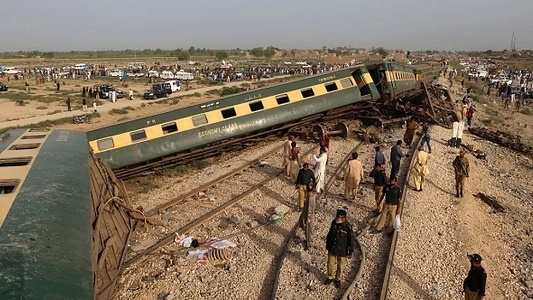
At least 30 people have been killed and 100 injured when a train derailed in southern Pakistan, a police spokesman has confirmed.

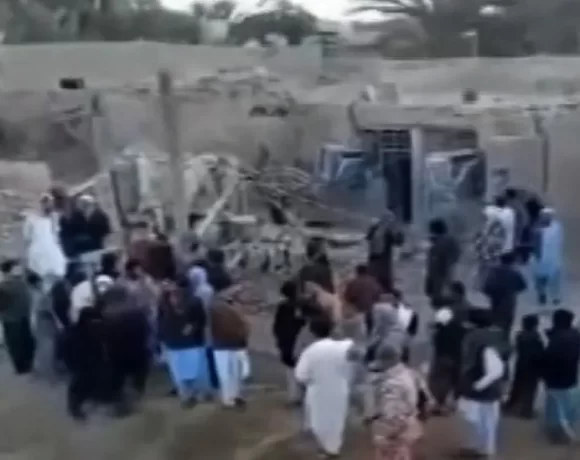
Several carriages of the Hazara Express overturned near Sahara Railway Station in Nawabshah, about 275km (171 miles) from the largest city Karachi.

Wounded passengers were moved to nearby hospitals. Rescue teams are trying to free people from the twisted wreckage.

Accidents on Pakistan’s antiquated railway system are not uncommon.

Videos posted on social media showed dozens of people at the site of the accident, with some passengers climbing out of the overturned carriages.

One passenger who survived told BBC Urdu he had seen many women and children lying on the ground.

“They were shouting and screaming. I didn’t know what to do. I filled my hands with water from this canal nearby and poured it on the faces of those who were unconscious, hoping they would regain consciousness,” Naseer Ahmed said.

Nasser said he survived the accident because he “fell out of the window when the train derailed”.

Aslam, who was on the train with his son, said: “We were sleeping when suddenly the carriage came down and [it felt like] an apocalypse.”

Railway Minister Saad Rafiq said initial investigations showed the train was travelling at normal speed and they were trying to establish what led to the derailment. It could be the result of a mechanical fault or sabotage, he added.

Authorities have dismissed reports the track was flooded.

A railways spokesperson in Karachi said at least eight carriages went off the track.

He said military and paramilitary troops along with rescue workers were on the scene and helped to rescue passengers trapped inside the train carriages.

The most seriously injured passengers were transported to distant, better-equipped hospitals in military helicopters.

Officials said rescue operations were completed in the early evening on Sunday.

An emergency has been declared in the main hospitals in Nawabshah and neighbouring districts of Sindh.

Train services to the interior districts of Sindh have been suspended.

Sindh Information Minister Sharjeel Memon told BBC News that the government’s top priority was “the rescue work, which we are totally focused on”.

In 2021, two trains travelling in Sindh province collided, killing at least 40 people and injuring dozens.

Between 2013 and 2019, 150 people died in such incidents, according to local media reports.

BBC/Taiwo Akinola

Subscribe to our Telegram and YouTube Channels also join our Whatsapp Update Group
Foreign

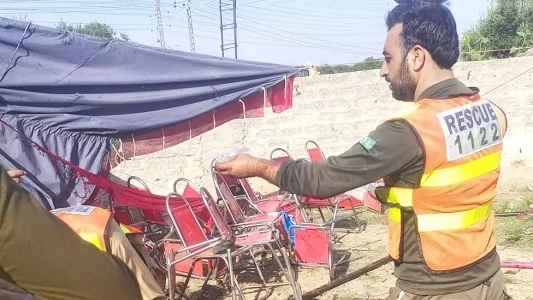
At least 35 people have been killed in an explosion in Pakistan during a rally organised by an Islamist party.

At least 200 people were also injured in the explosion in north-west Bajaur district, where Jamiat Ulema-e-Islam-Fazl (JUI-F) was holding a meeting.

Police told the BBC that they have found evidence suggesting the explosion was a possible suicide attack.

Security forces have cordoned off the area and have warned the death toll is likely to rise further.

A rescue operation to assist the injured is ongoing and the motivation behind the possible terrorist attack is not yet clear.

Hundreds of people were attending the JUI-F workers’ convention in the town of Khar, in the Pakistani tribal district of Bajaur, Khyber Pakhtunkhwa province, near the border with Afghanistan.

Images being broadcast on local TV show ambulances ferrying injured people to hospital, and some are being taken by helicopter to nearby Peshawar for treatment.

Authorities have declared a health emergency at the district hospital.

Some badly injured people have been waiting in the hallways of health clinics struggling to cope with the high number of casualties.

A regional leader of the JUI-F, Maulana Ziaullah, was killed in the blast, local officials have said.

JUI-F is a major religious political party and forms part of the government coalition in Pakistan’s parliament.

The party’s leader, Fazal-ur-Rehman, has demanded that Pakistan’s Prime Minister Shehbaz Sharif launch an inquiry into the explosion.

The political gathering was an opportunity for the JUI-F to rally its support, ahead of an election expected to take place later this year.

BBC/Simeon Ugbodovon

Subscribe to our Telegram and YouTube Channels also join our Whatsapp Update Group
Foreign

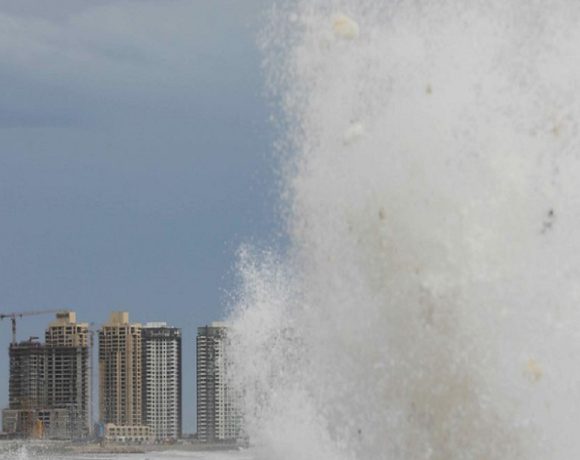
More than 170,000 people in India and Pakistan have been evacuated from the path of a fierce cyclone before its expected landfall on Thursday.

Forecasters have warned that Cyclone Biparjoy which means “disaster” in Bengali could destroy homes and crops in its path.

Biparjoy is expected to first hit India’s Gujarat state on Thursday evening local time.

Visuals from the state’s coast showed heavy rains, high tides and rough seas.

The cyclone is expected to make landfall near the Jakhau port between Mandvi in Gujarat and Keti Bandar in Pakistan’s Sindh province.

In its latest update, India’s weather department said that the landfall process “would commence from today evening [local time] and continue till midnight”.

Pakistan’s disaster management agency warned of storm surges as high as 3-4m along the coastline from Karachi to India’s Gujarat.

Gujarat’s Relief Commissioner Alok Pandey said the cyclone’s speed had reduced but its winds speed were expected to be around 110-12 km/h at the time of landfall, which he called “very dangerous”.

India’s weather office warned that the cyclone will damage roads, thatched houses and uproot electricity towers and trees along Gujarat’s coast.

The State’s Health Minister, Rushikesh Patel, asked people to stay where they were and avoid travelling. “Our aim is to ensure zero casualties,” he said.

At least seven deaths were reported amid heavy rains in India this week.

The victims included two children crushed by a collapsing wall, and a woman hit by a falling tree while riding a motorbike, AFP news agency reported.

In Pakistan, the storm is expected to strike the coast of Sindh province. Authorities have already evacuated 81,000 people from the south-eastern coast and set up 75 relief camps at schools.

Pakistan’s climate change Minister Sherry Rehman said that Karachi, the province’s largest city with a population of more than 20 million, was not under immediate threat but emergency measures were being taken.

Meteorologists warned that high tides could inundate low-lying areas along the coasts.
BBC/Adebukola Aluko

Subscribe to our Telegram and YouTube Channels also join our Whatsapp Update Group
Foreign

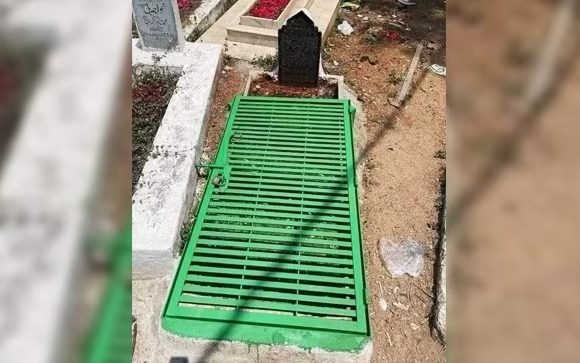
Parents in Pakistan are now putting padlocks on their late daughters’ graves to prevent them from being raped by some randy men.

According to a report, necrophilia cases are on the rise in the country and some social media users, including activists and authors have raised the matter once again on Thursday.

First Post reports that one such user named Harris Sultan, an Ex-Muslim Atheist activist and the author of the book “The Curse of God, why I left Islam” blamed hardline Islamist ideology for such depraved acts.

“Pakistan has created such a horny, sexually frustrated society that people are now putting padlocks on the graves of their daughters to prevent them from getting raped. When you link the burqa with rape, it follows you to the grave,” Sultan tweeted on Wednesday.

Another Twitter user Sajid Yousaf Shah wrote, “The social environment created by #Pakistan has given rise to a sexually charged and repressed society, where some people have resorted to locking their daughter’s graves to protect them from sexual violence. Such a connection between rape and an individual’s clothing only leads to a path filled with grief and despair.”

Women’s bodies have been unearthed and desecrated on several occasions in the past.

The scariest necrophilia case ever reported in Pakistan was in 2011 when a grave keeper named Muhammad Rizwan from North Nazimabad, Karachi was arrested after he confessed to raping 48 female corpses. Rizwan was caught running away after desecrating a corpse. He had caught the attention of nearby grave diggers and some other people.

Most recently in May 2022, some unknown men dug out the corpse of a teenage girl and raped it in the Chak Kamala village in Gujrat, Pakistan. This occurred on the same night the family had buried the deceased.

According to reports, the shocking incident came to light when the deceased girl’s relatives visited the graveyard the next morning as per their religious traditions. The kin found the body dug up and lying uncovered. The body showed signs of rape.

In 2021, some unknown men had carried out a similar barbaric act in Maulvi Ashraf Chandio’s village near the coastal town of Ghulamullah.

In 2020, A man was arrested on February 28 after being caught red-handed raping a corpse of a woman in a graveyard in Punjab, Pakistan. The incident occurred in Okara City in the Punjab province. The accused was identified by his first name, Ashraf.

In 2019, a woman’s dead body was allegedly dug up and raped by unidentified men in Karachi’s Landhi Town. The woman was buried in Ismail Goth Graveyard.

The woman’s body was dug up one day after it was buried. The caretaker of the graveyard told the deceased’s family that a dog had removed the slab which was covering the grave.

In 2013, a 15-year-old girl’s body was found lying outside her grave in Gujranwala, and was reportedly assaulted sexually.

Culled / Titilayo Kupoliyi

Subscribe to our Telegram and YouTube Channels also join our Whatsapp Update Group 
Foreign

At least 28 people have been killed in an explosion at a mosque in the Pakistani city of Peshawar.

According to report, the blast happened when the mosque was packed with worshippers and more than 150 people were injured, and a section of the building was destroyed, as officials say people are buried under the rubble. Several others are being taken to local hospitals.

Meanwhile, the cause of the explosion is unclear. Prime Minister Shebaz Sharif has strongly condemned the attack.

In a statement, Mr Sharif said those behind the incident “have nothing to do with Islam”.

He added: “The entire nation is standing united against the menace of terrorism”.

The blast took place during afternoon prayers in the north-western city, near the country’s border with Afghanistan.

Mohammad Asim, a spokesman for the Lady Reading Hospital, said that some of those injured were in critical condition.

“It’s an emergency situation,” Mr Asim added.

Local media report that police, army and bomb disposal squads are at the scene.

In the capital, Islamabad Police issued a security high alert and said security at all entry and exit points to the city had been increased.

BBC/Taiwo Akinola

Subscribe to our Telegram and YouTubeChannels also join our Whatsapp Update Group
Crime

As notorious drug kingpin bags 7 years imprisonment


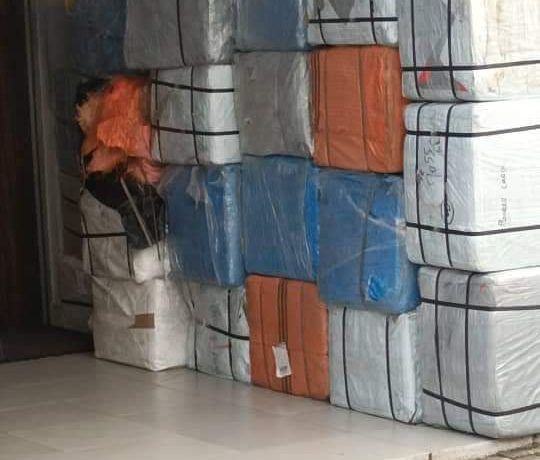
Desperate attempts by the tramadol drug cartel to smuggle into Nigeria over Two Million Four Hundred and Sixty-Five Thousand (2, 465, 000) tablets of the pharmaceutical opioid in 225mg and 250mg, weighing Two Thousand, Three Hundred and Fifty Six kilograms (2,356kgs) with an estimated street value of One Billion, Forty Million Naira (N1, 040, 000, 000) through the Murtala Muhammed International Airport, MMIA, Ikeja Lagos have been foiled by operatives of the National Drug Law Enforcement Agency, NDLEA.

Femi Babafemi, the Director, Media & Advocacy of NDLEA who made this known in a statement on Sunday, said the seizure of the drug on Friday 7th October came barely a week after about 13.5million pills of the same opioid worth over N8.8billion were recovered by NDLEA operatives from one of the mansions of a billionaire drug baron in the highbrow residential estate, Victoria Garden City, VGC, Lekki Lagos.

Following credible intelligence, the Agency had shown interest in the consignment of 52 cartons that came into Nigeria from Karachi, Pakistan with six different airway bills via Ethiopian Airline flight, comprising seven cartons of 250mg of a brand called tamral and 45 cartons of 225mg, branded as tramaking.

Soon after its arrival at the Lagos airport, the NDLEA called for a joint examination of the consignment with other stakeholders and after its information was confirmed by all, the 52 cartons of the seized substance which are above the recommended threshold for medical use and banned in the country, were moved to the Agencys facility.

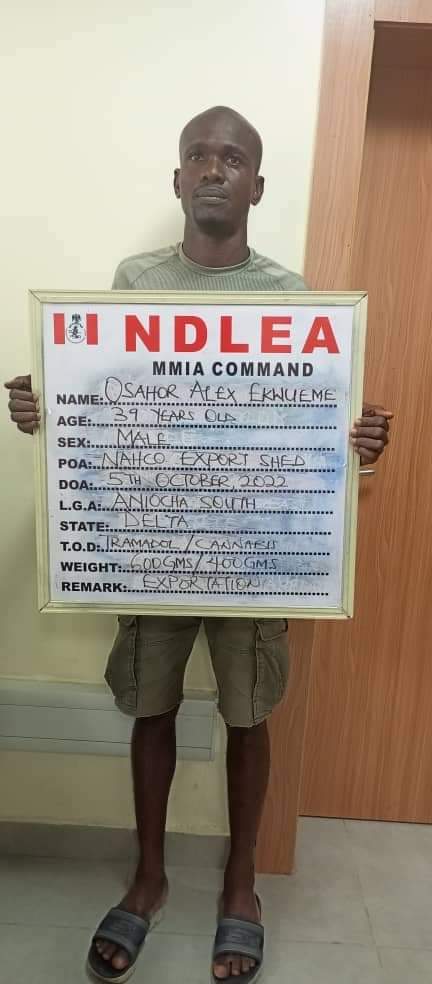
In the same vein, another bid to export through the airport 15 parcels of cannabis and 600grams of tramadol 225mg concealed in a sack of crayfish to Dubai, UAE was equally thwarted by operatives who seized the consignment and subsequently arrested a freight agent, Osahor Alex Ekwueme, who presented it for export.

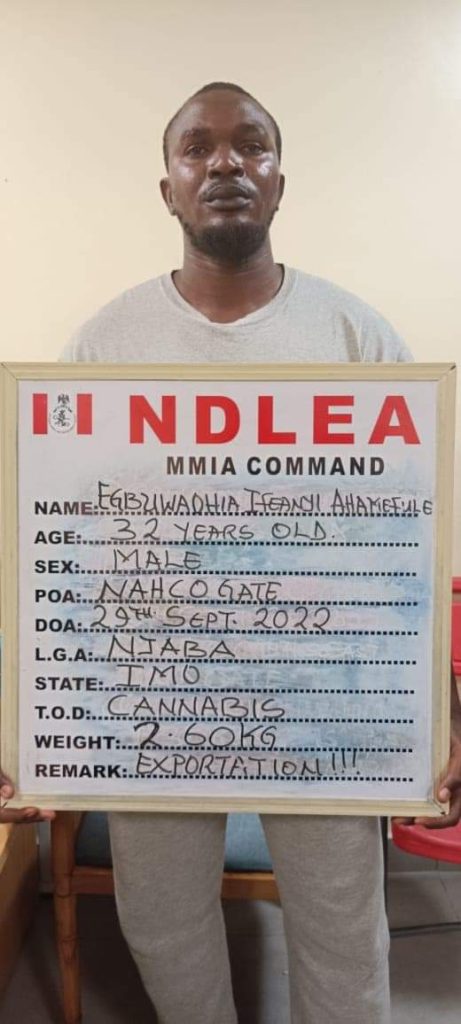
Weeks after NDLEA operatives intercepted 5.20kgs of cannabis concealed in kegs of palm oil going to Dubai at the NAHCO export shed of the airport, the brain behind the consignment, Ifeanyi Egbuwaohia, has been arrested in Igando area of Lagos. Though Ifeanyi works as a technician at Computer Village, Ikeja but beneath his known business he also works with a drug network in Dubai, where he sends illicit drugs for distribution. Few hours after his arrest, another consignment of 2.60kgs of the same substance sent by him for export to Dubai was also intercepted by operatives at the airport.

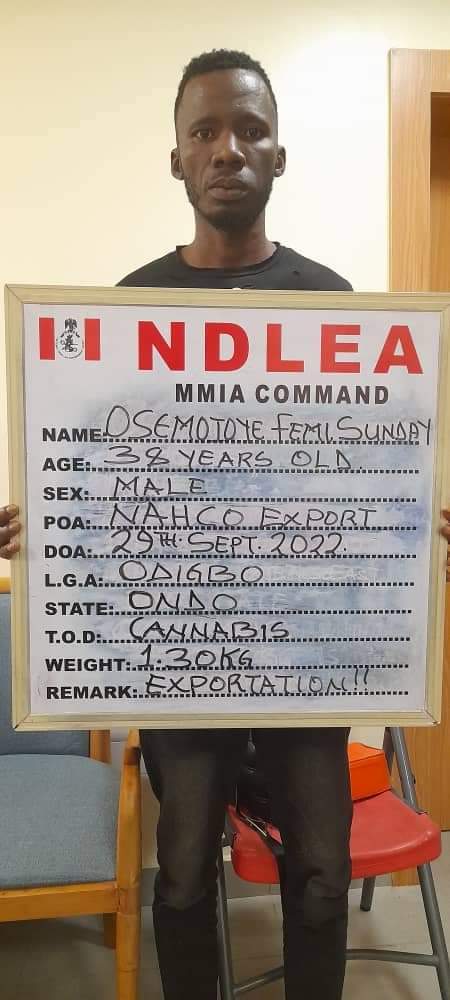
Another consignment of 1.30kgs of cannabis concealed in reconstructed engine blocks going to Dubai have also been seized at the SAHCO export shed while two persons: Olatunji Kehinde Temiola and Osemojoye Femi Sunday have been arrested in connection to the bid.

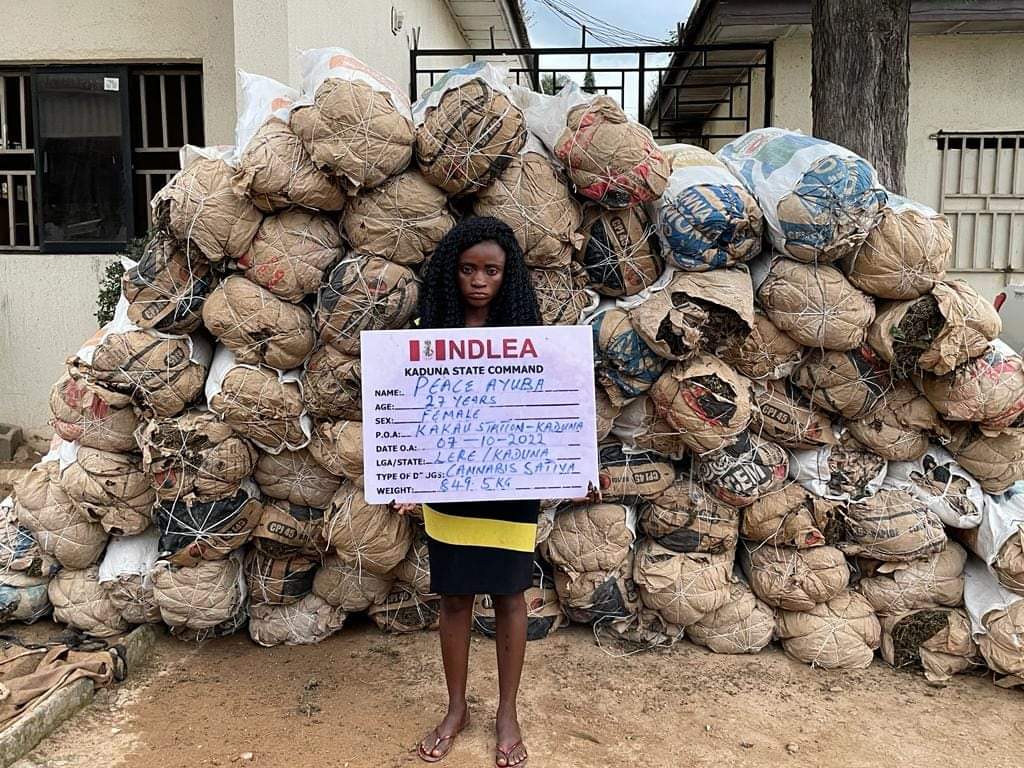
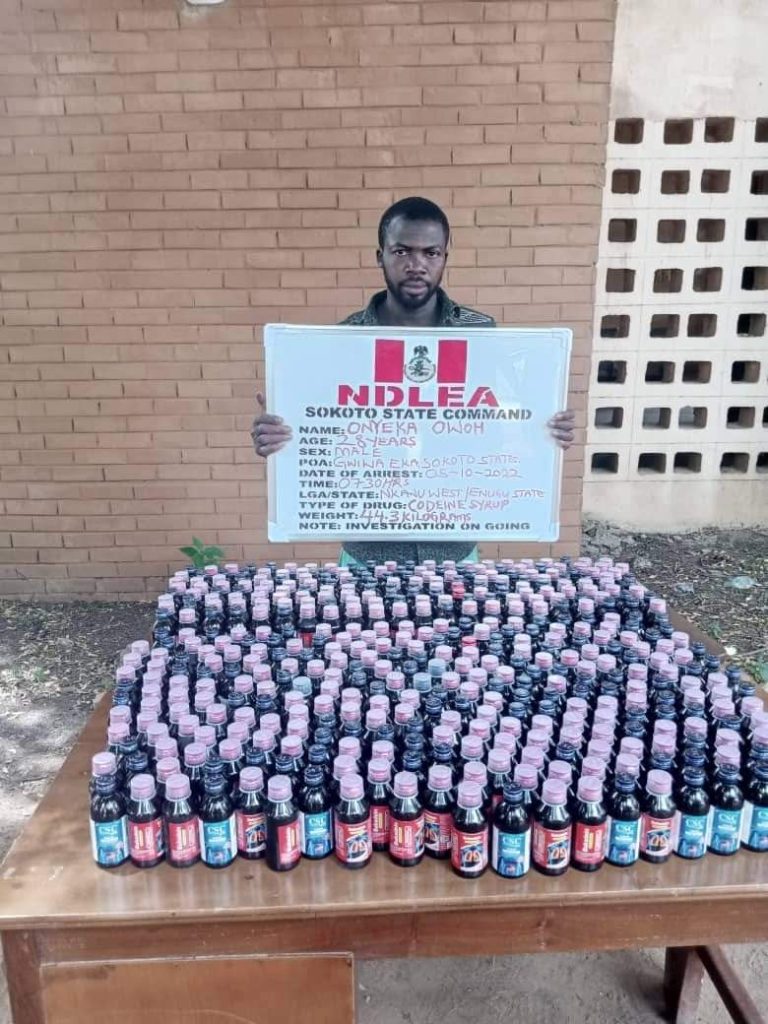
Meanwhile, In Kaduna state, a female drug dealer, Peace Ayuba, was on Friday 7th October arrested at Kakau Gonin Gora with seventy eight (78) bags of cannabis sativa weighing 849.5kgs, while operatives in Sokoto state arrested Onyeka Owo, 28, with 443 bottles of codeine based syrup.

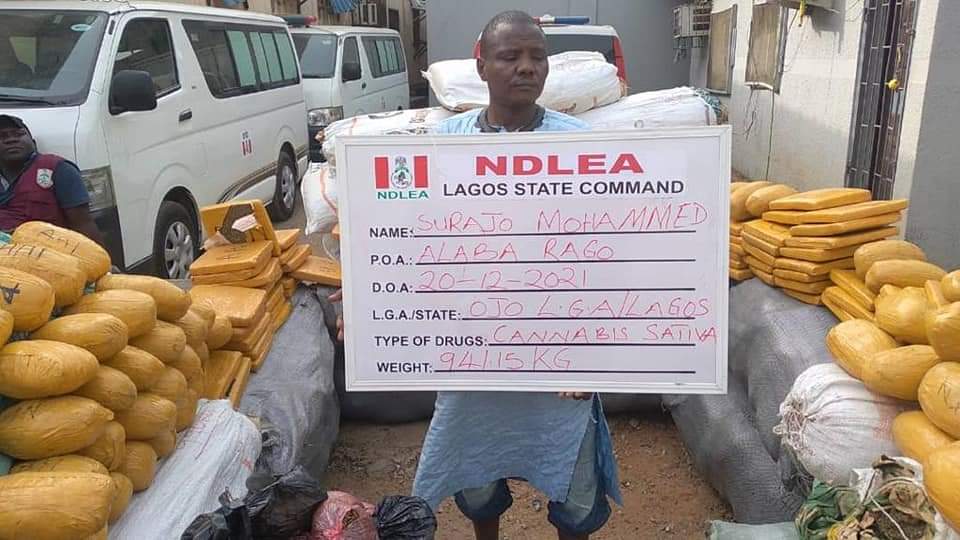
Ten months after his arrest by NDLEA, a notorious drug dealer in Alaba Rago area of Ojo, Lagos, Alhaji Surajo Mohammed has been convicted and sentenced to seven years imprisonment by a Federal High Court in Lagos presided over by Justice Yellin Dogoro. Surajo was arrested with 941.15kgs cannabis on Monday 20th December 2021 and arraigned in court in charge number FHC/L/370c/2021. In his judgment delivered on Thursday 6th October 2022, the Judge however gave the convict an option of seven million naira fine.

While commending the officers and men of the MMIA, Kaduna, Sokoto and Lagos commands for the feats, Chairman/Chief Executive of NDLEA, Brig. Gen. Mohamed Buba Marwa (Retd) urged them and their compatriots across the country to remain steadfast, resolute and unrelenting until the last gram of illicit drugs is taken away from the streets of Nigeria.

Olaolu Fawole

Foreign

Pakistan’s police have charged the country’s former Prime Minister, Imran Khan, under anti-terror laws.

Their investigation comes after he accused the police and judiciary of detaining and torturing his close aide.

Tensions are high in the country, with the former leader’s supporters gathering outside his house vowing to “take over” if he is arrested.

Since being ousted from power in April, Mr Khan has been a vocal critic of the government and the country’s army.

Police announced the charges after the cricketer-turned-politician accused authorities of torturing his close aide, who is himself being detained under sedition charges.

In a public speech on Saturday, Mr Khan condemned Islamabad’s police chief and a female judge for the detention and alleged mistreatment of his party colleague, Shahbaz Gill.

“You should also get ready as we will take action against you,” he said in the speech, referring to the pair directly.

Officials accused Mr Khan of breaching the country’s anti-terrorism act for allegedly making threats against the state officials.

Hundreds of the former prime minister’s supporters gathered outside his home in Islamabad after news of the investigation broke, vowing to “take over” the capital if police tried to detain him.

Police who were present at the scene said they were not there to arrest the former leader, but to maintain law and order.

The case comes at a time of heightened tension between Pakistan’s government and Mr Khan, who was ousted from power in April in a no-confidence vote.

Since then, the former leader has toured the country to deliver a series of fiery speeches calling for fresh elections and fiercely criticising both the government and the army.

On Saturday, Pakistan’s media regulator announced that television channels would be banned from broadcasting his speeches live, accusing Mr Khan of hate speech against state institutions.

The former leader claims the government is trying to censor him. On Sunday, he criticised the ban at another political rally in the city of Rawalpindi.

“What crime has Imran Khan committed? I will never accept this gang of thieves,” he told his supporters.

Mr Khan later accused the government of blocking access to YouTube halfway through the speech in an effort to prevent people from listening to him live.

Despite being ousted from power in a no-confidence vote earlier this year, Imran Khan continues to count on the support of many Pakistani voters.

Last month, his PTI party stunned rivals by taking control of a crucial provincial assembly in Punjab, defeating the PML-N party in what was expected to be an easy win for them.

Many saw July’s by-election victory as a signal of Mr Khan’s continued popularity at the ballot box – and a foretaste of what could happen if the early elections that he is seeking were to be held.

The charismatic politician was elected prime minister in 2018 but fell out with Pakistan’s powerful army towards the end of his tenure. After a series of defections, he lost his majority in parliament.

BBC/Simeon Ugbodovon

Subscribe to ourTelegram channel

Foreign

Pakistan’s parliament will select a new prime minister on Monday after Imran Khan was ousted in a no-confidence vote in the early hours of Sunday.

Shahbaz Sharif – the leader of an opposition coalition who worked to depose Mr Khan – is widely expected to win a majority of the vote.

Parliamentary voting will take place around 14:00 local time (09:00GMT).

Mr Khan, 69, was voted out after days of political drama and Supreme Court intervention.

He attempted to block a previous attempt to bring a no-confidence motion against him by dissolving parliament and calling for a snap election.

However, the country’s Supreme Court upheld an opposition petition that his actions were unconstitutional and ordered the vote to go ahead.

What do we know about Shahbaz Sharif?

Mr Sharif, 70, comes from one of Pakistan’s most powerful political dynasties. His older brother, Nawaz Sharif, was a former three-term Prime Minister who last held office from 2013 to 2017.

He leads one of the country’s main opposition parties, the Pakistani Muslim League Nawaz (PMLN).

He submitted his candidacy for the top post on Sunday and is widely tipped to have the numbers to ensure victory.

Other opposition leaders – like Bilawal Bhutto Zardari of the Pakistan Peoples Party (PPP) – have already indicated their support for him.

Mr Sharif is seen as a seasoned and effective administrator, having led the nation’s largest province of Punjab for three terms.

On Sunday, he heralded “a new dawn” for Pakistan following the vote.

However, Imran Khan, whose supporters protested across major cities after he was dismissed, is still blaming a “foreign conspiracy” for his removal as prime minister.

He has claimed, without evidence, that his rivals had colluded with the US to remove him because of his foreign policy stance on Afghanistan, Russia and China. Washington has strongly denied this. But the former international cricketer’s claims fed on anti-American sentiment held by many of his supporters.

He tweeted that the crowds seen were one of the largest protests in Pakistan’s history – a claim that has not been not independently verified.

BBC/Simeon Ugbodovon

Foreign

Pakistan’s Prime Minister Imran Khan has been ousted from power after losing a no-confidence vote in his leadership.
The vote was held past midnight after opposition parties brought a motion against him, following days of drama.
The motion was first brought last week, but the former cricket star blocked it by dissolving parliament.
Sunday’s vote took place after the country’s Supreme Court ruled in favour of opposition parties and said that Mr Khan had acted unconstitutionally.
Opposition leader Shehbaz Sharif – who is expected to be chosen as the new prime minister on Monday – said Pakistan and its parliament were “finally freed from a serious crisis”, adding in a tweet: “Congratulations to the Pakistani nation on a new dawn.”
If voted in by parliament, Mr Sharif – a long-time rival of Mr Khan and brother of former three-time Prime Minister Nawaz Sharif – would be able to hold power until October 2023, when the next election is due to be held.
The vote makes Mr Khan the first Pakistani prime minister to be ousted by a no-confidence motion, with opposition parties securing 174 votes in the 342-member house in support of the no-confidence motion.
His supporters are expected to take to the streets on Sunday evening.
‘International conspiracy’
Mr Khan has previously said he would not recognise an opposition government, claiming – without evidence – that there was a US-led conspiracy to remove him because of his refusal to stand with Washington on issues against Russia and China.
He has repeatedly said that Pakistan’s opposition parties are working with foreign powers. Members of his party (PTI) left the building just ahead of the vote, also insisting he was the victim of an international conspiracy.
The US has said there is “no truth” in these allegations, and Mr Khan has never provided any evidence.

BBC

Foreign

A court in Pakistan has sentenced two men to death for a rape which triggered public outrage.

Abid Malhi and Shafqat Ali Bagga came across a Pakistani-French woman and her two children stranded on a motorway.

The men broke into their car, which had run out of petrol on the road near Lahore, robbed them and raped the woman in front of her children.

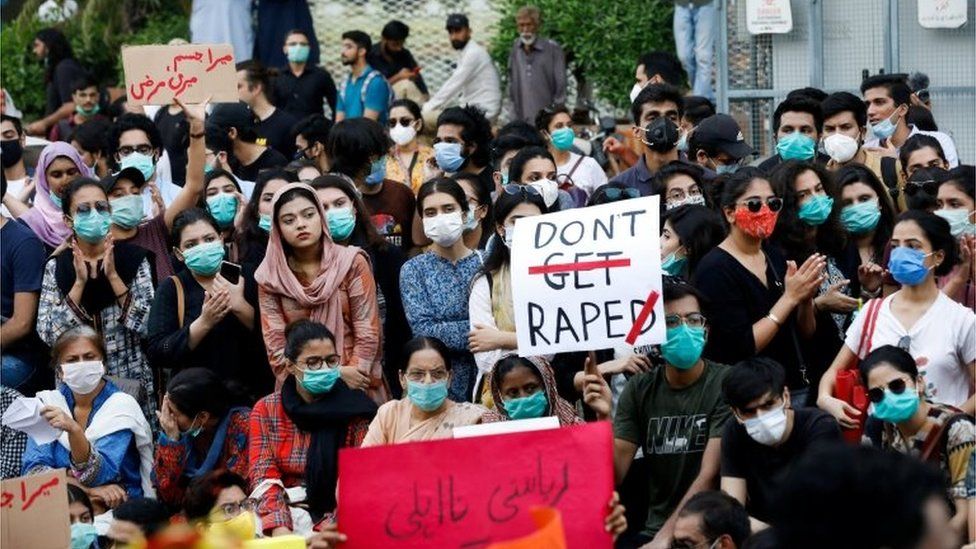
Later comments by a policeman, who questioned why the woman had been out late on her own, led to mass protests.

On Saturday, a special court in the eastern city of Lahore convicted Abid Malhi and Shafqat Ali of gang rape, kidnapping, robbery and terrorism offences.

Their lawyer said they would appeal against the decision, according to the AFP news agency.

What happened during the attack’?

On 9 September 2020, the woman – whose name has not been publicly released – ran out of fuel on a motorway leading out of Lahore. Her two children were with her.

She called her relatives in Gujranwala who advised her to call the motorway emergency numbers and also set off to help her.

According to the complaint registered with the police by one of the woman’s relatives, the car was broken into by two men in their early to mid-30s who stole money and jewellery she had on her. They raped her in front of her two children in a nearby field, and then escaped.

Police say the woman was traumatised, although she did provide them with some basic descriptions of her attackers.

The next day the most senior police official in Lahore, Umer Sheikh, appeared in front of the media and implied that she had been partly to blame. He questioned why she had not taken a busier road, given that she had been alone with her children, or checked her fuel before departing.

In several TV appearances he reiterated these points, also adding that the woman, who is a resident of France, seemed to be operating under the impression Pakistan was as safe as France.

The reaction was like nothing seen in the country before and came from all quarters.

On social media people called him out for his victim-blaming.

Thousands of people across Pakistan also took part in protests, demanding justice and better protection of women in the country.

In December, new rape laws were passed, offering faster trials and tougher sentences.

BBC