Energy

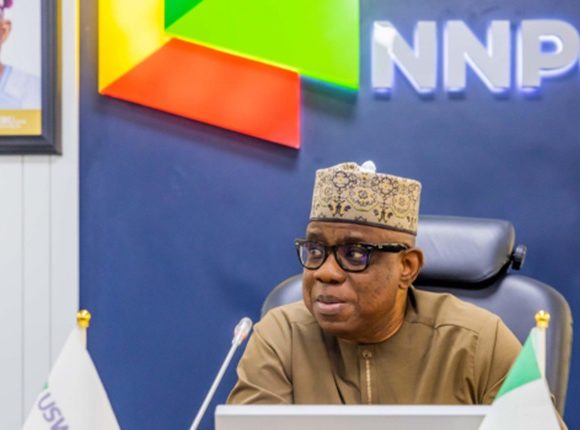
The Nigerian National Petroleum Company Limited, Group Chief Executive Officer, Bashir Ojulari, has lamented the crude and gas production losses resulting from the three-day strike carried out by the Petroleum and Natural Gas Senior Staff Association of Nigeria.

In a letter written to the Nigerian Midstream and Downstream Petroleum Regulatory Authority and Nigerian Upstream Petroleum Regulatory Commission, Ojulari explained that the suspended strike led to 16 per cent oil production and 30 per cent marketed gas losses, while the nation suffered a 20 per cent power supply shortfall.

The National oil company’s letter, dated 29 September 2025 and titled ‘Impact Assessment of ongoing industrial action,’ was also sent to the National Security Adviser and the Director General, Department of State Services.

The industrial action caused by a rift between the union and the Dangote Refinery forced the shutdown of major oil terminals, gas plants and power facilities, leading to the deferment of 283,000 barrels of crude oil per day and 1.7 billion standard cubic feet of gas daily, choking off vital income streams from the country’s two biggest revenue sources.

This came as the leadership of the union announced the suspension of its nationwide strike against Dangote Petroleum Refinery following the intervention of the Federal Government, even as it cautioned that the truce remained temporary and could be revisited if the pending issues were not addressed.

Recalled, PENGASSAN and the management of the 650,000 refinery have been at loggerheads.

The rift stemmed from allegations by PENGASSAN that the Dangote Refinery engaged in mass transfers and sackings of union members, while also replacing some Nigerians with foreign nationals, claims the company consistently denied.

The refinery’s management stated that the workforce reorganisation was due to operational requirements and not related to union activities.

The standoff escalated when the union embarked on an industrial action by halting gas and crude oil supplies to the refinery, raising the alarm over potential disruptions to the nation’s energy supply and economic stability.

The Federal Government intervened over concerns about the impact of the dispute, citing the risk of “adverse effects on the economy and energy security,” and convened high-level talks to resolve the impasse.

Detailing the financial losses in the letter obtained by our correspondent on Wednesday,  the NNPCL GCEO said industrial action resulted in significant production deferments.

Ojulari disclosed that, within the first 24 hours of the strike, as of September 29, 2025, production deferments stood at 283,000 barrels of oil per day, 1.7 billion standard cubic feet of gas per day, and more than 1,200 megawatts of power generation

According to him, this translates to around 16 per cent of national oil production, 30 per cent of marketed gas, and 20 per cent of electricity supply, with the impacts expected to intensify if the situation lingers.

As of 29 September 2025 (within the first 24 hours of the strike), production deferments stood at approximately 283 kbpd of oil, 1.7 bscfd of gas, and over 1,200 MW of power generation impact. This equates to around 16 per cent of national oil output, 30 per cent of marketed gas, and 20 per cent of electricity generation. Should the situation continue, the impacts are expected to intensify, posing a material threat to national energy security,” the GCEO noted.

The gas sector also recorded heavy losses during the strike, with about 1.7 billion standard cubic feet per day taken offline. Industry data showed that this volume translates to roughly 1.7 million Mcf of gas daily, which, when converted at 1.037 MMBtu per Mcf, amounts to about 1.76 million MMBtu each day.

He further explained that at least five scheduled critical maintenance activities have been affected, with knock-on effects likely to worsen deferments in subsequent periods. These include the USAN turnaround maintenance, AKPO GT-3 pigging, H2 well tests, annual compressor maintenance and SEPNU EAP IGE.

Ojulari also revealed that about 100,000 barrels per day of crude oil and 1.341 billion standard cubic feet of monetised gas across Joint Venture and Production Sharing Contract assets, which were due to be restored this week, have now been delayed.

Ojulari noted that while a limited number of non-unionised staff were still facilitating crude exports, operations remained heavily constrained.

He warned that ongoing and scheduled lifting operations across the terminals were likely to suffer further financial setbacks in the coming months, raising the risk of demurrage claims by international buyers.

At the Brass Terminal, for instance, the loading of an NNPC cargo that was close to completion was stalled after documentation could not be finalised due to the strike. The delay, he said, had already triggered demurrage costs.

The NNPCL boss stressed that the financial toll was mounting rapidly, with significant revenue losses projected at current deferment levels.

According to him, missed crude lifting and disrupted gas sales were placing the company’s cash flow under “immediate and compounding pressure.”

Punch/Adetutu Adetule
Subscribe to our Telegram and YouTube Channels, and also join our WhatsApp Update Group.

Economy

The Federal Government has brokered peace in the face-off between the Dangote Petroleum Refinery and the Petroleum and Natural Gas Senior Staff Association of Nigeria, after two days of conciliation meetings.

A statement issued in the early hours of Wednesday by the Minister of Labour and Employment, Dr Mohammed Maigari Dingyadi, disclosed that the matter was resolved following lengthy discussions.

According to the statement, the resolutions reached included: “The Honourable Minister of Labour informed the meeting that unionisation is a right of workers in accordance with the laws of Nigeria, and this right should be respected.

“After examining the procedure used in the disengagement of workers, the meeting agreed that the management of Dangote Group shall immediately begin the process of redeploying the disengaged staff to other companies within the Dangote Group, with no loss of pay.

“No worker will be victimised arising from their role in the impasse between Dangote and PENGASSAN.

“PENGASSAN agreed to start the process of calling off the strike. Both parties agreed to this understanding in good faith.”

The government delegation at the meeting included the National Security Adviser, Mallam Nuhu Ribadu; Minister of Labour and Employment, Dr. Dingyadi; Minister of Finance and Coordinating Minister of the Economy, Wale Edun; Minister of Budget and Economic Planning, Senator Atiku Bagudu; Minister of State for Labour and Employment, Barr. Nkeiruka Onyejeocha; Director-General of the DSS, Adeola Ajayi; and the Director-General of the NIA, Ambassador Mohammed Mohammed.

Monday’s earlier meeting between PENGASSAN and the Dangote Refinery management over the industrial dispute had ended in a deadlock.

The session, which began around 4 pm, stretched into the early hours of Tuesday without resolution.

Following the stalemate, Dingyadi announced that the talks would reconvene by 2 pm on Tuesday.

The follow-up meeting, which eventually commenced around 3:50 p.m. at the Office of the National Security Adviser, lasted into the early hours of Wednesday, when the breakthrough was finally achieved.

The rift had stemmed from allegations by PENGASSAN that the Dangote Refinery engaged in mass transfers and sackings of union members, while also replacing some Nigerians with foreign nationals, claims the company consistently denied.

The Federal Government intervened over concerns about the impact of the dispute on the nation’s economy and energy security.

Punch/Olaolu Fawole

Energy

The Petroleum and Natural Gas Senior Staff Association of Nigeria, PENGASSAN, has warned the Federal Government against selective implementation of the Petroleum Industry Act 2021.

The President of PENGASSAN, Comrade Festus Osifo who gave the warning at the 7th triennial national delegates conference in Abuja, said the government must set up the host communities development funds immediately.

Osifo observed that the full implementation of the provisions of the PIA will further deepen the development of the midstream sector of the Nigerian oil and gas industry.

He, therefore, urged the incoming government to aggressively implement the Act for the benefit of the country.

Comrade Osifo who expressed satisfaction at the ongoing rehabilitation of Nigeria’s three refineries, commended the Group CEO of NNPC Limited, Mr. Mele Kayri for the bold steps toward a workable approach to bringing back on-stream the ailing refineries.

He said: “We will also continue to advocate for the adoption of the NLNG model in the running of the nation’s four Refineries when fully revamped and the creation of an enabling environment for the establishment and operation of modular and private refineries.

“We are happy that the current NNPC management is favourably disposed to such. With the Dangote refinery, there will be a significant impact on the fuel supply dynamics, including easing pressure on the economy, especially when combined with the ongoing revamping of the three refineries in the country”.

The PENGASSAN president expressed dissatisfaction over Nigeria’s rising debt level.

 “This is quite alarming mostly when you compare the cost of servicing this debt to the revenue generated by the government per annum”, he added.

He stated that while the oil workers were not against the government taking loans, he stressed that borrowed funds should not be used for consumption but rather channeled into productive ventures and infrastructure development.

Vanguard/ Oluwayemisi Owonikoko

Subscribe to our Telegram and YouTubeChannels also join our Whatsapp Update Group

News Analysis

A harmonious, peaceful and orderly work place is essential and needed to guarantee satisfaction of employees and employers’ for enhanced productivity.

However, whenever there is conflict in the interest of parties, industrial unrest and crisis becomes inevitable and unavoidable. 

Research has shown that disharmony between workers and their employers’ often centre on poor remuneration, inadequate welfare, non payment of salaries and allowances as and when due.

Other factors for industrial actions are unconducive working environment, delay in promotion and breach of contractual agreement. 

Recently, Nigeria was plugged into a season of industrial action, especially in health, education, oil and gas as well as the civil service. 

This harvest of strikes include the Academic Staff Union of Universities, ASUU, Colleges of Education Academic Staff Union, COAESU, Joint Health Staff Union, JOHESU, NARD, NUPENG and PENGASSAN. 

A national  strike planned for last month was averted at the last minute by the federal government.

The Nigeria Labour Congress, NLC and Trade Union Congress, TUC had threatened to lead Nigeria workers on an indefinite strike due to electricity tariffs increase and fuel price hike that worsened living condition in the country.

While industrial action is the statutory right of workers to press home their demands, the result of such unfortunate happening is socio economic paralysis in the various sectors of national life. 

Incessant strikes often lead to brain drain which is why there is exodus of the country’s trained personnel and professionals to other countries of the world in search of greener pasture.

In moving forward, there is the need to ensure industrial harmony between government at all levels and in the private sector to minimize the adverse effects of labour unrest on the socio economic life of the citizenry.

Government should fast track and implement policies that can reduce inflation and ameliorate the poor living condition of the people and help to decrease the level of employer and employee frictions in the country.

Dialogue should be encouraged at all time while government should not wait for workers to embark on strike before meeting their legitimate demands. 

Since it is evident that industrial welfare is an ill wind that blows no one any good, ensuring a sound and harmonious workplace relation is essential not only to the workers but the entire society.

Tayo Sanni