By Rotimi Famakin
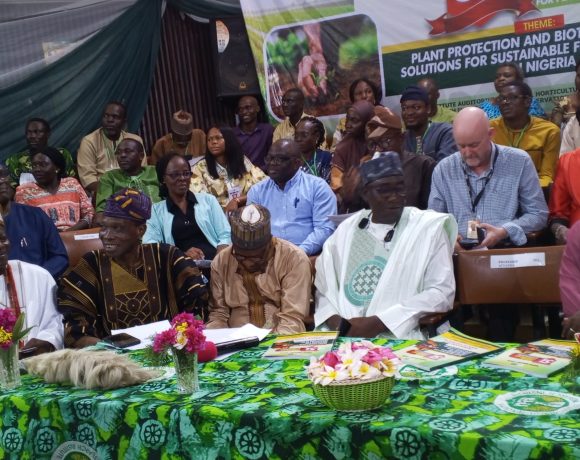
The need to tackle emerging species of crop pests and diseases as well as mitigating climate change through peer review of research findings took the centre stage at the 51st Annual conference of the Nigerian Society for Plant Protection, NSPP held at the National Horticultural Research Institute, NIHORT, Idi Ishin, Jericho, Ibadan.

With members drawn from across the globe, the society comprises of plant scientists, biotechnologists and other agricultural crop specialists with members from across the world.

It has the mandate of researching into causes, effect, prevention and management of weather related crop pests and diseases, hence the theme of the conference: “Plant protection and Biotechnological Solutions for Sustainable Food production in Nigeria”.
In a message to the opening of conference, the Minister of state for Agriculture and Food Security, Senator Aliyu Abdullahi observed that Nigeria’s agricultural practice system was presently being challenged by climate change, new species of pests destroying crops, multiplication of pests through warm temperatures and diseases such as fungi and bacteria that accompanied normal weather condition.
He noted that such required a multifaceted approach to tackle. “Climate change is no longer a distance threat, it is here with us. We already experiencing rising temperatures, unpredictable rainfall, longer drought. Aside this is something critical. These climate shifts are changing how pest and diseases behave. Warm temperatures allow pests to reproduce faster, leading to multiple generations within a single growth session.”The Minister said.
Represented by the Executive Secretary of Agricultural Research Council of Nigeria, ARCN, Dr Abubakar Dabban, the minister listed the approach to include smart study of weather to track pests, empowerment of farmers, quick and effective approach to disease and pest control.
Others are, “dissemination of new agricultural information on new innovations to rural farmers through their local languages, exposure of farmers to new techniques of pest and disease control, adoption of Artificial intelligence, quarantine and synergy among stakeholders”.
Senator Abdullahi also said formation of integrated pest management, IPM platform in all regions of Nigeria for early data collection on emerging pest and plant diseases had become a necessity.
Addressing members of the Nigerian Society for Plant Protection, NSPP, the president of the society, Professor Abdulhameed Yusuf said achieving food security and sufficiency in the country relied on the collective responsibilities of all. “The future of Nigeria’s food security depends on our collective ability to translate research findings into practical solutions that will support farmers and strengthen our agricultural system for the benefit of our nation and our future generations”
The NSPP president maintained that the conference would enable scientists to engage in peer review of their research findings that would help food production in Nigeria.
In a keynote address on the theme of the conference, Plant protection and Biotechnological Solutions for Sustainable Food production in Nigeria, the head of the Virology and molecular diagnostic unit at the International Institute of Tropical Agriculture, IITA, Dr Lava Kumar, rated Nigeria’s agricultural productivity high when compared to other African countries.
Dr Kumar who noted that the federal government was taking numerous steps to boost food production however said lack of infrastructure and innovation were causing setbacks to the achievement of the desired food production in the country.
The Executive Director, National Horticultural Research Institute, NIHORT, Professor Lawal Atanda explained that the institute had developed numerous crop varieties and technologies to surmount emerging threats to crop production.
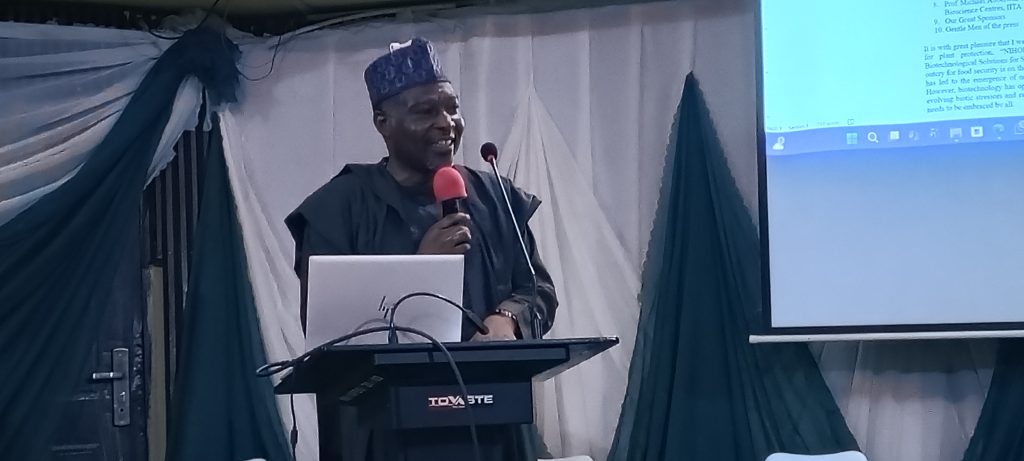
According to Professor Atanda, the new technologies included HORTITECH one and HORTITECH two, while new tomato varieties including HORTITOM one to HORTITOM seven had been released by the institute.
Professor Atanda also explained that the institute recently released new onion varieties such as HORT ONION one to three for dry season farming and HORT ONION four to six for wet season farming. “imported onion seed varieties led to loss by onions farmers. The institute was contacted and I know NSPP must have also been contacted. We have therefore released six varieties of onions for dry and wet season farming.”
He noted that the institute with outstations in Imo, Kano, Gombe, Benue and plateau states has mandate on research on genetic improvement, production technologies, storage,utilization, marketing of crop and ornamental plants that medicinal to humans.
Goodwill messages from the Oyo state government , Onimoji of imojiland, Oba Dominick Kola, as well as representatives of Lagos, Kwara, centred on the need for collaboration to achieve food security mandate of President Bola Tinubu’s administration.

The event featured award of fellowship to distinguished members of the society including Professors BabaGana Kabir, Juliet Akinyele and Akeem Ayorinde.
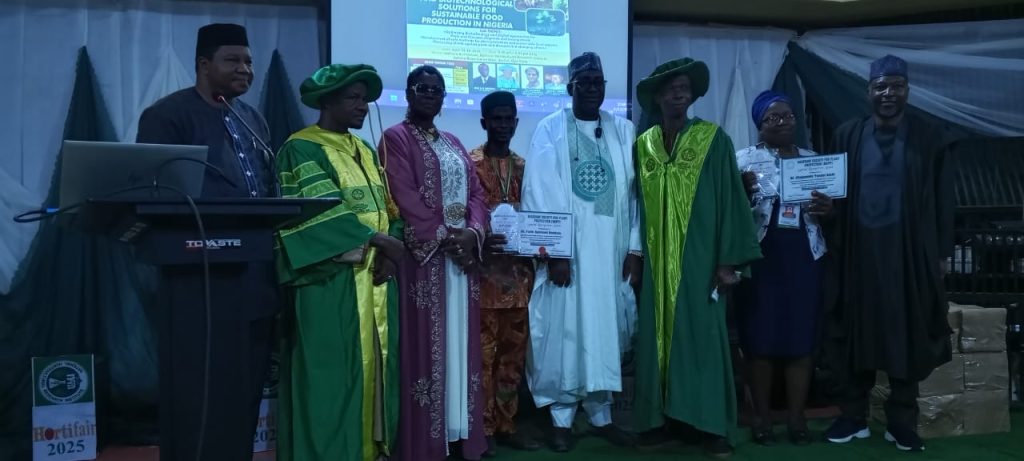
The awardees according to the Chairman, NSPP Board of Trustee, Professor Babatunde Olufolaji were selected based on their immense conktributions towards the growth and development of the society
High point of the event was the launch of the society’s journal described as Nigerian Journal of Plant Protection, NJPP
Edited by Olaitan Oye-Adeitan