Energy

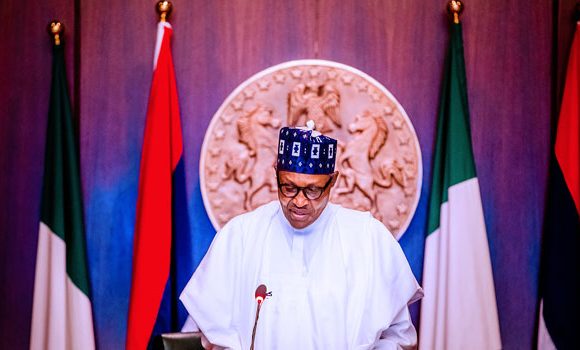
President Muhammadu Buhari has signed the Petroleum Industry Bill 2021 into law.

Working from home in five days quarantine as required by the Presidential Steering Committee on COVID-19 after returning from London on Friday August 13, the President assented to the Bill Monday August 16, in his determination to fulfill his constitutional duty.

The ceremonial part of the new legislation will be done on Wednesday, after the days of mandatory isolation would have been fulfilled.

The Petroleum Industry Act provides legal, governance, regulatory and fiscal framework for the Nigerian petroleum industry, the development of host communities, and related matters.

The Senate had passed the Bill on July 15, 2021, while the House of Representatives did same on July 16, thus ending a long wait since early 2000s, and notching another high for the Buhari administration.

Femi Adesina
Special Adviser to the President
(Media and Publicity)
August 16, 2021

Energy

The National Assembly said it was working tirelessly to ensure the passage of the Petroleum Industry Bill, PIB, in April 2021.

This came as the Joint Ad-hoc Committee of the National Assembly expressed regrets over the poor condition of the nation’s refineries, adding that PIB when passed would revive the refineries to function optimally.

The joint committee of Senate and House of Representatives said this in Port Harcourt, Rivers State, yesterday, during a visit to Port Harcourt Refinery Company, in continuation of its oversight visit of the refineries in the nation.

Speaking, Mohammed Mougunu, Chairman of the Ad-hoc Committee in the House of Representatives on PIB, and Chief Whip of the House, noted that the committee was poised to pass the petroleum bill as soon as possible.

Mougunu noted that the main focus of the Bill was to entrench reformation of all the nation’s refineries to international standard, noting that there as the need to make the country’s refineries more competitive.

He said: “The main thrust of the PIB is to reform our oil and gas industry, to make it more competitive and bring their operation in tandem with international best practices.

“We are here in Port Harcourt refinery to see their constraints and how best within the prodigies of PIB, leverage on same and then make their operations more competitive in a bid to attract the much-needed investment in the oil and gas industry, especially against the backdrop of the fact that the world is now moving away from fossil fuels to renewables.”

The committee’s co-chair, said NASS would ensure the passage of the long-awaited PIB in April, adding that the bill will bring to an end the capital flight.

Speaking earlier in a meeting with the management of Port Harcourt Refinery, PHRC, the Senate Ad-hoc Committee Chairman on PIB, Sen. Sabo Nakudu, noted that committees were mandated to submit it’s report to the House as soon as possible.

Also, Sen. Albet Bassey, who is Chairman Upstream, at the Upper Chamber, expressed regrets over the moribund condition of the nation’s refineries, noting that efforts were on to return life to the facilities.

However, the Managing Director of PHRC, Ahmed Dikko, expressed optimism that rehabilitation of the facility would commence in April.

Vanguard

Energy

An expert in the petroleum industry, Dr Israel Aye, says the two proposed commissions for regulation of the upstream and downstream activities in the Petroleum Industry Bill, PIB, will allow transparency and boost nation’s economic growth.

The two commissions in the Bill are the Nigerian Upstream Regulatory Commission and the Nigerian Midstream and Downstream Regulatory Authority.

Doctor Aye, who stated this at a workshop organised by the Nigeria Association of Women Journalists, NAWOJ, in Lagos, noted that the commissions would enable Nigerians to interrogate every process involved in decision making.

He decried the belief that implementation had always been the problem hindering so many policies, saying effective frameworks would deter sabotage.

Dr. Aye enjoined women journalists to support the clamours for quick passage of the PIB which he said would focus more on governance, administration and fiscal in terms of doing business and its effectiveness on the host communities.

In her remark, the Vice President, NAWOJ, B Zone, Mrs. Bola Akingbehin, urged the National Assembly to speedily pass the Petroleum Industry Bill.

Mrs. Akingbehin also tasked women journalists to support the efforts in ensuring issues that concern female were well canvassed for in the Bill.

The theme of the workshop is: “The Implications of the PIB on Gender in Nigeria”.

In a related development, the former President, Nigeria Association of Women Journalists NAWOJ, Mrs. Ifeyinwa Omowole has has asked journalists to change the stereotype narratives of gender bias and dominance in the society.

Mrs. Omowole, one of the facilitators at a three day workshop organised for female journalists in Osun State tasked journalists to be objective and fair in their reportage.

Speaking of on the theme of the training is ‘Gender Equity and Safety/Gender Sensitive Reporting’, the former president of NAWOJ said responsibilities were now shifting from men to women.

According to her, gender issues are not about the women or the girl child alone, but peculiar to locations or communities, because gender issues can affect or be about men or the male child too.

She noted that everybody, male and female, must be carried along in development and governance so that there would be even development.

Mrs. Omowole said there were serious gender issues that journalists need to give optimal coverage because of the negative effect they would have on the society in the future, hence, the media must continue to sensitise, advocate and point out issues.

She urged government to make laws and enforce these laws to abolish discrimination.

Funmi Adekoya