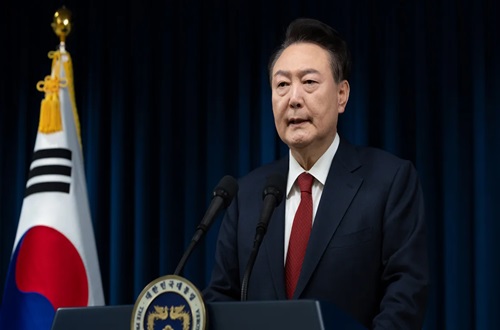
South Korea’s parliament voted to impeach President Yoon Suk Yeol on Saturday in an extraordinary rebuke that came about after his own ruling party turned on him following his refusal to resign over his short-lived martial law attempt.
It is the second time in less than a decade that a South Korean leader has faced impeachment proceedings in office and means Yoon is suspended from exercising his powers until the decision is finally adjudicated by the country’s Constitutional Court.
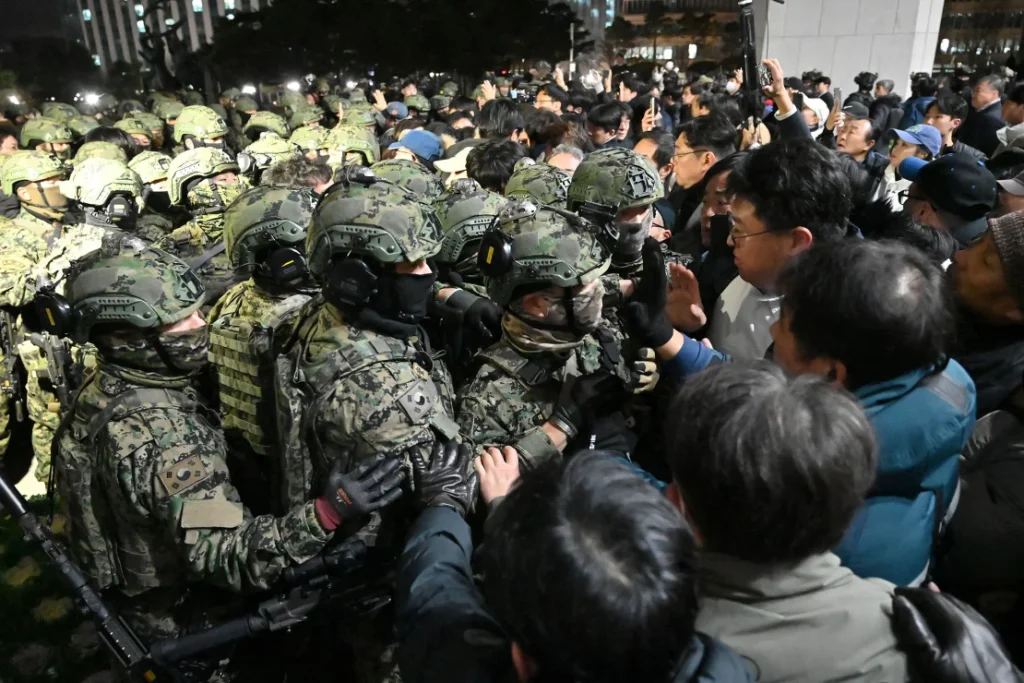
The dramatic decision marks the culmination of a stunning political showdown after Yoon briefly declared martial law on December 3 and sent soldiers to parliament, where lawmakers fought past troops to enter the building and vote down the decree.
Yoon’s gamble backfired spectacularly, galvanizing many in the vibrant Asian democracy to call for his removal.
Opposition parties tried impeaching him a week ago – but Yoon survived after members of his ruling People Power Party boycotted the vote, saying they hoped the president would voluntarily resign instead.
Yoon then doubled down – giving a defiant speech on Thursday in which he defended his martial law decision, lambasted the opposition, claimed he was trying to save the country and vowed to “fight until the last moment with the people.”
Yet moments before that speech, the leader of Yoon’s party withdrew his support for the president and backed impeachment as the “only way… to defend democracy”, instructing lawmakers to vote with their conscience.
Thousands of protesters gathered in Seoul on Saturday, braving the cold to call for Yoon to resign ahead of the vote, which was passed by 204 lawmakers with 85 voting against it.
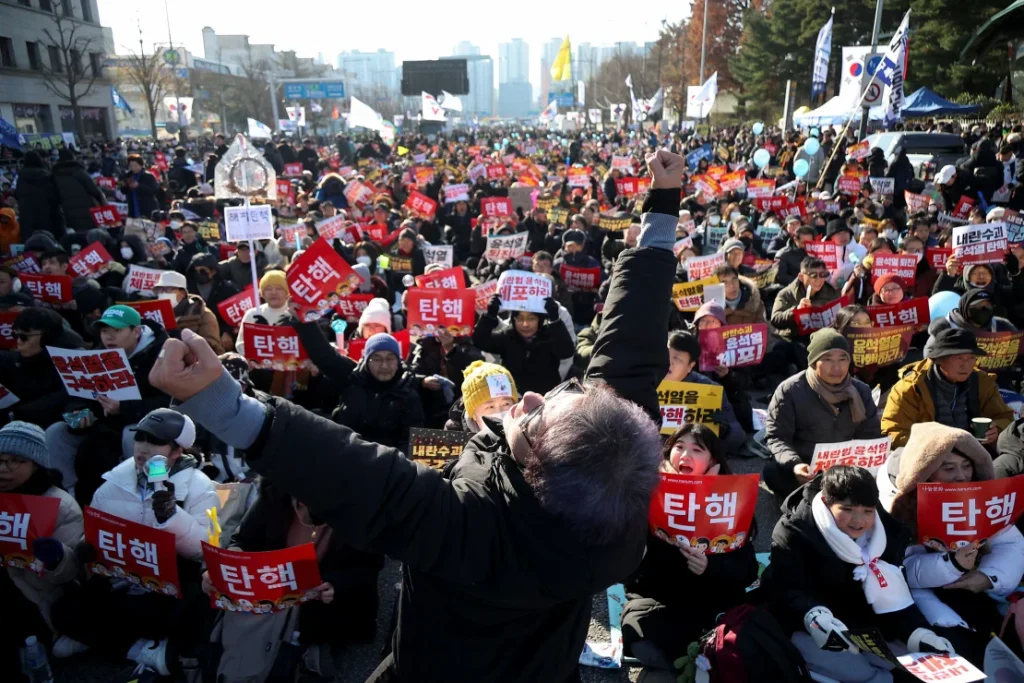
Meanwhile, thousands of the president’s supporters gathered in downtown Seoul, with many waving US and South Korean flags, chanting slogans and holding up signs in support of the embattled Yoon.
Yoon, who has been immediately suspended of his powers, now awaits a ruling by the Constitutional Court – one of the country’s highest courts – to confirm his fate, which can take up to six months.
If confirmed, he will become the second South Korean president to be thrown out of office by impeachment after Park Geun-hye, the country’s first female leader.
Under South Korean law, Prime Minister Han Duck-soo will serve as acting president, but he also faces his own political problems and is being investigated over his role in the martial law decision, adding to the political uncertainty in the weeks ahead.
A former prosecutor and conservative firebrand, Yoon has had a difficult two years in office, mired in low approval ratings and political scandals involving his wife and political appointments.
Since he took office in 2022 he has also faced political gridlock with an opposition-majority parliament – which prevented from moving forward on legislation to cut taxes and ease business regulations, as his main rivals in the Democratic Party used the legislature to impeach key cabinet members and hold up a budget bill.
His administration cracked down what he referred to as “fake news” with police and prosecutors raiding multiple media outlets, including MBC and JTBC, as well as the homes of journalists.
Yoon argued that his frustration with the political deadlock drove him to take a bold power move, surprising not only members of his own party but also many military leaders.
Police raids and treason investigations
In his late-night address declaring martial law, Yoon accused the opposition of “anti-state” activities and being in cahoots with North Korea, without providing evidence – a charge his opponents have strenuously denied. He also portrayed his act as the only way to break the political deadlock in parliament.
But it was met with shock and anger across the country, which remains deeply scarred by the brutality of martial law imposed during decades of military dictatorship before it transitioned into hard-won democracy in the 1980s.
Dramatic scenes from that night showed security forces breaking through windows in the National Assembly to try and prevent lawmakers from gathering, and protesters confronting riot police.
Since then, pressure on the president has grown, with police, parliament, prosecutors and the anti-corruption body launching separate investigations into Yoon on treason allegations. On Tuesday, lawmakers approved a special counsel to investigate whether Yoon committed insurrection and abused his power by issuing martial law.
The following day, South Korean police raided the presidential office, a presidential security official confirmed to CNN. Yoon has also been barred from leaving the country.
Last week, South Korean prosecutors detained former defense minister Kim Yong-hyun, who allegedly recommended the martial law imposition and resigned in the wake of the scandal. Kim attempted to end his own life in custody late Tuesday, according to the head of the country’s correctional service.
On Thursday, Yoon said he had only discussed the martial law decree with Kim before declaring it. Meanwhile parliament has already impeached both Yoon’s justice minister and his police chief.
Senior government officials have testified at various government hearings over the last week revealing some extraordinary details about the night of the martial law order.
Special Warfare Command Commander Kwak Jong-geun testified that he received a direct order from President Yoon to break the doors of the National Assembly and drag out the lawmakers, but he did not comply.
South Korea, one of East Asia’s most important economies and vital US regional ally, now faces months of protracted political uncertainty of the kind that dominated the country during the last impeachment crisis in 2016 and 2017.
Then-president Park Geun-hye was ultimately impeached by lawmakers over corruption allegations, kicked out of office by the Constitutional Court, jailed and later pardoned.
CNN/Titilayo Kupoliyi
Subscribe to our Telegram and YouTube Channels and also join our Whatsapp Update Group