Foreign

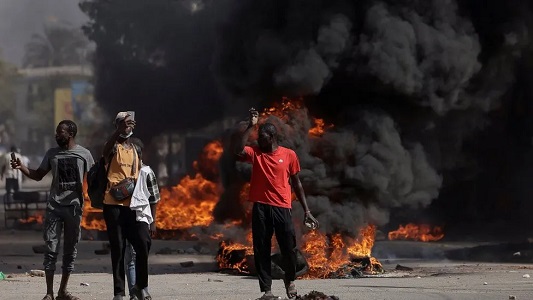
Violent protests in Senegal against the postponement of presidential elections have spread across the country, with the first fatality reported.

A student died in clashes with police on Friday in the northern city of Saint-Louis, an opposition leader and a local hospital source said.

In the capital Dakar, security forces fired tear gas and stun grenades to disperse the crowds.

The 25 February elections were last week delayed by MPs until 15 December.

President Macky Sall had earlier called off the polls indefinitely, arguing this was needed to resolve a dispute over the eligibility of presidential candidates.

Lawmakers later extended Mr Sall’s mandate by 10 months.

Opponents of the move have warned that Senegal’s reputation as a bastion of democracy in an unstable region of West Africa is on the line.

Opposition leader Khalifa Sall, who is not related to the president, earlier called the election delay a “constitutional coup”.

The death of the student in Saint-Louis was reported by Khalifa Sall in a post on social media.

“The hearts of all democrats bleed at this outburst of clashes provoked by the unjustified halting of the electoral process,” he said.

The death was confirmed by a local hospital source speaking on condition of anonymity, and by an official at the university the student attended, according to the AFP news agency.

The Senegalese authorities have not publicly commented on the issue.

The country’s mass protests erupted last weekend. On Friday, demonstrators in Dakar fought running battles with security forces, throwing stones and burning tyres.

President Sall has said he is not planning to run for office again – but his critics accuse him of either trying to cling on to power or unfairly influencing whoever succeeds him.

Twenty candidates had made the final list to contest the elections, but several more were excluded by the Constitutional Council, the judicial body that determines whether candidates have met the conditions required to run.

West Africa’s regional bloc Ecowas on Tuesday pleaded for Senegal’s political class to “take steps urgently to restore the electoral calendar” in line with the constitution.

Senegal has long been seen as one of the most stable democracies in West Africa. It is the only country in mainland West Africa that has never had a military coup.

It has had three largely peaceful handovers of power and never delayed a presidential election.

BBC/Simeon Ugbodovon

Subscribe to our Telegram and YouTube Channels and also join our Whatsapp Update Group
Foreign

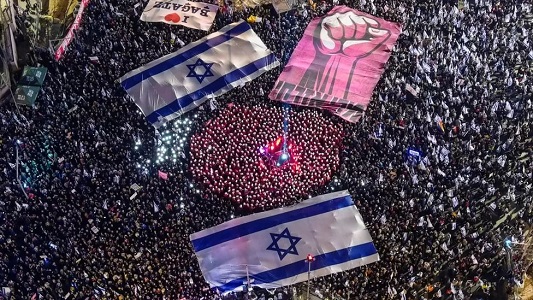
Hundreds of thousands of Israelis have taken part in what some are calling the biggest protest in the country’s history.

Protests against government plans for a radical overhaul of the judicial system have been running for 10 weeks.

Record numbers of demonstrators turned out in cities such as Haifa, while about 200,000 are believed to have taken to the streets in Tel Aviv.

Critics say the reforms will undermine democracy.

But Benjamin Netanyahu’s government says planned changes are better for the electorate.

Organisers said as many as 500,000 pro-democracy protesters took to the streets nationwide on Saturday, in what the Israeli Haaretz newspaper called “the largest demonstration in the country’s history”.

Opposition leader Yair Lapid told crowds in the southern city of Be’er Sheva that the country was facing “the greatest crisis in its history”.

“A wave of terrorism is hitting us, our economy is crashing, money is escaping the country. Iran just signed yesterday a new agreement with Saudi Arabia. But the only thing this government cares about is crushing Israeli democracy,” he said.

Tamir Guytsabry, a protester in Tel Aviv, told Reuters: “It’s not a judicial reform. It’s a revolution that [is] making Israel go to full dictatorship and I want Israel to stay a democracy for my kids.”

The protests against the judicial reforms have brought hundreds of thousands of people on to the streets.

The reforms aim to give the elected government decisive influence over the choice of judges and limit the ability of the Supreme Court to rule against the executive or strike down legislation.

The issue has caused deep divides in Israeli society and, significantly, has seen reservists – the backbone of Israel’s military – threatening to refuse to serve as a way of showing their opposition.

On Monday, in an unprecedented move, dozens of reserve fighter pilots in an elite Israeli Air Force squadron said they would not report for training. They later reversed course and agreed to attend and hold talks with their commanders.

On Thursday, protesters blocked roads and attempted to stop Mr Netanyahu from flying out of the country. He later took off for Rome.

The government has stood firm in the face of the uproar, claiming the protests are being fuelled by political opponents.

Critics say the planned reforms, which are already making their way through parliament, will politicise the judiciary and could lead to an authoritarian government.

Mr Netanyahu says the reforms are designed to stop the courts from overreaching their powers and that they were voted for by the Israeli public at the last election.

BBC/Simeon Ugbodovon

Subscribe to our Telegram and YouTubeChannels also join our Whatsapp Update Group
Economy

By Oluremi Olugbenro

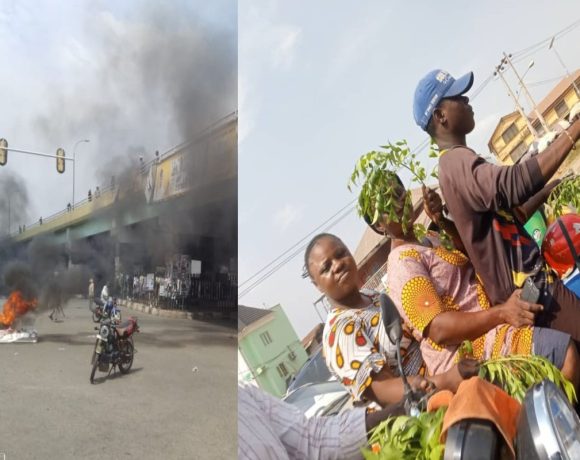
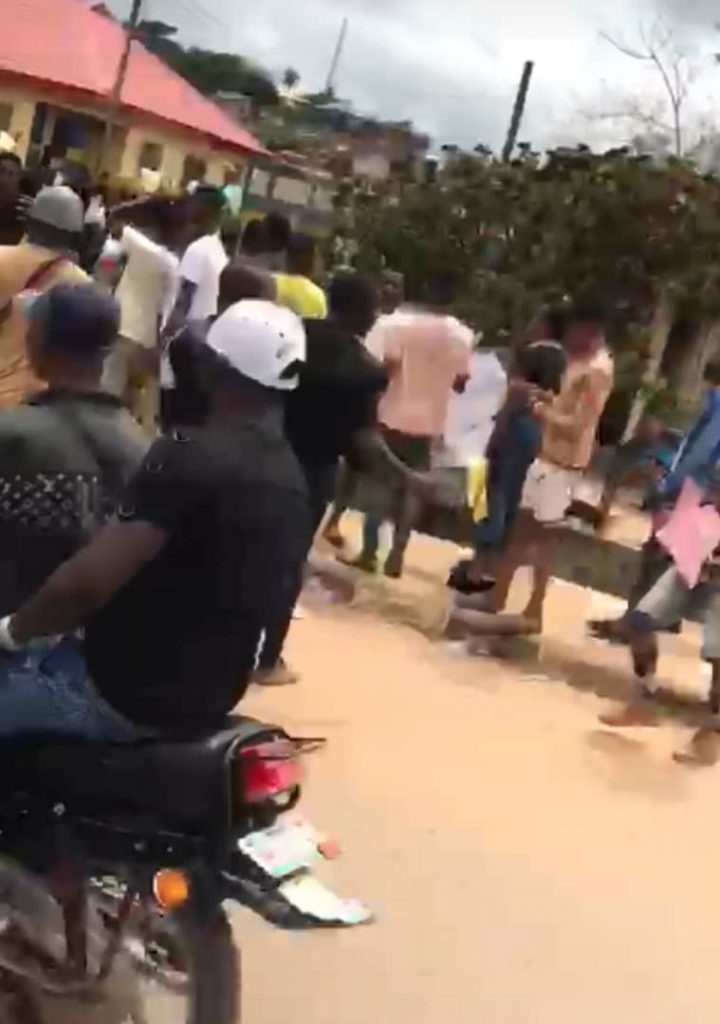
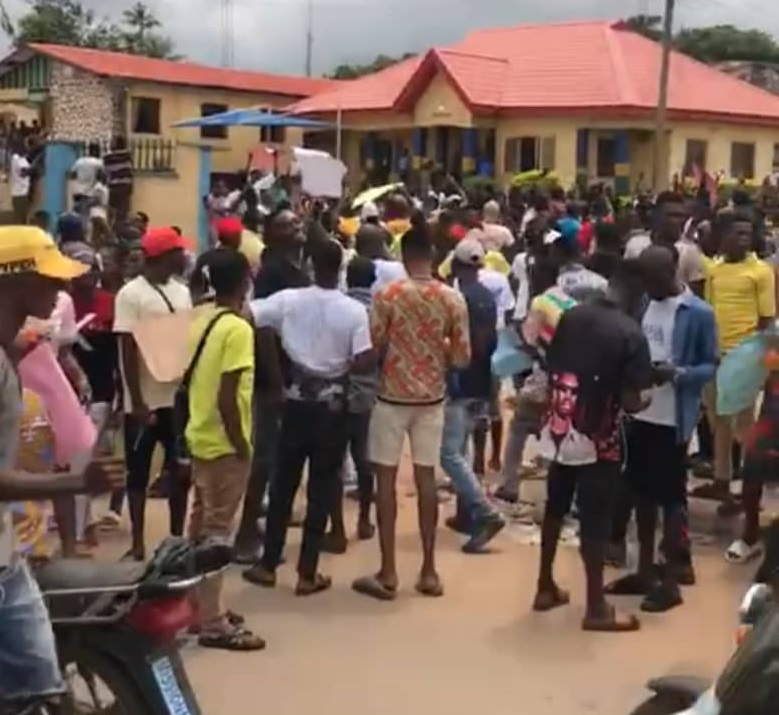
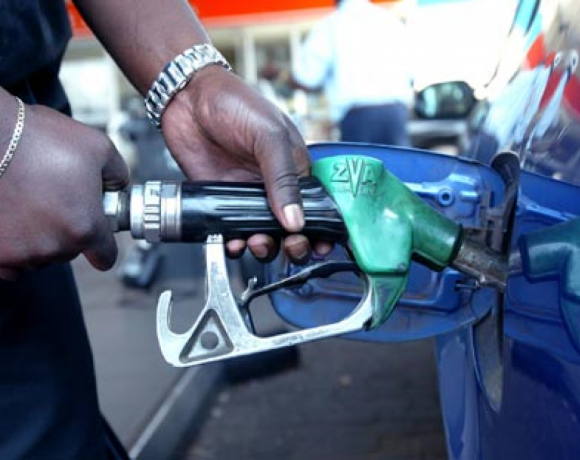
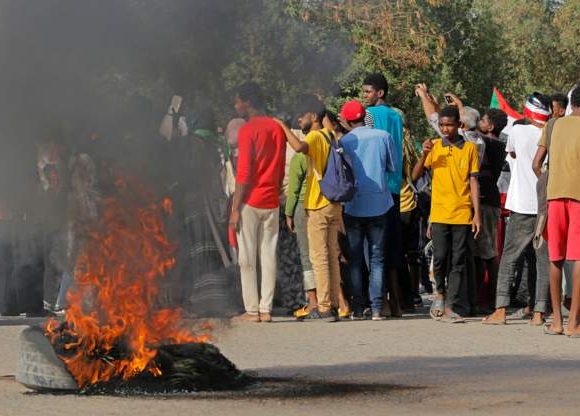
Commercial activities and private engagements were disrupted in Abeokuta, the Ogun State capital on Tuesday, as some youths took to the street to protest scarcity of cash and fuel. 

Pockets of violence were witnessed in parts of the city with at least one person reportedly shot at Sapon area of the town where some banks facilities were allegedly vandalized by the protesting youths. 

The situation led to parents and guardians rushing to withdraw pupils from schools while banks, filling stations and other business outlets had to lock up hurriedly as Radio Nigeria reporters who monitored the situation observed that bonfires were made at major junctions in Adatan, Lafenwa, Post Office, Olorunsogo, Abiola Way and Iyana Mortuary. 

A large number of commuters and vehicles passing through the roads had to display bunch of leaves which they described as the sign of solidarity with the protests.

Some residents who spoke with Radio Nigeria claimed that the crisis broke out among some aggrieved youths who were trying to withdraw cash from a new generation bank at Asero area of the town before spreading to other parts of the state capital where it was reportedly hijacked by suspected hoodlums. 

The town also witnessed a heavy presence of security personnel on patrol of the major roads restore the peace and douse the tension among residents.

State police public relations officer, Mr Abimbola Oyeyemi could not be reached for comments on the situation but officers and men of the state police command were observed on major roads putting out the bonfires and removing the items used to barricade the roads by the protesters.

Foreign

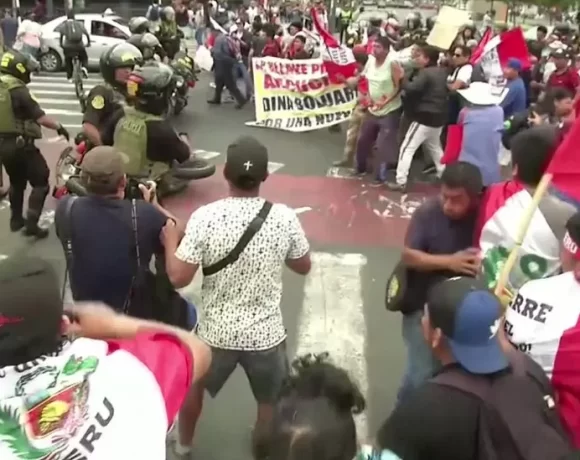
At least three more people are reported to have died amid protests against Peru’s President Dina Boluarte.

Report says, dozens of lives have been lost during weeks of demonstrations after former leader Pedro Castillo was ousted.

According to report, Police used tear gas to disperse crowds in the capital Lima, where thousands of protesters from rural areas have spent days converging, while a woman died in the southern town of Macusani, where a police station is reported to have been set on fire.

The 35-year-old woman was admitted to the hospital without any vital signs, according to emergency services.

Separately, Peru’s human rights watchdog reported two further deaths as a result of blockades in the northern La Libertad region.

In a tweet, it said a 51-year-old woman had died, and that “a teenager lost her baby”.

The deaths come ahead of a large-scale protest planned for Thursday afternoon in the capital.

Journalist Neil Giardino told the BBC that “anger indignation made its way to Lima” as thousands of indigenous people from the highlands descended on the capital.

A driver from the city of Cusco, in south-eastern Peru, who traveled to Lima to join the protests, said that “every day more people from the south are arriving to force the state to respect our rights.”

“There’s so much pain – young people have died, fathers with two and three children have died, women have been made widows,” the man said.

“Our military and police, rather than defending us, are killing us. It hurts so much. How can they kill us for rising up to defend our country? We’ve never robbed our country. We only want to improve our lives to build a better country.”

Demonstrators want Ms. Boluarte to step aside and call fresh elections, and for Mr. Castillo, her left-wing predecessor, to be released from custody.

The governors of the southern Puno, Cusco and Apurimac regions have also called for the president’s resignation.

The country has been in political turmoil over years, which came to a head when Mr. Castillo was arrested last month for trying to dissolve Congress.

He is being investigated on charges of rebellion and conspiracy. He denies all the accusations, insisting that he is still the country’s legitimate president.

Ms. Boluarte has resisted calls to step down and issued a call earlier this week to Peruvians to ensure their protests were peaceful.

BBC/Taiwo Akinola

Subscribe to our Telegram and YouTube Channels also join our Whatsapp Update Group
Foreign

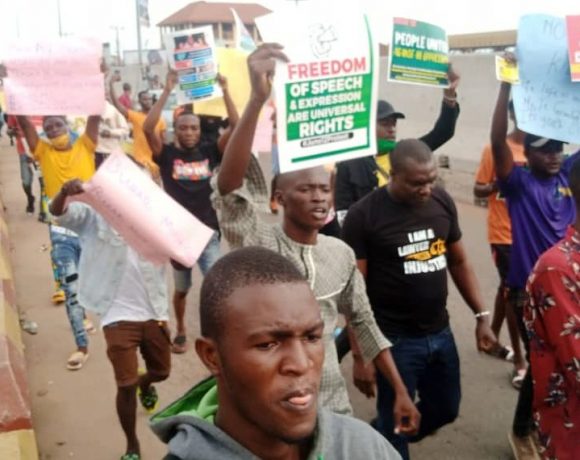
A 19-year-old demonstrator was shot and killed by security forces during the latest protests against last year’s coup, the Central Committee of Sudanese Doctors said.

Police also stormed a hospital in the capital, Khartoum, and fired tear gas inside the wards on Wednesday.

Ninety-four protesters are now known to have died since Sudanese army officers derailed the transition to civilian rule in October.

BBC

Politics

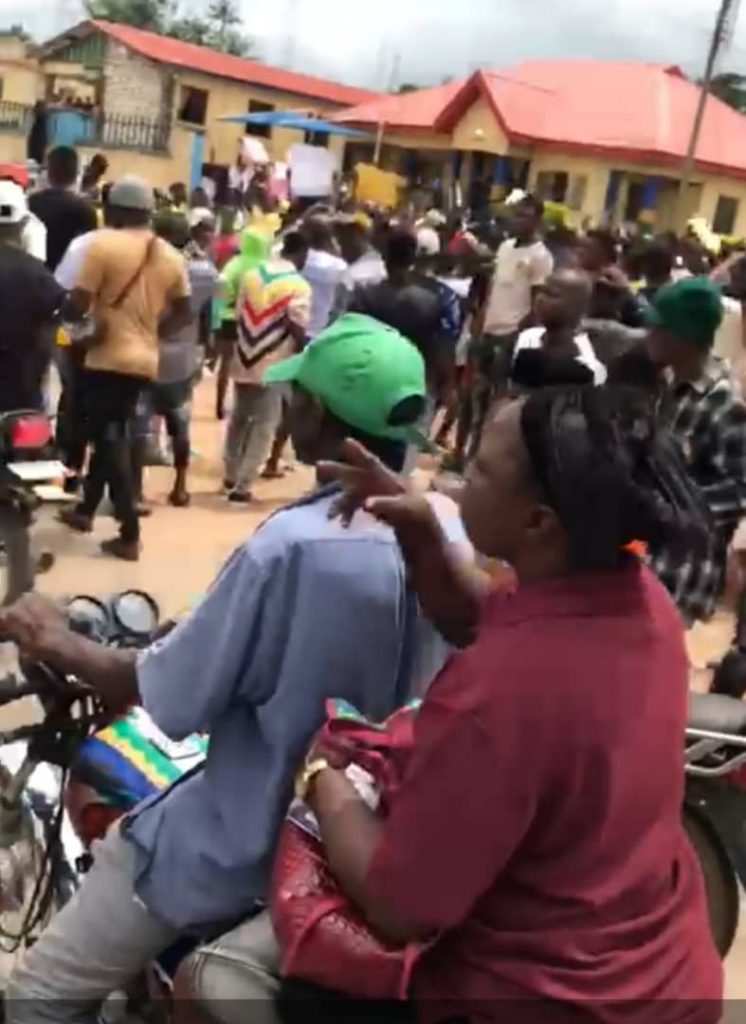
Some youths in Akure, Ondo State capital on Saturday staged a peaceful protest in commemoration of the June 12 Democracy Day.

The youths in their numbers took to the street to join their counterparts across the country to demand good governance as well as an urgent end to insecurity.

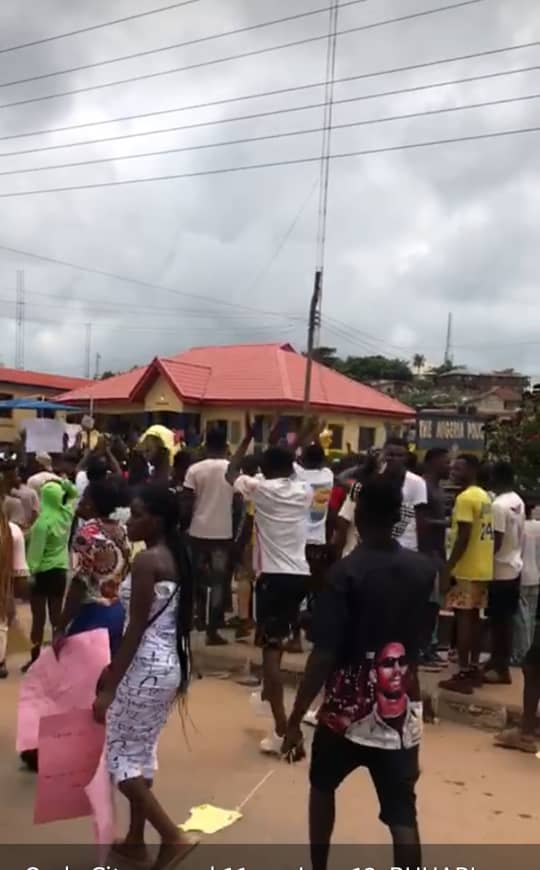
They converged on Post Office Junction in the state capital holding placards with various inscriptions, stating their demands.

Similarly, Youths in Ondo Town also took to the streets in their hundreds chanting various songs which focused on demand for good governance.

The youths later converged on the popular Yaba Police Station where they were addressed before dispersing.

Adebukola Bardi

Economy

Nigerian tertiary students in Osun, Oyo and Ondo States have protested the recent hike in electricity tariff and petrol price in the country.

The protest is organised by the National Association of Nigerian Students (NANS) Zone D.

The students gathered in their hundreds at the different states capital.

In Osogbo, hundreds of protesters converged at Freedom Park, in the Osun State capital.

The students came out with placards showing different inscriptions condemning the hike.

Speaking with PREMIUM TIMES, the students association’s spokesperson, Kazeem Israel, said the increment on the price of petrol and in electricity tariff is anti-people.

“No doubt, this government has worsened all the crises it inherited from the last administration. In fact, the Buhari government is a clear example that we the students must go back to our revolutionary days as we cannot continue to lament,” he said.

“Today, education underfunding has become a norm, healthcare under the pandemic is undergoing cuts officially from government at all levels while the rich run to private hospitals and dash abroad through chartered flights leaving the plebeains to self-medicate.”

Mr Israel said President Buhari should reverse petrol price to N97 and stop the deregulation of the oil sector.

He should “stop the devaluation of the naira now, increase budgetary allocation to education to 35%, return to the old stamp duty price, give 500% increment to healthcare budget to reflect the pandemic era, pay N100,000 Cost of Study Allowance (COSA) to all students and stop the Anti-Social Media Bill Now.”

Speaking further at the protest ground, he told our correspondent that no dialogue with the government would be accommodated.

Electricity distribution companies (DisCos) across the country this month implemented a new electricity tariff regime.

The is as a result of the Nigerian Electricity Regulatory Commission (NERC) directive that DisCos to maintain a N4 tariff for all customers consuming less than 50kWh of energy per month.

The government has also increased the price of petrol with a litre now sold at N162.

Nigerians on social media have called on various opposition leaders to stage protest again the development.

Mr Buhari on Monday reiterated that there was no going back on subsidy removal.

Culled from Premium Times