Foreign

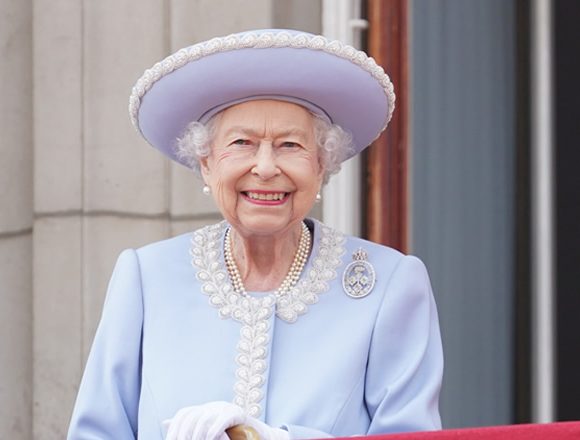
Australia’s new 5 Dollar banknote will not feature Britain’s King Charles III, but rather a new design that honours the culture and history of the first Australians, the country’s central bank announced Thursday.

The design will replace the portrait of her majesty Queen Elizabeth II, the reserve bank of Australia said in a statement adding that the decision was made after consulting with the Australian Government.

The bank will consult with first Australians in designing the 5 Dollar banknote, which could take several years to be issued, it added.

The first Australians refers to the country’s indigenous population or first nations people, made up of aboriginal and Torres Strait Islanders, descendants of the world’s oldest continuous culture who have occupied the continent for more than 65,000 years. Together they make up about 3.2 per cent of the country’s population of 25 million people.

Meanwhile, the current 5 Dollar bill will continue to be in circulation and remain legal tender even after the introduction of the new banknote, according to bank officials, the existing coins with the Queen’s image will remain legal tender “forever.”

King Charles III will continue to be featured on coins, which the royal Australian mint is expected to start producing “in the second half of this year,” Andrew Leigh, the Assistant Minister for Competition, Charities and the Treasury, said in an interview.

CNN/Oluwayemisi Owonikoko

Subscribe to our Telegram and YouTube Channels also join our Whatsapp Update Group
 

Foreign

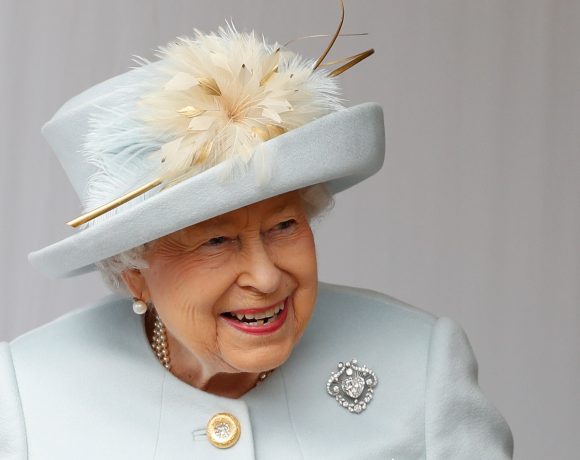
Thousands of Police, hundreds of troops, and an army of officials made final preparations on Sunday for the state funeral of Queen Elizabeth II, as part of a display of national mourning that has been described as the biggest gathering of world leaders for years.

According to CBS News, the President of the United States, Joe Biden, as well as other dignitaries, arrived in London for the funeral, to which around 500 royals, heads of state, and heads of government from around the globe have been invited.

The late Queen’s eight grandchildren, led by heir to the throne, Prince William, circled the coffin and stood with heads bowed during a silent vigil on Saturday evening.

The miles-long queue at Westminster Hall closed to new arrivals on Sunday for everyone in line to file past the coffin before Monday morning when it will be borne on a gun carriage to Westminster Abbey for the queen’s funeral.

People across the United Kingdom observed a pause Sunday evening for a nationwide minute of silence to remember the queen, who died September 8 at the age of 96 after 70 years on the throne.

Monday (today) has been declared a public holiday, and the funeral will be broadcast to a huge television audience and screened to crowds in parks and public spaces across the country.

A tide of people continued to stream into Westminster Hall, where the queen’s coffin is lying in state, draped in the Royal Standard and capped with a diamond-studded crown.

The lying-in-state continues until early Monday morning when the queen’s coffin will be moved to nearby Westminster Abbey for the funeral, the finale of 10 days of national mourning for Britain’s longest-reigning monarch.

After the service Monday at the abbey, the late queen’s coffin will be transported through the historic heart of London on a gun carriage. It will then be taken in a hearse to Windsor, where the queen will be interred alongside her late husband, Prince Philip, who died last year.

Punch/Titilayo Kupoliyi

Subscribe to our Telegram channel

News

The beautiful story of the University College Hospital can’t be talked about without mentioning the iconic moment when Queen Elizabeth II came to declare open, the Hospital.

During her visit to Nigeria in the year 1956, on the 14th of February that same year, Her Royal Majesty, Queen Elizabeth II accompanied by a host of other dignitaries graced the Hospital and declared it open to start delivering healthcare services. Though it was still under construction.

HRM Queen Elizabeth was a true gem to the entire world, also fostering a great union called the commonwealth. The way she held down the fort of monarchy for decades represented a holding forth of constitutionalism. She would forever stand as a symbol of continuity and she most definitely touched every part of the world.

Just as Queen Elizabeth stood as a symbol of continuity, this attribute further reflects in our great institution UCH as we continue to stand as one of the foremost teaching hospitals and healthcare delivery centres, in Nigeria and the World.

At the young age of 30 when HRM Queen Elizabeth came to visit Nigeria, the Hospital recalls two moments:

‘How the Queen was welcomed at the Hospital Ramp by Sir James Robertson, (the then Governor General of the Federal of Nigeria) and Sir Sydney Philipson, (the then Chairman of UCH Board of Management)

‘The moment when she walked with elegance about the floors of the School of Nursing building along with Prince Philip and accompanied by Sir Sydney Philipson, the then Chairman of UCH Board’.

These moments are forever framed at the Museum of the Hospital.

The University College Hospital sends her condolences to Great Britain and the Royal family for the loss of Queen Elizabeth II who ruled justly and also held down the fort of monarchy for decades. She will forever be remembered as such a strong figure in the iconic history and establishment of our great institution UCH IBADAN.

PR/Lillian Ibomor

Subscribe to our Telegram channel

Foreign

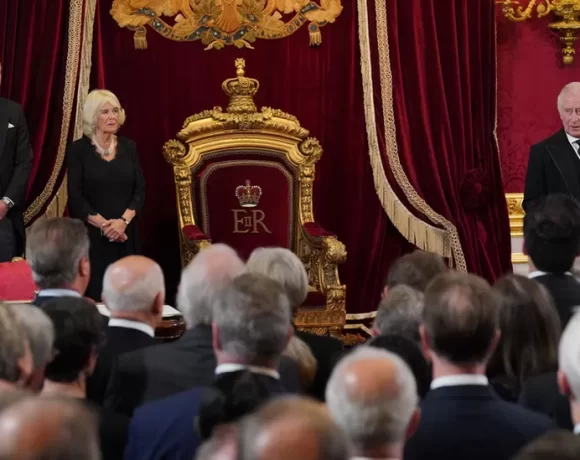
Charles III has been proclaimed as UK King at a ceremony at St James’s Palace.

Charles became king immediately following the death of his mother Queen Elizabeth II, but a historic meeting formally confirmed his role on Saturday.

During the Accession Council, the King approved the day of the Queen’s funeral becoming a bank holiday, although it is not known when it will take place.

It is the first time the historic ceremony has been televised.

The King himself was not present to begin with, but he attended the second part of the ceremony to hold his first meeting of the Privy Council, the group of senior politicians who advise the monarch.

Clerk of the Privy Council Richard Tilbrook proclaimed Charles “King, head of the Commonwealth, defender of the faith”, before declaring “God Save the King”.

The packed room, attended by senior politicians, judges and officials who gathered in the State Apartments of the Palace in London, repeated back the phrase.Making his own declaration, the King said it was his “most sorrowful duty” to announce to the death of his mother.He said: “I know how deeply you, the entire nation, and I think I may say the whole world, sympathise with me in the irreparable loss we’ve all suffered.”It is the greatest consolation to me to know the sympathy expressed by so many to my sister and brothers.”The ceremony was attended by 200 members of the Privy Council, including former Prime Ministers Boris Johnson, Theresa May, David Cameron, Gordon Brown, Tony Blair and John Major.Later, applause and cheers of “God Save the King” broke outside St James’s Palace, before a crowd of thousands sang the national anthem.It was the decision of King Charles III to allow television cameras into the Accession Council for the first time to allow the public to view proceedings.

BBC/Olaolu Fawole

Foreign

Denmark’s Queen, Margrethe II has called off some weekend events to mark the 50th anniversary of her accession following the death of Britain’s Queen Elizabeth II, the palace.

The Danish queen, Elizabeth’s third cousin, has cancelled a carriage procession through Copenhagen and a palace balcony appearance, while reception and lunch at City Hall have been postponed.

A scaled-down gala theatre performance in her honour will go ahead at Copenhagen’s royal theatre on Saturday evening.

A lunch with Nordic royals will go ahead as planned on Sunday, as well as a downsized gala banquet at the Christiansborg Palace.

This is the second time Margrethe, who acceded to the throne in January 1972, has had to put off her jubilee celebrations, marking the actual anniversary last January with a smaller celebration due to the Covid-19 pandemic.

The full festivities had been postponed until this weekend.

With the death of Elizabeth, Margrethe is now Europe’s longest-serving monarch, just ahead of Sweden’s Carl XVI Gustaf who has been king for 48 years.

Margrethe is also Europe’s only reigning queen, though four countries – Belgium, the Netherlands, Spain and Sweden – have crown princesses next in line to the throne.

Punch/Titilayo Kupoliyi

Subscribe to our Telegram channel

Foreign

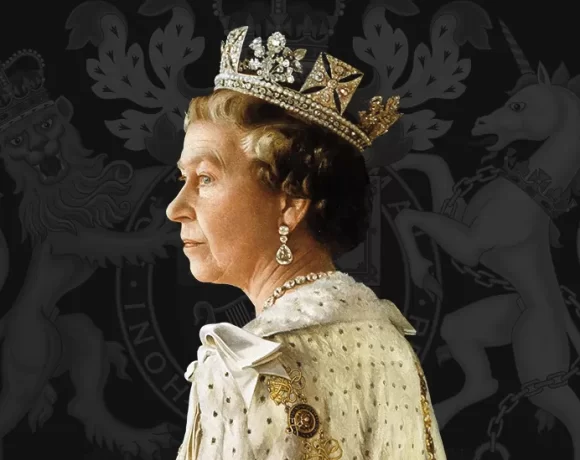
Queen Elizabeth II, the UK’s longest-serving monarch, has died at Balmoral aged 96, after reigning for 70 years.

Her family gathered at her Scottish estate after concerns grew about her health earlier on Thursday.

The Queen came to the throne in 1952 and witnessed enormous social change.

With her death, her eldest son Charles, the former Prince of Wales, will lead the country in mourning as the new King and head of state for 14 Commonwealth realms.

In a statement, Buckingham Palace said: “The Queen died peacefully at Balmoral this afternoon.

“The King and the Queen Consort will remain at Balmoral this evening and will return to London tomorrow.”

All the Queen’s children travelled to Balmoral, near Aberdeen, after doctors placed the Queen under medical supervision.

Her grandson, Prince William, is also there, with his brother, Prince Harry, on his way

Queen Elizabeth II’s tenure as head of state spanned post-war austerity, the transition from empire to Commonwealth, the end of the Cold War and the UK’s entry into – and withdrawal from – the European Union.

Her reign spanned 15 prime ministers starting with Winston Churchill, born in 1874, and including Liz Truss, born 101 years later in 1975, and appointed by the Queen earlier this week.

She held weekly audiences with her prime minister throughout her reign.

At Buckingham Palace in London, crowds awaiting updates on the Queen’s condition began crying as they heard of her death. The Union flag on top of the palace was lowered to half-mast at 18:30 BST.

The Queen was born Elizabeth Alexandra Mary Windsor, in Mayfair, London, on 21 April 1926.

Few could have foreseen she would become monarch but in December 1936 her uncle, Edward VIII, abdicated from the throne to marry the twice-divorced American, Wallis Simpson.

Elizabeth’s father became King George VI and, at age 10, Lilibet, as she was known in the family, became heir to the throne.

Within three years, Britain was at war with Nazi Germany. Elizabeth and her younger sister, Princess Margaret, spent much of wartime at Windsor Castle after their parents rejected suggestions they be evacuated to Canada.

After turning 18, Elizabeth spent five months with the Auxiliary Territorial Service and learned basic motor mechanic and driving skills. “I began to understand the esprit de corps that flourishes in the face of adversity,” she recalled later.

Through the war, she exchanged letters with her third cousin, Philip, Prince of Greece, who was serving in the Royal Navy. Their romance blossomed and couple married at Westminster Abbey on 20 November 1947, with the prince taking the title of Duke of Edinburgh.

She would later describe him as “my strength and stay” through 74 years of marriage, before his death in 2021, aged 99.

BBC/Olaolu Fawole

Foreign

Prince Philip, Queen Elizabeth II’s husband, has died aged 99, Buckingham Palace has announced.

Buckingham Palace said: “It is with deep sorrow that Her Majesty The Queen has announced the death of her beloved husband, His Royal Highness The Prince Philip, Duke of Edinburgh.

“His Royal Highness passed away peacefully this morning at Windsor Castle.”

Boris Johnson said he “inspired the lives of countless young people”.

The prince married Princess Elizabeth in 1947, five years before she became Queen, and was the longest-serving royal consort in British history.

In March, the Duke of Edinburgh left hospital after a month-long stay for treatment.

He underwent a procedure for a pre-existing heart condition at another London hospital – St Bartholomew’s.

Prince Philip and the Queen had four children, eight grandchildren and 10 great-grandchildren.

Their first son, the Prince of Wales, Prince Charles, was born in 1948, followed by his sister, the Princess Royal, Princess Anne, in 1950, the Duke of York, Prince Andrew, in 1960 and the Earl of Wessex, Prince Edward, in 1964.

Prince Philip was born on the Greek island of Corfu on 10 June 1921.

His father was Prince Andrew of Greece and Denmark, a younger son of King George I of the Hellenes.

His mother, Princess Alice, was a daughter of Lord Louis Mountbatten and a great-granddaughter of Queen Victoria.

BBC