Foreign

Ukraine has condemned a fresh wave of Russian strikes overnight which killed one person and injured 23 others, as talks with the US aimed at ending the war are set to resume.

Ukraine’s Foreign Minister, Andrii Sybiha said the “brutal” attack – “cynically” ordered by Russian leader Vladimir Putin had “hit not only our people, but also the negotiation table”.

Delegations from Russia, Ukraine and the US have been meeting in Abu Dhabi for the first trilateral talks since the Kremlin launched a full-scale invasion of its neighbour in 2022.

A source told the BBC that some progress had been made but the key issue of territory remains unresolved.

The mayor of Ukrainian capital Kyiv said one person had died and four had been wounded while Kharkiv’s mayor reported that 19 people had been hurt during a sustained assault on the city in the early hours of Saturday morning.

On the second day of the three-way talks in Abu Dhabi, Sybiha said the “barbaric” overnight assault proved “that Putin’s place is not at the board of peace, but at the dock of the special tribunal”.

US President Donald Trump said last week that Putin had accepted an invitation to join his Board of Peace – an organisation focused on ending global conflicts. Putin has not confirmed this.

Kyiv’s mayor Vitali Klitschko said on Telegram that three of the four people who had been injured had been hospitalised.

He added that the capital’s critical infrastructure had been damaged, leaving 6,000 buildings without heating.

Temperatures have fallen to around -12C in parts of Ukraine, according to the Met Office. In a statement following the assaults, President Volodymyr Zelensky said: “The main target of the Russians was the energy infrastructure.”

Last week, Russia attacked Kyiv’s power infrastructure, forcing Zelensky to initially call off his trip to the World Economic Forum in Davos, Switzerland.

In Kharkiv, Mayor Ihor Terekhov said 19 people had been injured during the strikes in the early hours of Saturday morning. A maternity hospital and a hostel for displaced people were damaged.

Russia occupies roughly 20% of Ukraine, including parts of the eastern Donbas region. The Kremlin wants Ukraine to hand over large areas of the territory, but Ukraine has ruled this out.

In Davos, Zelensky said: “It’s all about the land. This is the issue which is not solved yet.”

He said that he had reached an agreement with Trump on future US security guarantees for Ukraine in the event of a deal.

He gave no detail but said it would need to go before US Congress and the Ukrainian parliament before signing.

BBC / Titilayo Kupoliyi

Foreign

Russia’s Federal Security Service, FSB, said on Tuesday it had arrested a woman in her fifties accused of detonating explosives in a bid to sabotage the Trans-Siberian Railway.

The suspect was allegedly working on behalf of Ukrainian intelligence, the FSB said, in the latest incident of alleged covert activity during the countries’ conflict.

“In August 2025, following the instructions provided by the adversary, the suspect manufactured a homemade explosive device from publicly available components, placed it on the railway tracks and triggered it,” the Russian agency said.

“She recorded the moment of the explosion on her mobile phone camera and sent the footage as a report to the handler to receive a reward.”

The statement did not name the suspect but said she was born in 1974 and carried out the alleged attack in eastern Siberia’s Zabaikalsky region.

The FSB warned Russians that it was monitoring social networks and online messenger services such as Telegram and WhatsApp for evidence of Ukrainian services recruiting Russians to carry out sabotage.

Separately, the agency told state news agency TASS that a man had been sentenced to 18 years and six months for transporting explosives on behalf of a “pro-Ukrainian” group.

A resident of the Bryansk region, which borders Ukraine, had, the FSB said, established contact through the Telegram app with a banned “terrorist organisation”.

He allegedly retrieved explosives from a cache on the orders of this group before waiting for “further instructions”, according to the same source cited by TASS.

He was jailed by a military tribunal.

Punch/Adetutu Adetule

Subscribe to our Telegram and YouTube Channels, and also join our WhatsApp Update Group.

Foreign

Russia says it downed 221 Ukrainian drones launched on its territory overnight, in one of the largest aerial assaults since May.

More than half of the drones were intercepted over the Bryansk and Smolensk regions, south-west of Moscow, where Lukoil facilities were reportedly targeted, the defence ministry said.

Authorities in the Leningrad region said 28 drones were brought down and that a fire had broken out on a vessel in the Baltic port of Primorsk, Russia’s largest oil terminal. They added that the blaze was extinguished without casualties or leaks.

Meanwhile, officials said two civilians were killed in Ukraine’s Sumy region when a Russian glide bomb struck a village near the border.

Interceptions were reported across at least nine other regions of Russia, including Kaluga, Novgorod and the Moscow area, where nine drones were said to have been destroyed. Debris was recorded across several areas, though Russian officials insisted there had been no casualties.

Seven people, including five civilians and two military personnel, were injured when a drone struck a bus in Bryansk, the region’s Governor Alexander Bogomaz said.

Moscow’s figures, which the BBC has been unable to independently verify, suggest Thursday night’s attack constituted one of the largest Ukrainian aerial bombardments in over four months.

Russia said it destroyed a record 524 drones on 7 May. By comparison, Ukrainian officials said Russia had deployed 818 drones against their territory in recent weeks.

Azerbaijannews/Adetutu Adetule

Foreign

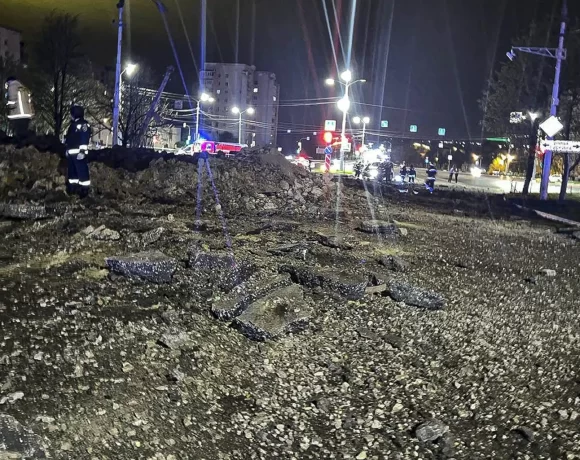
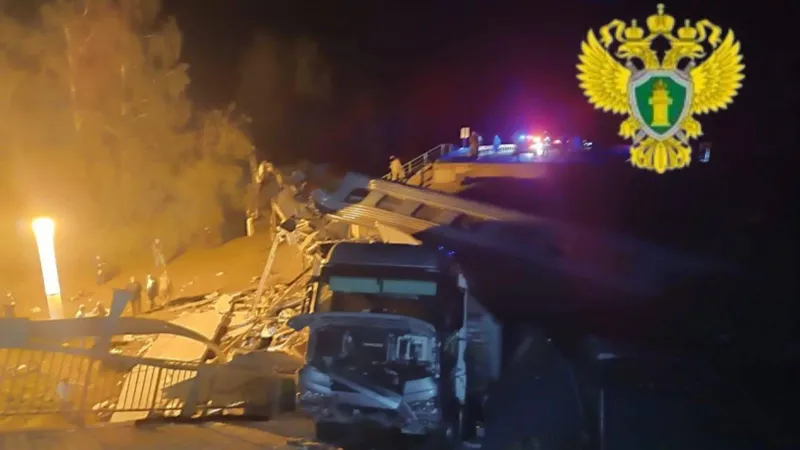
Two bridges have collapsed overnight in separate incidents in Russian regions bordering Ukraine, killing at least seven people and injuring dozens more.

A road bridge came down in Bryansk, bringing several heavy trucks on to a moving passenger train late on Saturday, the regional governor said.

Emergency services said at least seven people were killed. At least 47 people were taken to hospital, including one child, Governor Alexander Bogomaz said.

Moscow Railway alleged on Telegram that the bridge came down as a result of “illegal interference”.

Hours later a second bridge collapsed in the Zheleznogorsk district, derailing a locomotive train, acting governor Alexander Khinshtein said.

The train caught fire and a driver suffered injuries to his legs, Khinshtein said.

Khinshtein wrote on Telegram: “The cause of the bridge collapse will be established. All emergency services are working on the scene. I am keeping the situation under control.”

It is unclear whether the two collapses in the neighbouring regions are related and Ukraine is yet to comment.

BBC / Titilayo Kupoliyi

Subscribe to our Telegram and YouTube Channels, and also join our WhatsApp Update Group.

Foreign

Syria’s ousted president Bashar al-Assad and his family are in Moscow, a Kremlin source told Russian news agencies, hours after he fled the country as Islamist-led rebels entered Damascus.

The announcement comes as Russia, a key Assad ally, called for an emergency meeting of the UN security council on the fast-changing situation on the ground in the war-torn country.

“Assad and members of his family have arrived in Moscow,” the source told the TASS and Ria Novosti news agencies. “Russia granted them asylum on humanitarian grounds,” he added.

Asked whether Assad was confirmed to be in Moscow, a Western official said they believed that was likely the case and had no reason to doubt Moscow’s claim.

The Kremlin source also said the rebels who ousted Assad in a lightning offensive “guaranteed the security of Russian army bases and diplomatic institutions on Syria’s territory”.

Russia, Assad’s biggest backer along with Iran, holds a naval base in Tartus and a military airfield in Khmeimim.

Moscow’s forces became militarily involved in the Syrian conflict in 2015, providing support for Assad’s forces to crush the opposition in the bloody civil war.

“Russia has always been in favour of a political solution to the Syrian crisis. Our starting point is the need to resume negotiations under the auspices of the UN,” the Kremlin source added.

A Russian representative to the United Nations announced that Moscow had requested an emergency closed-door meeting of the UN Security Council on the situation in Syria for Monday afternoon.

“The consequences (of the events in Syria) for this country and the whole region have not yet been measured,” the official said on Telegram.

Vanguard/Simeon Ugbodovon

Subscribe to our Telegram and YouTube Channels and also join our Whatsapp Update Group
Feature

By Titilayo Kupoliyi

Mongolia is a landlocked country in East Asia, bordered by Russia to the north and China to the south.

With a population of 3.17 million people and more than 80 million livestock animals, Mongolia is the world’s second-largest producer of cashmere wool. 

Surprisingly, despite the country’s sparse population, Mongolia Produces 50 percent of the world’s cashmere.

The report states that Mongolia has 30 million goats and because of the cold weather and spacious nature, the goats grow the best hair in the world.

The fur from the goats is taken to the factory to be transformed into cashmere, the fur is cleaned, dried, and knitted and the final product is cashmere.

Cashmere is one of the softest, smother warmest, most breathable, and long-lasting fabrics in the world.

This ancient fiber has long been associated with luxury, with earliest documented usage dating back to the 18th century, when Cashmere shawls were being exported to the Western world, particularly France and Britain.

In the 13th century, several caves were discovered in Mongolia, with representations of wild goats domesticated by man. It is very likely that even in earlier centuries, cashmere goats were raised by herders not only for their meat but also for their warm wool. 

Today, the global demand for cashmere has been growing steadily across all sectors of the market, especially in Europe, where Italy and the UK are the main importers from China and Mongolia.

The cashmere sector is contributing to 5% of the Mongolian GDP and about 100 textile industries (95 Micro, Small, and Medium Enterprises) are providing more than 20,000 jobs to people, mostly in the capital city.  

The increase in consumers’ spending on luxury goods has, however, brought significant negative social, environmental, and economic impacts on the environment, herders, producers, and buyers. 

Still, in the transition towards a free market, Mongolian herders face difficulties in adjusting their productive systems to create value, preserve their natural resources, and altogether secure their livelihoods and resilience.

Loss of traditional know-how on collective rangeland management, collapsing extension services, lack of market opportunities, and dysfunctional value chains have contributed to an under-performing livestock sector. 

To cope with economic uncertainties, herders have adopted a quantitative strategy, increasing their herds’ size as a safety net for food and livelihoods. 

As of 2020, herd size is estimated at 80+ million while carrying capacity is estimated at 45 million.

Subscribe to our Telegram and YouTube Channels and also join our Whatsapp Update Group

Foreign

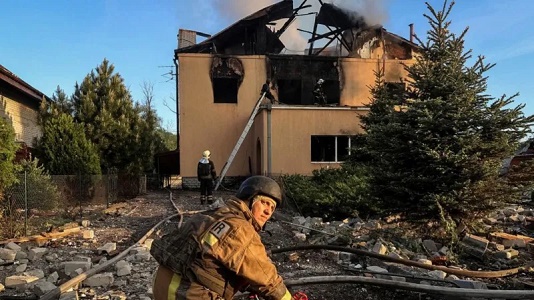
Ukraine says it has repelled a Russian armoured attack in the north-eastern Kharkiv region, after Moscow’s forces launched an incursion across the border and sought to break through defensive lines.

Kharkiv regional head Oleh Syniehubov said Russian reconnaissance groups had tried to penetrate the border, adding that “not a single metre has been lost”.

“Russia has launched a new wave of counteroffensive operations in the Kharkiv sector,” said Ukrainian President Volodymyr Zelensky.

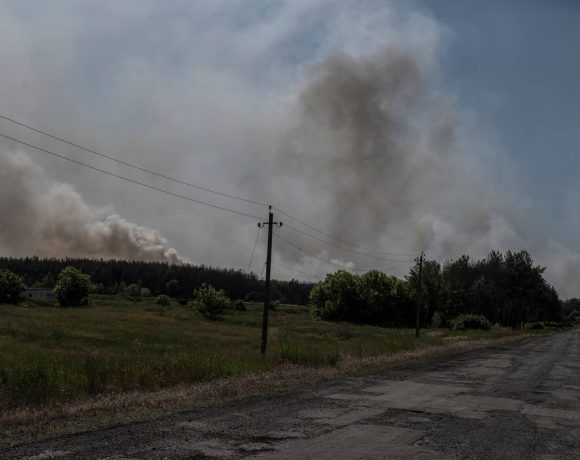
Also on Friday, a huge fire broke out at an oil storage depot in Ukraine’s occupied Luhansk region after what Russian-installed officials said was a Ukrainian strike. Three people were killed in the attack, they added.

Ukrainian commanders have been expecting a summer offensive for some time, possibly even a bid to capture the regional capital, Kharkiv. But officials are adamant Russia does not have the resources to do so.

Russia had the capability to aggravate the situation in border areas but not the ability to capture Ukraine’s second city, said the head of Ukraine’s centre for countering disinformation, Andriy Kovalenko.

Ukrainian reports suggested Russia was trying to create a 10km buffer zone for its Belgorod region, after a series of Ukrainian cross-border attacks.

Friday’s small incursions over the Russian border form a familiar yet disturbing axis for Ukrainian forces.

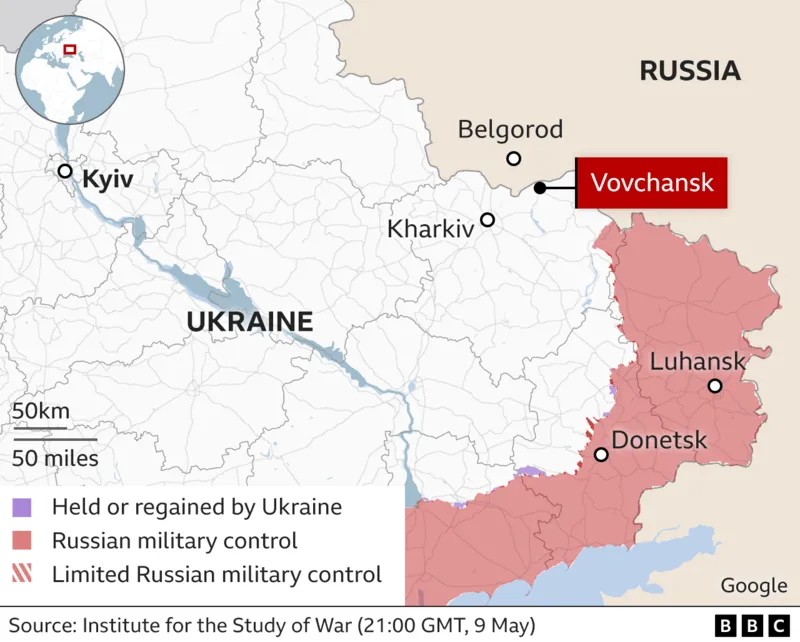
The defence ministry in Kyiv said the attack started with the heavy bombing of the town of Vovchansk “using guided aerial bombs” with the support of artillery. Then, small Russian “scouting groups” moved in across the border, reportedly in several places.

The local head in Vovchansk, 75km (45 miles) north-east of Kharkiv, said the town had come under heavy attack from the early hours of Friday and civilians were being evacuated. Some 3,000 people live in Vovchansk and at least one person was killed and five more injured in the barrage, according to Kharkiv’s regional leader.

“At approximately 05:00, there was an attempt by the enemy to break through our defensive line under the cover of armoured vehicles. As of now, these attacks have been repulsed, fighting of varying intensity continues,” the defence ministry said.

President Zelensky said the Russians had been engaged “with our troops, brigades and artillery”, but added that a fierce battle was under way.

Civilians were being evacuated from the Vovchansk district while reserve troops move in, officials added.

In the occupied Luhansk region, Russian officials reported that Ukrainian forces had attacked the city of Rovenky, killing three people and injuring seven.

The Russian-installed health ministry said four of those injured were in a serious condition.

“Because of the shelling, the oil depot was engulfed by flames and nearby houses were damaged,” Russian-installed Governor Leonid Pasechnik wrote on Telegram.

It was the second such attack this week. On Wednesday, an attack on another oil depot in the region injured five people.

Ukrainian bloggers and Telegram channels reported Friday’s attack and posted pictures of a large blaze.

However, there has been no comment from Ukrainian officials.

On Friday, the US announced a new $400m (£319m; €371m) military aid package for Ukraine.

It will be Washington’s third instalment of aid to the country after months of political deadlock and delays – adding to the previous package worth a total of $7bn sent in late April.

In a statement, US Secretary of State Anthony Blinken announced that the “urgently needed” aid would include air defence munitions, artillery rounds, anti-tank weapons and armoured vehicles.

On Friday, the White House gave its assessment of the situation, with National Security Spokesman John Kirby telling reporters the US thinks Russia “will make further advances in the coming weeks to try and establish a buffer zone along the Ukrainian border”.

However, he said that Washington was confident in Ukraine’s ability to withstand such attacks, and would be “working around the clock” to ensure the country had all the necessary tools and weapons to do so.

Moscow has been looking to capitalise on the delayed arrival of US ammunition and weaponry by continuing to push in the eastern Donetsk region.

The return of heavy fighting in the north-east further illustrates Russia’s growing confidence and ambitions.

The deputy chief of Ukraine’s military intelligence, Maj Gen Vadyn Skibitsky, told The Economist last week that Russia was gearing up for an assault on both Kharkiv and the northern region of Sumy. That warning was repeated by the commander of Ukrainian ground forces, Lt Gen Oleksandr Pavliuk.

Tens of thousands of Russian forces are said to have gathered on the border.

You could be forgiven for seeing a repeat of 2022, when Russia failed to capture Kharkiv and Sumy in the early weeks of its full-scale invasion. Russian forces did occupy the border town of Vovchansk for several months, until they were pushed out in September 2022.

Outwardly at least, officials and generals do not think either of the two regional capitals could fall.

Russia was unable to conquer either city when it had a larger, better-trained force than it does now. Ukrainian sources estimate around 90% of that original 150,000 army are either dead or wounded.

Military commentator Oleksandr Kovalenko has pointed out that Russia needed some 80,000 troops to capture the small eastern city of Avdiivka last February, after months of bombardment. Big cities such as Sumy and Kharkiv were on a completely different scale, he said.

Secondly, Russia has talked about creating a buffer zone between its Belgorod region and Ukraine.

That is because Ukrainian troops have continued to launch artillery strike on Russian territory, to the nervousness of some Western allies.

BBC/Simeon Ugbodovon

Subscribe to our Telegram and YouTube Channels and also join our Whatsapp Update Group

Foreign

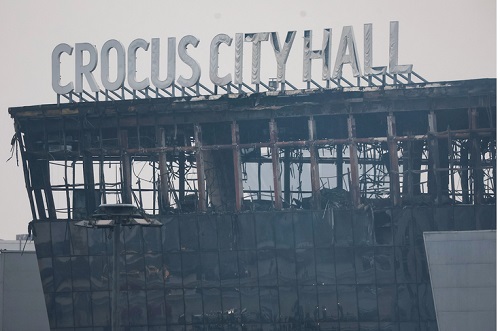
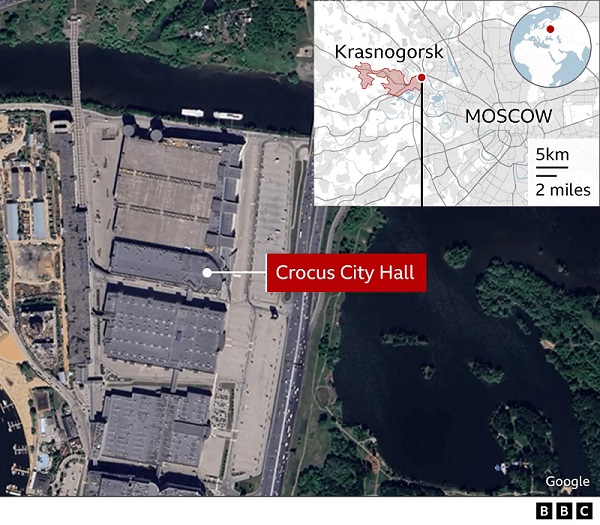
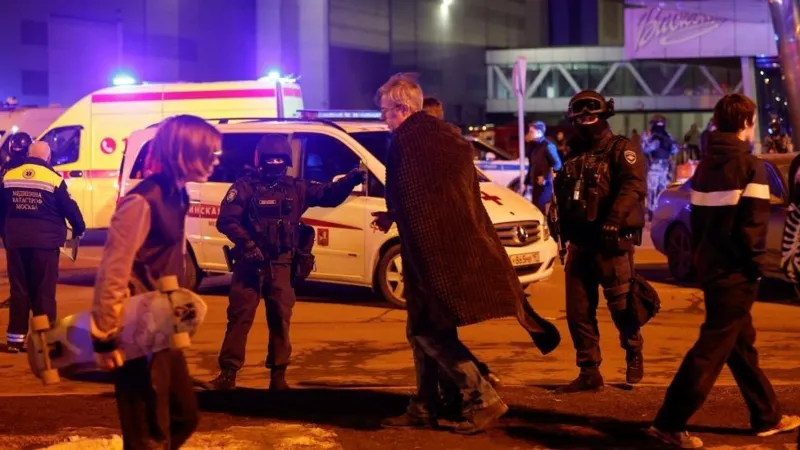
Victims of an attack by gunmen at a concert hall on the fringes of Moscow, are at least 115 with 100 more injured, according to Russian security services.

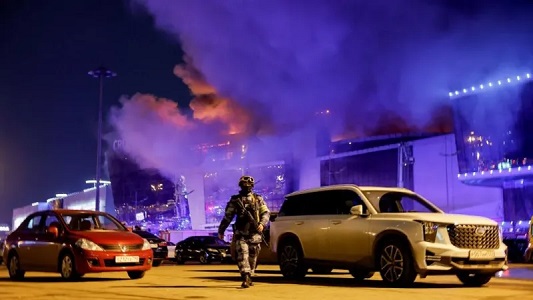
Attackers clad in camouflage gear took part in the attack, in the north-western suburb of Krasnogorsk, BBC-verified video shows.

Four men directly involved were among 11 arrested on Saturday, officials say.

Crocus City Hall was about to host a rock concert when the gunmen burst into the foyer and then the theatre itself.

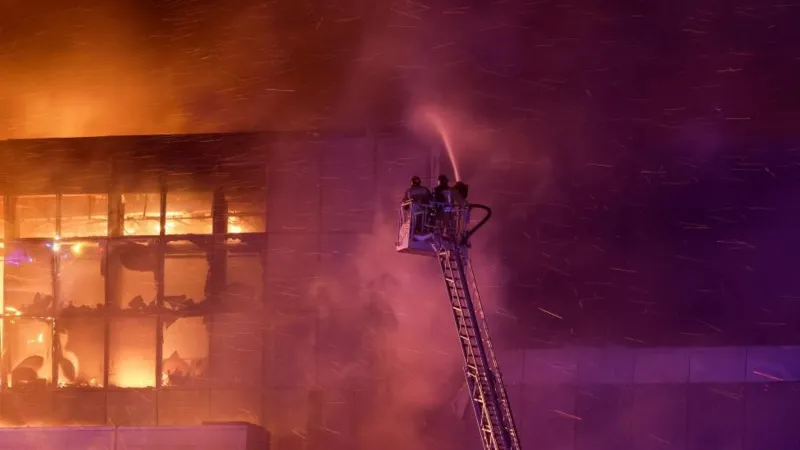
Much of the building was engulfed by fire and part of the roof collapsed.

Children are said to be among the casualties and the Russian foreign ministry has condemned a “terrorist attack”.

According to an unverified statement online, militant group Islamic State said it was behind the attack.

Russia’s National Guard said it had special units working at the scene to hunt down the attackers. Top Russian officials also headed to Krasnogorsk.

Two weeks ago, the US embassy put out a warning to US citizens to avoid large gatherings, saying it was monitoring reports that “extremists have imminent plans to target large gatherings in Moscow”. It updated its advice on Friday evening, urging US citizens to avoid the vicinity of the attack.

More than 6,000 Russians had flocked to the Crocus City Hall retail and concert complex for a concert by rock group Picnic. One witness said the violence erupted minutes before the band were due to come on stage. Picnic’s band members themselves were unharmed.

Russian President Vladimir Putin called the attack a “barbaric terrorist act” and announced a day of national mourning for 24 March

He said all the attackers have been arrested, and that the suspects were trying to flee to Ukraine, a claim Kyiv has described as “absurd”

Muscovites are queuing to give blood for those injured and flower tributes have been placed at the scene of the attack

BBC/Simeon Ugbodovon

Subscribe to our Telegram and YouTube Channels and also join our Whatsapp Update Group
Foreign

Gunmen have attacked a concert hall on the fringes of Moscow, killing at least 60 people and wounding 100 more, Russian security services say.

At least four attackers clad in camouflage gear took part in the attack, in the north-west suburb of Krasnogorsk, BBC-verified video shows.

Crocus City Hall was about to host a rock concert when the gunmen burst into the foyer and then the theatre itself.

Much of the building was engulfed by fire and part of the roof collapsed.

Children are said to be among the casualties and the Russian foreign ministry has condemned a “terrorist attack”.

According to an unverified statement online, the militant group Islamic State said it was behind the attack.

US officials told CBS, the BBC’s partner service in the US, that it had obtained intelligence that showed IS had wanted to attack Russia. The White House said it had warned Russia earlier this month of plans for a potential attack in Moscow targeting “large gatherings”.

Russia’s National Guard said it had special units working at the scene to hunt down the attackers. Top Russian officials also headed to Krasnogorsk.

Two weeks ago, the US embassy put out a warning to US citizens to avoid large gatherings, saying it was monitoring reports that “extremists have imminent plans to target large gatherings in Moscow”. It updated its advice on Friday evening, urging US citizens to avoid the vicinity of the attack.

More than 6,000 Russians had flocked to the Crocus City Hall retail and concert complex for a concert by the rock group Picnic. One witness said the violence erupted minutes before the band were due to come on stage. Picnic’s band members themselves were unharmed.

Russian President Vladimir Putin has not yet directly addressed the nation, but according to one of his deputies has wished those injured a speedy recovery.

A security guard described how the heavily-armed attackers burst into the foyer firing bullets as he and his colleagues were working at the central entrance.

“There were three other security guards and they hid behind an advertising board,” he told Russian telegram channel Baza. “And those attackers passed 10m [30ft] away from us – they started shooting randomly at people on the ground floor.”

Inside the auditorium a woman said she and other visitors rushed towards the stage, as soon as they realised shots were being fired. “I saw a person in the stalls with a sidearm and there were cracks [of gunfire] going off, I was trying to crawl behind a loudspeaker,” she told Russian TV.

Fire and plumes of smoke rose into the sky and the hall’s facade burst into flames as glass on the top two floors of the building blew out.

The fire appeared to have started when the attackers threw some kind of incendiary device.

One man, Vitaly, described seeing the attackers opening fire while he was on a balcony in the concert theatre: “They threw some petrol bombs, everything started burning. We were led out towards an exit.”

Another eyewitness said children and teenagers were in the complex at the time of the attack, taking part in a ballroom dancing competition.

While some of those in the concert hall were able to flee to the parking area from the stage, others headed to the roof and Russian authorities said about 100 more had escaped through the basement.

Dozens of ambulance crews were immediately sent to the scene and stood outside the complex in Krasnogorsk for some time after the attack.

Moscow Mayor Sergei Sobyanin responded by cancelling all public events in the capital over the weekend. “I am sorry for the loved ones of the victims,” he said.

In the following hours several other regions also cancelled events, including Russia’s second biggest city St Petersburg.

Russian Foreign Ministry spokeswoman Maria Zakharova called on the international community to condemn the incident, calling it “a monstrous crime”.

Ukraine’s government was quick to deny any involvement in the attack, which comes more than two years after Russia launched a full-scale invasion of its neighbour.

“Regardless of everything, for Ukraine everything will be decided on the battlefield,” presidential adviser Mykhailo Podolyak said on Telegram.

Only six days ago Vladimir Putin won a fifth term in the Russian presidential elections. The vote did not include any genuine opponents and Western countries denounced the elections as neither free nor fair.

Ukrainian military intelligence spokesman Andriy Yusov suggested the attack was a “deliberate act of provocation by Putin’s special services”, without offering any evidence.

Friday night’s attack was the worst targeting civilians in Moscow for years, but it brought back memories of a theatre siege in the capital in 2002 when 40 Chechen militants took more than 900 people hostage during a musical called Nordost.

Russian security services eventually stormed the theatre, pumping sleeping gas into the hall. Some 130 hostages died.

Security has now been tightened at airports and stations.

White House spokesman John Kirby said the images of the shooting were “horrible and hard to watch”.

“Our thoughts obviously are going to be with the victims of this terrible, terrible shooting attack,” he said.

BBC/Simeon Ugbodovon

Subscribe to our Telegram and YouTube Channels and also join our Whatsapp Update Group
Foreign

The United States has announced more than 500 new sanctions against Russia over its invasion of Ukraine and the death in custody of the opposition figure Alexei Navalny.

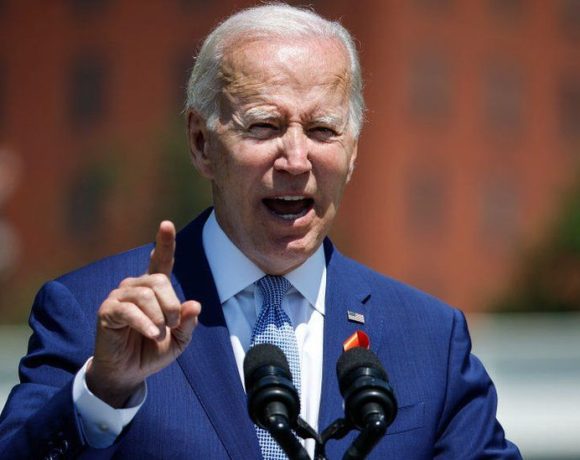
The sanctions will target individuals connected to Navalny’s imprisonment and Russia’s war machine, President Joe Biden said.

Export restrictions will be imposed on nearly 100 firms or individuals.

It is unclear what impact the sanctions will have on Russia’s economy.

BBC/Simeon Ugbodovon

Subscribe to our Telegram and YouTube Channels and also join our Whatsapp Update Group

Foreign

Protests and vigils have been held near Russian embassies in many countries following the death of Alexei Navalny in a Russian jail

More than 100 street protesters were detained in Russian cities, reports say, as people were warned not to rally

The 47-year-old outspoken critic of President Putin had been in a Russian jail since 2021 on politically-motivated charges

The Russian prison service announced on Friday that he had died, although this has not been confirmed by his family.

US President Joe Biden says Vladimir Putin is “responsible” for Navalny’s death.

Ukrainian President Volodymyr Zelensky speaking at the Munich Security Conference described Russian President Vladimir Putin as a man who maintains power through corruption and violence.

Zelensky accused Putin of trying to send the world a “clear message” on the day the Munich Security Conference opened.

The Ukrainian president called on attendees of the conference to “work together to destroy what [Putin] stands for”.

“It is his fate to lose, not the fate of the rules-based world order to vanish.”

In August, Navalny was found guilty of founding and funding an extremist organisation, which he denies, and was given an extra 19 years in jail

He had already been sentenced to nine years for parole violations, fraud and contempt of court.

Meanwhile, across Russia, the authorities have been scooping up flowers and tributes left to Alexei Navalny, to ensure there is no public sign of the extent of support for Vladimir Putin’s biggest rival.

In Moscow, a video showed what looked like men in dark tops, with their hoods raised, moving in to clear the many tributes laid at the Solovetsky Stone, a monument to the victims of political repression in Stalin’s time.

The carnations and roses had been piled high on and around the stone – and at another monument in St Petersburg – as a stream of Navalny’s supporters turned out to remember him. Some left photos of the politician, and small notes of protest and defiance.

The video from Moscow showed police blocking access to the site, while the shrine was removed.

There were similar reports from memorials across Russia.

Men in civilian clothing, again with their hoods up, also removed tributes left on the bridge near the Kremlin where the opposition politician Boris Nemtsov was murdered in February 2015. Again, police stood by and watched.

The authorities don’t want any focal points for protest.

BBC/Simeon Ugbodovon

Subscribe to our Telegram and YouTube Channels and also join our Whatsapp Update Group

Foreign

Russia’s most significant opposition leader for the past decade, Alexei Navalny, has died in prison inside the Arctic Circle, the prison service said.

Seen as President Vladimir Putin’s most vociferous critic, Navalny was serving a 19-year jail term for offences widely considered politically motivated.

He was moved to an Arctic penal colony, considered one of the toughest jails, late last year.

The prison service in the Yamalo-Nenets district said he had “felt unwell” after a walk on Friday.

He had “almost immediately lost consciousness”, it said in a statement, adding that an emergency medical team had immediately been called and tried to resuscitate him but without success.

“The emergency doctors declared the prisoner dead. Cause of death is being established.”

Navalny’s lawyer Leonid Solovyov told Russian media he would not be commenting yet.

BBC/Simeon Ugbodovon

Subscribe to our Telegram and YouTube Channels and also join our Whatsapp Update Group
Foreign

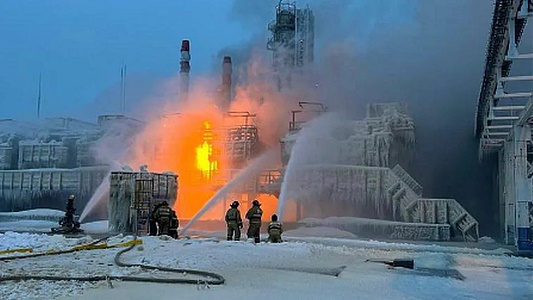
An explosion has occurred at a gas export terminal near the city of St Petersburg in Russia, officials say.

The blast caused a large fire, the state-owned RIA Novosti news agency said. It said the fire had been contained, and there were no reports of injuries.

The cause of the fire is not known, but local media have reported that drones had been seen in the area.

Both Russia and Ukraine have used drones in the current conflict. Ukraine usually does not admit such attacks.

Russia launched its full-scale of invasion of Ukraine nearly two years ago, but has made little progress in recent months.

On Sunday, eight people were killed by shelling in the Russian-controlled city of Donetsk in eastern Ukraine, Alexei Kulemzin, the city’s Russian-installed mayor said. Kyiv has also not commented on that attack.

Regarding Sunday’s explosion near St Petersburg, regional governor Alexander Drozdenko said a “high alert regime” was in place after the incident at the terminal of gas producer Novatek, in Ust-Luga on the Gulf of Finland. He shared a video of what appeared to be a large fire.

Russian news outlet Shot quoted local residents as saying they heard a drone followed by several explosions at Ust-Luga, close to Russia’s border with Estonia.

Fontanka, a St Petersburg-based news outlet, said at least two drones were spotted flying towards the city before the fire broke out.

It said there were three large international tankers near the fire, although there were no reports of damage to them.

The BBC has not verified the details of what happened, and there has been no comment from Ukrainian officials.

Russia’s defence ministry also said it shot down three Ukrainian drones in Smolensk Region, close to its border with Ukraine, on Saturday night. It earlier said it had shot down drones over Tula and Oryo, both in western Russia.

There were no reports of casualties.

Russia and Ukraine have been targeting each other’s energy infrastructure, and on Friday a fire broke out at an oil depot in Bryansk, south-west Russia, which Moscow blamed on a Ukrainian drone strike.

That came a day after an attack targeted a major oil loading terminal in St Petersburg.

On Thursday, Russia claimed to have captured a village close to the devastated city of Bakhmut, in Ukraine’s eastern Donetsk region. Kyiv has not confirmed the claim.

Ukraine has warned repeatedly that its army is facing severe ammunition shortages, but has set a target of producing a million drones domestically this year.

Russia launched the invasion of its neighbour nearly two years ago.

BBC/Simeon Ugbodovon

Subscribe to our Telegram and YouTube Channels and also join our Whatsapp Update Group
Foreign

Russia said it had accidentally bombed a village in its southern Voronezh region near Ukraine on Tuesday but stressed there were no casualties.

The accident occurred the same day as Russia hit Ukraine with a large-scale missile attack.

It is not the first such incident during Moscow’s almost two-year-long Ukraine offensive.

“On January 2, 2024, at around 9 am Moscow time (GMT), during a flight of the Aerospace Forces, an abnormal discharge of aircraft ammunition occurred over the village of Petropavlovka in the Voronezh region,” the Russian army said in a statement quoted by Russian news agencies.

“There are no casualties,” it added.

Petropavlovka lies some 150 kilometres (93 miles) east of the Ukraine border.

The ministry said six private houses were damaged in the accident, Russian news agencies reported.

“An investigation into the circumstances of the incident is underway. A commission is working on the ground to assess the nature of the damage and provide assistance to restoring houses,” the statement read.

The governor of the Voronezh region, Alexander Gusev, said some of Petropavlovka’s residents have been moved to temporary accommodation.

He also said there were no casualties but said there was “destruction recorded in seven households.”

In April last year, the Russian army acknowledged that one of its warplanes accidentally dropped a bomb in its own city of Belgorod, near the Ukraine border, causing a blast.

BBC / Titilayo Kupoliyi

Subscribe to our Telegram and YouTube Channels and also join our Whatsapp Update Group 

Religion

By Kayode Oguntona

Until the crisis of hunger, bloodshed, injustice and prevailing sufferings around the world today are properly addressed, the Christmas celebration may continue to be a mere ritual.

The Bishop, the Catholic Diocese of Oyo, the Most Reverend Emmanuel Adetoyese Badejo who stated this in his Christmas message in Oyo Town noted that the season would appear bleak this year in Ukraine, Russia, Israel, Gaza, Sudan and some parts of Nigeria where people are faced with war and discomfort.

Bishop Badejo said Father Christmas shows, the glittering gifts and lavish parties that come with the yuletide are not the reason for the season as usually painted by the modern media, but the spirit of love, compassion, peace and truth.

According to the cleric, the Christmas celebration indicts many world leaders who are supposed to be saving people from trouble and suffering because Jesus came to the world to destroy all discomforts of humanity, especially sin.

While urging the nation’s political class to allow the spirit of Christmas to reflect in their actions, Bishop Badejo also called on Nigerians to do the same in their hearts every day and not yearly.

Subscribe to our Telegram and YouTube Channels and also join our Whatsapp Update Group
Foreign

Wagner chief Yevgeny Prigozhin has been confirmed dead after genetic analysis of bodies found in Wednesday’s plane crash, Russian officials say.

The Investigative Committee (SK) said the identities of all 10 victims had been established and corresponded to those on the flight’s passenger list.

Prigozhin’s private jet came down north-west of Moscow on 25 August, killing all those on board.

The Kremlin has denied speculation it was to blame for the crash.

The SK said it was continuing a criminal investigation.

“Molecular-genetic testing has been completed,” it said in a statement.

“According to its results, the identities of all 10 deceased have been established, and they correspond to the list published in the flight manifest.”

The victims include several senior figures in Wagner, a Russian mercenary group set up by Prigozhin and involved in military operations in Ukraine, Syria and parts of Africa.

The others on the Embraer Legacy plane – flying from Moscow to St Petersburg – included Wagner members Valery Chekalov, Sergei Propustin, Yevgeny Makaryan, Alexander Totmin and Nikolay Matuseyev.

The plane was flown by pilot Alexei Levshin and co-pilot Rustam Karimov, and there was one flight attendant, Kristina Raspopova.

The crash came two months after Prigozhin led a Wagner mutiny against the Russian armed forces, seizing the southern city of Rostov and threatening to march on Moscow.

The standoff was defused after a deal was reached which led to Prigozhin and Wagner fighters relocating to Belarus.

However, Russian President Vladimir Putin described the mutiny as a “stab in the back” and there has been speculation that Russian security forces were somehow involved in the crash.

US officials quoted by CBS have said that the most likely cause of the crash was an explosion on board the plane, and the Pentagon said Prigozhin was probably killed.

On Friday Kremlin spokesman Dmitry Peskov said rumours of foul play were an “absolute lie”.

Mr Putin has sent his condolences to the families of the victims.

He described Prigozhin as a “talented person” who “made serious mistakes in life”.

BBC/Simeon Ugbodovon

Subscribe to our Telegram and YouTube Channels also join our Whatsapp Update Group
Foreign

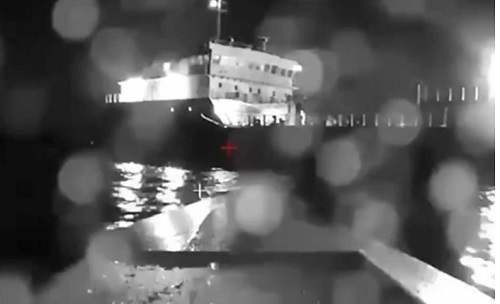
A Russian tanker with 11 crew members has been hit in a Ukrainian attack in the Black Sea, Russian officials say.

They said the vessel’s engine room was damaged in the overnight strike in the Kerch Strait. No-one was hurt.

Ukraine has not publicly commented. But a Ukrainian security service source told the BBC a sea drone had been used.

Saturday’s attack is the second in as many days involving such weapons. Russia, however, has not admitted any damage during Friday’s attack.

Naval drones, or sea drones, are small, unmanned vessels which operate on or below the water’s surface. Research by BBC Verify suggests Ukraine has carried out several attacks with sea drones.

The Kerch Strait connects the Black Sea and the Sea of Azov, separating Crimea – Ukraine’s peninsula annexed by Moscow in 2014 – and Russia’s Taman peninsula.

According to Ukraine’s SBU security service, Saturday’s operation was also conducted jointly with the Ukrainian navy and that 450kg of TNT explosive had been used.

The tanker was loaded with fuel, they said so the “fireworks” were visible from afar.

Russia’s maritime transport agency says the Sig tanker was located 17 miles (27km) south of the Crimean Bridge.

Russia’s state-run Tass news agency quoted an official from the country’s regional Marine Rescue Co-ordination Centre (MRCC) as saying that two tugs had already arrived at the scene of the attack – just to the south of the Kerch Strait.

“The engine room was damaged. Not much, but it was damaged,” the official said.

Russia’s maritime transport agency RosMorRechFlot later said the vessel had a hole “in the area of [the] engine room near the waterline from the starboard side, presumably as a result of an attack by a sea drone”.

“The ship is afloat,” it added.

Russian state-run media also reported that lights on the Crimean Bridge – further north – was turned off and all traffic halted amid warnings of an imminent attack.

On Friday, a Russian naval ship suffered a serious breach in a Ukrainian naval drone strike near Russia’s Black Sea port of Novorossiysk, Ukrainian security sources told the BBC.

Footage later emerged purportedly showing the drone hitting the Olenegorsky Gornyak large landing ship. Another unverified video showed a heavily listing vessel being towed to port.

But Russia’s defence ministry said it had repelled a Ukrainian attack on its naval base in Novorossiysk which involved two sea drones, but did not admit any damage.

Novorossiysk, a major hub for Russian exports, lies to the south-east of the Kerch Strait.

Clashes in the sea have increased in recent weeks, after Russia abandoned a major UN deal that enabled grain to be safely exported across the Black Sea.

Ukrainian ports have been pummelled by Russian drones and missiles, and Kyiv has threatened to retaliate.

“It is clear that it is impossible to win the war if you are not actively attacking,” said Ukraine’s presidential adviser Mykhailo Podolyak, when asked about Western allies who may be becoming nervous about this war spilling well beyond its borders.

He believes the apparent images of damaged Russian vessels will make Moscow “think twice about using the Black Sea for blackmail”.

While Kyiv denies drone strikes deeper inside Russia, it says it sees threats on occupied territories and surrounding waters as fair game.

Russia enjoys complete control of the Black Sea and Sea of Azov and two reportedly damaged ships are unlikely to change that.

But previous Ukrainian counter-offensives have been fuelled by their ability to cut off major Russian supply lines.

If it has indeed been able to immobilise a large Russian warship and oil tanker in two days, it will hope more will follow.

This war’s footprint seems to be getting bigger.

In a separate development, Saudi Arabia is due to host talks later on Saturday on how to end the war in Ukraine.

Invitations have been sent to about 30 countries – but not Russia – to attend the meeting in the Red Sea city of Jeddah.

Russian President Vladimir Putin launched his full-scale invasion of Ukraine in February 2022.

BBC/Simeon Ugbodovon

Subscribe to our Telegram and YouTube Channels also join our Whatsapp Update Group
Foreign

Russian President Vladimir Putin has said he does not reject the idea of peace talks on Ukraine.

Speaking after meeting African leaders in St Petersburg, he said African and Chinese initiatives could serve as a basis for finding peace.

President Putin also said it was hard to implement a ceasefire when the Ukrainian army was on the offensive.

Ukraine and Russia have previously said they will not come to the negotiating table without certain preconditions.

Kyiv says it will not concede any territory but Moscow says Kyiv must accept its country’s “new territorial reality”. Russia invaded its neighbour last year and is occupying territory in the country’s south and east.

Mr Putin told the late-night press conference on Saturday that there were no plans to intensify action on the Ukrainian front for now.

He also defended the arrest of critical voices, claiming some people were harming Russia from inside.

Criticism of Moscow’s invasion of Ukraine is outlawed and most prominent opposition members are behind bars or in exile.

In the wide-ranging briefing, the Russian president also told reporters that Moscow carried out some “preventive strikes” after an explosion on a Crimean bridge earlier this month.

Following the bridge incident – which left two people dead – Mr Putin vowed to respond to what he claimed was a “terrorist” act by Ukraine. Kyiv did not officially say it was responsible for the blast on the bridge, which links the occupied peninsula to Russia.

The Russia-Africa summit comes after an African contingent including leaders and representatives from seven countries met Ukraine’s President Volodymyr Zelensky and Mr Putin last month.

In the north-eastern Ukrainian city of Sumy, one person was killed and five others injured after a rocket attack, the country’s interior ministry said.

The ministry said on Telegram that a Russian missile hit an educational institution on Saturday evening. The BBC has not verified this information.

Elsewhere, two people were killed and another was injured after a missile hit “an open area” in the southern Ukrainian city of Zaporizhzhia on Saturday, an official said.

Anatoliy Kurtiev, secretary of the city council, said the blast wave caused by the “enemy missile” blew out apartment windows and damaged an educational institution and supermarket.

Russia said two office blocks were damaged in a drone attack on Moscow in the early hours of Sunday.

The city’s mayor Sergei Sobyanin said no one was injured in the attack, which he blamed on Ukraine.

The airspace over Moscow was temporarily closed but Vnukovo Airport has since reopened.

President Zelensky has been visiting Ukrainian special forces near Bakhmut, the city where some of the fiercest fighting of the war has been taking place.

Ukrainian authorities have said Kyiv’s troops are gradually moving forward near the eastern city, which Russian forces seized in May.

BBC/Simeon Ugbodovon

Subscribe to our Telegram and YouTube Channels also join our Whatsapp Update Group
Politics

Vice President, Kashim Shettima has departed Abuja to represent President Bola Tinubu at two major international summits in Rome, Italy, and St Petersburg, Russia.

Shettima, who left the Nnamdi Azikiwe International Airport, Abuja at about 3 pm Sunday, will join other global leaders for the first Stocktaking Moment Summit, with the theme, “Transforming Food Systems for People, Planet and Prosperity,” holding from Monday, July 24, to Wednesday, July 26.

“During the summit, the Vice President will chair a high-level session, with the theme, ‘Innovative Financing for Food System Transformation: The Case of Nigeria,’ and the side event on ‘Scaling up Multi-stakeholders Collaboration and Investment in the Implementation of Food Systems Transformation Pathways in Nigeria,” a statement signed by State House Director of Information, Office of the VP, Olusola Abiola, revealed on Sunday.

The event is being organised in collaboration with the Rome-based UN Agencies, the Food and Agriculture Organisation of the UN, the International Fund for Agricultural Development and World Food Programme, as well as the UN Food Systems Coordination Hub and wider UN system.

Shettima will then proceed from Rome to St. Petersburg in Russia to represent the President at the Russia-Africa Summit scheduled to hold from Wednesday, July 26 to Saturday, July 29.

While in Russia, the Vice President will join other political and business leaders at the 2nd Russia–Africa Summit and Russia–Africa Economic and Humanitarian Forum focused on strategising to enhance relations between Russia and the African continent, among other benefits.

Also, he will participate in bilateral meetings with representatives of relevant Russian senior government officials and business leaders to discuss relations between Russia and Nigeria.

Shettima, who is accompanied by senior government officials from federal ministries, departments, and agencies, is expected back in the country at the end of the week.

 It is his first foreign trip since assuming office as Vice President.

Punch / Titilayo Kupoliyi

Subscribe to our Telegram and YouTube Channels also join our Whatsapp Update Group
Foreign

More than 2,000 residents are being evacuated from four villages in Russian-occupied Crimea after a fire that triggered hours of explosions at a nearby ammunition depot.

Russian-installed officials also shut a stretch of the motorway that crosses the southern half of the peninsula.

They did not explain the cause of the fire at a military training ground near the city of Staryi Krim.

But unconfirmed reports on social media spoke of three Ukrainian strikes.

The overnight explosions coincided with a heavy Russian missile and drone attack that officials said was largely targeted at Ukraine’s southern city of Odesa.

Critical infrastructure and military facilities were attacked by several waves of cruise missiles and Iranian-made drones launched from the Black Sea, Crimea and southern Russia, said Ukraine’s air force.

Although 37 Russian missiles and drones were shot down, a number did penetrate Ukrainian defences. Officials in Odesa said a number of people were wounded and several flats were damaged. A grain and fuel terminal at the port were hit along with two warehouses including one described as housing fireworks.

It was the second night in a row that Odesa was targeted, in attacks linked to Russia’s withdrawal from an international deal enabling grain and fertiliser to be exported safely across the Black Sea.

Port fuel facilities were damaged in the earlier attacks on Odesa, which is a key hub for Ukraine’s grain exports.

Russia had called its attack on Odesa a “mass revenge strike” for an attack on the Russian-built bridge over the Kerch strait linking Crimea to Russia. Seaborne drones have been blamed for Monday’s bridge strike that knocked out a section of bridge and killed a Russian couple.

The fire at a munitions depot in Crimea on Wednesday closed a 12km (7.5-mile) section of the Tavrida highway that links the cities of Simferopol and Sevastopol to the bridge. Construction of the road by Russia’s occupation authorities began in 2017.

A series of explosions were heard in the area from around 04:30 (01:30 GMT) on Wednesday.

Russia’s appointee-boss in Crimea, Sergei Aksyonov, said the cause of the fire at the military range was being investigated but that no-one was hurt.

He said four settlements housing some 2,200 people close to the range in Crimea’s Kirovskyi district were being evacuated.

BBC / Titilayo Kupoliyi

Subscribe to our Telegram and YouTube Channels also join our Whatsapp Update Group
Foreign

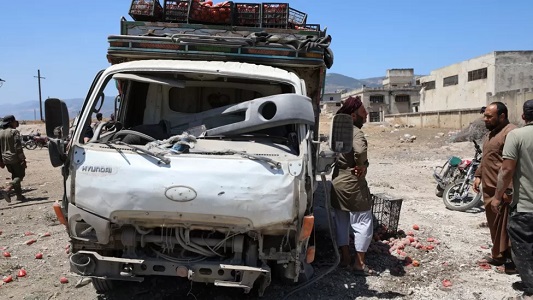
The UN has expressed deep concern about an escalation of hostilities in north-western Syria after at least 11 people were reportedly killed in Russian air strikes on rebel held Idlib province.

Nine were killed when warplanes dropped bombs next to a market outside Jisr al-Shughour on Sunday, rescuers said.

The Syrian Observatory for Human Rights monitoring group reported that it was the deadliest Russian attack this year.

Another two people were killed in an air strike near Idlib city, it said.

There was no immediate comment from the Russian military, whose air campaign in support of the Syrian government has been crucial in turning the tide of the 12-year civil war in its favour.

But the Syrian defence ministry said its troops had co-operated with the Russian air force in an operation that targeted “terrorist headquarters and warehouses” in Idlib and “eliminated dozens of terrorists”.

The strikes were retaliation for attacks that had killed civilians in government-held Hama and Latakia provinces, it added.

The Syrian Observatory said a total of six civilians had been killed in drone and artillery attacks by jihadist and rebel groups since Wednesday.

Fifteen civilians and four fighters had been killed in Russian air strikes and government artillery attacks over the same period, it added.

The White Helmets, whose first responders operate in opposition-held areas, said most of those killed near Jisr al-Shughour were workers and farmers at a vegetable market that was next to the site targeted in the Russian strike.

Mohammed said he had been loading tomatoes and aubergines onto vehicles at the market when a bomb exploded.

“I looked over and saw my neighbour screaming next to me. I carried him [to safety],” he told AFP news agency. “Some of the [vehicle] owners were injured and others were killed.”

The White Helmets said children were among the wounded and that the death toll might rise because several people were in a critical condition.

“Attacks on civilians in Syria continue unabated and unresolved, leaving Syrians trapped in a never-ending cycle of tragedy and despair,” it warned.

More than half a million people have been killed in the conflict that erupted after President Bashar al-Assad cracked down violently on peaceful pro-democracy protests in 2011.

Idlib is the last remaining opposition stronghold and is home to 2.9 million displaced people, many of whom are living in dire conditions in camps.

In March 2020, Russia and Turkey brokered a ceasefire to halt a push by the government to retake Idlib. That led to an extended lull in violence, but sporadic clashes, air strikes and shelling continue.

BBC/Adebukola Aluko

Subscribe to our Telegram and YouTube Channels also join our Whatsapp Update Group

Foreign

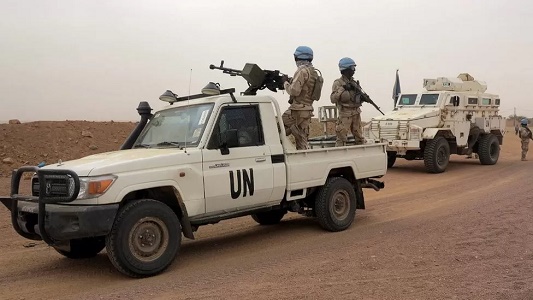
Mali’s foreign minister has called on the UN to withdraw its peacekeeping force from his country “without delay”.

Abdoulaye Diop accused the force, Minusma, of having “become a part of the problem in fuelling intercommunal tensions”. He was addressing the UN Security Council.

Minusma has more than 13,000 troops. Its decade-old mission has failed to stop the spread of jihadist violence.

Russian Wagner mercenaries are now assisting Mali’s military rulers.

Western officials have accused Wagner of human rights abuses in Ukraine and parts of Africa, and last month the US announced sanctions on Ivan Maslov, whom it described as Wagner’s top official in Mali.

Wagner has not commented on the Western allegations and its activities in Mali and other parts of Africa remain shrouded in secrecy.

Minister Diop’s criticism of Minusma followed earlier Malian objections to France’s long-standing involvement in Mali. The alliance with France, the former colonial power, collapsed last year.

Mr Diop spoke of a “crisis of confidence between the Malian authorities and Minusma” and said “the Malian government asks for the withdrawal without delay of Minusma”.

Minusma’s mandate is due to end on 29 June, but UN chief Antonio Guterres has recommended that the mission be reconfigured to focus on a few limited priorities.

The UN currently lists military contingents from Chad, Bangladesh and Egypt as the biggest in the force.

When asked about Mr Diop’s remarks on Friday the UN special envoy to Mali, El-Ghassim Wane, said “we stand to be guided by whatever decision the [Security] Council may take”.

But he added that without the host country’s consent “operating in a specific country would be extremely challenging, if not impossible”.

A report by the UN high commissioner for human rights accused the Malian armed forces and “foreign security personnel” of having killed more than 500 people during an operation in the village of Moura, in central Mali, in March last year. The governments of Mali and Russia both condemned that report.

BBC/Simeon Ugbodovon

Subscribe to our Telegram and YouTube Channels also join our Whatsapp Update Group
Foreign

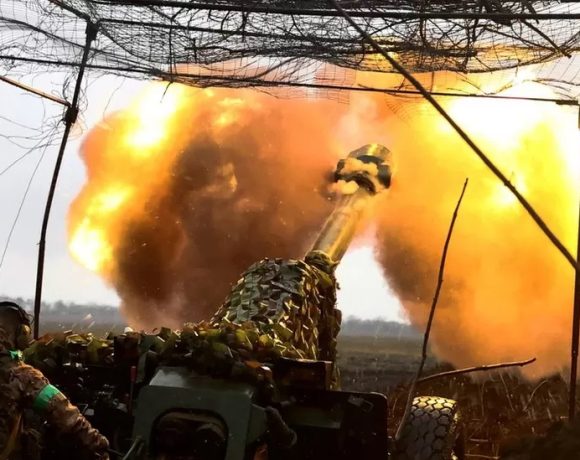
Ukraine’s military has launched attacks on occupying Russian forces in the key southern Zaporizhzhia region, Russian officials and military bloggers say.

Reports say Ukrainian troops – backed by tanks, artillery and drones – are trying to advance south of the town of Orikhiv for the second night running.

A senior Ukrainian defence official said the enemy was in “active defence”.

Several military experts have said the focus of Ukraine’s long awaited counter-offensive will be Zaporizhzhia.

They argue Kyiv is trying to regain access to the Sea of Azov, splitting the occupying Russian forces in the region into two detached groupings.

That would not only weaken Russia’s combat capability but also eliminate a land bridge to Crimea, the southern peninsula illegally annexed by Russia in 2014.

Ukraine has been planning a counter-offensive for months, but it has wanted as long as possible to train troops and to receive advanced military equipment from Western allies.

The government is deliberately saying little about its plans but its forces are now probing Russian positions at several points along the front line, looking for signs of weakness.

Meanwhile Russian attacks on Ukraine continue. Overnight it launched fresh cruise missile and drone strikes, with falling debris killing at least one person in Zhytomyr to the west of the capital Kyiv.

Subscribe to our Telegram and YouTube Channels also join our Whatsapp

BBC/Taiwo Akinola

Foreign

Russia’s military says it has thwarted another major offensive by Ukrainian forces in Donetsk, destroying military equipment and inflicting huge personnel losses on the enemy.

A defence ministry statement early hour on Tuesday said Russian forces had repelled Ukraine’s second major offensive in two days, destroying, among other military equipment, eight main battle Leopard tanks supplied to Ukraine by its Western allies and 109 armoured vehicles.

It also said total Ukrainian losses amounted to 1,500 troops.

Reuters could not immediately get a response from Kyiv about the Russian claims and was unable to independently verify the assertions. It, however, noted that both sides have often made claims of inflicting heavy human losses on each other which could not be independently verified.

On Tuesday, the leader of Russia’s powerful Wagner mercenary group, Yevgeny Prigozhin, cast doubt on the defence ministry statement, calling it an “absurd fiction of science”.

To kill that many people would require daily gains of 150 kilometres, he said in remarks published on the Telegram channel of his press service.

Totting up the figures provided by the ministry would imply “we have already destroyed the entire planet five times over,” Mr Prigozhin added sarcastically.

A recent Reuters report says the Wagner chief has frequently clashed with Moscow’s defence establishment over the conduct of Russia’s campaign in Ukraine and what he says is insufficient support being provided to his mercenary army.

Russia said that Ukrainian forces have begun a major offensive in the southern region of Donetsk, although it is unclear if Ukraine’s long-awaited counter-offensive has commenced.

Kyiv pressed on for the second day in row, the Russian defence ministry said on its Telegram channel on Tuesday.

“Having suffered heavy losses the day before, the Kiev regime reorganised the remnants of the 23rd and 31st mechanised brigades into separate consolidated units, which continued offensive operations,” the ministry said, adding that “a complex fire defeat” had been inflicted.

Ukrainian officials have made no mention of any broad, significant new campaign and sidestepped questions on the matter on Monday.

FRCN Abuja/Adetutu Adetule

Subscribe to our Telegram and YouTube Channels also join our Whatsapp


Foreign

A 15-year-old Sasha Kraynyuk has studied the photograph handed to him by Ukrainian investigators, as he recognised the boy dressed in Russian military uniform immediately.

The teenager sitting at a school desk has the Z-mark of Russia’s war emblazoned on his right sleeve, coloured in the red, white and blue of the Russian flag.

But the boy’s name is Artem, and he’s Ukrainian.

Sasha and Artem were among 13 children taken from their own school in Kupyansk, north-eastern Ukraine last September by armed Russian soldiers in balaclavas. Ushered onto a bus with shouts of “Quickly!”, they then disappeared for weeks without trace.

When the children, who all have special educational needs, were finally allowed to call home, it was from much deeper inside Russian-occupied territory.

To get them back, their relatives were forced to make gruelling journeys across thousands of miles into the country that has declared war on them.

Only eight of the children have been returned from Perevalsk so far and Artem was one of the last, collected by his mother just this spring.

When I reached the school’s director by phone, she saw no problem with dressing Ukrainian children in the uniform of an invading army.

“So what?” Tatyana Semyonova retorted. “What can I do? What’s it to do with me?”

I countered that the Z symbolised the war against the children’s own country. “So what?” the director demanded again. “What kind of a question is that? No-one is forcing them.”

Subscribe to our Telegram and YouTube Channels also join our Whatsapp

BBC/Taiwo Akinola