Crime

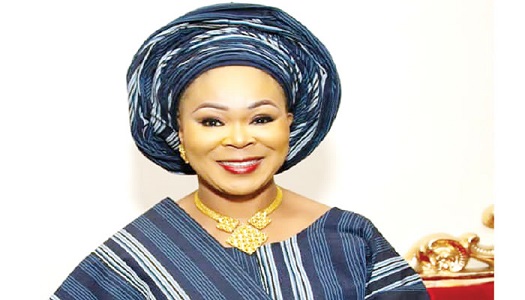
The Minister of Women Affairs, Mrs. Uju Kennedy-Ohanenye, says stringent measures will be taken against perpetrators of Sexual and Gender-Based Violence (SGBV).

She stated this at a news conference in Abuja to kickstart the 16 days of activism against gender-based violence,

The Minister reiterated plans for the establishment of mobile courts, backed by state governments and relevant agencies, to ensure that offenders face appropriate sanctions.

Mrs. Uju Kennedy-Ohanenye urged parents to remain vigilant, emphasizing the need to protect their children and wards from falling victim to gender-based issues.

“If we do not teach our children how to report their plight, how will you know that child has been molested and maltreated, some of us are lacking in this aspect. If your child for instance is molested, we are not only going to sue the person that molested the child we will sue you for negligence”.

The UN Resident Coordinator in Nigeria, Mr. Mathias Schmale, called on the government to increase gender-responsive budgeting and develop strategies to eliminate societal norms and issues contributing to such violence.

Mr Schmale underscored the importance of women’s empowerment and the implementation of the Violence Against Persons Prohibition (VAPP) Act, which has been domesticated by most states, as crucial steps to addressing these pervasive problems.

Hadiza Abdulrahman

Subscribe to our Telegram and YouTube Channels and also join our Whatsapp Update Group 

Crime

By Funmi Ojo

Stakeholders on Sexual and Gender Based Violence have called for effective implementation of the Violence Against Persons Prohibition (VAPP) Law and Administration of Criminal Justice Law.

They made the call in Osogbo, Osun State at the Best Practice Roundtable on Violence Against Persons Prohibition (VAPP) Law and Administration of Criminal Justice Law.

Our Correspondent Funmi Ojo reports that the theme of the roundtable was “Towards Consolidating Advocacy for Effective Justice Delivering for Survivors of SGBV”.

The Violence Against Persons (Prohibition) Law (2015) was made to eliminate violence in private and public life, prohibit all forms of violence against persons and to provide maximum protection and effective remedies for victims and punishments of offenders.

The bill for Violence Against Persons Prohibition Law (VAPP) was enacted in 2013 and passed by the House of Representatives and the Senate on May 14, 2015 which has been domesticated by 34 states including Osun State.

Also, the Administration of Criminal Justice Law 2018 provides for the administration of criminal justice system which promotes efficient management of criminal justice institutions, speedy dispensation of justice, protection of the society from crimes and protection of the rights and interest of the suspect, the defendant and victims in Nigeria.

Delivering a paper on Accelerating Best Practices on Administration of Criminal Justice Law and Violence Against Persons Prohibition Law, The Chief Magistrate, Administration, Osun State, Dr. Olusegun Ayilara said stakeholders must be intentional about their roles in seeking justice for survivors of Sexual and Gender Based Violence.

The Executive Director, Community Advancement Initiative for Self-Reliance, Mrs. Eni Ayeni advocated funding of one-stop Sexual Assault Referral Centers across states, monitoring framework for the implementation as well as setting up of special courts to try sexual and Gender Based Violence cases.

Also speaking, Mrs. Veronica Onoja, from Justice, Development and Peacemakers Center, Osogbo, noted that the increasing cases of Gender Based Violence (GBV) is due to delay in getting justice, calling on relevant stakeholders to expedite action toward investigation and prosecution of such cases.

The Violence Against Persons Prohibition (VAPP) Law and Administration of Criminal Justice Law, for all its remarkable qualities, cannot accomplish all that it was created for without the necessary structures to aid in doing so.

Subscribe to our Telegram and YouTubeChannels also join our Whatsapp Update Group

Crime

As part of efforts to address cases of Sexual and Gender-Based Violence and other vices in the country, the Federal Government, through the Ministry of Women Affairs, has disclosed its readiness to introduce mobile courts.

The Minister of Women Affairs, Uju Kennedy-Ohaneye, at a briefing in Abuja, on Monday, said, “If we have a mobile court, it will help as we go for our advocacy against SGBV. We have been advocating, and spending money, to no avail.

She disclosed this part of reforms and targets she hopes to realise in her first 100 days in office.

“When victims report, police will come in for arrest, we will take the victim straight to the hospital to confirm and then the mobile courts come in to ensure justice is served.”

She stressed the need for a different approach to interventions targeting grassroots women. She highlighted the importance of working with women cooperatives to implement empowerment projects that can be sustained by the recipients beyond the initial government support.

“The narrative has changed in this ministry. We have decided to forge ahead with more sustainable moves that will impact our women and children.

“Sanitary towels being given to girls in some schools from time to time is not sustainable; therefore, we have decided that instead of giving them the sanitary towels, we set up sanitary pad production ventures. Sharing gas cylinders to rural women is also not sustainable; the ministry is concerned about who refills the gas stove for the rural woman after the first refill. We have decided to, instead, give them charcoal burners and biogas stoves among others,” she noted.

In a meeting with students’ union representatives on the sidelines of the briefing, the minister reiterated government’s stand with Nigerian women, girls and boys, as well as her stand for justice on any case of sexual harassment in the country.

Punch/Simeon Ugbodovon

Subscribe to our Telegram and YouTube Channels also join our Whatsapp Update Group

Feature

Funmi Adekoya in this piece examines sexual and gender-based violence and Child Early and Forced Marriage as social menace that require concerted efforts to checkmate

Sexual and Gender-Based Violence, SGBV, is any harmful act perpetrated against a person’s will, and that is based on socially ascribed differences between male and female.

These include rape, domestic violence, sexual exploitation, trafficking in persons and harmful traditional practices.

According to data from the Nigerian National Population Commission, NPC, Gender Based Violence, experienced by Nigerian women throughout their lifetime, from either their present husband, is put at 19% for demonstrative or emotional violence, 14% for physical violence, and 5% for sexual abuse.

Also, data on different forms of violence against women submitted by United Nations (UN) human rights bodies shows that 22.3% women experience Lifetime Physical and/or Sexual Intimate Partner Violence, while 13.8% experience Physical and/or Sexual Intimate Partner Violence in the last 12 months. The record also indicates that Child Marriage is 43.4%, Female Genital Mutilation/Cutting is 19.5%.

Ending Sexual and Gender-Based Violence (SGBV) and Child Early and Forced Marriage (CEFM) are complex and multifaceted tasks that require collective efforts from individuals, communities, governments, and organizations.

However, identifying and addressing the underlying factors that contribute to SGBV such as poverty, unequal power dynamics, and lack of access to resources and education, is key to mobilizing communities to actively address SGBV by organizing workshops, discussion forums, and events focused on raising awareness and promoting collective responsibility.

Little wonder experts on Sexual and Gender Based Violence and Child Early and Forced Marriage are calling for collaborative effort to identify best practices and evidence-based approaches.

According to the Coordinator, Care-Fronting Nigeria, Dr. Maji Peterx, government at all levels should ensure implementation of policies against Sexual and Gender Based Violence.

He advocated fostering international cooperation to combat cross-border Sexual and Gender Based Violence, human trafficking, and other forms of violence that impact vulnerable populations.

“What we are looking at is the mobilization of critical mass of people to buy into the idea that we are all in this together, the issue of Child Early and Forced Marriage (CEFM) and Sexual and Gender Based Violence (SGBV) is not a one-man thing, it is an everybody thing.”

Dr. Peterx emphasized the need to enact comprehensive laws and initiate policies that address SGBV including laws against domestic violence, rape, and sexual harassment, and particularly enforcing the laws, while the legal system should also be sensitive to the needs of survivors and perpetrators are held accountable.

He called for policy formulation towards achieving gender equality in all aspects of life including education, employment, decision-making roles; challenging and dismantling patriarchal systems that perpetuate violence and discrimination

“Promote gender equality by engaging men and boys in discussions about challenging harmful masculinity, stereotypes and promoting healthy, respectful attitudes towards women and girls. Encourage male allies to speak out against SGBV and take an active role in creating safe communities.”

Dr. Peterx said the media had key role to play through reportage of SGBV cases while avoiding sensationalism and victim-blaming narratives, and as well utilizing media platforms to raise awareness and promote positive messages about respect, consent, and equality, which is very important.

“We must capitalize on the power of the media to give us this narrative that would raise awareness and consciousness. We the Civil Society must design a pattern for advocacy to get more people to understand our advocacy, so that they will know that if we don’t deal with SGBV and CEFMit, they will deal with us. We can therefore all work together to bring an end to it.”

Dr. Peterx added “I think many at times, government look for short time solution to a long time problem. We need bills and policies to ensure that gender issue is a structural and systemic issue, so that when government is making policies, it would be a law that protects the lives of all.

“Although, government is signatory to Act, international convention, do they implement and enforce? That is why we want government to see to the implementation of treaty they are signatory to.”

While corroborating the opinion of Dr. Peterx, Program Manager, International Federation of Women Lawyers, FIDA Nigeria, Mr. Fikih Obaro highlighted some keys steps to end Sexual and Gender Based Violence, Child Early and Forced Marriage.

“I think what is critical is behavioural change. Behavioural change is key towards ensuring that we have effective solution on SGBV and CEFM, and what that means is, basically we need to go back to the root, we need to go back to the community, we need to sensitize person, we need to provide avenue where people can change their behaviour from being perpetrator or being abusive to being supporters structurally for survivors of Gender Based violence.

“So sensitisation is key to behavioural change, advocacy is key towards achieving behavioural change. There has to be concerted advocacy from the grassroots down to upper echelons towards ensuring that we have a society that responds positively to Sexual and Gender Based Violence”.

Mr. Obaro called for provision of accessible and survivor-centered support services including counseling, medical care, legal aid, and safe shelter for survivors of SGBV, with survivors encouraged to come forward by reducing stigma, victim-blaming, and ensuring their safety during the reporting and investigation process.

“In terms of reintegration of survivors back to the society, Obaro said it is key that Nigeria has a victim protection approach and victim protection system whereby survivors of Sexual and Gender Based Violence are being reintegrated back into the society without fear of stigmatisation.”

“We need to create safe homes, we need to create effective shelter, we need to create safe avenues so that they can have succour an enabling environment for them to be empowered and be gradually reintegrated back to the society “.

In his own contribution, Program Coordinator, Child and Youth Protection Foundation, Mr. Olatosimi Kolawole called on civil society organizations to collaborate with government in the implementation and monitoring of policies on Sexual and Gender Based violence.

“The first thing we need to do as CSO is to recognize that government have policies that addresses the issue of Sexual and Gender Based Violence, understand the provision of these policies and understand that we need to start engaging with government to have a budget head for the implementation.”

“Implementation is vital, and I know that CSOs can push for the implementation of these policies and monitoring the implementation of the policies. When this is done we will see that government policies are actually speaking to the yearning and aspirations of the people.”

Mr. Kolawole said CSOs should regularly evaluate the effectiveness of SGBV prevention and response initiatives and make necessary adjustments based on feedback and data.

“Remember, ending SGBV is an ongoing process that requires each person’s actions, no matter how small, to contribute to a safer and more equitable world.”

Subscribe to our Telegram and YouTube Channels also join our Whatsapp Update Group

Health

By Funmi Adekoya

To end Sexual and Gender Based Violence, SGBV, as well as Child Early and Forced Marriage in Nigeria, government and other stakeholders must collaborate.

This was the observation of Experts on Sexual and Gender Based Violence, Child Early and Forced Marriage.

Sexual and Gender-Based Violence is any harmful act that is perpetrated against person’s will and that is based on socially ascribed differences between male and female, this include rape, domestic violence, sexual exploitation, trafficking in persons and harmful traditional practices.

According to data from the Nigerian National Population Commission, Gender Based Violence, as experienced by the Nigerian women throughout their lifetime from either their present husband, is reported as 19% for demonstrative or emotional violence, 14% for physical violence, and 5% for sexual abuse.

Ending Sexual and Gender-Based Violence (SGBV) is a complex and multifaceted task that requires collective efforts from individuals, communities, governments, and organizations.

According to the Coordinator of a non-governmental Organisation, Care fronting Nigeria, Dr. Maji Peterx government at all levels should ensure implementation of policies against Sexual and Gender Based Violence.

He identified fostering international cooperation to combat cross-border Sexual and Gender Based Violence, human trafficking, and other forms of violence that impact vulnerable populations.

Dr. Peterx also called for regularly evaluating the effectiveness of SGBV prevention and response initiatives and make necessary adjustments based on feedback and data.

Also speaking, Program Manager, International Federation of Women Lawyers, FIDA Nigeria, Mr. Fikih Obaro highlighted some key steps to end Sexual and Gender Based Violence, and Child Early and Forced Marriage.

In his own contribution, Programme Coordinator, Child and Youth Protection Foundation, Mr. Olatosimi Kolawole advised Civil Society Organizations to collaborate with government in the implementation and monitoring of policies on sexual and Gender Based violence.

Mr. Kolawole also advocated responsible reporting of SGBV cases by the media, avoiding sensationalism and victim-blaming narratives as well as 

using media platforms to raise awareness and promote positive messages about respect, consent, and equality.

Remember, ending SGBV is an ongoing process that requires each person’s actions, no matter how small, which can contribute to a safer and more equitable world.

Subscribe to our Telegram and YouTube Channels also join our Whatsapp Update Group
News

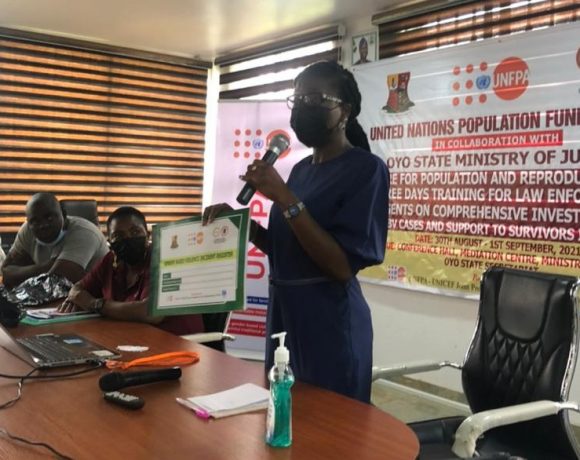
In tackling the menace and shoddy prosecution of Sexual and Gender Based Violence in Oyo State, the United Nations Population Fund project in collaboration with Oyo State Ministry of Justice and Centre for Population and Reproductive Health have organised a three day training for law enforcement agents.

The training which was on comprehensive investigations of Sexual and Gender Based Violence SGBV cases was held at the Conference Hall, Mediation Centre, Ministry of Justice, Oyo State Secretariat, Ibadan.

Speaking during the training, Senior Project Coordinator at the Centre for Population and Reproductive Health and implementing partner for the UNFPA in Oyo State, Tolulope Babawarun noted that the COVID-19 pandemic has influenced the increase of SGBV in the state and the country at large, hence the need to train the law enforcement agents who were handling such cases.

Mrs Babawarun maintained that it was imperative for law enforcement officers to gather and handle informations gathered from survivors of SGBV carefully so as for it to stand in court during the prosecution of offenders.

She stressed that cases had been lost and offenders escaped justice due to shoddy investigations and handling of SGBV cases which necessitated the training programme.

In a remark, a representative of the National Drug Law Enforcement Agency, NDLEA, Mr. Patrick Ikechukwu said the agency is striving to rid the state of illicit drugs which is a great contributor to the rise of SGBV.

Mr Ikechukwu opined that survivors of SGBV sometimes abuse drugs to suppress the pain of being a victim while offenders are influenced by illicit drug in perpetrating the crime.

He noted that though NDLEA’s mandate does not cover SGBV, he had been informed that the organisation could still protect victims, gather information and arrest offenders and hand over the case to the police.

Mr Ikechukwu lauded the giant stride of the organisers of the programme through the training in bringing down the numbers of victims of SGBV.

Also, a representative of the Nigerian Police, CSP Joyce Miyaki who expressed joy in attending the training noted that she was more informed and equipped in handling cases of SGBV.

Officer in charge of anti human trafficking in Nigeria Security and Civil Defence Corps, NSCDC, Mr. Afe Olurotimi said he had learnt to be more protective in addressing the victim’s problem.

The law enforcement agents unanimously agreed that more synergy could help in curbing the menace of Sexual and Gender Based Violence, SGBV.

Olumide Ogunbiyi