Foreign

Following Ukraine’s liberation of Izyum, there have been multiple allegations of atrocities against Russian occupation.

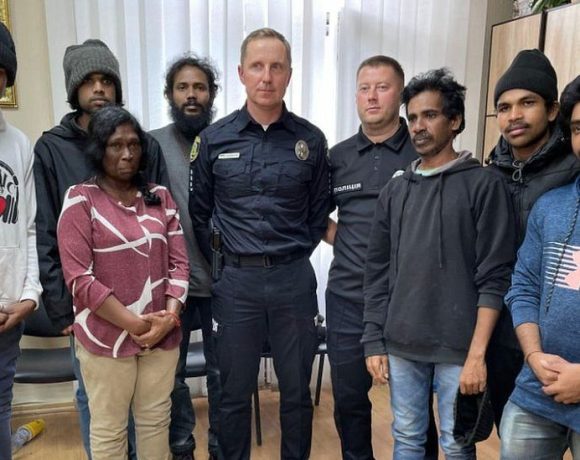
Among the accounts emerging is that of a group of Sri Lankans held captive for months.

One of seven Sri Lankans who was captured by Russian forces in May, Dilujan Paththinajakan said, “We thought we would never get out alive”.

The group had just set out on a huge walk to safety from their homes in Kupiansk, north-eastern Ukraine, to the relative safety of Kharkiv, some 120km away but at the first checkpoint they came across, they were captured by Russian soldiers.

The Sri Lankans were blindfolded, their hands tied, and taken to a machine tool factory in the town of Vovchansk, near the Russian border.

It was the start of a four-month nightmare which would see them kept prisoner, used as forced labour, and even tortured.

The group had come to Ukraine to find work or study but now, they were prisoners, surviving on very little food, only allowed to use the toilet once a day for two minutes.

On the occasions they were allowed to shower, that too was restricted to just two minutes.

The men – mainly in their 20s – were all kept in one room.

The only woman in the group, 50-year-old Mary Edit Uthajkumar, who was kept separately, said months of solitary confinement had taken a toll.

“They locked us in a room,” she said “They used to beat us when we go to take shower. They don’t even allow me to meet others. We were stuck inside for three months.”

Mary Edit Uthajkumar, 50, said months of solitary confinement had taken a toll

Mary, her face already scarred by a car bomb in Sri Lanka, has a heart condition but didn’t receive any medication for it.

The group also spoke of being beaten for no apparent reason – of Russian soldiers who would get drunk and then attack them.

Russia has denied targeting civilians or committing war crimes, but the Sri Lankans’ allegations come alongside many other reports of atrocities committed by Russian occupying forces.

Ukraine has been exhuming bodies from a burial site in the forest near Izyum, some of which show signs of torture and Ukrainian President Volodymyr Zelensky has said: “more than 10 torture chambers have already been found in the liberated areas of Kharkiv region, in various cities and towns”.

BBC/Maxwell Oyekunle

Subscribe to our Telegram Channel and join our Whatsapp Update Group
Foreign

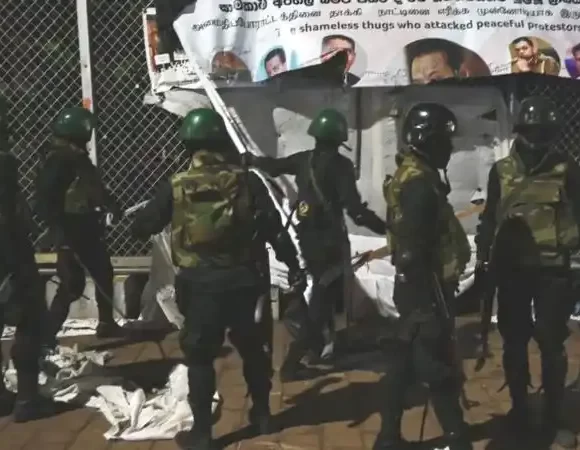
Security forces in Sri Lanka have raided the main anti-government protest camp in the capital Colombo and have begun pulling down tents.

Hundreds of troops and police commandos moved on the protesters outside the presidential offices, hours before they were due to leave the area.

A BBC video journalist was beaten by the army and one soldier snatched his phone and deleted videos.

It comes after Ranil Wickremesinghe was sworn in as president.

Sri Lanka’s ex-president Gotabaya Rajapaksa fled the country last week.

Mr Wickremesinghe – the former prime minister – is seen as deeply unpopular with the public, and has vowed tough action against demonstrators. But some protesters have said they will give him a chance.

Sri Lanka has seen months of mass unrest over an economic crisis.

Many blame the Rajapaksa administration for mishandling the nation’s finances, and see Mr Wickremesinghe as part of the problem. But there were few demonstrations on the streets the day after he won the parliament vote.

Foreign

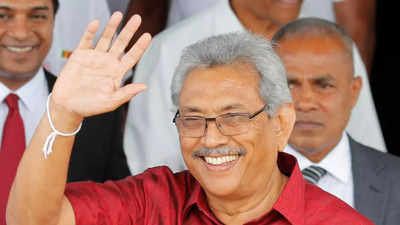
Sri Lanka’s President Gotabaya Rajapaksa has fled the country on a military jet, amid mass protests over its economic crisis.

Reports say the 73-year-old arrived in the capital of the Maldives, Male, at around 03:00 local time (22:00 GMT).

Mr Rajapaksa’s departure ends a family dynasty that has ruled Sri Lanka for decades.

He had been in hiding after crowds stormed his residence on Saturday.

The president had earlier pledged to resign on Wednesday 13 July.

His brother, former Finance Minister Basil Rajapaksa, has also left the country with sources saying  to be heading to the US.

As news of the president’s departure filtered through, noisy chanting broke out among demonstrators at Galle Face Green, the main protest site in the capital city, Colombo.

Sri Lankans blame President Rajapaksa’s administration for their worst economic crisis in decades.

For months they have been struggling with daily power cuts and shortages of basics like fuel, food and medicines.

The leader, who enjoys immunity from prosecution while he is president, is believed to have wanted to flee abroad before stepping down to avoid the possibility of arrest by the new administration.

BBC/Maxwell Oyekunle

Foreign

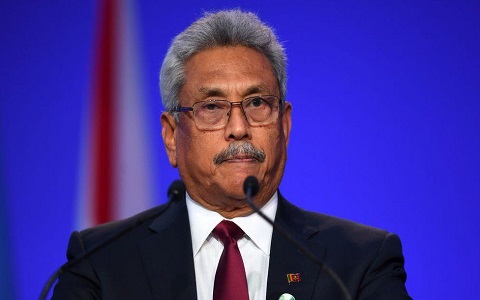
Sri Lanka President Gotabaya Rajapaksa has confirmed he will be resigning, the prime minister’s office has said.

It comes two days after crowds stormed the official residence of both leaders. Demonstrators are still occupying the buildings and are refusing to leave until both leaders are gone.

The parliament Speaker had earlier said the president would resign on 13 July.

Mr Rajapaksa’s current whereabouts are unknown. The BBC has been told that he is on a navy vessel at sea.

His resignation was first announced by the Parliament Speaker on Saturday, but many Sri Lankans responded with scepticism to the idea that he would relinquish power.

On Monday, Prime Minister Ranil Wickremesinghe’s office said in a statement it had been informed by Mr Rajapaksa that he would step down on Wednesday.

However, there has still been no direct word from Mr Rajapaksa.

Under Sri Lanka’s constitution, his resignation can only formally be accepted when he resigns by letter to the parliament Speaker – which has yet to happen.

Mr Wickremesinghe had earlier also said he would step down from his position.

Mr Rajapaksa had departed the presidential palace before protesters entered on Saturday, calling for his resignation.

His brother, former Prime Minister Mahinda Rajapaksa, is at a naval base in the country, the sources say.

For months, Sri Lankans have been calling for the resignation of the Rajapaksa brothers.

The president has been blamed for the country’s economic mismanagement, which has caused shortages of food, fuel and medicine for months.

Inside the occupied palace on Sunday, protesters were refusing to budge.

“Our struggle is not over,” student protest leader Lahiru Weerasekara said, quoted by AFP. “We won’t give up this struggle until [President Rajapaksa] actually leaves,” he said.

“The next couple of days are going to be extremely uncertain times as to see what transpires politically,” political analyst and human rights lawyer Bhavani Fonseka told Reuters, adding that it would be interesting to see if the two leaders “actually resign”.

Other politicians in Sri Lanka met on Sunday to discuss how to handle a smooth transition of power.

The speaker of Sri Lanka’s parliament told the BBC World Service Newshour programme a new cross-party coalition government would need to be formed within a week of the president officially stepping down.

BBC/Simeon Ugbodovon

Foreign

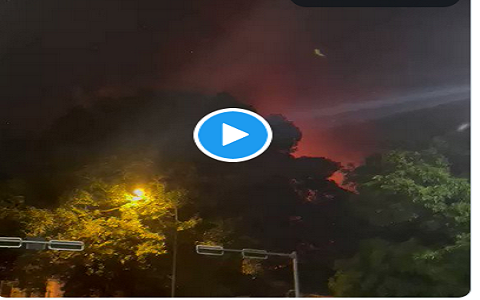
The home of Sri Lanka’s Prime Minister Ranil Wickremesinghe has been set on fire.

Over the past hour, the unrest between protesters and police has intensified outside Wickremesinghe’s residence in the country’s capital Colombo.

Foreign

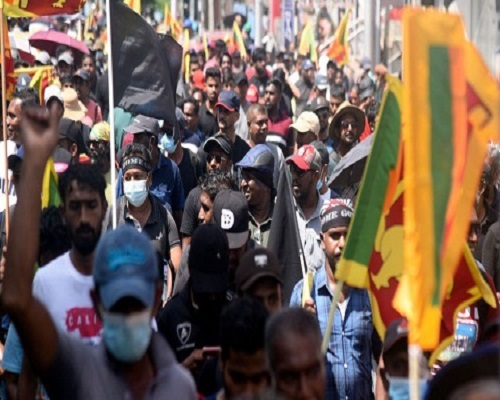
Thousands of protesters have stormed President Gotabaya Rajapaksa’s residence in the capital of Sri Lanka.

Demonstrators from all over the country marched to Colombo demanding his resignation after months of protests over the mismanagement of the country’s economic crisis.

Reports say he has already been moved to a safer location.

The country is suffering rampant inflation and is struggling to import food, fuel and medicine.

Thousands of anti-government protesters travelled in cars, vans and buses to the capital, with officials telling AFP news agency that some had even “commandeered” trains to get there.

They swarmed into Colombo’s government district, shouting slogans against the president and breaking through several police barricades to reach President Rajapaska’s house, a witness told Reuters.

Police fired shots in the air to try and prevent angry crowds from overrunning the residence, but were unable to stop some of the crowd from entering.

Authorities had attempted to stop the demonstration from taking place by imposing a curfew on Friday night. But protesters were undeterred, and the curfew was lifted after civil society groups and opposition parties strongly objected to it.

Sri Lanka has run out of foreign currency reserves and is struggling to import essential goods. Many blame the country’s dire economic situation on President Rajapaksa, and demonstrations have been taking place since March demanding he quit.

BBC/Simeon Ugbodovon