Foreign

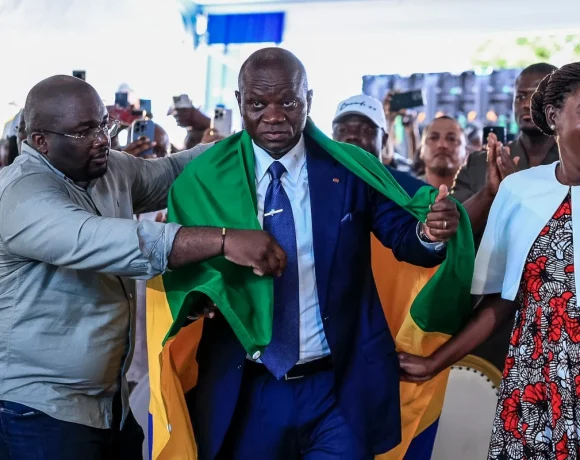
Gabon on Wednesday has placed ban on Facebook and TikTok, hours after the media regulator announced their suspension due to the risk of “conflict-inducing ” posts.

According to report, Gabon’s media regulator on Tuesday announced the suspension of social media platforms “until further notice”, blaming content posted online for stoking conflict and division in society.

The High Authority for Communication imposed “the immediate suspension of social media platforms in Gabon”, its spokesman Jean-Claude Mendome said in a televised statement.

He said “inappropriate, defamatory, hateful, and insulting content” was undermining “human dignity, public morality, the honour of citizens, social cohesion, the stability of the Republic’s institutions, and national security”.

The communications body spokesman also cited the “spread of false information”, “cyberbullying” and “unauthorised disclosure of personal data” as reasons for the decision.

“These actions are likely, in the case of Gabon, to generate social conflict, destabilise the institutions of the Republic, and seriously jeopardise national unity, democratic progress, and achievements,” he added.

The regulator did not specify any social media platforms that would be included in the ban.

However, the regulator said “freedom of expression, including freedom of comment and criticism,” remained “a fundamental right enshrined in Gabon”.

Less than a year after being elected, Gabonese President Brice Oligui Nguema has faced his first wave of social unrest, with teachers on strike and other civil servants threatening to down tools.

School teachers began striking over pay and conditions in December, and protests over similar demands had since spread to other public sectors — health, higher education and broadcasting.

Punch/Edited by Taiwo Akinola

Technology

The National Information Technology Development Agency has disclosed that interactive computer service platforms and Internet intermediaries are required to fulfill certain conditions in running their services in Nigeria.

These conditions are stated in the recently released Code of Practice for Interactive Computer Service Platforms/Internet Intermediaries (online platforms).

This is according to a statement issued by NITDA on Monday.

The statement read in part, “NITDA wishes to present to the public a Code of Practice for Interactive Computer Service Platforms/Internet Intermediaries for future review and input.”

The Code of Practice was developed by NITDA alongside the Nigerian Communications Commission and National Broadcasting Commission,with input from platforms such as Twitter, Facebook, WhatsApp, Instagram, Google, and Tik Tok.

One of such conditions in the Code of Practice is that each online platform is required to have a country representative, who will interface with the Nigerian authorities.

This means that Twitter, Facebook, WhatsApp, Instagram, Google, Tik Tok and other interactive online platforms are required to have country representatives.

Other conditions include registering with the Corporate Affairs Commission as a legal entity, complying with tax obligations, and abide by regulatory and legal demands.

The Code of Practice is aimed at safeguarding the fundamental human rights of Nigerians and non-Nigerians living in Nigeria, and regulating interactions on online platforms.

Punch/Olaolu Fawole

Foreign

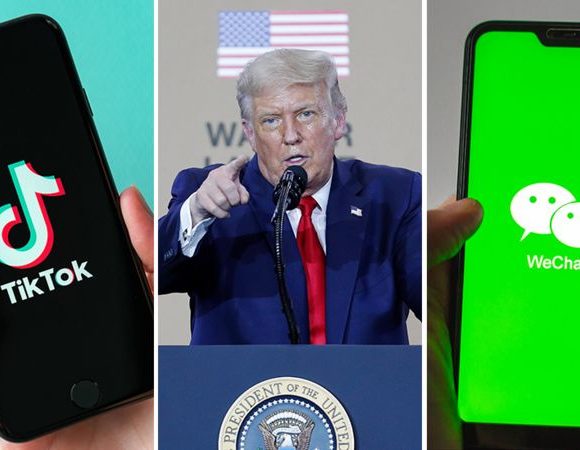
TikTok and WeChat will be banned from US app stores from Sunday, unless President Donald Trump agrees to a last-minute deal.

The Department of Commerce said it would bar people in the US from downloading the messaging and video-sharing apps through any app store on any platform.

The Trump administration says the companies threaten national security and could pass user data to China.

But China and both companies deny this.

WeChat will effectively shut down in the US on Sunday, but people will still be able to use TikTok until 12 November, when it could also be fully banned.

TikTok said it was “disappointed” in the order and disagreed with the commerce department, saying it had already committed to “unprecedented levels of additional transparency” in light of the Trump administration’s concerns.

“We will continue to challenge the unjust executive order, which was enacted without due process and threatens to deprive the American people and small businesses across the US of a significant platform for both a voice and livelihoods.”

The ban order from the Department of Commerce follows President Trump’s executive orders signed in August. It gave US businesses 45 days to stop working with either Chinese company.

If a planned partnership between US tech firm Oracle and TikTok owner ByteDance is agreed and approved by President Trump, the app will not be banned.

It is not yet clear whether Mr Trump will approve the deal, but he is expected to review it before the Sunday deadline.

BBC

Foreign

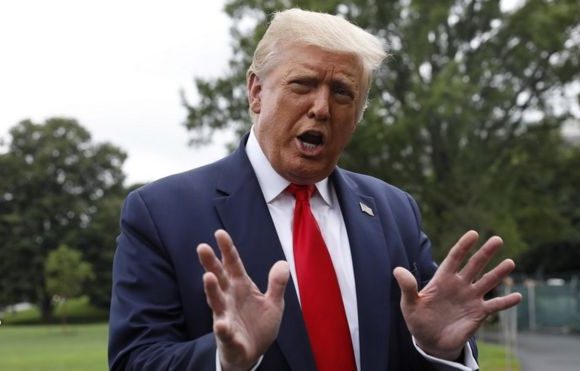
President Donald Trump has announced he is banning the Chinese-owned video-sharing app TikTok in the US.

He told reporters he could sign an executive order as early as Saturday.

US security officials have expressed concern that the app, owned by Chinese firm ByteDance, could be used to collect the personal data of Americans.

TikTok has denied accusations that it is controlled by or shares data with the Chinese government.

The fast-growing app has up to 80 million active monthly users in America and the ban would be a major blow for ByteDance.

“As far as TikTok is concerned, we’re banning them from the United States,” Mr Trump told reporters aboard Air Force One.

It was not immediately clear what authority Mr Trump has to ban TikTok, how that ban would be enforced and what legal challenges it would face.

Microsoft has reportedly been in talks to buy the app from ByteDance, but Mr Trump appeared to cast doubt that such a deal would be allowed to go through. If the deal went ahead reports say it would involve ByteDance shedding TikTok’s US operations.

A TikTok spokesperson declined to comment on Mr Trump’s mooted ban, but told US media outlets the company was “confident in the long-term success of TikTok” in the US.

The move to ban TikTok comes at a time of heightened tensions between the Trump administration and the Chinese government over a number of issues, including trade disputes and Beijing’s handling of the coronavirus outbreak.

BBC