Health

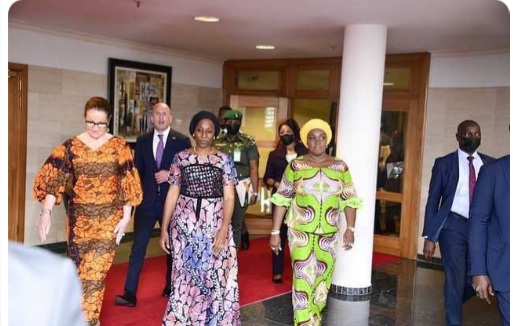
Wife of the Oyo state governor, Engineer Tamunominini Makinde has acknowledged the efforts of the United Nations Population fund, UNFPA towards eliminating Gender-Based Violence in Oyo State and Nigeria at large.

Engineer Makinde stated this in a goodwill message at the official launching of the First National Sexual and Gender-Based Violence, Harmful Practices and Obstetrics Fistula Landscape Analysis Report in Nigeria by (UNFPA) in partnership with Global Affairs, Canada which took place at the State House Banquet Hall, Aso Rock Villa, Abuja.

The governor’s wife who highlighted the roles she had played in collaboration with other relevant Ministries, Departments and Agencies in Oyo State in the fight against Gender-Based Violence and other harmful practices against women said these had proved successful.

“some of such successes included the commissioning of the Oyo State-owned Sexual and Assault Referral Center in Ibadan in May 2021; the public presentation of the Violence Against Persons Prohibition Law in February 2022 and the introduction of a toll-free hotline which indigenes and residents of Oyo State can call to report Rape and Gender-Based Violence cases”

She equally expressed the hope that the landscape analysis report which had been launched will further help to eliminate Gender-Based Violence and other harmful practices against girlchild and women in Nigeria.

“In my view, a collaboration by all stakeholders in the fight to end Gender-Based Violence is key as statistics have shown that girls and women are hugely at the receiving end of the ugly acts”

Oluseyi Olarinde

Subscribe to our Telegram channel

Health

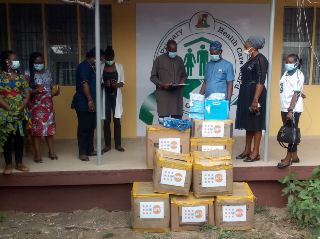
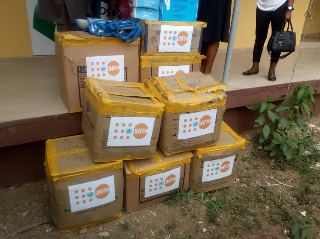
Ogun State Government has taken delivery of Personal Protective Equipment, PPE, and Family Planning consumables, donated by the United Nations Funds for Population Activities, UNFPA, and the Planned Parenthood Federation of Nigeria, PPFN,
The items which included examination gloves, long surgical gloves, facemasks, and others, to be distributed to 33 Primary Health Centres in three Local Government Areas, would complement government’s effort in curtailing the spread of COVID- 19 pandemic in the State.
Receiving the items in Abeokuta, the Executive Secretary, Primary Health Care Development Board, Dr. Elijah Ogunsola, said the gesture would protect more frontline health workers, as well as increase access to sexual reproductive health services and Gender Based Violence response.
Dr.Ogunsola who noted that the COVID-19 pandemic had wreaked havoc on the global health system, gave the assurance that the items would be judiciously used for the safety of workers and wellbeing of women of child bearing age.
Earlier, the State Chairperson, PPFN, Mrs. Tayo Ladejobi, had explained that the donation was the second in the series of the distribution, explaining that the gesture was part of the UNFPA’s efforts to support the State government in fighting COVID-19 pandemic.

Olusegun Folarin

Health

The United Nations Population Fund, UNFPA, has donated personal protective equipment to the Oyo State primary healthcare board in the care of survivors of female genital mutilation.
The PPE include arm length gloves, surgical mask, surgical aprons and goggles.


Presenting the PPE to the board Executive Secretary at the state secretariat, Agodi, Ibadan, Director for Centre for Population and Reproductive Health, University College Hospital, Ibadan, Professor Oladosu Ojengbede noted that the equipment would encourage health workers to provide comprehensive services to prevent and manage complications and resettle women living with female genital mutilation.


Professor Ojengbede also stated that the centre had trained over three hundred health workers at primary healthcare levels to lead to elimination of female genital mutilation.
Professor Ojengbede added that the organisation had also donated PPE’s such as handwashing equipment, masks, sanitizers and educating the people on protection against covid 19.
Receiving the PPE, Executive Secretary, Oyo State Primary Healthcare Board, Dr. Muyideen Olatunji while appreciating the kind gesture of UNFPA maintained that the items would be distributed among the healthcare facilities across the state.
Dr. Olatunji solicited for more support from UNFPA and called on philanthropic individuals and organisations to partner the Oyo State Primary Healthcare Board for service to humanity.

Olumide Ogunbiyi

News Analysis

Recently, the National Population Commission, NPC, predicted that the continued closure of schools across the country due to coronavirus might lead to an increase in teenage pregnancy, abortion and the number of early school dropout.

The acting Executive Chairman of the NPC, Dr Tayo Oyetunji, said there had been a noticeable increase in gender-based violence ranging from rape to physical and emotional assaults on girls.

Although, the country conducted its last population census in 2006, the 2006 population and housing census put the nation’s population at one hundred and forty million and since then, estimates had been used to update the country’s growing population every year.

In the 2018 Nigerian Demographic and Health Survey that was conducted by the NPC in conjunction with the Federal Ministry of Health, World Health Organisation, WHO and the United Nations Population Fund, UNPF, among others, which was released last year, reveals a troubling trend which must be checked.

An astronomical increase in population could deepen poverty, escalate violence and worsen unemployment.

According to the survey, Nigeria is estimated to be two hundred and six million people with the birth rate put at five point three children per woman with Katsina state having the highest at seven point three children per woman.

The survey found that forty-four percent of teenage girls with no education have begun childbearing, while only one percent of teenage girls with more than secondary school education have given birth.

While Lagos has the lowest rate of teenage pregnancy at just one percent while Bauchi has the highest at forty-one percent.

According to the United Nations Sexual and Reproductive Health Agency UNFPA’S “World Population Report 2020”, thirty-three thousand Nigerian girls under the age of eighteen will be forced into marriage, usually to much older men.

One in five females married today in Nigeria is underage.

About nineteen percent of women between fifteen and nineteen years have begun child bearing while about fourteen percent would have given birth and four percent are pregnant with their first child.

It is common knowledge that the more educated a woman is, the fewer children she will bear.

It is pertinent therefore to increase the enrolment of girl child in primary and secondary schools especially in the most vulnerable areas.

Unfortunately, about eleven northern states are yet to domesticate the Child Rights Act despite its obvious benefits for children which include being unable to get married till the age of eighteen as girls stay longer in school.

Sadly, Nigeria has not been able to address the root causes of population explosion, which include polygamy, child marriage and low prevalence of contraception.

For instance, a motion moved by a federal lawmaker in the Eighth National Assembly to implement effective population management policy degenerated into a religious debate and failed to achieve its intended outcome. 

To mitigate the effect of increasing population therefore, Nigeria’s modern contraceptive prevalence rate of twelve per cent for married women and twenty-eight percent for sexually active unmarried women is still too low and needs to be scaled up. 

Saudi Arabia, one of the world’s most conservative countries, has placed a ban on marriage of persons below the age of eighteen.

State governments must also stop the practice of spending public funds in sponsoring mass weddings.

Addressing birth rates through a mix of women empowerment, education opportunities, birth control clinics and public enlightenment will make a difference.

Fawzeeyah Kasheem