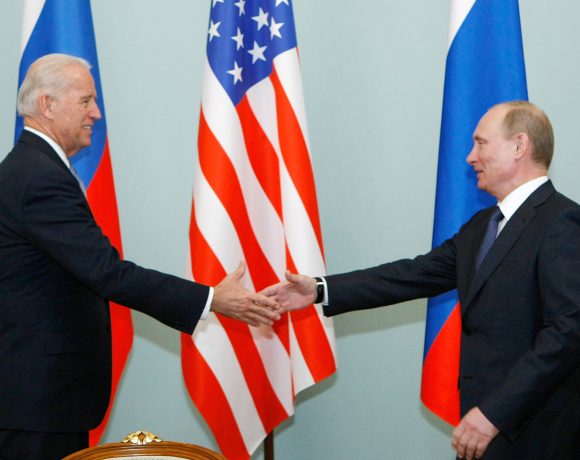
Foreign

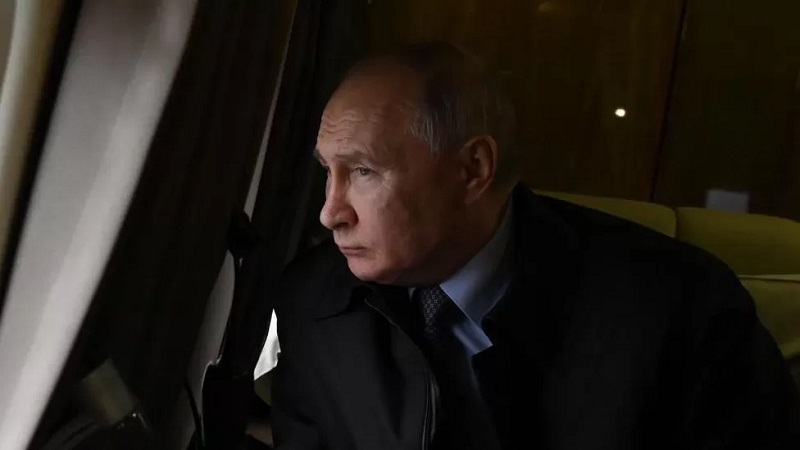
Ukraine reports that Russia has launched its largest drone assault since the full-scale invasion began, targeting several regions, including Kyiv, where one person was killed.

By 08:00 Sunday (05:00 GMT), Ukraine’s air force said 273 drones had been launched, hitting the central Kyiv region, as well as Dnipropetrovsk and Donetsk in the east.

It explained that among the drones were Shahed attack drones, with 88 intercepted and 128 going astray “without negative consequences.”

The attack came a day before a scheduled call between Donald Trump and Russian President Vladimir Putin, amid US calls for a ceasefire.

Leaders from Germany, Britain, France, and Poland are set to meet virtually with Trump before his conversation with Putin on Monday.

Friday’s face-to-face talks in Turkey, the first between Russia and Ukraine in over three years, resulted only in a prisoner swap deal.

Ukrainian officials said the strikes demonstrate Moscow’s unwillingness to seek peace despite international pressure.

“For Russia, the Istanbul negotiations are just a pretence. Putin wants war,” said Andriy Yermak, a top aide to the Ukrainian president.

Meanwhile, Ukrainian President Volodymyr Zelensky met Pope Leo at the Vatican on Sunday following the pontiff’s inauguration, and later held a brief discussion with US Vice President JD Vance in Rome.

BBC/Maxwell Oyekunle

Subscribe to our Telegram and YouTube Channels, and also join our WhatsApp Update Group.

Foreign

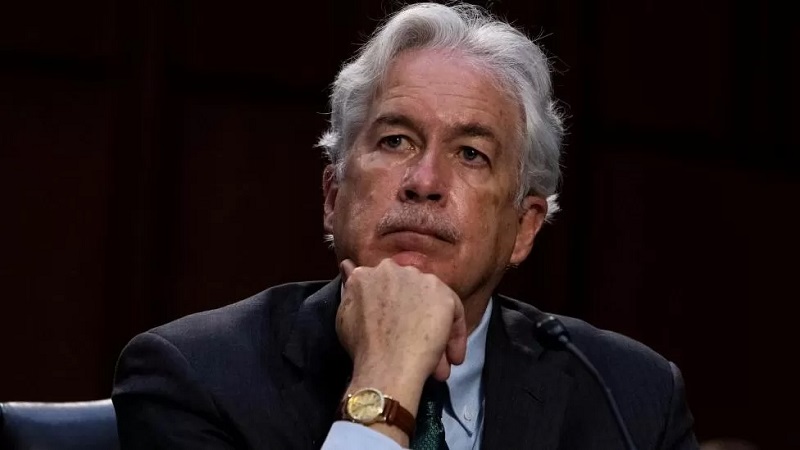
Russian President Vladimir Putin is trying to buy time while he works out how to deal with Yevgeny Prighozin, says the director of the CIA.

Mr Prigozhin is the head of the Wagner mercenary group who led a mutiny in Russia a month ago.

That mutiny exposed significant weaknesses in the system of power Putin has built, CIA head William Burns said.

He told the Aspen Security Forum that Russia’s leader may still seek retribution against Mr Prigozhin.

“What we are seeing is a very complicated dance,” the CIA chief said on Thursday.

Mr Prigozhin has moved around but had been in the Belarus capital of Minsk recently as well as Russia, he said when asked about a recent video apparently showing the Wagner boss in Belarus.

Mr Putin is likely to be trying to buy time as he works out how best to deal with the leader of the Wagner group, Mr Burns added.

That mercenary group still has value for Russia’s leadership in places like Africa, Libya and Syria and so it was likely that Mr Putin would try and separate the group from its leader.

And the CIA chief said that Mr Putin may wait to exact revenge.

“Putin is someone who generally thinks that revenge is a dish best served cold,” Mr Burns said. “In my experience, Putin is the ultimate apostle of payback so I would be surprised if Prigozhin escapes further retribution.”

Earlier this month, US President Joe Biden suggested there was a risk the Wagner boss could be poisoned.

“If I were he I’d be careful what I ate. I’d keep my eye on my menu,” the president quipped.

The CIA director echoed that line saying: “If I were Prigozhin, I wouldn’t fire my food taster.”

The intelligence agency did indeed have advance knowledge of the mutiny, Mr Burns said, confirming previous reports.

A senior Russian army general, Sergei Surovikin, who was reported to have known about the Wagner mutiny in advance, also does not currently have “freedom of movement”, the CIA chief added.

William Burns confirmed the CIA had advanced knowledge of the mutiny

The mutiny was the most direct assault Mr Putin has seen in his 23 years in power, including by directly challenging the Kremlin’s justification for the war in Ukraine, with Mr Prigozhin saying it had been built on lies, Mr Burns said.

He added that what was most remarkable was that Russia’s leader felt compelled to do a deal with a man who used to be his caterer, the CIA chief said.

Mr Prigozhin is often referred to as “Putin’s chef” as he first came to prominence after providing catering services to Mr Putin and the military before founding the Wagner group.

Mr Putin has projected an image of himself as the arbiter of order in Russia, and so the 36 hours of the mutiny will have left many in the country with the question of “whether the emperor had no clothes or at least why is it taking him so long to get dressed”, Mr Burns said.

This would have resurrected deeper questions in the Russian elite about Mr Putin’s judgement, which have been there since his decision to launch a full-scale invasion of Ukraine in February 2022.

If Ukraine makes further advances on the battlefield then that could lead more Russians to pay attention to Mr Prigozhin’s critique of the war, he said.

It should not come as surprise that Ukraine’s counter-offensive was proving a “hard slog”, the CIA head said, given that offence was harder than defence and the Russians had months to prepare.

“It is going to take time and it is not going to be easy to make progress. I am however an optimist,” Mr Burns said.

He also said that there were signs that Russia might be considering a false flag operation by attacking shipping in the Black Sea and then blaming it on the Ukrainians.

BBC/Simeon Ugbodovon

Subscribe to our Telegram and YouTube Channels also join our Whatsapp Update Group

Foreign

The European Union presidency has called for an international tribunal over Russia’s invasion of Ukraine.

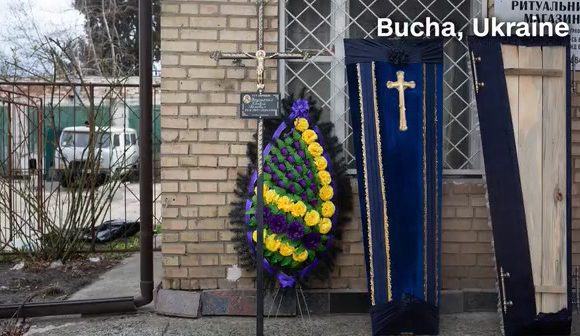
The call, from the Czech Republic which currently holds the rotating presidency of the bloc, came after the discovery of hundreds of graves in Izyum, a town recently liberated by Ukrainian troops.

Many are said to be civilians, women and children among them.

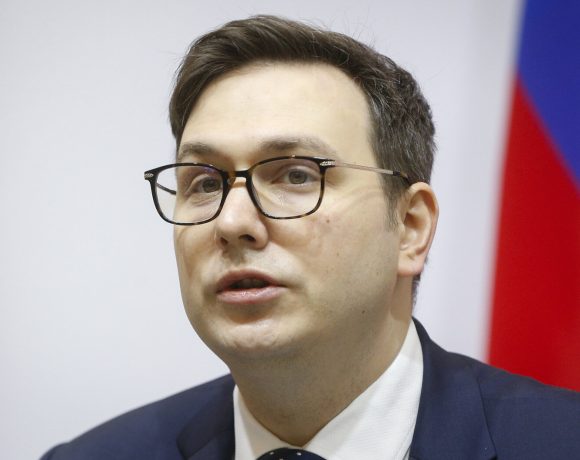
We stand for the punishment of all war criminals,” Czech Foreign Minister Jan Lipavsky said.

Ukraine says it believes war crimes have been committed in Izyum, where 59 bodies have been exhumed so far – with more expected from the graves in a forest at the edge of the city.

In the 21st Century, such attacks against the civilian population are unthinkable and abhorrent,” Mr Lipavsky said.

“We must not overlook it. We stand for the punishment of all war criminals,” he said.

I call for the speedy establishment of a special international tribunal that will prosecute the crime of aggression.”

The discovery of the burial sites came as Ukrainian troops continue their counter-offensive in the country’s north-east, after successfully recapturing territory from Russia in recent days.

Russian President Vladimir Putin said on Friday that Ukrainian counter-offensives would not change Russia’s military plans in the east of Ukraine.

BBC/Maxwell Oyekunle

Subscribe to our Telegram channel

Foreign

United States President, Joe Biden, on Monday, accused President Vladimir Putin of Russia of trying to destroy Ukraine’s identity.

According to Biden, this is as witnessed by Russian bombardments of civilian targets such as schools, hospitals, daycare centres and museums.

“I believe what Putin is attempting to do is to eliminate the identity of Ukraine.

“He can’t occupy it, but he can try to destroy its identity,’’ Biden said in Tokyo.

Biden said “Putin must pay a dear price for his barbarism in Ukraine,’’ in order to deter others from taking similar action, in reference to military tensions around Taiwan.

He was speaking at a joint news conference with Japanese Prime Minister, Fumio Kishida.

Punch/ Titilayo Kupoliyi

Foreign

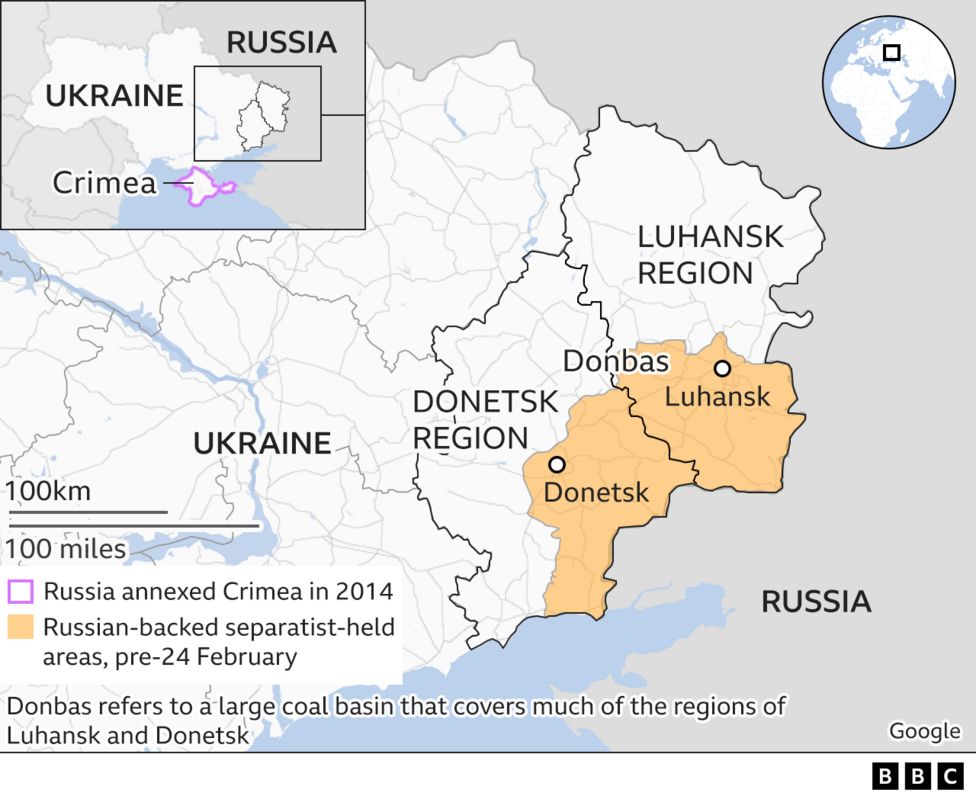
Ukraine’s President Volodymyr Zelensky has said Russia has launched an assault to seize the eastern Donbas region.

Moscow bombarded cities with rocket and artillery fire on Monday and in a video address Mr Zelensky said that the battle “for the Donbas has begun”.

Ukraine’s top security official, Oleksiy Danilov, said that Russia tried to break through the Ukrainian front lines in the region.

The offensive has been long-expected after Russia failed to seize Kyiv.

Russia initially appeared to want to capture major Ukrainian cities and topple the government.

But after facing stiff resistance, Russian defence officials said that its main objectives in the “first stage of the operation” had been “generally accomplished” and its forces were moved from areas around the capital.

They announced plans to redirect the focus of the invasion towards the “liberation” of the Russian speaking Donbas region.

Russia’s President Vladimir Putin has portrayed the invasion as an attempt to demilitarise and “denazify” Ukraine, something Ukraine and its allies dismiss as a ruse for an unprovoked attack.

Throughout Monday, Russia unleashed a barrage of rocket and artillery fire on a number of eastern areas, with eight civilians killed in the city of Kreminna in Luhansk and in the Donetsk area.

Seven people were killed and eleven more were injured in four Russian strikes in western Lviv, a city that has largely been spared the attacks seen elsewhere in Ukraine.

The governor of the Luhansk region said the situation was “hell”, with constant fighting being reported in some cities.

In Ukraine’s second city of Kharkiv, the regional governor said evacuations of civilians were taking place in areas where intense clashes are expected.

Russian defence officials said it its forces had hit hundreds of military targets in Ukraine on Sunday night, including 16 military facilities in the Kharkiv, Zaporizhzhia, Donetsk and Dnipropetrovsk regions, as well as a port in Mykolayiv in the south and east of Ukraine.

Speaking in a video message on Monday night, Mr Zelensky said that he and his forces “will defend ourselves” and pledged “not give up anything Ukrainian”.

“A very large part of the entire Russian army is now focused on this offensive,” he added, but said that Ukraine’s forces will fight on “no matter how many Russian troops are driven there, we will fight”.

Moscow claimed last month that it controlled 93% of Luhansk and 54% of Donetsk and its forces are expected to try and encircle the remaining Ukrainian troops in the region.

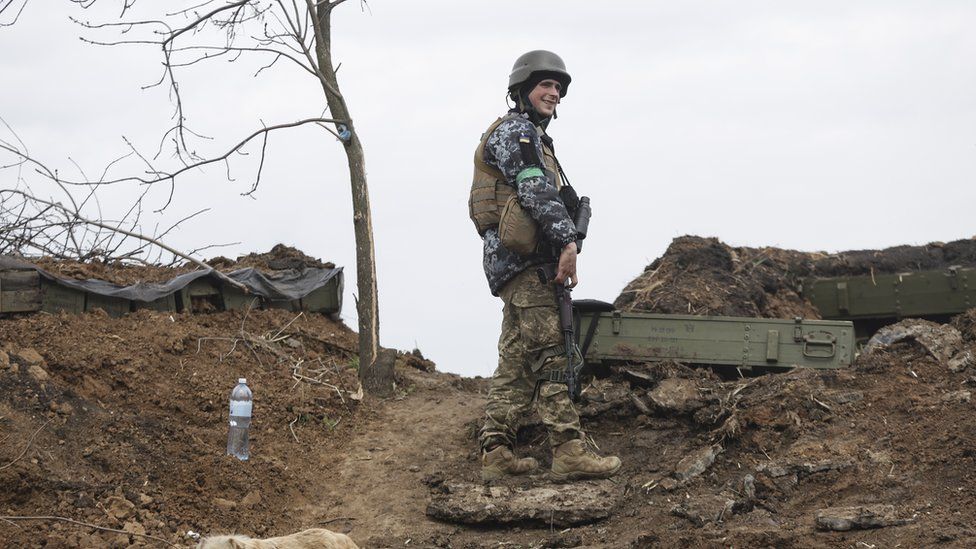
But they face a protracted fight with some of Kyiv’s most battle-hardened troops. Ukraine is believed to have between 40-50,000 soldiers in the Donbas, many of whom have spent years fighting against Russian-backed separatists forces in the region.

Mr Zelensky’s chief of staff, Andriy Yermak, said the assault marked “the second phase of the war” and assured Ukrainians that their forces could hold off the offensive.

“Believe in our army, it is very strong,” he said.

The change in Russia’s objectives was set out by President Vladimir Putin during a speech last week, where he announced that his aim was “to help the people who live in the Donbas, who feel their unbreakable bond with Russia”.

The Pentagon’s press secretary, John Kirby, cautioned Russia could be “setting the conditions for future offensive operations” and officials in Kyiv warned that the new Russian offensive does not mean that Moscow has ended its attacks on other parts of Ukraine.

“Putin hasn’t removed the goal to destroy us as a state and our political leadership,” Mr Danilov said in an interview with Ukrainian TV.

Russia continues to target the south-eastern city of Mariupol, which would allow its troops to complete a land bridge between the occupied Crimean peninsula and forces in separatist-held regions of eastern Ukraine.

Officials in Kyiv claimed Russian war planes were preparing to drop five-tonne bombs on the Azovstal plant where the final Ukrainian holdouts are sheltering.

BBC/Simeon Ugbodovon

Foreign

US President, Joe Biden has said that the atrocities being uncovered in Ukraine qualify as genocide.

President Biden had previously avoided using the word ‘genocide’ but  he now believes is warranted as scenes of devastation emerge from towns once overrun by Russian troops.

“I called it genocide because it’s become clearer and clearer that Russian President Vladimir Putin is just trying to wipe out even the idea of being Ukrainian. The evidence is mounting,”

Biden told reporters in Iowa after using the term earlier in a speech.
“It’s different than it was last week, the more evidence that’s coming out,” he continued. “Literally, the horrible things that the Russians have done in Ukraine — and we’re going to only learn more and more about the devastation.”
“We’ll let the lawyers decide, internationally, whether or not it qualifies,” he concluded, “but it sure seems that way to me.”

It was a dramatic rhetorical escalation in the US view of what is happening on the ground in Ukraine, which Biden has previously deemed war crimes. And it appeared to be the latest example of the President allowing his emotion-driven views of the war to outpace official US policy toward the conflict, even as he was voicing a position held by many Americans horrified by the scenes of brutality in Ukraine.

It garnered near-immediate praise from Ukrainian President Volodymyr Zelensky, who began accusing Russia of committing genocide inside his country last week.

“True words of a true leader @POTUS,” Zelensky wrote on Twitter. “Calling things by their names is essential to stand up to evil. We are grateful for US assistance provided so far and we urgently need more heavy weapons to prevent further Russian atrocities.”

CNN/Olaolu Fawole

News Analysis

*As the world grapples with the horrors of Russia’s invasion of Ukraine with trepidation and the need to avoid the crisis escalating into a third World War, Simeon Ugbodovon looks at core issue behind the booming canons.*

February 25 at 5:49 pm, the world found itself in a new face of conflict, Russian President, Vladimir Putin, launched a blistering attack on Ukraine after weeks of speculations and denials by the Kremlin. 

The issues behind the needless wars would have been better handled through diplomatic channels if reason was allowed to prevail.

Now, the world is witnessing disruptions of much-desired political, economic and social symmetry, with the strong possibility of reversion to the Cold War Order, should the present conflagration thaw.

Four weeks into the internecine, the tolls are mounting while the Russian Defence Ministry puts its casualties at 9,861, US State Department of Defence estimates 10,000 while Ukraine puts the figure as high as 14,000. Among are some Russian generals, though none of the figures have been independently verified.

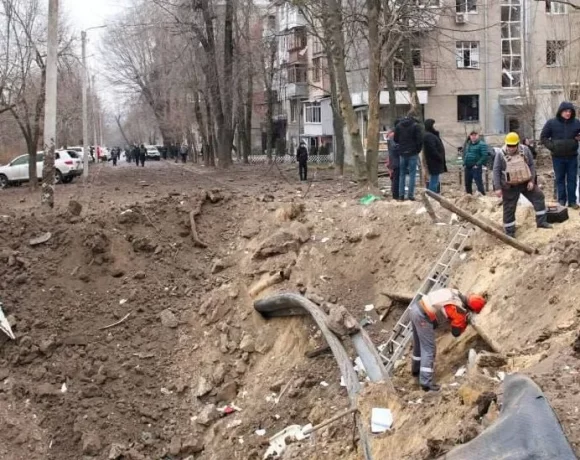
For Ukraine, the invasion by its neighbour has been equally catastrophic. Missiles from Moscow have targeted buildings and other key infrastructure. Civilian deaths according to the Office of the United Nations High Commission for Human Rights CHCHR, stands at 953 including 78 children with 1,557 injured including 9 children.

Ukraine claims to have lost 1,300 soldiers, with Russia claiming the figure is 2,870 and 3,700 injured.

Whatever, the claims and counter claims, should these catastrophes even have taken place?

It seems some leaders have yet to learn any lesson about the evil unbridled ambition, especially expansionism breeds.

Scroll back to 1939-1945 in Europe, the epicentre of the First and Second World wars, Adolf Hitler had craved a dominant Germany in Europe, claiming Australia and Czechoslovakia as first war booties or medals, so to say.

For the Czechs, the ordeal in the hands of Hitler started with dismemberment: not done with cession of Sudetenland areas to him, without a strong deterrent from Europe’s powerhouses. Like Oliver Twist, the Third Reich marched on Prague on March 15, 1939 to make the rest of Czechoslovakia German protectorate.  Lithuanian was forced to cede Memel (Klaipeda), next to the northern frontier of East Prussia, to Hitler – the self-styled new emperor of Europe.

Russia’s invasion of Ukraine is following the same pattern, beginning with Crimea in 2014. Europe, though protested, complacently allowed Putin to keep Donetsk and Luhansk as the price of his invasion. Georgia had also initially had the bitter taste of Moscow’s bile in 2008 carving out South Ossetia and Abkhazia in Georgia as independent states, though unrecognized internationally.

But the North Atlantic Treaty Organisation, NATO, had also kept on mutating to the chagrin of Putin. From a twelve member body: Belgium, Canada, Denmark, France, Iceland, Italy, Luxembourg, Netherlands, Norway, Portugal, the United Kingdom, and the United States, in NATO membership increased to fifteen between 1952 and 1955, and 1982, with fourteen others joining after the end of the Cold War, from 1999 to 2020.

Of the thirty countries which make up NATO, 27 are within the jurisdiction of Europe while one country is in Eurasia, and only 2 in North America

Bosnia and Herzegovina, Georgia, and Ukraine are considered potential brides as part of the NATO Open Doors enlargement policy.

So, the old Soviet bloc has indeed shrunken, leaving Moscow with Armenia, Azerbaijan, Belarus, Georgia, Kazakhstan, Kyrgyzstan, Moldova, Russia, Tajikistan, Turkmenistan, Ukraine, and Uzbekistan, forming the Commonwealth of Independent States, as sphere of influence.

Russia’s cause had not been furthered helped by other members of the Warsaw Pact, Czechoslovakia, Poland Romania and Bulgaria, where communist regimes eventually collapsed, and who had already opted to join NATO

For Moscow, it is time to reflect on why old Warsaw Pact Countries prefer aligning with the West. Belarus strongman Alexander Lukashenko should watch it, should the Putin era give way to Gorbachev’s era Perestroika and Openness, he might find himself haunted by his actions.

Ukraine has now found itself in the eyes of the storm, drawing Putin’s ere for daring to become the coveted bride of the West, thus further reducing Moscow’s sphere of influence after the pro-Russian president, Victor Yushchenko was ousted through street protests in 2014.

  The ongoing debacle in Ukraine will surely shore up more intrigues as countries weigh their options on where the pendulum is likely to swing at the end of it all.

China has seemingly stuck to Russia, with whom it hopes to counter the expansive NATO bloc, while also treading cautiously to avoid the angst of the West with its potential for economic consequences.

Ukraine president, Zelenski is a Jew, which should naturally draw support from Israel, but Tel Aviv is also being cautious not to fracture Russia’s cooperation with it over its raid in Syria as the Jewish state seeks to curtail Iran’s influence in Assad’s Syria.

India is not too willing to jettison its relations with Moscow which had always  supported it with military hardware, and as well, being very mindful of arch-rivals in Asia Pakistan and China, which have warmed up to Putin.

At the same time, Delhi is mindful of the ability of the United States to wield the big stick, and it is well aware of the strategic importance of the Quadrilateral Security Dialogue, Quad involving the United States, Australia, India and Japan to its own security as the quartet seeks to curtail China’s footprints in Asia-Pacific.

For Venezuela’s Maduro, this is an opportunity to warm up to Big Brother, though Moscow had been supportive in its conflict with United States and opposition figure, Juan Guaido.

Crude oil from Venezuela would come in handy as the West seeks to boycott reliance on Russian oil, in exchange for some level of sanctions relief. The same applies to Iran as it negotiations over attempt to curb its nuclear programme remains on the table.

Surely, Israel will be all ears and eyes for any rapprochement or deal with Iran along such line, as it is opposed to any deal that gives Tehran with relief from sanctions or financial muscle to muster its nuclear programme.

This is Russian roulette; Putin is watching to see how different countries outside the West respond to it as the West ratchets up sanction to decimate Russia economically.

African countries have little or no sphere of influence in this matter. Countries such as Central African Republic, Sudan, Mozambique, Libya  and Mali Wagner group, a mercenary firm believed to be strongly linked to Russia, provides military support against insurgency,  will surely keep mute.  Mali, in particular, will not go along with France as the honeymoon between France and its former colony remains sour as the junta in Mali has looked up to Russia in the war against Jihadist.

Oil-producing countries hold the leverage reaping windfalls from the hike in oil prices on the world market.

Unfortunately, this is not the case for Nigeria which, though endowed with black gold, has continued to import premium spirit rather than get refineries working.

Now, the nation smarts for it with the ongoing Russian invasion of Ukraine. Diesel now sells for N700 a litre; gas, N650 per kg and kerosene about N500.
Foreign

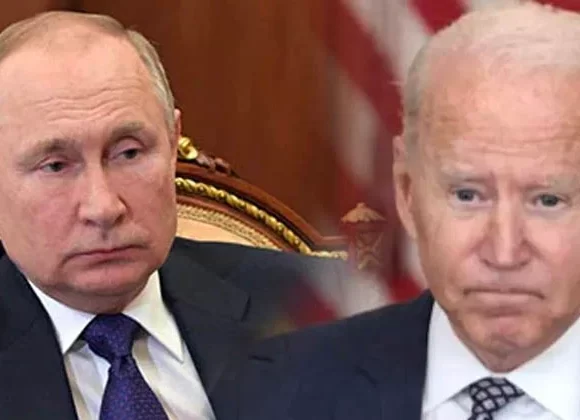
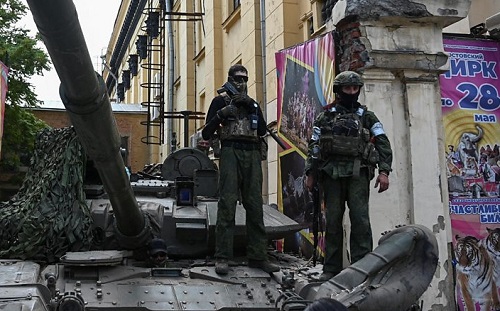
US President Joe Biden and his Russian counterpart Vladimir Putin are preparing sit down for their first, highly-anticipated summit.

The talks in Geneva, Switzerland, come at a time when both sides describe relations as being at rock bottom.

Issues include arms control, sanctions and US allegations of Russian cyber-attacks and election interference.

No major breakthroughs are expected but there are hopes of finding small areas of agreement.

The summit which is set to begin at around 2:00 pm Nigerian time today comes on the tail-end of Mr Biden’s first foreign trip as US president, in which he has also attended meetings with G7 and Nato leaders.

Going into the summit, Mr Biden has stressed that he has the backing of his Western partners.

The meeting will be held in a villa overlooking Lake Geneva.

The choice of Geneva as the setting harks back to the Cold War summit between US President Ronald Reagan and Soviet leader Mikhail Gorbachev in 1985.

Culled from BBC