Foreign

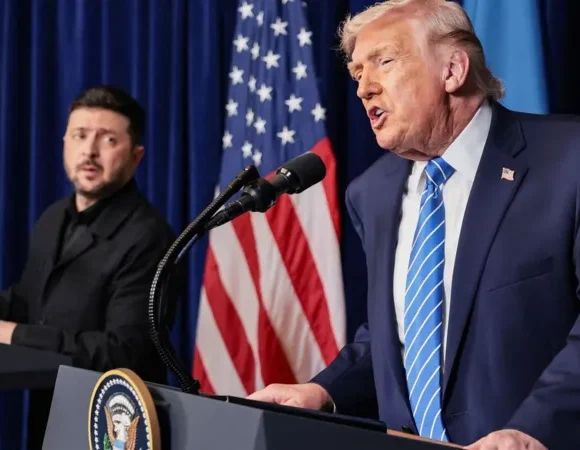
Donald Trump and Volodymyr Zelensky said progress had been made to end the Ukraine war during talks in Florida, but failed to reach a breakthrough on a few of the thorniest issues.

The US and Ukrainian leaders met at Trump’s Mar-a-Lago home on Sunday to discuss a revised peace plan, several key parts of which Russia has already rejected.

On Monday, Zelensky said the US had offered security guarantees for a period of 15 years. Trump said on Sunday an agreement on this point was “close to 95%” done.

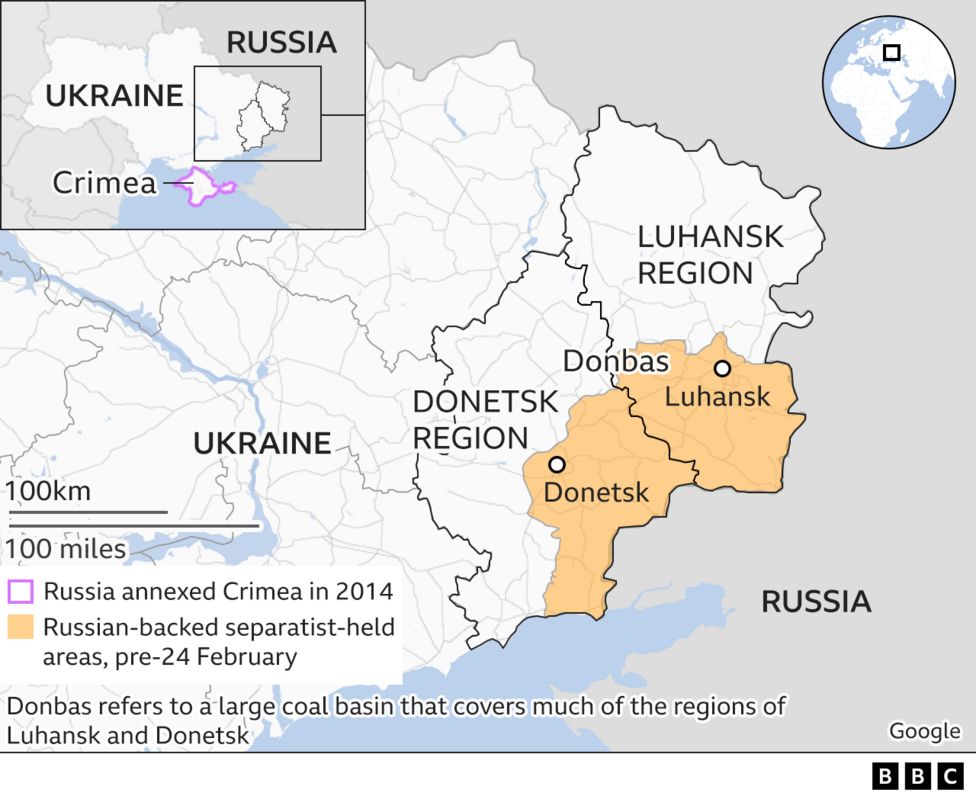
But little has been said on the future of Ukraine’s contested Donbas region, which Russia seeks to control in its entirety.

Moscow currently controls about 75% of the Donetsk region, and some 99% of the neighbouring Luhansk. The two regions are known collectively as Donbas.

Speaking to reporters after the talks, Trump said a deal on Donbas remained “unresolved, but it’s getting a lot closer”.

Its fate has been a major obstacle throughout negotiations, with Russia consistently unwilling to compromise on its aim to seize its full control.

On Monday, the Kremlin again said Ukraine should withdraw its troops from the part of Donbas Kyiv still controls. Ukraine has insisted the area could become a free economic zone policed by Ukrainian forces – but Zelensky has underlined that any talks on this should include the Ukrainian people, Reuters news agency reported.

The US president has repeatedly changed his own position on Ukraine’s lost territories, and in September stunned observers by suggesting that Ukraine might be able to take it back. He later reversed course.

Addressing reporters at Mar-a-Lago after Sunday’s talks, Zelensky repeated his belief that an overall peace agreement was 90% of the way there, a figure he had given in the days leading up to his visit.

Both leaders also indicated there had been progress on one key sticking point – security guarantees for Ukraine.

Zelensky later said the US had offered security guarantees for an extendable period of 15 years, but Kyiv wanted the option of having them for up to 50 years. He said he hoped the guarantees would begin the moment Kyiv signed a peace deal, Reuters reported.

The US has not yet commented on the time frame. On Sunday, Trump said an agreement was close and that he expected European countries to “take over a big part” of that effort with support from the US.

Trump, meanwhile, floated the possibility of trilateral talks between the US, Russia, and Ukraine, saying it could happen “at the right time”.

While the US president is keen to add the Ukraine-Russia war to the list of conflicts he claims to have ended, he cautioned that stalled or scrapped talks that go “really badly” could mean that the war continues.

Zelensky suggested the Ukrainian officials could meet at the White House in January, potentially alongside European leaders, as the US and Ukrainian delegations finalise plans for further talks.

In a post-meeting call with European allies, European Commission President Ursula von der Leyen hailed “good progress” in the Florida talks while reinforcing the need for “ironclad security guarantees” for Ukraine.

French President Emmanuel Macron also said Kyiv’s allies would meet in Paris next month to discuss security guarantees.

Zelensky later said that a peace plan should be put to a referendum in Ukraine, saying a 60-day ceasefire would be necessary for such a vote to take place.

However, Russia does not back a temporary ceasefire, an issue which reportedly came up on a call between Trump and Russia’s President Vladimir Putin ahead of Sunday’s meeting.

Yuri Ushakov, Russia’s former US ambassador, said Trump listened to the Kremlin’s assessment of the proposals and the two presidents left the call united in their belief that a temporary ceasefire proposed by the EU and Ukraine would instead prolong the conflict.

The US president who initiated the call acknowledged that Moscow had little interest in a ceasefire that would allow Ukraine to hold a referendum.

“I understand that position,” he added.

Little further detail was offered, although Trump said he believed the Russian leader “wants Ukraine to succeed”.

Meanwhile, strikes continued overnight In Ukraine.

Kyiv said 25 airstrikes were carried out by Russia on Sunday, 21 of which were shot down.

Russia’s Ministry of Defence said 89 UAVs were intercepted by them on Sunday night – the vast majority of which were over the Bryansk region.

BBC / Titilayo Kupoliyi

Follow us on Telegram and YouTube, and join our WhatsApp Update Group for more news updates.
Foreign

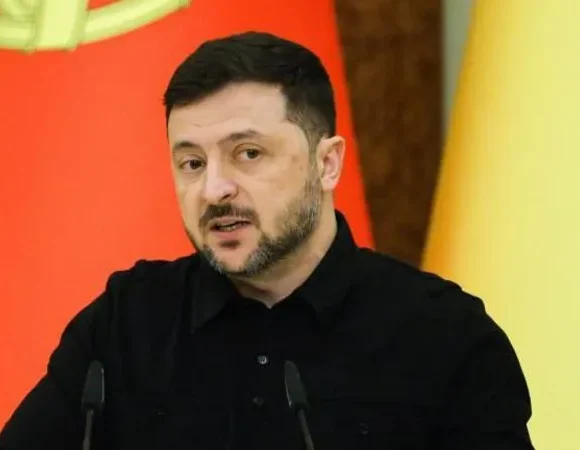
Ukraine’s President, Volodymyr Zelensky has given a positive assessment of a conversation he had with US envoys on how to end the Russia-Ukraine war.

Zelensky said Thursday’s call with Steve Witkoff and Jared Kushner, which lasted nearly an hour, had yielded “new ideas in terms of formats, meetings, and… timing on how to bring a real peace closer”.He added later that he would hold another meeting with President Donald Trump “in the near future”.

Earlier this week Zelensky gave details of an updated 20-point peace plan, agreed by US and Ukrainian envoys in Florida.

The Kremlin said it was analysing proposals brought back from the US by a Russian envoy.

Trump and his envoys have been holding talks with both Ukraine and Russia in an effort to reach a deal to end the war which was started by Russia’s full-scale invasion of Ukraine in February 2022.

There appears to have been some progress in recent days with Ukraine’s president praising the “good ideas” put forward by Witkoff and Trump’s son-in-law Kushner.

Zelensky said it had been an “active day” for his country’s diplomacy, as he went into details with the US envoys.

He conceded that there was still “work to be done on sensitive issues” but added that “together with the American team, we understand how to put all of this in place”.

Zelensky added that Ukraine’s top negotiator Rustem Umerov, the country’s top security official, “will continue discussions with the American team”.

The 20-point peace plan agreed by the US and Ukraine is seen as an update to the initial draft prepared by Witkoff several weeks ago.

Merry Christmas from all of us at Radio Nigeria Ibadan Zonal Station

That draft was widely seen as heavily geared towards Russia’s maximalist pre-invasion demands, which Kyiv and its European allies said would mean the de facto capitulation of Ukraine.

Describing the updated proposal on Wednesday, Zelensky had said it offered Russia the potential withdrawal of Ukrainian troops from the east and the creation of a demilitarised zone in their place.

He said the plan now included security guarantees from the US, Nato and Europeans for a co-ordinated military response if Russia invaded Ukraine again.

On the key question of Ukraine’s industrial eastern Donetsk region, Zelensky said a “free economic zone” was a potential option. Any area that Ukrainian troops pulled out of would have to be policed by Ukraine, he stressed.

Moscow currently controls about 75% of the Donetsk region, and some 99% of the neighbouring Luhansk. They are collectively known as Donbas.

Zelensky has been under heavy pressure from Trump to cede all of Donbas to Russia during ongoing Washington-led peace negotiations.

The Ukrainian leader has so far rejected any territorial concessions, and instead demanded iron-clad security guarantees for Ukraine in any potential settlement.

Russian President Vladimir Putin has repeatedly warned that Ukrainian troops must leave Donbas or Russia will seize it.

On Thursday, Kremlin spokesman Dmitry Peskov said Moscow was studying the proposals brought back from the US by the Russian envoy, Kirill Dmitriev.

“We are examining this material, and depending on the decisions made by the head of state, we will continue our communication with the Americans,” he said.

While diplomatic efforts to end the conflict inch forward, fighting continues on the ground.

The Ukrainian military said on Thursday that it had struck one of Russia’s key oil refineries in the southern region of Rostov with cruise missiles.

The Novoshakhtinsk refinery near the Ukrainian border is critical for supplying fuel for Russian military operations in occupied eastern Ukraine.

The Russian defence ministry said its forces had taken control of the settlement of Sviato-Pokrovske in the Donetsk region.

Earlier this week, Ukrainian troops withdrew from the embattled eastern town of Siversk.

The capture of the town brings Russia closer to the last remaining “fortress belt” cities of Sloviansk and Kramatorsk still in Ukrainian hands in the Donetsk region.

BBC / Titilayo Kupoliyi

Follow us on Telegram and YouTube, and join our WhatsApp Update Group for more news updates.

Foreign

President Volodymyr Zelensky says intense Russian drone and missile strikes on cities in Ukraine have left at least six people dead, including two children.

Another 21 people were wounded, in another night of attacks that he said proved Moscow had not come under enough pressure for its continued war.

Hours earlier, US President Donald Trump said his plans for an imminent summit in Budapest with Russia’s Vladimir Putin had been shelved as he did not want a “wasted meeting”.

The Kremlin has rejected calls for a ceasefire along the current front lines made both Trump and European leaders.

Meanwhile, Ukraine’s military said it had attacked a Russian chemical plant in the Bryansk border region late on Tuesday with UK-supplied Storm Shadow missiles.

Calling the strike “a successful hit” that penetrated the Russian air defence system, military officials said the Bryansk plant “produces gunpowder, explosives and rocket fuel components used in ammunition and missiles employed by the enemy to shell the territory of Ukraine”.

Zelensky, who was due to visit Swedish defence contractor Saab on Wednesday, returned from talks with Trump last Friday, having failed to persuade the US president to provide long-range Tomahawk missiles.

“As soon as the issue of long-range missiles became a little further away for us, for Ukraine, then almost automatically Russia became less interested in diplomacy,” Zelensky said.

The Ukrainian capital came under a wave of attacks overnight, the first such strikes since 28 September.

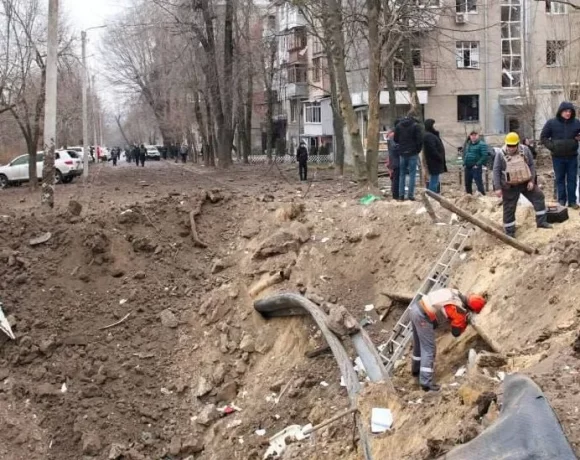
A couple in their 60s were killed when a drone hit their high-rise building in the city, and four people were killed in the wider Kyiv region. Among the victims were a woman, a six-month-old baby and a girl aged 12.

The capital was under a ballistic missile warning for most of the night, and echoed to the sound of explosions. By morning, rescue teams fought fires in residential buildings.

Across Ukraine, Russian attacks once again targeted energy infrastructure and emergency power outages were imposed in several areas.

BBC/Ttilayo Kupoliyi

Subscribe to our Telegram and YouTube Channels, and also join our WhatsApp Update Group.

Foreign

Ukraine reports that Russia has launched its largest drone assault since the full-scale invasion began, targeting several regions, including Kyiv, where one person was killed.

By 08:00 Sunday (05:00 GMT), Ukraine’s air force said 273 drones had been launched, hitting the central Kyiv region, as well as Dnipropetrovsk and Donetsk in the east.

It explained that among the drones were Shahed attack drones, with 88 intercepted and 128 going astray “without negative consequences.”

The attack came a day before a scheduled call between Donald Trump and Russian President Vladimir Putin, amid US calls for a ceasefire.

Leaders from Germany, Britain, France, and Poland are set to meet virtually with Trump before his conversation with Putin on Monday.

Friday’s face-to-face talks in Turkey, the first between Russia and Ukraine in over three years, resulted only in a prisoner swap deal.

Ukrainian officials said the strikes demonstrate Moscow’s unwillingness to seek peace despite international pressure.

“For Russia, the Istanbul negotiations are just a pretence. Putin wants war,” said Andriy Yermak, a top aide to the Ukrainian president.

Meanwhile, Ukrainian President Volodymyr Zelensky met Pope Leo at the Vatican on Sunday following the pontiff’s inauguration, and later held a brief discussion with US Vice President JD Vance in Rome.

BBC/Maxwell Oyekunle

Subscribe to our Telegram and YouTube Channels, and also join our WhatsApp Update Group.

Foreign

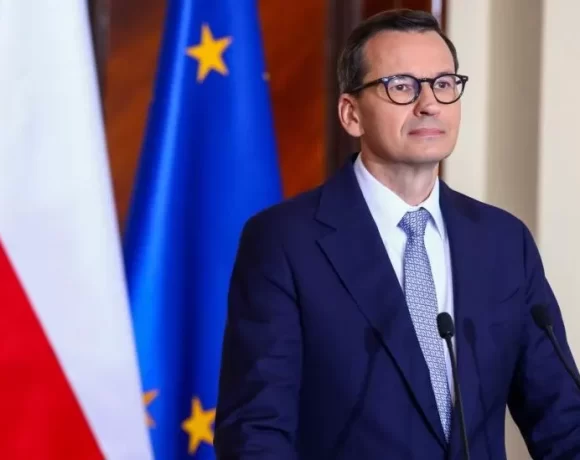
One of Ukraine’s staunchest allies, Poland, has said it is no longer supplying weapons to its neighbour, as a diplomatic dispute over grain escalates.

Prime Minister Mateusz Morawiecki said Poland’s focus was instead on defending itself with more modern weapons.

Poland has already sent Ukraine 320 Soviet-era tanks and 14 MiG-29 fighter jets and has little more to offer.

However, the remarks coincide with high tensions between the two neighbours.

On Tuesday, Poland summoned Ukraine’s ambassador over comments made by President Volodymyr Zelensky at the United Nations after Poland, Hungary and Slovakia extended a ban on Ukrainian grain.

Mr Zelensky said it was alarming how some of Ukraine’s friends in Europe were playing out solidarity “in a political theatre – making a thriller from grain”. Warsaw denounced his words as “unjustified concerning Poland, which has supported Ukraine since the first days of the war”.

Mr Morawiecki was interviewed on Wednesday night by the private Polsat news TV channel hours after the Ukrainian ambassador had been summoned to the foreign ministry in Warsaw in response to the Ukrainian leader’s speech.

“We are no longer transferring weapons to Ukraine, because we are now arming Poland with more modern weapons,” the prime minister said.

He was adamant Poland was helping Ukraine defeat the “Russian barbarian” by maintaining a military hub, but would not agree to Poland’s markets being destabilised by grain imports, Polish news agency Pap reported.

“Our hub in Rzeszow, in agreement with the Americans and Nato, is fulfilling the same role the whole time as it has fulfilled and will fulfil.”

Poland’s military has depleted its own military by about a third through transfers to Ukraine and is in the process of replacing it with modern Western-produced hardware.

Arms exports to Ukraine will not stop completely as Polish manufacturer PGZ is due to send about 60 Krab artillery weapons in the coming months.

Asked about the prime minister’s comments, Polish state assets minister Jacek Sasin told Radio Plus on Thursday that “at the moment it is as the prime minister said – in the future we will see”.

BBC / Titilayo Kupoliyi

Subscribe to our Telegram and YouTubeChannels also join our Whatsapp Update Group

Foreign

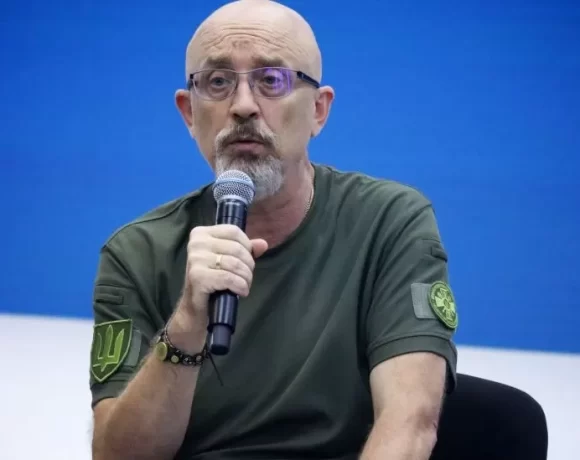
Ukraine’s Defence Minister, Oleksii Reznikov has confirmed that he is leaving his post.

Mr Reznikov had led the ministry since before the start of Russia’s full-scale invasion in February 2022.

President Volodymyr Zelensky announced Mr Reznikov’s dismissal on Sunday, saying it was time for “new approaches” in the defence ministry.

Rustem Umerov, who runs Ukraine’s State Property Fund, has been nominated as Mr Reznikov’s successor.

In a post on X, formerly Twitter, Mr Reznikov confirmed that he had submitted his resignation letter to the country’s parliament.

Ukrainian media has speculated that he will become Kyiv’s new ambassador in London, where he has developed good relations with senior politicians.

The 57-year-old has become a well-known figure since the beginning of the war in Ukraine. Internationally recognised, he has regularly attended meetings with Ukraine’s western allies and played a key role in lobbying for additional military equipment.

But his dismissal has been anticipated for some time. Last week, Mr Reznikov told reporters he was exploring other positions with the Ukrainian president.

According to local media, the former defence minister said that if Mr Zelensky offered the opportunity for him to work on another project he would probably agree.

Ukrainian defence advisor Yuriy Sak told the BBC that Mr Reznikov spearheaded the transformation of the ministry, laying the groundwork for future NATO membership.

“His legacy is that he has convinced ministers of defence around the world that the impossible is possible,” he said in reference to Mr Reznikov’s successful lobbying of foreign governments for arms.

But experts have observed that the cabinet reshuffle is unlikely to lead to any major change in Ukraine’s battlefield strategy, with Gen Valery Zaluzhny – the commander of Ukraine’s armed forces – overseeing the campaign.

Mr Reznikov’s dismissal comes amid a wider anti-corruption drive in Mr Zelensky’s administration, with weeding out graft in the state seen as essential to Ukraine’s desire to join Western institutions like the EU.

BBC / Titilayo Kupoliyi

Subscribe to our Telegram and YouTubeChannels also join our Whatsapp Update Group

Foreign

Russian missiles struck the city of Vinnytsia in central Ukraine on Thursday, killing at least 12 people in what President Volodymyr Zelensky called “an open act of terrorism“.

Ukraine’s emergency services said there were “12 dead, including one baby, and 25 wounded” and dozens of rescue workers were fighting to put out a large blaze sparked by the strikes.

The news came as EU foreign and justice ministers prepared to meet in The Hague for a conference on alleged Russian war crimes.

Zelensky said he would be addressing the meeting via video call and Ukrainian Foreign Minister Dmytro Kuleba is set to attend.

“Every day, Russia kills civilians, kills Ukrainian children, carries out missile attacks on the civilian facilities where there is no military target. What is this, if not an open act of terrorism?” the Ukraine leader said in a statement on social media.

 Channels / Titilayo Kupoliyi

Foreign

Ukraine’s President Volodymyr Zelensky has said Russia has launched an assault to seize the eastern Donbas region.

Moscow bombarded cities with rocket and artillery fire on Monday and in a video address Mr Zelensky said that the battle “for the Donbas has begun”.

Ukraine’s top security official, Oleksiy Danilov, said that Russia tried to break through the Ukrainian front lines in the region.

The offensive has been long-expected after Russia failed to seize Kyiv.

Russia initially appeared to want to capture major Ukrainian cities and topple the government.

But after facing stiff resistance, Russian defence officials said that its main objectives in the “first stage of the operation” had been “generally accomplished” and its forces were moved from areas around the capital.

They announced plans to redirect the focus of the invasion towards the “liberation” of the Russian speaking Donbas region.

Russia’s President Vladimir Putin has portrayed the invasion as an attempt to demilitarise and “denazify” Ukraine, something Ukraine and its allies dismiss as a ruse for an unprovoked attack.

Throughout Monday, Russia unleashed a barrage of rocket and artillery fire on a number of eastern areas, with eight civilians killed in the city of Kreminna in Luhansk and in the Donetsk area.

Seven people were killed and eleven more were injured in four Russian strikes in western Lviv, a city that has largely been spared the attacks seen elsewhere in Ukraine.

The governor of the Luhansk region said the situation was “hell”, with constant fighting being reported in some cities.

In Ukraine’s second city of Kharkiv, the regional governor said evacuations of civilians were taking place in areas where intense clashes are expected.

Russian defence officials said it its forces had hit hundreds of military targets in Ukraine on Sunday night, including 16 military facilities in the Kharkiv, Zaporizhzhia, Donetsk and Dnipropetrovsk regions, as well as a port in Mykolayiv in the south and east of Ukraine.

Speaking in a video message on Monday night, Mr Zelensky said that he and his forces “will defend ourselves” and pledged “not give up anything Ukrainian”.

“A very large part of the entire Russian army is now focused on this offensive,” he added, but said that Ukraine’s forces will fight on “no matter how many Russian troops are driven there, we will fight”.

Moscow claimed last month that it controlled 93% of Luhansk and 54% of Donetsk and its forces are expected to try and encircle the remaining Ukrainian troops in the region.

But they face a protracted fight with some of Kyiv’s most battle-hardened troops. Ukraine is believed to have between 40-50,000 soldiers in the Donbas, many of whom have spent years fighting against Russian-backed separatists forces in the region.

Mr Zelensky’s chief of staff, Andriy Yermak, said the assault marked “the second phase of the war” and assured Ukrainians that their forces could hold off the offensive.

“Believe in our army, it is very strong,” he said.

The change in Russia’s objectives was set out by President Vladimir Putin during a speech last week, where he announced that his aim was “to help the people who live in the Donbas, who feel their unbreakable bond with Russia”.

The Pentagon’s press secretary, John Kirby, cautioned Russia could be “setting the conditions for future offensive operations” and officials in Kyiv warned that the new Russian offensive does not mean that Moscow has ended its attacks on other parts of Ukraine.

“Putin hasn’t removed the goal to destroy us as a state and our political leadership,” Mr Danilov said in an interview with Ukrainian TV.

Russia continues to target the south-eastern city of Mariupol, which would allow its troops to complete a land bridge between the occupied Crimean peninsula and forces in separatist-held regions of eastern Ukraine.

Officials in Kyiv claimed Russian war planes were preparing to drop five-tonne bombs on the Azovstal plant where the final Ukrainian holdouts are sheltering.

BBC/Simeon Ugbodovon