Foreign

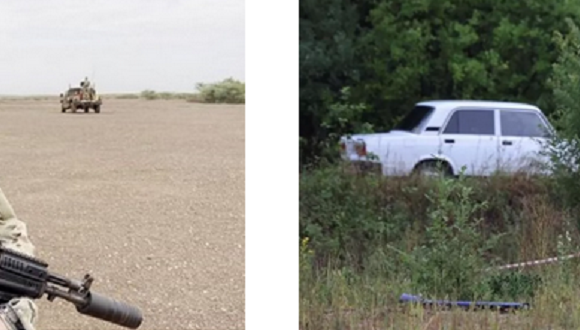
Wagner chief Yevgeny Prigozhin has been confirmed dead after genetic analysis of bodies found in Wednesday’s plane crash, Russian officials say.

The Investigative Committee (SK) said the identities of all 10 victims had been established and corresponded to those on the flight’s passenger list.

Prigozhin’s private jet came down north-west of Moscow on 25 August, killing all those on board.

The Kremlin has denied speculation it was to blame for the crash.

The SK said it was continuing a criminal investigation.

“Molecular-genetic testing has been completed,” it said in a statement.

“According to its results, the identities of all 10 deceased have been established, and they correspond to the list published in the flight manifest.”

The victims include several senior figures in Wagner, a Russian mercenary group set up by Prigozhin and involved in military operations in Ukraine, Syria and parts of Africa.

The others on the Embraer Legacy plane – flying from Moscow to St Petersburg – included Wagner members Valery Chekalov, Sergei Propustin, Yevgeny Makaryan, Alexander Totmin and Nikolay Matuseyev.

The plane was flown by pilot Alexei Levshin and co-pilot Rustam Karimov, and there was one flight attendant, Kristina Raspopova.

The crash came two months after Prigozhin led a Wagner mutiny against the Russian armed forces, seizing the southern city of Rostov and threatening to march on Moscow.

The standoff was defused after a deal was reached which led to Prigozhin and Wagner fighters relocating to Belarus.

However, Russian President Vladimir Putin described the mutiny as a “stab in the back” and there has been speculation that Russian security forces were somehow involved in the crash.

US officials quoted by CBS have said that the most likely cause of the crash was an explosion on board the plane, and the Pentagon said Prigozhin was probably killed.

On Friday Kremlin spokesman Dmitry Peskov said rumours of foul play were an “absolute lie”.

Mr Putin has sent his condolences to the families of the victims.

He described Prigozhin as a “talented person” who “made serious mistakes in life”.

BBC/Simeon Ugbodovon

Subscribe to our Telegram and YouTube Channels also join our Whatsapp Update Group
Foreign

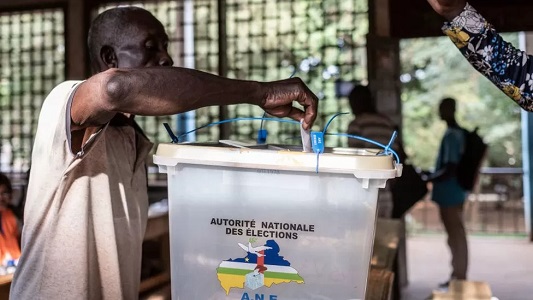
The Central African Republic president is asking voters to support abolishing term limits in a referendum backed by Russia’s Wagner mercenary group.

Wagner, which has troops and business interests in the country, is providing security for the referendum.

The main opposition has called for a boycott of the referendum, accusing President Faustin-Archange Touadéra of wanting to become president-for-life.

Mr Touadéra has grown ties with Russia since French forces withdrew in 2022.

His supporters say that constitutional limits on presidential terms are “uncommon” in the region, and the proposed changes will help achieve stability and development.

The CAR has been plagued by rebellions and coups for decades, with a powerful coalition of rebel groups trying to oust Mr Touadéra.

On Wednesday, Wagner boss Yevgeny Prigozhin said hundreds of its fighters had arrived in the resource-rich country as part of “a planned rotation before the referendum”, according to the Afrique Media website linked to the Russian group.

It quoted Mr Prigozhin as saying that “we control the territory of CAR and we are convinced that the gangs will not be able to harass the population”.

A UN peacekeeping in CAR is also providing security for the referendum.

But Wagner is increasingly seen as the main group on which Mr Touadéra’s government relies to remain in power, and to fight rebels.

Wagner has had at least 1,000 forces in CAR since 2018, and has also developed huge business interests in the country.

It reportedly trades in the minerals and timber industries.

Earlier this week, Mr Prigozhin was photographed shaking hands with Ambassador Freddy Mapouka, a CAR presidential advisor, at a Russia-Africa summit in St Petersburg.

France, the former colonial power, pulled its last forces out of CAR in 2022. It first sent about 1,600 troops to the country after a coup in 2013 unleashed a civil war.

As CAR moved to restore democracy, Mr Touadéra was elected president in 2016 and won a second term in 2020.

But he has been accused of becoming increasingly authoritarian, and his critics say the referendum is the latest sign of his attempt to extend his power.

If the changes to the constitution are approved, it would allow Mr Touadéra to seek a third term in 2025.

It would also raise the presidential term from five to seven years and allow the president to appoint more judges to the Supreme Court.

BBC/Simeon Ugbodovon

Subscribe to our Telegram and YouTube Channels also join our Whatsapp Update Group
Foreign

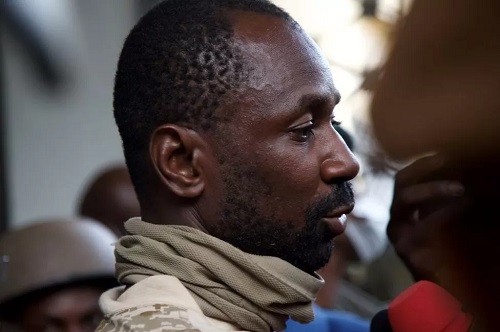
The military government in Mali has adopted a new constitution that enhances the powers of the president and the armed forces.

It also creates a senate and demotes French from an official to a working language.

Mali has been ruled by a junta since 2020.

The opposition movement has denounced the reforms, which the electoral commission says were backed by 97% of votes cast in last month’s referendum.

The official body said turnout was 38%.

Critics fear these changes make it easier for generals to break their promise of handing power back to civilian leaders after a presidential election in February 2024.

The new constitution means Interim President Col Assimi Goïta can now dictate government policy and has the power to dissolve parliament.

A legal case to have the referendum results annulled, because the vote was not held in all parts of Mali, was rejected by the constitutional court.

“Numerous irregularities” and “violations of the law” also meant the referendum result should be thrown out, according to Mali’s opposition movement – made up of political parties and civil society organisations.

It has been labelled “a plot on democracy” by Ismaël Sacko – the leader of the Social Democratic Party which was last month dissolved by the junta. He told Mali’s judiciary “to get its act together”, AFP reports.

There was huge popular support for the military junta when it seized power after mass protests against then-President Ibrahim Boubacar Keïta three years ago. People were fed up with economic uncertainty, a disputed election and chronic insecurity.

Since then, data suggests Mali’s military government has made little progress in its fightback against Islamists who control parts of the country.

But the government says the new constitution will stop the spread of the 11-year jihadist insurgency.

Mali recently decided to kick out all 12,000 UN peacekeepers in the country and is thought to employ 1,000 Russian mercenaries from the Wagner group for security back-up.

France’s soldiers were ordered to leave last year and there has been rising resentment of the former colonial power and its present-day relationship with Mali, and West Africa more broadly.

BBC/Simeon Ugbodovon

Subscribe to our Telegram and YouTube Channels also join our Whatsapp Update Group