Foreign

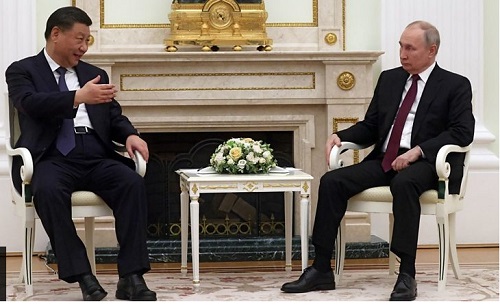
The US has urged Chinese President Xi Jinping to press Vladimir Putin on ceasing the “war crimes” being carried out by Russia in Ukraine.

The two will meet again on Tuesday for official talks during Mr Xi’s first visit to Moscow since the invasion.

The White House’s National Security Council spokesman called on Mr Xi to urge his Russian counterpart to withdraw troops from Ukraine.

John Kirby said seeking a ceasefire would not be enough.

“We hope that President Xi will press President Putin to cease bombing Ukrainian cities, hospitals and schools, to halt the war crimes and atrocities and to withdraw his troops,” he said.

“But we are concerned that instead, China will reiterate calls for a ceasefire that leaves Russian forces inside Ukraine’s sovereign territory and any ceasefire that does not address the removal of Russian forces from Ukraine would effectively ratify Russia’s illegal conquests.”

Mr Putin has said he will discuss a 12-point plan proposed by Mr Xi to “settle the acute crisis in Ukraine”.

“We’re always open for a negotiation process,” Mr Putin said, as the leaders called each other “dear friend”.

China released its plan to end the war last month – it includes “ceasing hostilities” and resuming peace talks.

China’s plan did not specifically say that Russia must withdraw from Ukraine – which Ukraine has insisted as a precondition for any talks.

Instead, it talked of “respecting the sovereignty of all countries”, adding that “all parties must stay rational and exercise restraint” and “gradually de-escalate the situation”.

The plan also condemned the usage of “unilateral sanctions” – seen as a veiled criticism of Ukraine’s allies in the West.

On Monday, a military band gave Mr Xi a warm welcome to Moscow at the start of the three-day visit. Mr Putin hailed China for “observing the principles of justice” and pushing for “undivided security for every country”.

He added that China had made” a tremendous leap forward in its development” in recent years, remarking: “We even feel a bit envious.”

In return, Mr Xi told Mr Putin: “Under your strong leadership, Russia has made great strides in its prosperous development. I am confident that the Russian people will continue to give you their firm support.”

Before Mr Xi’s arrival, Mr Putin wrote in China’s People’s Daily newspaper that the two nations would not be weakened by “aggressive” US policy.

Ukrainian leaders have been publicly emphasising the common ground they have with China – respecting the sovereignty and territorial integrity – but privately, they have been lobbying for a meeting or telephone call between President Volodymyr Zelensky and Mr Xi.

This was echoed by Mr Kirby, the US security spokesman, who urged Mr Xi “to play a constructive role” in the effort to end the conflict by speaking with Mr Zelensky.

The fear in Kyiv is that China’s support for Russia – currently based around technology and trade – might become military, potentially including artillery shells.

Russia is a source of oil for Beijing’s huge economy and is seen as a partner in standing up to the US.

In another development, Japan has announced that its Prime Minister, Fumio Kishida, will visit Kyiv on Tuesday for talks with President Zelensky. He is expected to voice solidarity and support for Ukraine following Russia’s invasion.

Mr Xi’s visit to Moscow comes days after the International Criminal Court (ICC) issued an arrest warrant for the Russian president over war crime allegations. This means Mr Putin could technically be arrested in 123 countries – though neither China nor Russia is on that list.

Western leaders have been attempting since last February to isolate Russia, following its full-scale invasion of Ukraine.

But they have been unable to establish a global consensus, with China, India and several African nations reluctant to condemn Mr Putin.

BBC/Simeon Ugbodovon

Subscribe to our Telegram and YouTubeChannels also join our Whatsapp Update Group
Feature

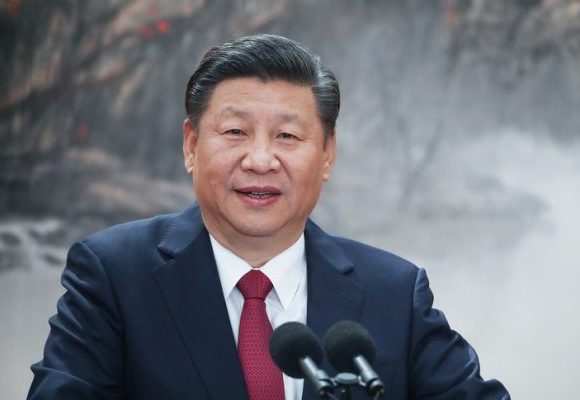
Xi Jinping was handed a third term as Chinese president on Friday, capping a rise that has seen him become the country’s most powerful leader in generations.

His appointment by China’s rubber-stamp parliament comes after Xi locked in another five years as head of the Chinese Communist Party (CCP) in October.

Since then, the 69-year-old has weathered widespread protests over his zero-Covid policy and the deaths of countless people after its abandonment.

But those issues have been avoided at this week’s National People’s Congress (NPC), a carefully choreographed event that is also set to appoint Xi ally Li Qiang as the new premier.

On Friday, delegates handed Xi a third term as president and re-appointed him head of the country’s Central Military Commission in a unanimous vote.

Beijing’s Great Hall of the People, a cavernous state building on the edge of Tiananmen Square, was adorned with crimson carpets and banners for the landmark vote, with a military band providing background music.

A digital monitor on the edge of the stage proclaimed the final tally — all 2,952 votes had been cast in favour of giving Xi another term in office.

The announcement was followed by delegates’ fervent declarations of allegiance to the Chinese constitution, in a demonstration of loyalty and unanimity.

Xi held up his right fist and placed his left hand on a red, leather-bound copy of China’s constitution.

In an oath beamed live on state television, he vowed to “build a prosperous, strong, democratic, civilised, harmonious and great modern socialist country.”

China’s close ally Russia swiftly offered Xi its “sincere congratulations” on his re-election.

“Russia highly values your personal contribution toward the strengthening of ties… and strategic cooperation between our nations,” President Vladimir Putin said in a letter to his “dear friend” Xi.

Punch / Titilayo Kupoliyi Subscribe to our Telegram and YouTube Channels also join our Whatsapp Update Group
Foreign

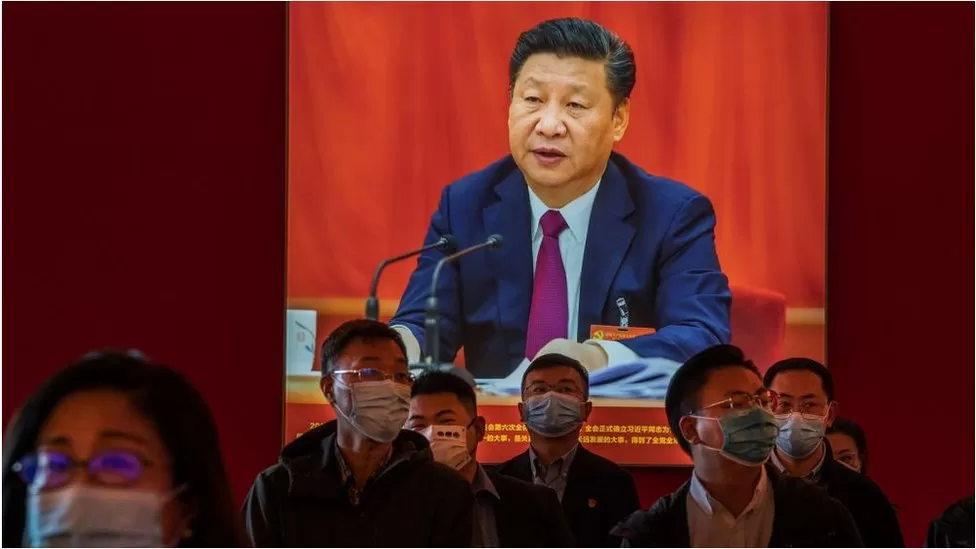
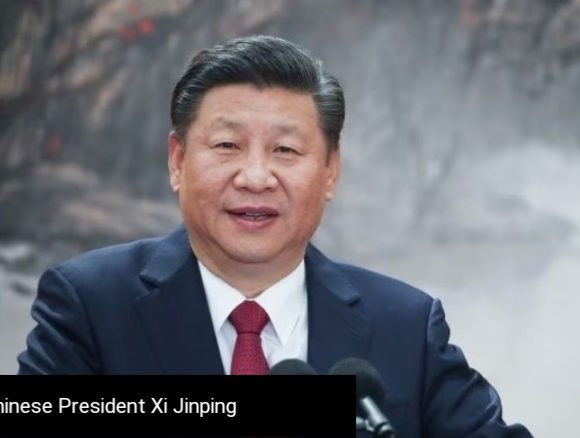
Xi Jinping secured a historic third term as China’s leader on Sunday and filled his inner circle with close allies, achieving after a decade in power complete dominance over the ruling Communist Party.

The party’s Central Committee elected Xi as its general secretary for another five-year term, bringing the country back towards one-man rule after decades of power-sharing among its elite.

“I wish to thank the whole party sincerely for the trust you have placed in us,” Xi told journalists at Beijing’s Great Hall of the People after the closed-door, rubber-stamp vote was announced.

Xi, 69, was also reappointed head of China’s Central Military Commission, keeping him in charge of the People’s Liberation Army.

He is now all but certain to sail through to a third term as the country’s president, due to be formally announced during the government’s annual legislative sessions in March.

Sunday’s developments cement him as the most powerful leader since Communist Party founder Mao Zedong.

In a wide-ranging acceptance speech on Sunday, Xi made signature remarks celebrating China’s rise as a global power and its success under his rule.

“The world needs China,” Xi said.

Culled / Titilayo Kupoliyi

Subscribe to our Telegram Channel and join our Whatsapp Update Group

Foreign

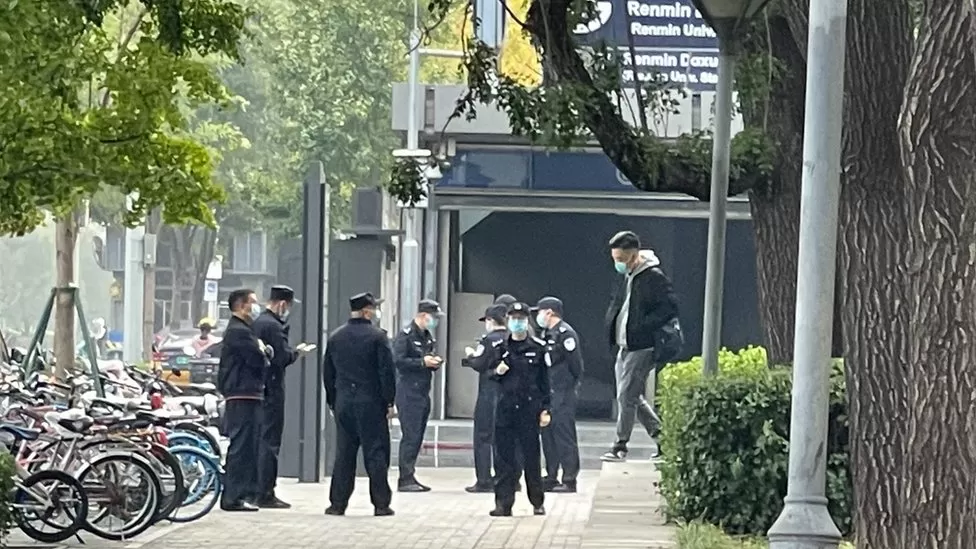
Frustration appears to be mounting in Beijing as the Chinese capital comes under tight security and Covid restrictions ahead of a historic Communist Party congress.

Authorities have tightened access to the city, shutting out many travellers, returning residents, and deliveries.

Others had their movement restricted or were forced to quarantine.

It has sparked an outpouring of anger online. Meanwhile, photos of an apparent public protest have circulated.

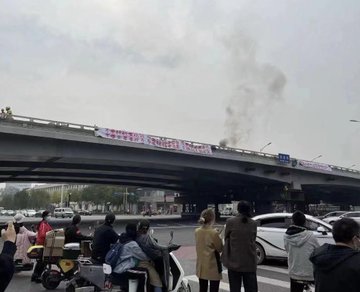
The images and footage show two large protest banners unfurled on a bridge in Beijing’s North-Western Haidian district.

One read: “No Covid test, we want to eat. No restrictions, we want freedom. No lies, we want dignity. No Cultural Revolution, we want reform. No leaders, we want votes. By not being slaves, we can be citizens.”

The other called on residents to “go on strike at school and work, remove the dictator and national traitor Xi Jinping”.

The protest appeared to have been swiftly stopped by authorities. A visit to the scene later found no trace of it, but there was a visible police presence in the area.

The week-long 20th Party Congress, due to kick off on Sunday, will see about 2,300 top officials and party delegates descend upon the capital.

China’s leader is expected to be handed a third term, breaking decades-long tradition and shoring up his already firm grip on power.

BBC/Oluwayemisi Owonikoko

Subscribe to our Telegram Channel and join our Whatsapp Update Group

Foreign

Ukraine’s recent counter-offensive will not change Russia’s plans, President Vladimir Putin has said in his first public comments on the matter.

In a rapid counter-attack, Ukrainian forces say they captured over 8,000 sq km (3,000 sq miles) in six days in the north-eastern Kharkiv region but Mr Putin said he was not in a hurry, and the offensive in Ukraine’s Donbas region remains on track.

He also noted that Russia had so far not deployed its full forces.

“Our offensive operation in the Donbas is not stopping. They’re moving forward – not at a very fast pace – but they are gradually taking more and more territory,” he said after a summit in Uzbekistan.

The industrial Donbas region in east Ukraine is the focus of Russia’s invasion, which Mr Putin falsely claims is necessary to save Russian speakers from genocide.

Parts of the Donbas have been occupied by Russian-backed separatists since 2014 and the Kharkiv region, where Ukraine’s recent counter-attack was launched, is not part of the Donbas.

In Friday’s comments, Mr Putin threatened a “more serious” response if Ukrainian attacks continue.

“I remind you that the Russian army isn’t fighting in its entirety… Only the professional army is fighting.”

Russia initially denied sending conscript soldiers to Ukraine, but several officers were disciplined after cases came to light of conscripts being forced to sign contracts and in some instances being taken prisoner.

So far, Russia has not officially declared war on Ukraine and only refers to its invasion as a “special military operation”.

President Putin put the country’s nuclear forces on “special” alert following its invasion of Ukraine in February and he has rarely left his country since then.

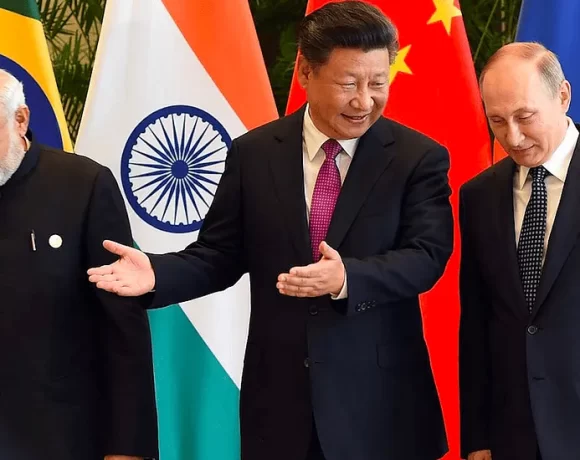
This week’s visit to the Shanghai Co-operation Organisation summit in Uzbekistan – where he met the Chinese leader Xi Jinping – highlights his need to foster ties with Asian countries after being sidelined by the West.

But even there, leaders have expressed concern over the invasion.

“Today’s time is not a time for war,” Indian Prime Minister Narendra Modi told Mr Putin.

It would be recalled that on Friday, US President Joe Biden reiterated his call on Russia to refrain from using chemical or tactical nuclear weapons.

Mr Biden said such action would “change the face of war unlike anything since World War Two”.

BBC/Maxwell Oyekunle

Subscribe to our Telegram channel