Health

The World Health Organization has said that 160 million Nigerians are at risk of yellow fever.

The WHO said with Nigeria’s population of about 200 million, the figure makes up around 25 percent of all the people at risk in Africa.

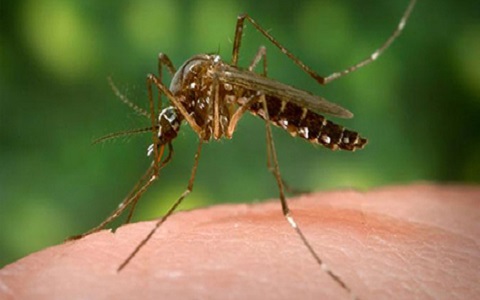
Yellow fever is an acute viral hemorrhagic disease transmitted by infected mosquitoes.

The “yellow” in the name refers to jaundice that affects some patients.

Symptoms of yellow fever include fever, headache, jaundice, muscle pain, nausea, vomiting, and fatigue.

According to the Medical Officer, WHO Nigeria, Dr. Anne Eudes Jean Baptiste, said, “yellow fever is dangerous because a small percentage of patients will go through a more toxic phase of the disease. By then, they will experience fever, and have system failure, mainly in the kidney and liver. They may experience bleeding coming from the mouth, nose, and eyes and within 7 to 10 days, half of them will die.”

The WHO also said Nigeria is at risk of both Urban and Sylvatic (jungle) exposure to the disease.

Sylvatic exposure is the transmission of yellow fever from mosquitoes that have bitten animals and non-human primates, workers in mining and agriculture are particularly vulnerable to this type of transmission.

In 2017, there was a resurgence in yellow fever in Nigeria after 15 years. This is due to gaps in the detection of the disease rather than lack of transmission of the virus and the cyclical nature of Sylvatic transmission. As surveillance and laboratory testing have been strengthened, improved information about the distribution of the disease in humans has become available.

The global health body, however, said Nigeria has vaccinated over 45 million people against yellow fever during the covid-19 pandemic, and reports revealed that Nigeria has recorded no fewer than 1,005 suspected yellow fever cases so far in 2022.

The cases were reported from 36 states including the FCT in 390 local government areas.

According to the Director General of the Nigeria Centre for Disease Control, Dr. Ifedayo Adetifa, there is strengthened surveillance for the disease.

 “Despite the ongoing covid-19 pandemic, we have given out over 66 million doses in 2020 and 2021 to protect people from yellow fever outbreaks”.

This achievement has been possible through routine immunization, as well as mass vaccination campaigns that identify gaps in the population and proactively target vulnerable communities,” he said.

Culled/Adebukola Aluko

Subscribe to our Telegram channel
Health

Apart from the global Covid-19 pandemic, another health challenge facing the country is yellow fever as being experienced in some states of the country.

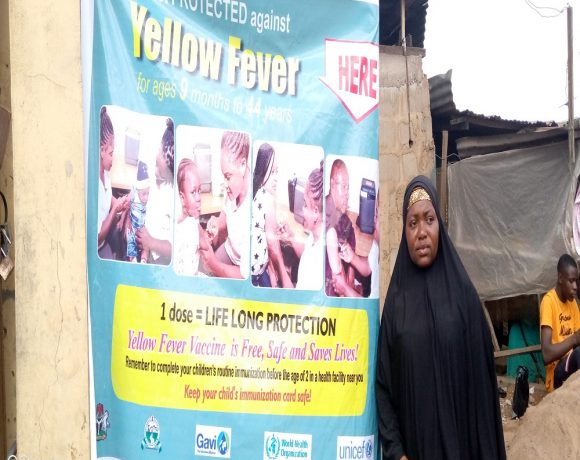
This informed the Federal Government’s decision to carry out mass immunization against the disease having identified it as an effective means of disease prevention.

The ten days exercise, which spans through the local government areas of the state, is spear headed by the National Primary Health Care Development Agency, NPHCDA, with support from the World Health Organization

Speaking on the exercise, the team leader in Alakia Adegbayi Area of Ibadan, Mrs Mujidat Olosho, urged residents to avail themselves for the exercise

Mrs Olosho said babies from nine months and adults up to forty four years were eligible while nursing and expectant mothers were exempted.

Some residents, who appreciated the gesture, asked for extension of the program to cover all Nigerians.

Yellow fever is a viral infection transmitted by infected mosquitos causing diseases such as fever, jaundice or even death

Anthonia Akanji

News Analysis

Recently, Nigeria Centre for Disesae Control, NCDC said a total of forty cases of communicable diseases were confirmed in some states like Delta, Enugu, Bauchi, Benue, Ebonyi and Oyo states.

Over seventy people have reportedly died since the recent outbreak of the virus in Bauchi, Delta and Enugu states.

In some cases, some residents of Delta state initially linked the deaths to a strange disease not until the Commissioner for health, Mordi Ononye, identified yellow fever as the cause of death.

Also, in Enugu, three additional local government areas were reportedly hit by strange deaths presumably linked to yellow fever.

According to health Minister, Osagie Ehanire, the federal government, through the Nigeria Centre for Disease Control, was responding to the outbreak.

He noted that from the analysis gathered so far it is yellow fever.

Yellow fever is a disease that is transmitted by mosquito bites in Africa and haemagogus and sabethes mosquitoes in South America.

Experts say there is no cure for yellow fever, but there is a vaccine now and about fifteen percent of people who get yellow fever progress to a severe form, which is characterised by jaundice, the condition that gave the disease its name.

The director, Disease Control and immunisation at the national primary health care development agency, Bassey Okposen, explained that public awareness campaign and immunisation have started in states with confirmed cases.

This is heartwarming but efforts should be geared towards the containment to prevent the virus from spreading to other states.

Many outbreaks which have occurred in Nigeria over the years have been attributed to clinicians either not reporting or reporting late when the index cases of epidemic prone diseases present in the various health institutions across the country.

It is crucial to note that disease outbreak do not give notice before its occurrence neither do they respect the borders of nations.

When they eventually occur, they are likely to spread like wildfire and often resulting in high morbidity and fatality rate with consequent economic impact.

Progress should also be made towards developing a suitable vaccine for the control of communicable diseases to reduce the spread.

It is necessary that Nigerians must protect themselves by keeping the environment clean, covering of food to prevent contact with rodents, washing of hands regularly and adhering to public health guidance self-medication should be avoided and people must report to the nearest medical facility for proper medical attention.

Olubunmi Agboola

Health

No case of Yellow Fever has been reported in Oyo state or at the University College Hospital, UCH, Ibadan.

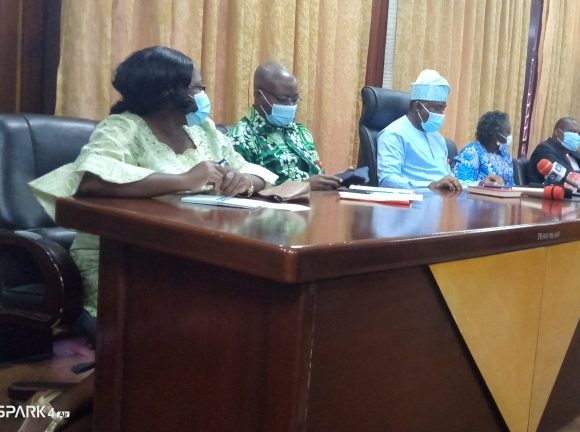
Chief Medical Director, CMD, of the hospital, Professor Jesse Otegbayo stated this at a news briefing in Ibadan.

Professor Otegbayo who explained that the disease is more in the Middle Belt, Edo and Delta States urged people to continue to abide by safety precautions against infectious diseases, preventing mosquito bites and vaccination every ten years.

The UCH helmsman noted that as some countries were experiencing the second wave of the global Covid 19 pandemic, Nigeria should not let her guard down.

Anthonia Akanji

Health

The Ondo State Government is to embark on a ten day campaign against yellow fever in Eleven Local Government Areas of the State. 

During the programme which will run from 20th to 29th of November 2020, children from nine months to adults of up to forty four years old will be vaccinated against yellow fever. 

The local government areas are, Akure South, Ifedore, Idanre, Ondo East, Ondo west and Ile Oluji/Okeigbo. 

Others are Odigbo, okitipupa, Irele, Ese-odo and Ilaje local governments 

The incidence manager for yellow fever, Dr. Victor Akinfesoye, announced this in Akure during a stakeholders’ meeting on yellow fever campaign. 

Dr. Adefesoye urged people within the age bracket for the vaccination to make themselves available while mothers should also present their children for the exercise. 

The medical expert noted that an outbreak of yellow fever had been recorded in Delta state, hence the need for inter-state transmission. 

Also speaking, the Director, Community Health Services and Education, Ondo State Primary Healthcare Board, Dr. Samuel Abiona had encouraged Residents to seize the opportunity of the vaccination to prevent themselves against the disease which he said had no cure yet. 

Goodwill messages from W.H.O and UNICEF also preached massive participation in the exercise for a healthy society. 

The sensitization meeting was attended by Medical group, women group, civil society organisations school owners and other stakeholders who promised to ensure the success of the yellow fever campaign.

Bukola Bardi

News Analysis

One disease which has continued to record recurrence in Nigeria over the years is Yellow Fever.

Yellow Fever is an acute viral haemorrhagic disease spread by a particular species of mosquito common in areas of Africa, Central and South America.

The mosquito, aedes aegypti species is believed to transmit the virus from person to person while the “yellow” refers to the jaundice that affects some patients.

Some of the symptoms of yellow fever include jaundice, sudden fever, headache, muscle and body pains, nausea, vomiting and fatigue.

Early this month, three people were reported to have died from an outbreak of yellow fever in Alkaleri and Tafawa Balewa Local Government areas of Bauchi State.

This prompted the state governor to embark on reactive vaccination for over five hundred thousand residents scattered across the twenty local government areas of the state.

Also, following the outbreak of the disease in eight local government areas of Ebonyi state.

In May this year, twenty of the fifty five suspected cases have reportedly died.

The Nigeria Centre for Disease Control, NCDC, deployed a rapid response team to support Ebonyi state with contract tracing and case finding.

Available records show that from an outbreak in 2017 to December 2018, three thousand, nine hundred and two suspected cases were reported from all thirty-six states and the Federal Capital Territory, FCT, in Nigeria.

This is a wakeup call to states to increase surveillance in this regard.

Commendably, the eliminate yellow fever epidemics strategy launched in 2017 with more than fifty partners has been working assiduously to reduce the impact of the disease in forty at risk countries in Africa and the Americas.

The partnership is committed to preventing international spread and containing outbreaks rapidly.

It is expected that by 2026 more than one billion people will be protected against the disease.

Also, the federal government in collaboration with World Health Organisation, WHO, and GAVI, the Vaccine Alliance, recently launched the Yellow Fever Reactive Vaccination Campaign in three states of Ebonyi, Benue and Cross River to contain the outbreak in affected areas.

More still needed to be done to combat this disease.

It is imperative to invest more in vaccines which have been proven to be very effective.

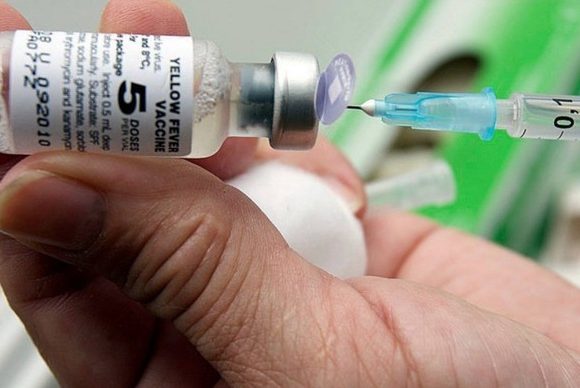
A single dose of yellow fever vaccine is sufficient to confer sustained immunity and lifelong protection against the disease.

This is important as there is no specific anti-viral drug for yellow fever currently.

Since diagnosis may be difficult at the early stage, it is recommended that people having symptoms related to the aforementioned report to the hospital for proper testing, diagnosis and treatment.

The yellow fever vaccine is available for free in Primary Health Care Centres across the country as part of the routine immunization schedule, mothers should avail themselves of this opportunity for their babies.

People should maintain proper hygiene at all times, clear stagnant waters from their environment, wear protective clothing and use repellent against these mosquitoes which are more active during the day time.

There should be adequate mapping by epidemiologists to identify high risk areas and constantly monitor them to forestall outbreak.

States should embark on regular aerial spraying of aedes mosquitoes identified as the vector that transmits yellow fever disease.

There should also be increased surveillance at the country’s borders to ensure that people with yellow fever and other infectious diseases are prevented from entering the country.

Most importantly, strong commitment at all level of governance is necessary if the country wants to be free from yellow fever.

Anthonia Akanji