Foreign

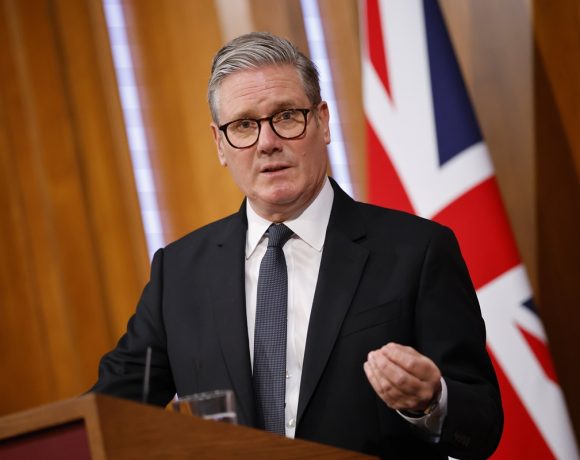
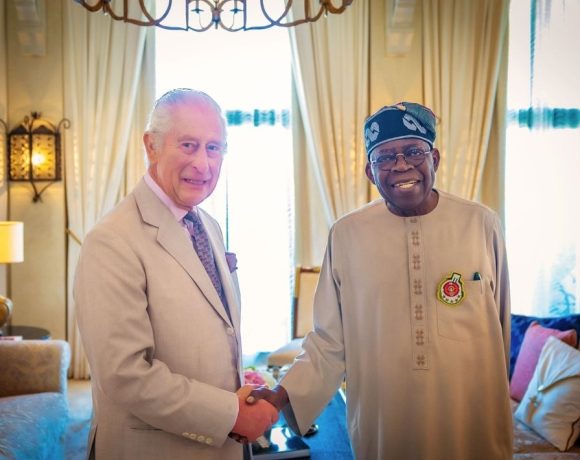
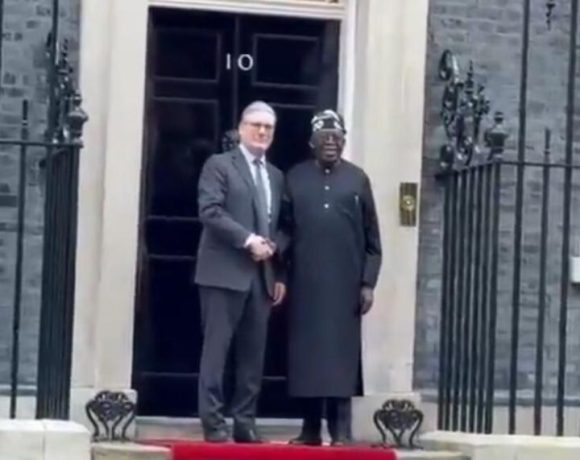
President Bola Tinubu is currently meeting with United Kingdom Prime Minister Keir Starmer in a high-level bilateral engagement aimed at strengthening ties between Nigeria and Britain.

A statement by the Special Adviser to the President on Information and Strategy, Bayo Onanuga, on Monday, said the meeting will culminate in the signing of various Memoranda of Understanding and agreements, including those on trade, investment, defence, and cultural cooperation.

The statement said the meeting reinforces Nigeria’s commitment to deepening bilateral relations, attracting foreign investment, and modernising key infrastructure to support economic growth.

It added that a major highlight of the visit was the signing of a £746 million financing agreement between UK Export Finance, the Nigerian Ports Authority, and the Federal Ministry of Finance.

The statement said the deal will fund the refurbishment of two key maritime infrastructures — the Lagos Port Complex (Apapa Quays) and the Tin Can Island Port Complex.

The President and the First Lady had earlier been the guests of their Majesties King Charles III and Queen Camilla at Windsor Castle.

Tinubu was accompanied by a high-profile delegation, including Senate President Godswill Akpabio; Attorney General and Minister of Justice, Prince Lateef Fagbemi; Minister of Solid Minerals, Dele Alake; Minister of Information and National Orientation, Idris Mohammed; and Minister of State for Foreign Affairs, Ambassador Bianca Ojukwu.

Other members of the delegation include Minister of Finance and Coordinating Minister of the Economy, Wale Edun; Minister of Industry, Trade and Investment, Dr. Jumoke Oduwole; Minister of Culture and Creative Economy, Hannatu Musawa; Minister of Communications and Digital Economy, Bosun Tijani; Minister of Defence, Gen. Christopher Musa; National Security Adviser, Malam Nuhu Ribadu; and Director-General of the National Intelligence Agency, Mohammed Mohammed.

Punch/Olaolu Fawole

Foreign

Britain and Ukraine are set to sign a defence partnership aimed at addressing the threat of low-cost drones, Downing Street announced ahead of a visit from Ukraine’s leader.

Since the start of the US-Israeli war with Iran late last month, Tehran has mainly used ballistic missiles to attack Israel but has relied on drones to strike targets in Gulf States.

The UK-Ukraine agreement will “boost global defensive capability against the proliferation of low-cost, high-tech military hardware, including drones”, British Prime Minister Keir Starmer’s office said in a statement.

It seeks to leverage Ukraine’s “expertise” in fending off drones from its years-long war with Russia, as well as Britain’s industrial base, “to manufacture and supply drones and innovative capabilities”.

“Drones, electronic warfare and rapid battlefield innovation are now central to national and economic security, and that has only been further magnified by the conflict in the Middle East,” Starmer said in the statement.

“By deepening our defence partnerships, we are strengthening Ukraine’s ability to defend itself from Russia’s brutal, ongoing attacks, while ensuring the UK and our allies are better prepared to meet the threats of the future.”

The deal would also provide 500,000 pounds ($670,000) to fund an “AI Centre of Excellence” to be integrated into the Ukrainian Ministry of Defence.

Punch/Adetutu Adetutu

Follow us on Telegram and YouTube, and join our WhatsApp Update Group for more updates.
 

Foreign

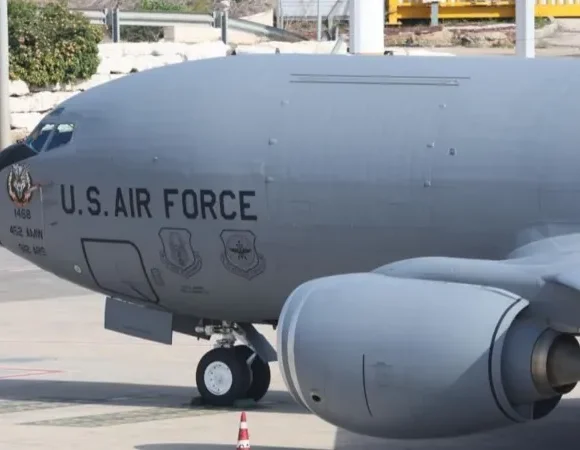
The United States Department of Defense has released the names of six crew members killed when a US military refuelling aircraft crashed in Iraq.

According to the Pentagon, the airmen aboard the Boeing KC-135 Stratotanker were John Klinner, 33, from Alabama; Ariana Savino, 31, from Washington; Ashley Pruitt, 34, from Kentucky; Seth Koval, 38, from Indiana; Curtis Angst, 30, from Ohio; and Tyler Simmons, 28, also from Ohio.

The Pentagon said Klinner, Savino and Pruitt served in the United States Air Force, while Koval, Angst and Simmons were members of the US Defence Secretary Pete Hegseth.

Military officials had earlier stated that the aircraft went down in western Iraq on Thursday and that the crash was not caused by either hostile action or friendly fire.

The aircraft was conducting a combat mission as part of ongoing US operations against Iran.

It was one of two planes involved in the mission, while the second aircraft landed safely.

US Defence Secretary Pete Hegseth described the fallen crew members as “American heroes.”

BBC/Edited by Maxwell Oyekunle

Follow us on Telegram and YouTube, and join our WhatsApp Update Group for more updates.

Foreign

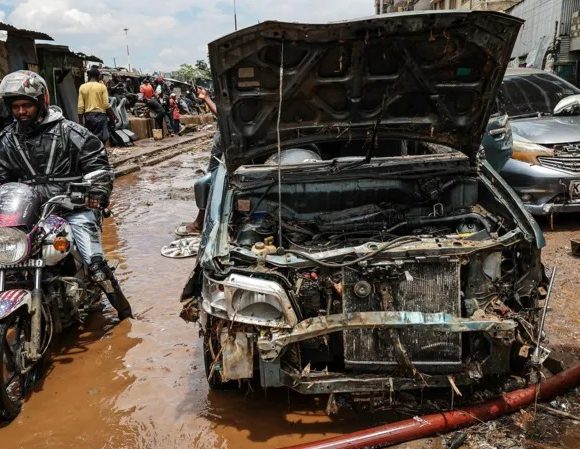
At least 62 people have died in Kenya over the past week after heavy rains triggered widespread flooding across the country.

Authorities say the latest figure marks an increase from the previous death toll of 42 reported a week earlier.

Emergency responders carried out several rescue operations overnight in the capital, Nairobi.

According to the Kenya Red Cross, 11 passengers were rescued after a minibus taxi, locally known as a matatu, became trapped in rising floodwaters, while two children were also saved from a flooded house.

The heavy rainfall has caused flash floods in several parts of the country, with rivers bursting their banks and inundating homes, roads, and electricity and water infrastructure.

Kenya Interior Ministry warned that many regions are still experiencing heavy rains, raising the risk of further flooding.

Authorities have urged residents in low-lying areas to relocate to safer ground, while more than 2,000 people have already been displaced and are seeking temporary shelter.

Police say search and rescue operations are ongoing following what they described as “torrential rain and subsequent devastating flooding” affecting various parts of the country.

More than half of the fatalities — 33 — have been recorded in Nairobi, where poor drainage systems and blocked waterways caused by unregulated development have worsened the flooding.

President William Ruto said emergency food supplies and medical assistance were being delivered to affected communities, while authorities were also working to clear blocked drainage systems.

The flooding has also affected neighbouring Ethiopia, where more than 100 people have died following floods and landslides in the southern part of the country.

Experts say climate change is increasing the likelihood of extreme rainfall events.

Global temperatures have already risen by about 1.1°C since the industrial era, and scientists warn that temperatures will continue to climb unless countries significantly cut greenhouse gas emissions.

BBC/Edited by Maxwell Oyekunle

Follow us on Telegram and YouTube, and join our WhatsApp Update Group for more updates.

Foreign

An explosion has damaged a Jewish school in Amsterdam in what the city’s mayor described as a deliberate attack against the Jewish community.

Mayor Femke Halsema said the overnight blast caused limited damage to the outer wall of the school located in the Buitenveldert district and that no injuries were reported.

Condemning the incident, the mayor described it as “a cowardly act of aggression towards the Jewish community,” stressing that Amsterdam must remain a place where Jews can live safely.

Security had already been heightened at Jewish public institutions following a suspected arson attack on a synagogue in Rotterdam last Friday.

According to local media reports, Dutch firefighters and police were deployed to the scene shortly after the explosion.

Authorities are also examining CCTV footage which reportedly shows a person placing explosives near the school.

In a statement after the blast, Mayor Halsema said she understood the fear and anger among Jewish residents of Amsterdam.

“They are increasingly confronted with antisemitism, and that is unacceptable,” she said.

Police have launched an investigation into the incident but have not publicly disclosed a possible motive.

The attack comes amid growing concerns that Jewish and American communities worldwide could face threats following joint strikes by Israel and the United States against Iran.

BBC/Edited by Maxwell Oyekunle

Follow us on Telegram and YouTube, and join our WhatsApp Update Group for more updates.

Foreign

US central command ( Centcom) says four of six crew aboard a US military refuelling aircraft have died after it crashed in western Iraq.

Rescue efforts continue after the loss of the KC-135, it said, having earlier said neither hostile nor friendly fire were involved in the downing of the aircraft.

The tanker had been involved in ongoing US operations against Iran, and was one of two aircraft involved in the incident. The second landed safely.

The Boeing-manufactured aircraft are capable of refuelling planes midair and typically play a major role in US military operations. They were used extensively in the first Gulf War to extend the range of fighter jets and bombers.

Centcom said the incident occurred around 14:00 ET (19:00 GMT) on Thursday and that the circumstances of the crash were now under investigation.

It added that the identities of the personnel who had been killed were being withheld for 24 hours so their next of kin could be notified.

The KC-135 usually has a crew of at least a pilot, a co-pilot and a boom operator responsible for controlling the refuelling arm of the aircraft.

Centcom earlier described the crash as happening over friendly airspace – but this is a region of Iraq where pro-Iranian militias operate. Iran’s military claimed on state TV that an allied group had targeted the plane with a missile.

Since the outbreak of the US-Israel war with Iran, seven US soldiers have been confirmed as having been killed in the conflict.

The US military has now lost at least four aircraft during the current war.

Earlier this month, three F-15s were shot down in “an apparent friendly fire incident” over Kuwait, officials said. All six crew members were able to safely eject.

Boeing manufactured the KC-135 Stratotanker for the US military in the 1950s and early 1960s.

It has been a backbone to the US military’s air refuelling fleet, and allow combat aircraft to carry out longer missions without needing to land.

BBC / Titilayo Kupoliyi

Foreign

The World Health Organisation has raised a fresh alarm over the humanitarian toll of the ongoing military offensive by the United States and Israel against Iran, revealing that over 1,800 people have been killed and 12,500 others injured in less than two weeks.

WHO Director-General Tedros Adhanom Ghebreyesus, in a statement shared on his X handle on Wednesday, warned that health systems across the Middle East are under “immense strain” and on the verge of total collapse.

The conflict, which escalated sharply on February 28 following a massive joint US-Israeli strike that killed Iran’s Supreme Leader Ayatollah Ali Khamenei and other top officials, has displaced hundreds of thousands of civilians.

According to the WHO chief, the reported toll from the conflict shows that Iran has suffered more than 1,300 deaths and about 9,000 injuries, Lebanon has recorded at least 570 deaths and around 1,400 injuries, and Israel has seen 15 deaths and approximately 2,142 injuries.

The displacement crisis is equally dire, with over 100,000 Iranians and up to 700,000 Lebanese citizens forced to flee their homes. Many are now living in deteriorating conditions with limited access to clean water and sanitation, raising fears of a massive disease outbreak among women and children.

Tedros noted that healthcare infrastructure is increasingly becoming a target in the theatre of war.

Since the start of the offensive, the WHO has documented 25 attacks on health facilities in Lebanon, 18 attacks in Iran, and two attacks in Israel.

These attacks not only claim lives but also deprive communities of critical care when they need it most,” the WHO chief stressed, calling on all parties to respect international law and protect civilians.

The war began after the White House justified its strikes on major Iranian cities, including Tehran, by citing missile and nuclear threats.

The Islamic Revolutionary Guard Corps has since launched retaliatory strikes targeting Israeli sites and US military bases in Bahrain, Jordan, Kuwait, Qatar, Saudi Arabia, and the UAE.

Despite the White House’s claims of a “precision” operation, the WHO reports suggest indiscriminate impact on the region’s most vulnerable populations.

The urgency for action is critical to prevent the collapse of already fragile health systems,” Tedros warned, as he called for unimpeded humanitarian access and immediate de-escalation.

Punch/Adetutu Adetule

Follow us on Telegram and YouTube, and join our WhatsApp Update Group for more news updates.

Foreign

Britain will impose airspace restrictions and deploy armed police officers in Windsor next week as President Bola Tinubu arrives for a state visit hosted by King Charles III.

President Tinubu is expected to begin the visit in the company of his wife Oluremi Tinubu on Wednesday, March 18, with a reception at Windsor Castle.

Thames Valley Police in a statement on its website on Wednesday, said it is working with the Royal Borough of Windsor and Maidenhead, the Royal Household and other security partners.

The force said airspace restrictions over Windsor Castle, which are in place permanently throughout the year, would be extended on Wednesday, March 18, to cover the period from 7am to 11.59pm.

Chief Superintendent Adrian Hall of Thames Valley Police’s Joint Operations Unit said the air restrictions formed part of a broader security operation for the visit.

“The air restrictions are just one part of our robust security operation for the state visit of Nigerian President Tinubu next week, with many measures you will see and others you will not..

As a force, we have a vast amount of experience in policing Royal events in Windsor and significant planning, and preparation has gone into this event,” Hall said.

He said the force would take a strong stance in enforcing the restrictions, warning that any breach would constitute a criminal offence under the Air Navigation Order and could lead to arrest.

“We will be taking a strong stance in enforcing the restrictions; anyone who breaches them will be committing a criminal offence under the Air Navigation Order and could be arrested.”

The police chief said officers with specialist capabilities, including search teams, the Mounted Section, road policing, and armed units, would be deployed across Windsor, alongside neighbourhood policing and Project Servator resources.

“We will also be deploying numerous police officers to Windsor with specialist capabilities, including our search teams, Mounted Section, Roads Policing and armed units, while our neighbourhood and Project Servator resources will also be on the ground engaging with the public,” he said.

The authorities will also deploy an extensive closed-circuit television network, hostile vehicle mitigation barriers, and other undisclosed security measures for the event.

Hall said, “We will also be using the extensive CCTV network in Windsor, Hostile Vehicle Mitigation barriers, and many other security measures that you may not be able to see to make sure the event runs safely.”

He urged members of the public to support the security operation by remaining vigilant.

The public plays a critical role to support us so we encourage them to report any suspicious activity or anything that does not seem quite right by calling 101 or speaking to one of our officers. If there is an immediate threat or emergency, then call 999,” Hall added.

Road closures and parking restrictions will take effect from Tuesday, March 17, with possible temporary disruption to roads in and around Windsor during the visit.

Thames Valley Police said it was being supported by the Civil Aviation Authority and National Air Traffic Services to enforce the flight restrictions. Persons with legitimate reasons for drone flying were directed to email [email protected].

Punch/Adetutu Adetule

Follow us on Telegram and YouTube, and join our WhatsApp Update Group for more news updates.

Foreign

Turkey’s President Recep Tayyip Erdogan has warned Iran that violations of Turkish airspace “cannot be justified,” adding that attacks on countries in the region help no one.

In a phone call with Iran’s President Masoud Pezeshkian, Mr Erdogan said Turkey is seeking diplomatic avenues to help bring the ongoing war to an end.

Speaking at a cabinet meeting on Tuesday, President Erdogan stated: “Despite our sincere warnings, extremely wrong and provocative steps continue to be taken that will jeopardise Turkey’s friendship.”

The comments follow Nato air defences intercepting a second Iranian ballistic missile that entered Turkish airspace on Monday.

Turkey, which maintains Nato’s second-largest army, shares a long and historically stable border with Iran, stretching over 500 years.

No other Nato member has the same level of engagement with the remnants of the Iranian regime.

Analysts note that President Erdogan is positioning Turkey as a mediator in regional conflicts, as he has previously done in Ukraine, Gaza, and other theatres.

BBC

Edited by Maxwell Oyekunle

Follow us on Telegram and YouTube, and join our WhatsApp Update Group for more updates.

Foreign

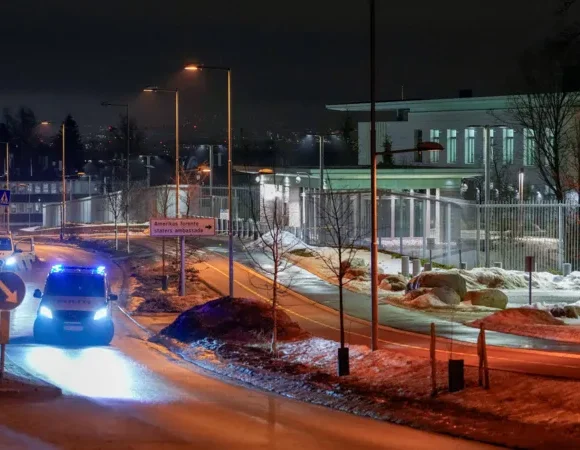
Police says the US embassy in Oslo has been hit by an explosion in the early hours of Sunday morning.

“Large resources” were sent to the area in the Norwegian capital at about 01:00 local time (00:00 GMT), police said.

“The police are in dialogue with the embassy and no injuries have been reported,” a statement said.

It added that there was currently “no information about exactly what happened or who may be involved”.

The embassy sustained minor damage, media reports say. The diplomatic mission’s US employees have not commented.

Michael Dellemyr, who is leading the police response, told Norway’s public broadcaster NRK the explosion was at the public entrance to the building.

The US embassy is located in the Morgedalsvegen district of Oslo, about 7km (4 miles) outside the city centre.

BBC/ Titilayo Kupoliyi

Follow us on Telegram and YouTube, and join our WhatsApp Update Group for more updates.

Foreign

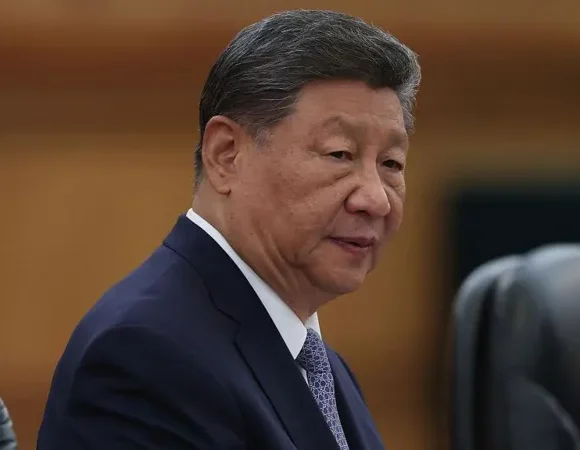
China has removed three retired military generals, including a former commander of the People’s Liberation Army, PLA, ground forces, from a key political advisory body just days before its largest annual political gathering.

According to State media on Monday, the Chinese People’s Political Consultative Conference, CPPCC, voted to expel Han Weiguo, Gao Jin and Liu Lei. No official explanation was provided, but the move came amid an intensified purge of senior military officials in recent weeks.

President Xi Jinping has launched recurring anti-corruption campaigns since taking office in 2012. While framed as efforts to clean up the party and armed forces, critics argue the campaigns are also used to sideline political rivals.

About 3,000 delegates from the CPPCC — an advisory body without legislative power — and China’s legislature, the National People’s Congress, NPC, were due to convene in Beijing the week for the annual “Two Sessions.” The meetings begin in some hours’ time, and will run for about a week.

CPPCC and NPC delegates typically serve five-year terms, with the current term set to end in March 2028. Mid-term removals are therefore unusual.

Han, 70, served as commander of the PLA Army from August 2017 until his retirement in June 2021. His two successors, Liu Zhenli and Li Qiaoming, have also been removed from their respective posts in recent months.

Liu Lei, also 70, was political commissar of the PLA Army from December 2015 to January 2022, overlapping with Han’s tenure.

Gao, 67, was the inaugural commander of the now-dissolved Strategic Support Force when it was established in 2015. He most recently headed the Central Military Commission’s Logistic Support Department before retiring in January 2022.

Alongside the three generals, several other CPPCC members were dismissed, including Zhang Kejian, a senior defence industry official who is under investigation for corruption.

Monday’s action follows a string of high-profile removals. Last Thursday, authorities announced the dismissal of 19 officials, nine of them from the military.

In January, senior military figures including Zhang Youxia and Liu Zhenli were removed from their posts and placed under investigation for “serious violations of discipline and law,” according to China’s defence ministry.

BBC/Taiwo Akinola

Foreign

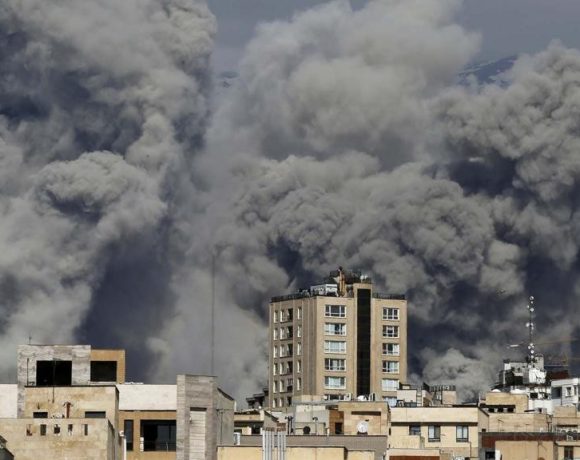
Israel has launched a new wave of strikes on Tehran, Iran on Sunday, saying it aimed to dominate the skies after killing Iran’s supreme leader and leaving the Islamic Republic grappling to rebuild its leadership amid its biggest test in five decades.

U.S. and Israeli strikes and Iranian retaliation have sent shockwaves through sectors from shipping to air travel to oil, amid warnings of rising energy costs and disruption to business in the Gulf, a strategic waterway and global trade hub.

Iranian President Masoud Pezeshkian said a leadership council composed of himself, the judiciary head and a member of the powerful Guardians Council had temporarily assumed the duties of Supreme Leader following the death of Ayatollah Ali Khamenei.

The U.S. military said it had sunk an Iranian ship, while Iran’s Revolutionary Guards said they had launched an attack on the U.S. aircraft carrier Abraham Lincoln with four ballistic missiles, state media reported.

In a sign of widening turmoil, Israel’s ambulance service said nine people were killed by a missile strike in the town of Beit Shemesh, the United Arab Emirates said Iranian attacks killed three people and Kuwait reported one dead in Iranian raids.

The Israeli military said that over the past day Israeli planes had conducted strikes to open the “path to Tehran”, and the majority of aerial defence systems in western and central Iran had been dismantled.

“Ali Khamenei was targeted in a precise, large-scale operation carried out by the Israeli Air Force, guided by accurate IDF intelligence, while he was in his central leadership compound in the heart of Tehran, where he was together with additional senior officials”.

Israeli military spokesperson Lieutenant Colonel Nadav Shoshani said many targets remained, including sites of military‑industrial production.

“We have the capabilities and the targets to keep going on for as long as necessary,” he said.

Asked if Israel was considering deploying ground forces, Shoshani said that was not under consideration even though U.S. President Donald Trump and Israeli Prime Minister Benjamin Netanyahu have urged Iranians to seize a rare opportunity to topple their leaders.

Hours after the U.S. and Israel said an air strike killed Khamenei, Iran’s state media confirmed the 86-year-old leader had died.

Inside Iran, some grieved for Khamenei while others celebrated his death, exposing a deep fault line in a country stunned by the sudden demise of the man who ruled for decades.

Thousands of Iranians were killed in a crackdown authorised by Khamenei against anti-government protests in January, the deadliest wave of unrest since the Islamic Revolution of 1979.

Footage from Tehran showed mourners packed into a square, dressed in black and many of them weeping.

However, videos posted on social media also showed joy and defiance elsewhere, with people cheering as a statue was toppled in the city of Dehloran in Ilam province, dancing in the streets of Karaj city, near Tehran in Alborz province, and celebrating in the streets of Izeh in Khuzestan province.

Khamenei, who built Iran into a powerful anti-U.S. force and spread its sway across the Middle East during his 36-year iron-fisted rule, was working in his office at the time of Saturday’s attack, state media said.

The raid also killed his daughter, grandchild, daughter-in-law and son-in-law.

Two U.S. sources and a U.S. official familiar with the matter said Israel and the U.S. timed their attack on Saturday to coincide with a meeting Khamenei was holding with top aides.

Experts said that while his death and those of other Iranian leaders would deal Iran a major blow, it would not necessarily spell the end of Iran’s entrenched clerical rule or the sway of the elite Revolutionary Guards over the population.

As supreme leader, Khamenei held ultimate power in Iran, acting as commander-in-chief of the armed forces and deciding on the direction of foreign policy, defined largely by confrontation with the United States and Israel.

Meanwhile, Russian President Vladimir Putin has denounced Khamenei’s death, China’s Foreign Minister Wang Yi described it as “blatant killing”, while European Union foreign policy chief Kaja Kallas said the death of Khamenei was “a defining moment in Iran’s history”.

After Iran retaliated with airstrikes around the Gulf, Anwar Gargash, adviser to the president of U.S. ally and oil power the United Arab Emirates, urged Tehran to “go back to your senses”, saying the war is not with Iran’s Gulf Arab neighbours.

The UAE has so far borne the brunt of Iran’s retaliation.

Trump warned on Sunday that the U.S. would hit Iran “with a force that has never been seen before” if it strikes back after the attacks on it.

In a sign of disruption to energy supplies, at least 150 tankers including crude oil and liquefied natural gas vessels dropped anchor in open Gulf waters beyond the Strait of Hormuz and dozens more were stationary on the other side of the chokepoint, shipping data showed on Sunday, after the U.S and Israeli strikes.

The oil tankers were clustered in open waters off the coasts of major Gulf oil producers including Iraq and Saudi Arabia as well as LNG giant Qatar.

In other regional repercussions, Pakistani police on Sunday clashed with protesters who breached the outer wall of the U.S. consulate in Karachi, leaving nine people dead, following news of Khamenei’s death.

Khamenei had a following among fellow Shi’ites outside Iran in countries such as Iraq and Pakistan, which have the largest Shi’ite populations after Iran.

In Iraq, police fired tear gas and stun grenades to scatter hundreds of pro-Iranian protesters who gathered outside the Green Zone in Baghdad, where the U.S. Embassy is located.

Global air travel remained heavily disrupted as continued air strikes kept major Middle Eastern airports, including Dubai – the world’s busiest international hub – closed in one of the biggest aviation interruptions in recent years.

Several blasts were heard for a second day in Dubai and over Qatar’s capital of Doha, witnesses said.

Iran, which had said it would target U.S. bases if attacked, hit a range of other targets, keeping the Gulf on edge.

Trump said the air strikes aimed to end a decades-long threat from Iran and ensure it could not develop a nuclear weapon.

He also sought to justify a risky gambit that seemed to contradict his professed opposition to American involvement in complex overseas conflicts.

Reuters/Olaolu Fawole
Foreign

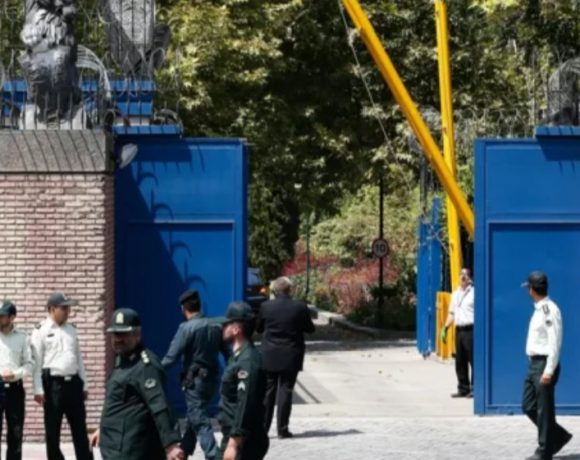
The United Kingdom has temporarily withdrawn staff from its embassy in Tehran amid rising tensions over the prospect of US military strikes against Iran, prompting several countries to warn their citizens in the Middle East.


The UK Foreign Office described the move as a “precautionary measure,” adding that the embassy in Iran’s capital would continue to operate remotely. It also updated its travel advisory, urging against “all but essential travel” to Israel.


Meanwhile, the United States Embassy in Israel told some non-emergency staff and their families on Friday that they could leave the country.


The developments come a day after officials from United States and Iran held talks widely seen as a last-ditch effort to avert conflict over Tehran’s nuclear programme.


Several other countries, including China, India and Canada, have advised their citizens to leave Iran as soon as possible due to the risk of hostilities.


President Donald Trump has threatened military action if Tehran fails to reach an agreement on its nuclear ambitions. He has ordered what officials describe as the largest US military build-up in the region since the US-led invasion of Iraq in 2003, while Iran has vowed to respond forcefully to any attack.


On Friday, US Ambassador to Israel Mike Huckabee advised embassy staff who wished to leave Israel to “do so as soon as possible.”


In an email, he reportedly said there was “no need to panic,” but stressed that those intending to depart should make arrangements “sooner rather than later.” A statement on the embassy’s website added that staff “may wish to consider leaving Israel while commercial flights are available.”


The move followed a recent decision by the US government to order all non-essential staff to leave its embassy in Beirut after a security review.


Meanwhile, the United States Department of State announced that Secretary of State Marco Rubio will travel to Israel on Monday for talks with Prime Minister Benjamin Netanyahu.
According to a department spokesperson, Rubio was expected to discuss “a range of regional priorities,” including Iran.

BBC/Taiwo Akinola

Foreign

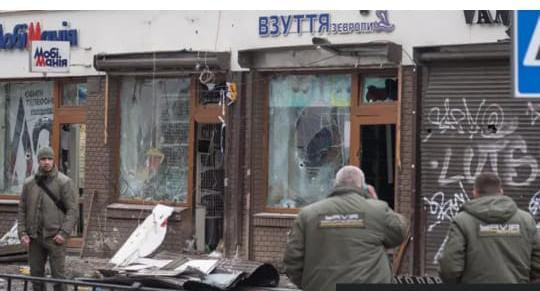
Ukrainian officials say, a 23‑year‑old female police officer has been killed and 25 people injured in a suspected terror attack in Lviv early Sunday.

Two homemade explosive devices, hidden in waste bins, detonated after police crews responded to a reported break‑in at a shop in the city centre shortly after midnight, the National Police of Ukraine reported.

According to report, the first blast struck when a patrol car arrived at the scene; a second explosion followed as a second crew arrived, injuring 11 people—six of them law‑enforcement officers in serious condition. The victim was identified as Viktoria Shpylka, who had joined the force at the start of the full‑scale invasion in the Kherson region.

President Volodymyr Zelenskyy confirmed that a suspect, a 33‑year‑old woman from the Rivne region, had been detained and that she allegedly acted on instructions from an agent of Russia’s special services. Interior Minister Ihor Klymenko said investigators are working to identify any additional co‑conspirators, while the regional prosecutor’s office has opened a terrorism investigation.

Lviv Mayor Andriy Sadovyi called the incident a “terrorist act” and urged residents to remain vigilant. The attack comes as Ukraine marks the fourth anniversary of Russia’s full‑scale invasion, which has left hundreds of thousands of military casualties on both sides and left Moscow in control of about 20 % of Ukrainian territory, including Crimea. 

BBC/Taiwo Akinola

Foreign

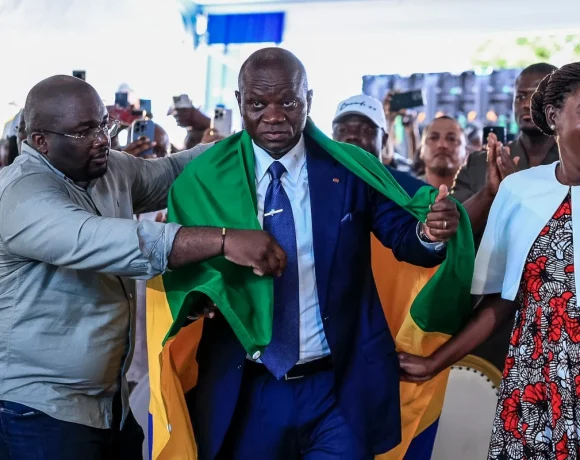
Gabon on Wednesday has placed ban on Facebook and TikTok, hours after the media regulator announced their suspension due to the risk of “conflict-inducing ” posts.

According to report, Gabon’s media regulator on Tuesday announced the suspension of social media platforms “until further notice”, blaming content posted online for stoking conflict and division in society.

The High Authority for Communication imposed “the immediate suspension of social media platforms in Gabon”, its spokesman Jean-Claude Mendome said in a televised statement.

He said “inappropriate, defamatory, hateful, and insulting content” was undermining “human dignity, public morality, the honour of citizens, social cohesion, the stability of the Republic’s institutions, and national security”.

The communications body spokesman also cited the “spread of false information”, “cyberbullying” and “unauthorised disclosure of personal data” as reasons for the decision.

“These actions are likely, in the case of Gabon, to generate social conflict, destabilise the institutions of the Republic, and seriously jeopardise national unity, democratic progress, and achievements,” he added.

The regulator did not specify any social media platforms that would be included in the ban.

However, the regulator said “freedom of expression, including freedom of comment and criticism,” remained “a fundamental right enshrined in Gabon”.

Less than a year after being elected, Gabonese President Brice Oligui Nguema has faced his first wave of social unrest, with teachers on strike and other civil servants threatening to down tools.

School teachers began striking over pay and conditions in December, and protests over similar demands had since spread to other public sectors — health, higher education and broadcasting.

Punch/Edited by Taiwo Akinola

Foreign

Celebrated American Christian worship leader, singer, and songwriter, Ron Kenoly, has passed away at the age of 81.

The news was confirmed by Bruno Miranda, Kenoly’s longtime music director, in a statement shared on the singer’s official Instagram page.

The statement revealed that Kenoly died on February 3, 2026, though the cause of death was not disclosed.

Miranda, who worked closely with Kenoly for more than 20 years, described him as not only a mentor but also a spiritual father, emphasizing Kenoly’s dedication to his calling.

“This morning, Feb. 3, 2026, we said goodbye to Dr. Ron Kenoly,” the statement read.

“For over 20 years, I had the honor of walking alongside him in ministry around the world—not just as his music director, but as a son, a student, and a witness to a life marked by faithfulness. Doc was very intentional about one thing: he was never an artist, never an entertainer. He was a worship leader. And he took all the time necessary to explain what that truly meant.”

Miranda elaborated on Kenoly’s philosophy of worship, highlighting that he viewed his role as guiding people into sincere reverence for God.

“A worship leader’s calling is not to perform songs, but to lead people into true worship in the presence of a King; the King of Kings, Jesus Christ. He taught me that a worship leader is not merely a song leader, but a servant who connects with people whose hearts are open to worship, guiding them to ‘enter His gates with thanksgiving, and His courts with praise’ (Psalm 100:4, ESV). Worship, he would say, is always rooted in gratitude for what Christ has done for us, and never in anticipation of what we want Him to do.

“Off the stage, Doc carried the same integrity, humility, and reverence for God that the world saw under the lights. He taught me that worship begins long before the first note is played, shaped by obedience, character, and a deep fear of the Lord.

“Today we grieve deeply but not without hope. The worship he lived is now the worship he beholds.

“Until we meet again, my pastor, my mentor, my friend.”

Born on December 6, 1944, in Coffeyville, Kansas, Kenoly moved to Hollywood, California, after high school and later served in the United States Air Force from 1965 to 1968.

During his military service, he performed with a cover band, the Mellow Fellows, which toured various military bases.

After his service, Kenoly returned to Los Angeles to pursue a full-time music ministry, eventually becoming one of the most influential figures in contemporary Christian worship music.

His breakthrough came in 1992 with the release of “Lift Him Up”, which became the fastest-selling worship album of its time.

Kenoly’s extensive discography includes:

Jesus Is Alive (1991)

Ancient of Days (1992)

God Is Able (1994)

Sing Out With One Voice (1995)

Welcome Home (1996)

High Places: The Best of Ron Kenoly

Channelstv/Titilayo Kupoliyi

Foreign

A dangerous winter storm has swept across the US, leaving at least seven people dead and cutting power to hundreds of thousands of homes.

Schools and roads across the country have been closed and flights have been cancelled as “life threatening” conditions stretched from Texas to New England, according to the National Weather Service (NWS).

At least two people died of hypothermia in Louisiana, and other deaths linked to the storm have been reported in Texas, Tennessee and Kansas.

As of Sunday afternoon, more than 800,000 households had lost power, according to poweroutage.us. Meanwhile, more than 11,000 flights were cancelled, FlightAware reported.

Widespread heavy snow, sleet and freezing rain, which is a dangerous phenomenon where cooled rain droplets freeze instantly on surfaces, could last for days, and the storm could affect around 180 million Americans – more than half the population.

“The snow and the ice will be very, very slow to melt and won’t be going away anytime soon, and that’s going to hinder any recovery efforts,” Allison Santorelli, a meteorologist with the National Weather Service, told the BBC’s US media partner CBS News.

Louisiana’s Department of Health confirmed on Sunday that two men had died of hypothermia.

The mayor of Austin, Texas, said there had been an “exposure-related” death.

Officials in Kansas said a woman, whose body was found on Sunday afternoon covered in snow, “may have succumbed to hypothermia”.

Weather-related deaths of three people have also been reported in Tennessee.

New York City Mayor Zohran Mamdani wrote in a post on X that at least five people in the city had died on Saturday but added their cause of death was yet to be determined.

He said, however, “It is a reminder that every year New Yorkers succumb to the cold”.

New York state Governor Kathy Hochul warned residents to stay inside and off roads.

“This is certainly the coldest weather we’ve seen, the coldest winter storm we’ve seen in years,” she said on Sunday.

“A sort of an arctic siege has taken over our state and many other states across the nation.”

Hochul said the “brutal” conditions were expected to bring the longest cold stretch and highest snow falls in years.

“It is bone chilling and it is dangerous,” she said.

Kentucky Governor Andy Beshear said on Sunday that the state was seeing more ice and less snow than was originally predicted.

“That is not good news for Kentucky,” he said.

Weather experts have warned that one of the biggest dangers of the storm is ice, which has the potential to damage trees, down power lines and make roads unsafe.

In Virginia and Kentucky, authorities have responded to hundreds of crashes on roads.

Canadians have also been hit with heavy snow and hundreds of cancelled flights.

Officials estimate that there will be 15-30cm (5-11in) of snowfall in the province of Ontario.

BBC / Titilayo Kupoliyi

Foreign

Ukraine has condemned a fresh wave of Russian strikes overnight which killed one person and injured 23 others, as talks with the US aimed at ending the war are set to resume.

Ukraine’s Foreign Minister, Andrii Sybiha said the “brutal” attack – “cynically” ordered by Russian leader Vladimir Putin had “hit not only our people, but also the negotiation table”.

Delegations from Russia, Ukraine and the US have been meeting in Abu Dhabi for the first trilateral talks since the Kremlin launched a full-scale invasion of its neighbour in 2022.

A source told the BBC that some progress had been made but the key issue of territory remains unresolved.

The mayor of Ukrainian capital Kyiv said one person had died and four had been wounded while Kharkiv’s mayor reported that 19 people had been hurt during a sustained assault on the city in the early hours of Saturday morning.

On the second day of the three-way talks in Abu Dhabi, Sybiha said the “barbaric” overnight assault proved “that Putin’s place is not at the board of peace, but at the dock of the special tribunal”.

US President Donald Trump said last week that Putin had accepted an invitation to join his Board of Peace – an organisation focused on ending global conflicts. Putin has not confirmed this.

Kyiv’s mayor Vitali Klitschko said on Telegram that three of the four people who had been injured had been hospitalised.

He added that the capital’s critical infrastructure had been damaged, leaving 6,000 buildings without heating.

Temperatures have fallen to around -12C in parts of Ukraine, according to the Met Office. In a statement following the assaults, President Volodymyr Zelensky said: “The main target of the Russians was the energy infrastructure.”

Last week, Russia attacked Kyiv’s power infrastructure, forcing Zelensky to initially call off his trip to the World Economic Forum in Davos, Switzerland.

In Kharkiv, Mayor Ihor Terekhov said 19 people had been injured during the strikes in the early hours of Saturday morning. A maternity hospital and a hostel for displaced people were damaged.

Russia occupies roughly 20% of Ukraine, including parts of the eastern Donbas region. The Kremlin wants Ukraine to hand over large areas of the territory, but Ukraine has ruled this out.

In Davos, Zelensky said: “It’s all about the land. This is the issue which is not solved yet.”

He said that he had reached an agreement with Trump on future US security guarantees for Ukraine in the event of a deal.

He gave no detail but said it would need to go before US Congress and the Ukrainian parliament before signing.

BBC / Titilayo Kupoliyi

Foreign

The US government has suspended immigrant visa processing for Nigerians seeking to travel to the US, marking the latest in a series of travel restrictions targeting the country.

This means the US will temporarily stop accepting and processing immigration visa applications from Nigerians.

The suspension also affects Russia, Somalia, Brazil, Afghanistan, and a host of other countries.

Recalled, that a memo from the US State Department showed that the Donald Trump administration is suspending visa processing for applicants from 75 countries in total.

The order was issued in November to tighten regulations on potential immigrants the administration deems likely to become “public charges” in the US.

The State Department spokesperson, Tommy Piggott, said, “The State Department will use its long-standing authority to deem ineligible potential immigrants who would become a public charge in the United States and exploit the generosity of the American people,

“Immigration from these 75 countries will be paused while the State Department reassesses immigration processing procedures to prevent the entry of foreign nationals who would take welfare and public benefits.”

The processing suspension will come into force on 21 January.

A week ago, the US introduced a travel policy that required Nigerians seeking to enter the United States on a B1/B2 visa to post bonds of up to $15,000.

Recalled, the policy requiring Nigeria to post bonds will also take effect on 21 January.

Last month, the US barred entry for Nigerians seeking to enter the US as green card holders, or on B‑1, B‑2, B‑1/B‑2, F, M, and J visas.

The government cited high rates of visa overstays and insecurity as reasons for the restrictions.

It also instituted partial and full travel bans on several African, Latin American, and Asian countries.

Premium Times/Adetutu Adetule

Follow us on Telegram and YouTube, and join our WhatsApp Update Group for more news updates.

Foreign

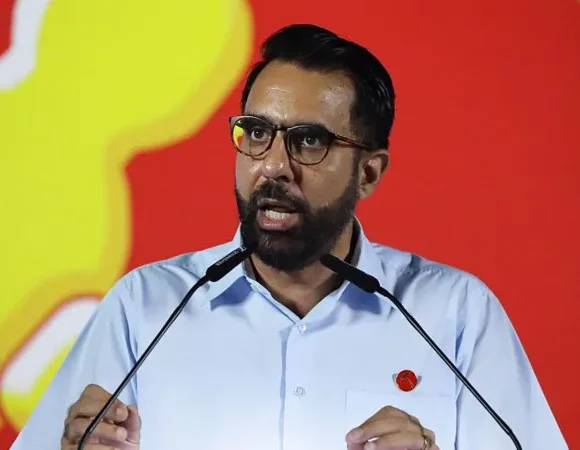
Singapore’s Leader of the Opposition in parliament, Pritam Singh, has been stripped of his title by the prime minister following a vote by lawmakers.

The vote took place on Wednesday in parliament, which is overwhelmingly dominated by the ruling People’s Action Party (PAP).

The move follows Singh’s conviction for lying under oath to a parliamentary committee. Singh has consistently maintained his innocence.

He remains a member of parliament and secretary-general of the largest opposition party, Workers’ Party (WP), but will lose privileges such as additional allowances and the right of first reply during parliamentary debates.

Singh’s case stands out as one of the only criminal convictions against a sitting opposition lawmaker. He was also the first person to hold the title of Leader of the Opposition.

Critics have previously accused Singapore’s government of using the judiciary to go after its political opponents – charges authorities have always denied.

On Wednesday, Indranee Rajah, the Leader of the House who had initiated the debate, said that Singh’s lies “strike at the trust” Singaporeans place in parliament and accused him of “failing to take responsibility”.

Singh defended himself during the debate, saying that his “conscience remains clear” and disagreed with the debate’s resolution that his behaviour was “dishonourable and unbecoming”. He also vowed to continue his work as an MP.

After three hours of debate, the parliament backed a motion that agreed Singh should not be the Leader of the Opposition. All 11 present WP members voted against it.

The parliament also agreed to review the implications for two other WP lawmakers at another time.

On Thursday, Prime Minister Lawrence Wong said in light of Singh’s conviction and the vote that it was “no longer tenable” for him to continue as the Leader of the Opposition.

He also invited the WP to nominate another of their MPs to take the title.

In response to BBC queries over text messaging, Singh responded with a single word: “#WeContinue”.

The WP said it will deliberate on the move and respond “in due course”. It previously said it would conduct an internal review of whether Singh contravened their rules.

The party holds 12 seats in Singapore’s 108-seat parliament.

BBC / Titilayo Kupoliyi

Follow us on Telegram and YouTube, and join our WhatsApp Update Group for more news updates.

Foreign

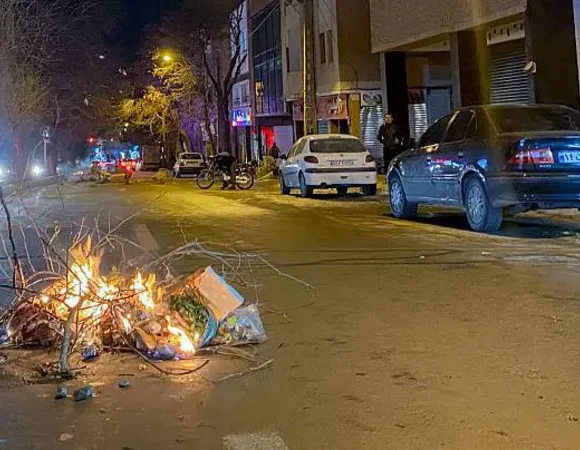
Protesters in Iran defied a deadly government crackdown on Saturday night, taking to the streets despite reports suggesting hundreds of people have been killed or wounded by security forces in the past three days.

Verified videos and eyewitness accounts seen by the BBC appeared to show the government was ramping up its response, as it continues an overarching internet blackout.

The country’s attorney general, Mohammad Movahedi Azad, said on Saturday that anyone protesting would be considered an “enemy of God” – an offence that carries the death penalty.

Hundreds of protesters are believed to have arrested since demonstrations began more than two weeks ago.

The protests were sparked by soaring inflation, and have spread to more than 100 cities and towns across every province in Iran. Now protesters are calling for an end to the clerical rulership of Iran’s Supreme Leader Ayatollah Ali Khamenei.

Khamenei has dismissed demonstrators as a “bunch of vandals” seeking to “please” US President Donald Trump.

The Iranian government has imposed the internet shutdown in an effort to stop the protests. Iran’s data infrastructure is tightly controlled by the state and security authorities. Internet access is largely limited to a domestic intranet, with restricted links to the outside world.

Over the past few years, the government has progressively curtailed access to the global internet. However, during the current round of protests, authorities have, for the first time, not only shut down access to the worldwide internet but also severely restricted the domestic intranet.

An expert told BBC Persian that the current shutdown is more severe than that imposed during the “Women, Life, Freedom” uprising three years ago. Alireza Manafi, an internet researcher, said internet access in Iran, in any form, was now “almost completely down”.

He added the only likely way to connect to the outside world was via Starlink, but warned users to exercise caution, as such connections could potentially be traced by the government.

The BBC and most other international news organisations are also unable to report from inside Iran, making obtaining and verifying information difficult.

Nonetheless, some video footage has emerged, and the BBC has spoken to people on the ground.

Verified video from Saturday night showed protesters taking over the streets in Tehran’s Gisha district. Several videos, verified and confirmed as recent by BBC Verify, show clashes between protesters and security forces on Vakil Abad Boulevard in Mashhad, Iran’s second largest city.

Masked protesters are seen taking cover behind wheelie bins and bonfires, while a row of security forces is seen in the distance. A vehicle that appears to be a bus is engulfed in flames.

Multiple gunshots and what sounds like banging on pots and pans can be heard as a green laser beam lights up the scene.

A figure standing on a nearby footbridge is visible in the footage and appears to fire multiple gunshots in several directions as a couple of people take cover behind a fence on the side of the boulevard.

Other videos have also emerged from the capital Tehran. One video, authenticated by BBC Verify, shows a large group of protesters and the sound of banging on pots in Punak Square in west Tehran, which has been one of the hotspots of protests this week.

Another clip, filmed in the Heravi district in north-east Tehran and confirmed by BBC Persian and BBC Verify, shows a crowd of protesters marching on a road and calling for the end of the clerical establishment.

BBC / Titilayo Kupoliyi

Follow us on Telegram and YouTube, and join our WhatsApp Update Group for more news updates.

Foreign

Vast crowds of Iranians have taken to the streets of the capital, Tehran, and several other cities, calling for an end to the Islamic Republic and in many places for the restoration of the monarchy.

Young and old, rich and poor, Iranians across the country and from all walks of life are now demonstrating their fury at the clerical establishment which has ruled them for close to half a century.

One young woman in Tehran told the BBC she was protesting because her dreams had been “stolen” and she wanted the regime to know that “we still have a voice to shout, a fist to punch them in the face”.

Another spoke of the despair and hopelessness that is driving the protests.

“We’re living in limbo,” she said. “I feel like I’m hanging in the air with neither wings to migrate nor hope to pursue my goals here. Life here has become unbearable.”

Day after day, since late December, protests in Iran have been spreading and building momentum, fuelled by deep-seated economic and political frustration.

“People are becoming bolder now,” 29-year old Sina told the BBC on Thursday by text message from the city of Karaj, west of the capital Tehran. “I went to buy some groceries and people were speaking out loud against the regime in the daylight! I was thinking that the protests will stop but it hasn’t lost its momentum.”

It is hard to know the full picture of what is taking place because independent media are not allowed to operate freely in Iran, many people are fearful to speak publicly, and now the internet has been severely restricted. The BBC spoke to people before the near blackout.

But there is no disguising the extent of discontent, and the size of some of the protests filmed and posted on social media.

Iranians have a multitude of grievances against their government – from the absence of political freedoms to corruption and the state of the economy which has resulted in crippling price rises.

The last major protests in Iran were sparked, in 2022, by the death in custody of a young woman, Mahsa Amini, who was accused of not wearing the compulsory hijab properly.

This time it was a strike by shopkeepers at Tehran’s historic grand bazaar on 28 December over the plummeting value of the Iranian currency which lit the match of a new crisis of legitimacy for the Islamic Republic.

Protests at universities followed. The institutions were swiftly ordered shut by the authorities, ostensibly because of cold weather. But by then, the spark had ignited a wider fire in the country, with clashes in many small towns and cities, particularly in the west of Iran.

Some of the chants heard on the streets over the past few days have been familiar. “Death to the Dictator” is a reference to the 86-year old Supreme Leader Ayatollah Ali Khamenei. “Azadi, Azadi”, or “Freedom, Freedom” is a common refrain.

Another popular chant: “This homeland won’t be a homeland until the mullahs are buried.”

New to these latest protests, however, is the chant: “Pahlavi will return,” a reference to Reza Pahlavi, the son of the late Shah of Iran who was overthrown in 1979. It was he who called for people to turn out on the streets on Thursday night.

The protests of the last few days have seen increasing chants for the return of the monarchy.

“Personally I think he’s the only way out of this,” 26-year old Sara from Tehran told the BBC.

Other Iranians say that they see expressions of support for the monarchy as a sign of desperation to be rid of the current regime, and a lack of alternatives.

“I’m not the biggest fan of Reza Pahlavi. But to be honest my personal opinion is not important now,” 27-year old Maryam from Tehran told the BBC. “Being and staying united is more important. It’s a different vibe from the Woman Life Freedom protests [of 2022].”

She says they were characterised by grief for Mahsa Amini.

“But people seem more angry and determined now.”

Another woman, in the western town of Ilam near the border with Iraq, described people raiding a supermarket linked to the regime, and throwing the produce away to show their disgust at the authorities.

She told the BBC she even knows young people from families affiliated with the regime who have been taking part in protests: “My friend and her three sisters, whose father is a well-known figure in the intelligence services, are joining without their father knowing.”

This is an extraordinary moment in the country. And no one knows exactly where it will lead.

BBC / Titilayo Kupoliyi

Follow us on Telegram and YouTube, and join our WhatsApp Update Group for more news updates.

Foreign

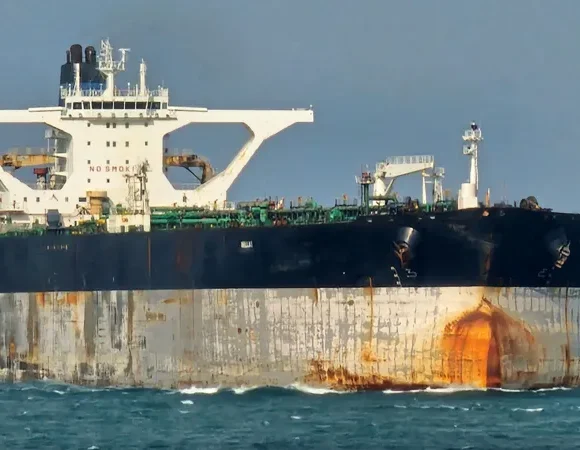
Russia has reportedly deployed a submarine and other vessels to escort an oil tanker which is also being pursued by US forces across the Atlantic.

The ship, currently between Iceland and the British Isles, has been accused of breaking US sanctions and shipping Iranian oil.

It has historically transported Venezuelan crude oil but is reporting to be empty at the moment.

Previously named Bella 1, its name has been changed to Marinera and it has also reportedly been reflagged from a Guyanese to a Russian vessel.

President Donald Trump said last month that he was ordering a “blockade” of sanctioned oil tankers entering and leaving Venezuela, a move the government there described as “theft”.

Meanwhile, several US military aircraft have been tracked over the North Atlantic in the area where the Marinera is reportedly being pursued by US authorities.

Data from sites such as FlightRadar24 show a US air-to-air refuelling tanker and several other aircraft used by US Air Force Special Operations Command for reconnaissance and other specialist missions, according to BBC Verify.

On Tuesday two US officials have confirmed to CBS News, the BBC’s US media partner, that Russia has sent a submarine and other navy vessels to escort the tanker.

The US Coast Guard tried to board it last month in the Caribbean when it was believed to be heading towards Venezuela. The Coast Guard had a warrant to seize the ship over its alleged breaking of sanctions.

Before it could be boarded, the vessel dramatically changed course and its approach to Europe has coincided with the arrival of around 10 US military transport aircraft as well as helicopters.

Russia says it is “monitoring with concern” the situation around the ship.

“At present, our vessel is sailing in the international waters of the North Atlantic under the state flag of the Russian Federation and in full compliance with the norms of international maritime law,” its foreign ministry said.

“For reasons unclear to us, the Russian ship is being given increased and clearly disproportionate attention by the US and Nato military, despite its peaceful status,” it said.

Two US officials told CBS News earlier on Tuesday that American forces were planning to board the ship, and that Washington preferred to seize it rather than sink it.

BBC Verify has been looking at footage released by Russia Today, reportedly taken onboard an oil tanker, which shows a ship in the distance matching the profile of a US Coast Guard Legend-class cutter.

It has also been monitoring the latest reported location of the Marinera. According to AIS location data from ship-tracking platform Marine Traffic, its location as of Tuesday morning was in the North Atlantic Ocean, about 300km (186 miles) south of Iceland’s shoreline.

Previous AIS tracking data suggests it travelled north, past the western coast of the UK over the past two days.

BBC / Titilayo Kupoliyi

Follow us on Telegram and YouTube, and join our WhatsApp Update Group for more news updates.

Foreign

The Janaza (funeral) prayer service for Sina Ghami and Abdul Latif Kevin Ayodele, close friends of boxing star, Anthony Joshua, is scheduled to take place on Sunday, January 4, 2026.

The bodies of Sina Ghami and Latif “Latz” Ayodele were repatriated to the United Kingdom following the fatal crash in Nigeria.

The service will begin at 10am at the London Central Mosque, 146 Park Road, London NW8 7RG.

A Saturday statement announcing the funeral, shared by Boxing King Media, disclosed this, saying: “Our thoughts and prayers are with their families and loved ones.”

Ghami and Ayodele tragically died in a road crash in Nigeria late last year, on Monday December 29, 2025, where Joshua was also involved but escaped with minor injuries.

The accident occurred on the Lagos–Ibadan Expressway in the Makun area of Ogun State, when the Lexus SUV carrying Anthony Joshua collided with a stationary truck, killing his strength and conditioning coach, Sina Ghami, and personal trainer, Latif “Latz” Ayodele, at the scene.

The funeral in London will allow family, friends, and the boxing community to pay their final respects.

Punch / Titilayo Kupoliyi

Foreign

US President Donald Trump says that Washington “successfully” carried out a “large-scale strike” against Venezuela, claiming that President Nicolas Maduro and his wife have been captured and removed from the country.

The United States of America has successfully carried out a large-scale strike against Venezuela and its leader, President Nicolas Maduro, who has been, along with his wife, captured and flown out of the Country,” Trump said on his Truth Social platform.

In a brief written statement, Trump said that the operation was conducted “in conjunction with U.S. law enforcement.”

He said additional details would be released later. He also announced that a news conference would be held at 11 a.m. at his Mar-a-Lago residence in the US state of Florida.

Meanwhile, United States Secretary of State Marco Rubio says he anticipates no further action against Venezuela following the capture of Nicolás Maduro, says a Republican senator.

Mike Lee confirmed Venezuelan President Maduro’s arrest, to stand trial on criminal charges in the US, following a phone call with Rubio.

He [Rubio] anticipates no further action in Venezuela now that Maduro is in US custody,” says Senator Lee.

Lee adds that the US strikes were “deployed to protect and defend those executing the arrest warrant”.

Earlier, Lee said in a post on X: “I look forward to learning what, if anything, might constitutionally justify this action in the absence of a declaration of war or authorisation for the use of military force.”

BBC / Titilayo Kupoliyi

Follow us on Telegram and YouTube, and join our WhatsApp Update Group for more news updates.