Opinion

By Oluwasheun Olayanju

Introduction

Rare earth metals have recently become a popular discussion and even a common headline in recent times.

Rare earth metals are an indispensable part of modern technology, serving as critical components in a vast range of industries, including consumer electronics, renewable energy, medical devices, and national defense.

These elements are key to the production of smartphones, electric vehicles (EVs), wind turbines, and military applications such as precision-guided missiles and stealth technology.

Their strategic importance has triggered intense competition among nations, leading to efforts to diversify supply chains and reduce dependence on dominant producers like China.

What Are Rare Earth Metals?

Rare earth elements (REEs) consist of 17 chemically similar elements: the 15 lanthanides, along with scandium and yttrium.

While these elements are relatively abundant in the Earth’s crust, they are rarely found in concentrated, economically extractable deposits.

This dispersion makes their mining and refining complex, energy-intensive, and environmentally challenging.

REEs are categorized into light and heavy rare earth elements.

Heavy Rare Earth Elements (HREEs)

Heavy rare earth elements (HREEs) are a subset of the 17 rare earth elements (REEs) and generally include elements from gadolinium to lutetium, along with yttrium.

Heavy rare earth elements, HREEs are less abundant and are mainly found in specialized mineral deposits such as xenotime and ion-adsorption clays.

These elements are crucial in high-tech applications, particularly in clean energy and defense industries.

Heavy REEs are scarcer and more valuable due to their unique properties in high-tech applications.

Global rare earth reserves in 2021

Extracting and processing these elements require specialized technology and infrastructure, further adding to their strategic significance in the global economy.

HREEs are essential for cutting-edge technologies, including renewable energy, defense systems, medical imaging, and aerospace engineering.

Their scarcity and complex extraction processes make them highly valuable and often subject to geopolitical tensions.

China dominates HREE production, but efforts are underway to diversify the supply chain and explore new mining sites worldwide.

List of Heavy Rare Earth Elements (HREEs) and their uses

Gadolinium (Gd) – Used in MRI contrast agents, neutron shielding in nuclear reactors, and specialized alloys.

Terbium (Tb) – Critical for green phosphors in lighting and displays, as well as in high-temperature magnets.

Dysprosium (Dy) – Enhances the heat resistance of neodymium-based magnets, making it vital for electric vehicles and wind turbines.

Holmium (Ho) – Used in nuclear control rods, lasers, and some high-powered magnets.

Erbium (Er) – Found in fiber optic communication systems and laser medical applications.

Thulium (Tm) – A key component in portable X-ray machines and laser devices.

Ytterbium (Yb) – Used in stress gauges, fiber optics, and as a doping agent for high-powered lasers.

Lutetium (Lu) – Utilized in PET scan detectors, catalysts in petroleum refining, and advanced optics.

Yttrium (Y) – A critical element in superconductors, ceramic materials, and LED displays.

Light Rare Earth Elements (LREEs)

Light rare earth elements (LREEs) are a subset of the 17 rare earth elements (REEs) and include the first half of the lanthanide series, from lanthanum to samarium, along with scandium.

These elements are more abundant in the Earth’s crust compared to heavy rare earth elements (HREEs), making them relatively easier to extract and process.

However, they are still considered strategically important due to their widespread applications in modern technology.

Significance and Applications

LREEs are integral to modern industries such as renewable energy, telecommunications, and defense.

Their role in high-performance magnets makes them essential for electric vehicles (EVs) and wind turbines, supporting global efforts for sustainable energy.

Additionally, they contribute to advanced optics, aerospace technology, and medical imaging, making them indispensable in high-tech manufacturing.

Despite their relative abundance, refining LREEs requires complex chemical separation processes, often leading to environmental and geopolitical challenges in their supply chain.

List of Light Rare Earth Elements (LREEs)

Lanthanum (La) – Used in hybrid car batteries, catalysts for petroleum refining, and optical lenses.

Cerium (Ce) – Plays a major role in catalytic converters, glass polishing, and self-cleaning ovens.

Praseodymium (Pr) – Essential for making high-strength permanent magnets in wind turbines and electric vehicles.

Neodymium (Nd) – A key component in neodymium-iron-boron (NdFeB) magnets, which are used in motors, headphones, and speakers.

Promethium (Pm) – A radioactive element used in nuclear batteries and specialized luminous paints.

Samarium (Sm) – Used in samarium-cobalt (SmCo) magnets, which are critical for aerospace and defense applications.

Where Are They Found?

A newly developed geological map has highlighted key global deposits of rare earth metals.

China remains the dominant player, controlling approximately 60% of global mine production and about 90% of rare earth processing and permanent magnet output.

Other major sources include:

Africa: Countries like Morocco and South Africa hold significant reserves, particularly of zinc, lithium, and cobalt, which are critical for renewable energy and battery technology.

South America: Chile and Brazil boast vast lithium reserves, a crucial component of electric vehicle (EV) batteries.

Ukraine: Recently identified as an emerging rare earth hub, Ukraine holds around 5% of the world’s reserves, adding a geopolitical dimension to the global supply chain.

Nigeria: Research indicates that Nigeria has deposits of rare earth metals, particularly in regions such as Kogi, Nasarawa, and Plateau states. While the extent of these reserves is still under study, they could play a role in the country’s mineral resource development in the future.

Challenges and Environmental Concerns

The extraction and processing of rare earth metals pose significant environmental and health risks due to the intensive mining and refining processes involved.

Open-pit mining, the most common extraction method, results in large-scale deforestation, habitat destruction, and soil erosion.

Additionally, the chemical processes used to separate rare earth elements (REEs) from ores often involve toxic solvents, acids, and large quantities of water, leading to hazardous waste by-products.

If not properly managed, these wastes can contaminate groundwater, rivers, and agricultural lands, posing long-term health risks to nearby communities.

Many rare earth ores contain radioactive elements such as thorium and uranium, which create additional hazards.

When improperly handled, these radioactive materials can accumulate in mining waste, leading to long-term radiation exposure and potential contamination of ecosystems.

Furthermore, rare earth mining generates fine dust particles containing heavy metals, which can be inhaled by workers and local populations, increasing the risk of respiratory diseases and other health complications.

Although research into more sustainable extraction methods is ongoing, including bio-leaching and ion-adsorption techniques, these alternatives have yet to be widely implemented due to high costs and technical challenges.

Governments and industries are under increasing pressure to adopt environmentally responsible sourcing and recycling practices to mitigate these impacts.

The Global Race for Rare Earths

As demand for rare earth elements (REEs) continues to soar, governments and industries worldwide are scrambling to secure stable and diversified supply chains.

China has long dominated rare earth production, accounting for over 60% of global mining and nearly 90% of processing capacity, giving it significant geopolitical leverage over these critical materials.

In response, the U.S. and European nations have ramped up investments in domestic mining projects and refining facilities, aiming to reduce dependence on Chinese exports.

Africa is emerging as a key player in the global rare earth market, with countries like Madagascar, Burundi, and South Africa developing their reserves.

Latin American nations are also being explored for their untapped mineral potential.

Meanwhile, Ukraine, despite ongoing geopolitical challenges, holds approximately 5% of the world’s rare earth reserves, making it an important future supplier.

Efforts are also underway to recycle rare earth elements from electronic waste and develop alternative materials for high-tech applications.

As nations compete for access to these essential resources, the global rare earth market is becoming increasingly strategic, shaping the future of clean energy, defense, and advanced technology industries.

Diversifying rare earth supply chains will not only stabilize global markets but also make these essential materials more affordable and widely available.

Governments and corporations are working to diversify rare earth supply chains.

The U.S., EU, and Japan are investing in mining, recycling, and alternative sources while implementing sustainability policies.

Private companies are funding new mines, developing recycling programs, and using blockchain for transparent sourcing.

Conclusion

Rare earth metals are indispensable to modern technology and industrial applications, making them a focal point in the global economy.

With China leading production and other nations racing to secure their own sources, the geopolitical and environmental implications of rare earth mining will continue to shape the future.

For African nations, particularly Nigeria and other resource-rich countries, this is a defining moment.

As demand surges due to the global push for green energy and technological advancements, governments and corporations are heavily investing in both known and newly discovered rare earth deposits to secure long-term supply stability.

For African nations, this presents both an opportunity and a warning.

While countries like China, the United States, and Australia have long exploited rare earth resources for economic and strategic advantages, Africa—with its untapped reserves—risks being left behind if proactive steps are not taken.

Nations like Nigeria, Tanzania, and South Africa possess significant mineral wealth, yet they remain underutilized.

Now is the time for African governments to recognize the value of these critical elements, invest in local mining and refining capabilities, and position themselves as key players in the global rare earth market.

Failure to act could result in the continued reliance on foreign supply chains, leaving Africa at the mercy of global power struggles over these invaluable resources.

The global shift toward clean energy and advanced technology provides an unprecedented chance to harness these critical minerals for economic growth.

However, if proactive steps are not taken—such as investing in mining, refining, and responsible extraction—the continent will remain a passive player, dependent on imported materials instead of leveraging its own wealth.

The time to act is now.

African leaders must prioritize rare earth metals as part of their economic and industrial strategy, ensuring that the continent benefits from its natural resources rather than being exploited for them.

With proper investment, regulation, and collaboration, Africa can emerge as a powerful force in the rare earth supply chain, driving innovation and self-sufficiency in the decades to come.

Acknowledgements: This feature is informed by research from Reuters, The Daily Galaxy, and additional sources on global rare earth metal distribution.

Subscribe to our Telegram and YouTube Channels and also join our Whatsapp Update Group.
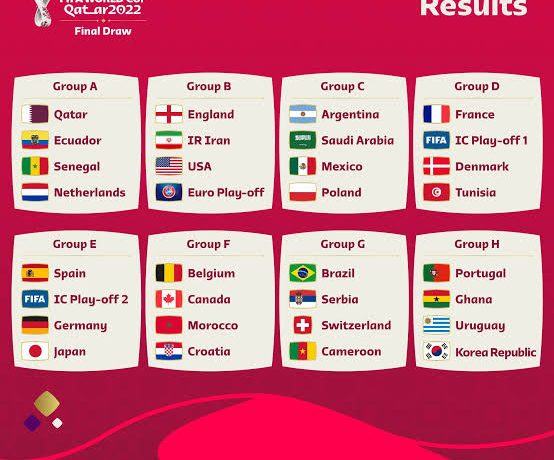
Sport

The 2022 World Cup will feature 32 teams in eight groups of four.

Four matches will be played each day during the group stage, which will run over a 12-day period and see winners and runners-up progress to the round of 16.

Matches will only be assigned to particular venues after the finals draw, so organisers can choose optimal kick-off times to suit television audiences in different countries, as well as supporters out in Qatar.

Unlike at Euro 2020, there will be a third-place play-off game on December 17.

Group stage: November 21 – December 2
Round of 16: December 3-6
Quarter-finals: December 9/10
Semi-finals: December 13/14
Final: December 18

Oluwakayode Banjo/Olaolu Fawole

News Analysis

Cancer, a chronic disease characterized by uncontrollable growth and spread abnormal cells in the body is fast becoming a big health epidemic in Nigeria.

 Statistics from the World Health Organisation, W.H.O., revealed that eighty thousand Nigerians die from cancer yearly while two hundred and forty people die from the disease every day. 

Data from the W.H.O. also showed that Nigeria has the highest cancer death rate in Africa and one hundred thousand new cancer cases are diagnosed every year globally.

Cancer patients experience excruciating pains, grapple with problems such as high cost of treatment, discrimination, abandonment and lack of prompt access to care.

Unfortunately, due to inadequate information about the disease, those diagnosed often believe it was the end of life.

This belief most times leaves those suffering from cancer distressed and sometimes depressed.

Some also withdraw from families and society to avoid stigmatisation while others lose confidence and self-esteem.

It has been proven that early detection of cancer could save people from the stress of coming down with its complications.

For instance, when women notice small painless lumps in the breast or difficulty in urination by men, it should be critically examined by professionals to ensure that it is not cancerous.

It is for this reason that February 4th is set aside to raise awareness and to encourage prevention as well as treatment of cancer.

The goal of the day led by the Union for International Cancer Control is to significantly reduce illness and death caused by cancer.

It also serves as an opportunity to rally international communities to end the injustice of preventable suffering from cancer.

The theme for this year “I Am And I Will” is about the actions that would lead to progress in reducing the global impact of cancer.

So every action no matter big or small would make lasting positive change.

Sadly, the global COVID-19 pandemic has affected activities of most organisations involved in cancer control, treatment and management.

Despite this setback, however, the cancer community has continued to show resilience in providing services in terms of screening, diagnosis and treatment.

It is important therefore for government to continue to invest in the control of cancer as well as its management.

The National Health Insurance Scheme, NHIS, should be extended to cover all Nigerians.

Also, the cost of chemotherapy treatment which is on the high side should be reviewed.

There is need to train more specialists in the oncology field to increase access to care by cancer patients.

Furthermore, government should provide good diagnostic centres with increased capacity to reduce waiting period for treatment.

Pressure should be mounted by stakeholders on the producers of cancer drugs to manufacture them in Nigeria for easy accessibility.

Increased vaccination of girls against human papilloma virus, HPV, will also reduce the incidences of cervical cancer.

Individuals on their part should desist from lifestyle that could expose them to the risk of cancer, such as smoking, having multiple sexual partners, eating wrong diets, processed foods and use of oral contraceptives for a long period.

The theme, “I Can And I Will” is a clarion call for everyone to collectively reduce deaths from cancer.

Anthonia Akanji

Foreign

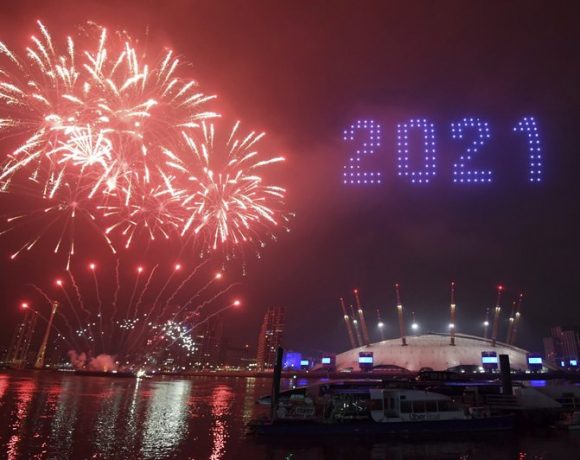
This New Year’s Eve is being celebrated like no other in most of the world, with many bidding farewell to a year they’d prefer to forget.

From the South Pacific to New York City, pandemic restrictions on open air gatherings saw people turning to made-for-TV fireworks displays or packing it in early since they could not toast the end of 2020 in the presence of friends or carousing strangers.

As midnight rolled from Asia to the Middle East, Europe, Africa and the Americas, the New Year’s experience mirrored national responses to the virus itself. Some countries and cities canceled or scaled back their festivities, while others without active outbreaks carried on like any other year.

Australia was among the first to ring in 2021. In past years, 1 million people crowded Sydney’s harbor to watch fireworks. This time, most watched on television as authorities urged residents to stay home to see the seven minutes of pyrotechnics that lit up the Sydney Harbor Bridge and its surroundings.

In New York’s Times Square, the ball dropped like always, but police fenced off the site synonymous with New Year’s Eve to prevent crowds of any size from gathering.

Another of the world’s most popular places to be on December 31, Dubai in the United Arab Emirates, pressed ahead with its revelry despite a surge of infections. Images of masked health care workers briefly lit up Burj Khalifa, the world’s tallest tower, before fireworks exploded in the sky over the building. Tens of thousands of people flooded the streets and squares marked out for social distancing were largely ignored.

Still, the pandemic robbed the night of its freewheeling spirit. Authorities implemented a raft of anti-virus measures to control rowdy crowds in downtown Dubai. At luxury bars and restaurants, music blared and people drank, but dancing was strictly prohibited.

The gleam of Las Vegas brought a similar crowd, with tens of thousands of people walking on the Strip by early evening despite a plea from the governor to avoid gatherings.

South Africans were also urged to cancel parties. Many instead lit candles as a way to honor health workers and people who have died in the COVID-19 pandemic.

In many European countries, authorities warned they were ready to clamp down on revelers breaching public health rules, including nightly curfews in France, Italy, Turkey, Latvia, the Czech Republic, and Greece.

“No one will be on the streets after 10 p.m. (Athens) will be a dead city to make sure no more restrictions are imposed,” said Greece’s public order minister, Michalis Chrisohoidis.

France’s government flooded the streets with 100,000 law enforcement officers to enforce the nationwide curfew.

A few families gathered in Madrid’s sunny central Puerta de Sol square to listen to the rehearsal of the traditional ringing of the bells that is held at midnight. They followed the Spanish custom of eating 12 grapes with each stroke of the bells before police cleared the area that normally hosts thousands of revelers.

“That’s it, life goes on. Despite what happened we have to celebrate,” said Cesar Pulido, 32, who celebrated in Madrid. “We have to eat the 12 grapes in order to ask 12 wishes like health, love, money, everything and good vibes.”

As the clock struck midnight, fireworks erupted over Moscow’s Red Square and the Acropolis in Athens, but the explosions echoed across largely empty streets as people obeyed orders to stay home.

From Berlin to Brussels, normally raucous celebrations were muted by the pandemic.

Even the British government, keen to celebrate the U.K.’s definitive split from the EU, ran ads imploring the public to “see in the New Year safely at home” amid a record number of newly confirmed cases. London’s annual New Year’s Eve fireworks display was canceled, but an unannounced display was broadcast before midnight, with tributes to health care workers, a reference to the Black Lives Matter movement and even a voice saying “you’re on mute” in reference to a bugbear of virtual work meetings.

In Scotland, residents normally mark the new year with parties and “first footing,” where a home’s first visitor of the year comes bearing gifts. The tradition is among the list of activities the government warned against.

“No gatherings, no house parties, no first-footing. Instead, we should bring in 2021 in our own homes with just our own households,” Scotland’s First Minister Nicola Sturgeon said.

Many around the world looked toward 2021 with hope, partly due to the arrival of vaccines that offer a chance of beating the pandemic.

“Although this was a very difficult year, a year of many losses, I’m grateful to be safe, to follow the rules, to do my part,” said Marilia Rafael, 33, who celebrated in Portugal, “and would like to ask that the next year may be better for all of us, may it be a year of hope, peace and love.”

More than 1.8 million deaths worldwide have been linked to the coronavirus since the start of the pandemic.

Some leaders, such as German Chancellor Angela Merkel, used their New Year’s address to thank citizens for enduring hardship during the lockdown and criticize those who defied the rules. Others, like Italy’s President Sergio Mattarella, flew the flag for science, urging citizens to discard their fears about getting immunized against COVID-19.

“Faced with an illness so highly contagious, which causes so many deaths, it’s necessary to protect one’s own health and it’s dutiful to protect those of the others – family members, friends, colleagues,”’ said Mattarella, 79.

In Brazil’s Rio de Janeiro, where official fireworks and celebrations also were canceled to limit the rapid spread of the virus, police officers braced for what promised to be a long night.

Rio officials decided to seal off Copacabana, where millions of people dressed in white usually gather on the beach to marvel at fireworks and attend large concerts. This year, between 8 p.m. and 6 a.m. on Jan. 1, only local residents will be able to access the city’s iconic shore, authorities said.

In South Korea, Seoul’s city government canceled its annual New Year’s Eve bell-ringing ceremony in the Jongno neighborhood for the first time since the event was first held in 1953, months after the end of the Korean War.

New Zealand, which is two hours ahead of Sydney, and several of its South Pacific island neighbors that also have no active COVID-19 cases held their usual New Year’s activities.

In Chinese societies, the virus ensured more muted celebrations of the solar New Year, which is less widely observed than the Lunar New Year that in 2021 will fall in February. Initial reports about a mystery respiratory illness sickening people in the Chinese city of Wuhan emerged exactly a year ago.

Associated Press

Politics

Former President, Chief Olusegun Obasanjo says the late former Ghana president, Mr Jerry Rawlings was a quintessential patriot and courageous leader that will be remembered for his critical role in the evolution of modern democratic Ghana.

Chief Obasanjo in a condolence letter to the people of Ghana on the death of her former leader and President, made available in Abeokuta eulogized the former leader as passionate about peace, security and leadership issues in Africa.

According to the former Nigeria President, the late President Rawlings will be missed for his exemplary leadership across Africa for his contribution to nation-building in the Republic of Ghana as the Military Head of State and as a democratically-elected President.

He said former President Rawlings provided the much-needed leadership and direction which impacted positively on the social stability and democratic progress recorded thus far achieved in Ghana. 

Chief Obasanjo said he worked closely with late Rawlings within the last two years of completing his second term in office, as a democratically-elected President of Nigeria during which he found in him a reliable friend, ally and confidant. 

The former Nigeria President said they worked together under the auspices of Africa Union with constructive contributions at the various fora in their joint efforts at charting a new future for Africa particularly in tackling the scourge of malaria on the continent.

Chief Obasanjo said he joined the government and the good people of Ghana as well as millions of others around the world in mourning a man, who dedicated his life to the growth and development of Ghana, his country, in particular, and Africa as a whole praying to God Almighty to give the family of late former president, the government and people of Ghana the fortitude to bear the irreparable loss of the committed nationalist.

Wale Oluokun

News

Wilful, deliberate or suspension of constitution or laid down set of rules and regulations by an individual to stay long in power outside a specific tenure of office either as president or head of state of a country is referred to as sit-tight syndrome. 

The trend is illegal and unconstitutional, but ironically, it is attractive, fanciful and too tempting to ignore by some people who finds themselves in positions of authority.

It is instructive to note that some leaders nowadays tinker with constitutions that brought them to power for selfish gains

Notably, African leaders past and present who indulged in this self-serving and ungodly adventure include Robert Mugabe of Zimbabwe, Mobutu Seseseko of Zaire, Kamuzu Banda of Malawi, Samuel Doe of Liberia, Hosni Mubarak of Egypt, Ben Ali of Tunisia, Yoweri Museveni of Uganda and Joseph Kabila of Democratic Republic of Congo.

Others are Matthew Kerekou of Benin Republic Omar Bongo of Gabon, Yahyah Jahmeh of Gambia, Gadafi of Libya, Nguema of Equitorial Guinea, Paul Biya of Cameroon and Gnasingbe Eyadema of Togo among others.

And perhaps, worried by the negative impact of sit tight syndrome on governance in Africa, President Muhammadu Buhari recently warned his colleagues at an ECOWAS extra- ordinary summit in Niamey, Niger Republic against spending more than their constitutional terms in office. 

Apart from this long overdue advise, African leaders must be ready and willing at all times to subject and surrender themselves to the dictates of the constitution they swore to uphold upon assumption of power and office.

A continent in a hurry to develop and carve a niche for itself among developed and civilized people can definitely not afford to continue in a perilous way.

The recent military coup and takeover of power from Ibrahim Keita of Mali is a pointer to this assertion.

Major driving force behind this subversion of the will of the people by these leaders is lust for power, greed, selfishness, ethnicity, religion and fear of the unknown after leaving power.

The obvious implication of their sit tight syndrome is instability usually brought about by civil wars, retarded socio-economic growth absence of peaceful transfer of power from one government to another, lack of democratic culture, authoritarianism, endemic corruption, isolation by world powers due to poor image, human rights abuses, restiveness, extra judicial killings and dictatorship. 

The cumulative impact of this dangerous trend of sit tight syndrome is the unending underdevelopment of Africa by Africans.

Concerted efforts must be made to strengthen democratic institutions, freedom of expression, freedom of the press, promotion of civil and human rights advocacy as well as citizens and civic obligations and duties to the state.

Above all, there must be a change of orientation and attitude to leadership in Africa, bearing in mind the age long dictum that, “no condition is permanent.

Tayo Sanni

Health

Africa has been declared free from wild polio by the independent body, the Africa Regional Certification Commission.

Polio which usually affects children under age five , sometimes lead to irreversible paralysis and death .

Twenty-five years ago,thousands of children in Africa were paralysed by the virus.

The disease is now only found in Afghanistan and Pakistan.

There is no cure but the polio vaccine protects children for life.

Nigeria is the last African country to be declared free from wild polio, having accounted for more than half of all global cases less than a decade ago.

BBC

News Analysis

The world eco-system and its geo-physical structure creates space for movement of people, goods and services from one place to another.

According to a globally rated travel magazine, it is estimated that Nigerians are the leading travelers among all countries in Africa.

As a result of the COVID-19 pandemic, the tide has changed and Nigeria is now the leading country with the number of returnees escaping from their foreign safe havens due to rampaging pandemic.

Research findings reveal that so many Nigerians in their large number on a daily basis are fleeing from countries like the United Kingdom, America, Saudi Arabia, United Arab Emirates and other neighboring countries.

Worried about this development, Nigerians especially families of people living abroad have been making their voices loud on the plight and possible evacuation and re-integration of their loved ones.

The federal government of Nigeria under the administration of President Muhammadu Buhari must be commended for rising up to the challenge of COVID-19 pandemic.

It has demonstrated responsibility as stated in section 14(2) b of the 1999 constitution of the Federal Republic of Nigeria as amended in 2010 which states that the security and welfare of the people shall be the primary purpose of government.

As far as COVID-19 pandemic and Nigerian returnees are concerned, the government has discharged that constitutional mandate as all the returnees are made to feel welcome in their fatherland.

They are being made to undergo all COVID-19 pandemic safety protocols.

However, it must be pointed out that there are many battles ahead of the government and the entire nation.

The emerging scenario is that many Nigerians now look at these returnees with suspicion and will do anything to avoid them.

Whereas majority of these returnees do not test positive to COVID-19 as they were subjected to series of tests before being allowed into the country.

All organs of government at every level should provide information and awareness platforms so as to re-integrate the returnees back into the society.

Non-government organizations, civil society groups, religious and communities leaders as well as the media also have roles to play in education and orientation of Nigerians, so they can see the returnees as their kinsmen and women.

Tayo Sanni

News Analysis

Children around the world are routinely engaged in paid and unpaid forms of work that may be harmful to them.

However, child labour is when children under the legal age of adulthood work or are involved in hazardous activities that may compromise their physical, mental, social or educational development.

According to World Bank records, Africa ranks highest among regions in the percentage of children involved in child labour.  

Child labour is not about children performing small tasks around the house, but the exploitation of the most vulnerable, disadvantaged and marginalized children in society.

According to the recent estimates of the International Labour Organization, ILO, there are approximately seventy-two million child labourers between the ages of five to seventeen in Africa.

Children are withdrawn from school and put to work in order to fight the economic downturn.

Also revealed from past research studies conducted in Nigeria is the fact that, whenever most families have some shocks female children are used in replacement of their mother’s work in domestic duties instead of going to school.

Large proportion of female Nigerian children are used as domestic servants by trafficking them into some neighbouring countries, some hawk for their parents or their masters without directly been paid.

Parents who have the financial ability to forgo the income from their children in most parts of Nigeria still do not choose to send those children to school.

The Covid-19 health pandemic and the resulting economic and labour market shocks are having a huge impact on people’s lives and livelihoods.

Unfortunately, children are often the first to suffer with the crisis pushing millions of vulnerable children into child labour.

Government should therefore intensify their efforts at educating parents on the need for a small family size.

This year, the World Day against Child Labour will be conducted as a virtual campaign and is being organized jointly with the global march against child labour and the international partnership for cooperation on child labour in agriculture.

As Covid-19 pandemic ravages the world, parents and guardians should protect their children and wards from labour and keep them at home.

Children should be properly engaged during this pandemic to protect them from contracting the dreaded disease.

Parents should be discouraged from giving their children for exchange or as servants in times of difficulty.

This the government can do by giving parents that wish to send their children to school but without the mean access to credit facilities to help them cater for their family.

Morenike Tony-Esan

Foreign

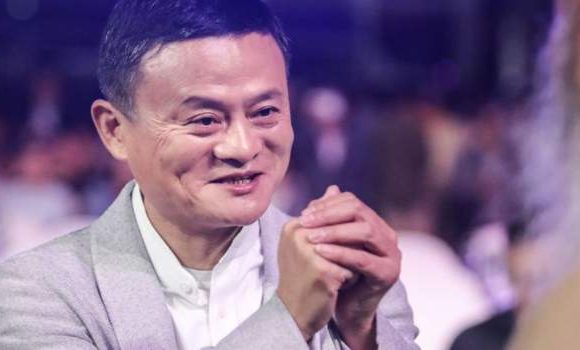
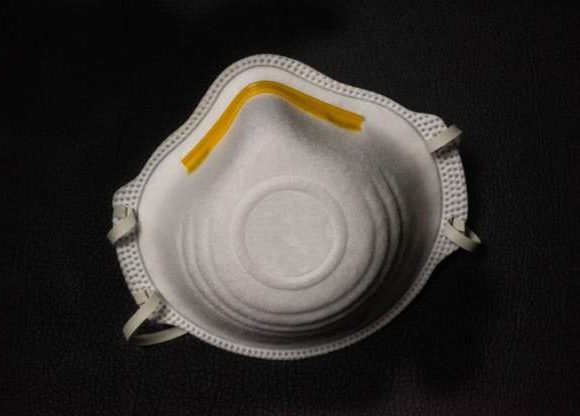
Chinese billionaire and co-founder of Alibaba, Jack Ma, has pledged to donate 20,000 testing kits, 100,000 masks and 1,000 protective suits to each African country to help the fight against Coronavirus.

Mr Ma, Asia’s richest person, earlier this month sent consignments of medical supplies to the US and pledged to distribute two million protective masks across Europe.

In a statement, he said the resources for African countries would be delivered to Ethiopia’s capital, Addis Ababa, with Prime Minister Abiy Ahmed overseeing distribution to the rest of the continent.

Mr Abiy confirmed the news in a series of tweets and spoke of his “great appreciation” for Jack Ma’s partnership:

“As members of the global community, it will be irresponsible of us to sit on the fence, panic, ignore facts, or fail to act. We need to take action now,” Mr Ma added in his statement.

He said the Jack Ma Foundation and Alibaba Foundation would also provide online material for Coronavirus clinical treatment to medical institutions on the continent.

There has been a sharp rise in Coronavirus cases in Africa in recent days, although they are still fewer than in most other continents. Strict measures have been ordered – including travel restrictions and the closure of schools – in South Africa and Kenya among others.

There are concerns that the continent’s weak health systems may be unable to cope with a large outbreak and that governments lack financial and logistical resources to deal with the virus.

BBC NEWS

Foreign

A second person in Senegal has tested positive for Coronavirus, the country’s health ministry confirms.

It says the patient is an 80-year-old French national who arrived in the West African country on 29 February.

He is being treated at the same hospital for infectious diseases in the capital city, Dakar, where another Frenchman was hospitalised for Coronavirus last week.

News of this second confirmed case in Senegal brings the total number of confirmed cases on the African continent to 12.

Other countries with patients who tested positive for the virus are Algeria – five people; Egypt- two people; Morocco – one person; Nigeria – one person and Tunisia – one person.

Senegal is one of the 33 sub-Saharan African nations with testing facilities for Coronavirus. The authorities say they are well prepared to deal with the virus.

On Monday the World Health Organization, WHO, told the BBC it expects the remaining 14 sub-Saharan nations currently without testing equipment to gain facilities within a fortnight.

BBC NEWS