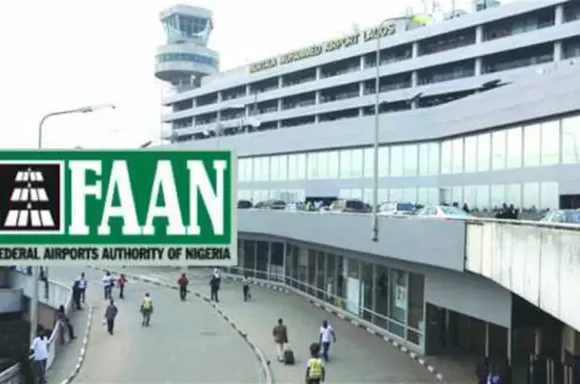
TWO major stakeholders in the aviation sector, the Airline Operators of Nigeria, AON, and the Federal Aviation Authority of Nigeria, FAAN, are currently trading blames over the root cause of constant flight delays experienced by passengers.
While AON insists that FAAN is cupable for the delays as a result of lack of consultation before closing the domestic runway of Murtala Mohammed Airport, MMA, FAAN however explained that measures are being put in place to mitigate the problem as repair works in still ongoing on runway 18L/36R.
Drawing attention to the issue, AON President, Abdulmunaf Yunusa in a letter addressed to the Director General, FAAN, Capt Rabiu Yadudu said: “FAAN is aware of the current existential threat of runaway aviation fuel prices to the domestic airlines. The closure of the main domestic runway of MMA automatically adds an additional 10-15% more fuel costs per sector into and out of MMA, based on the additional flight and taxi time incurred as a result.
“The airlines have already felt these additional costs within the first week of the closure of the runway. This unnecessary burden is unsustainable for a 3 month period on the airlines.
“The closure of Runway 18L has led to a chain of direct flight delays on a daily basis, impacting the entire system of scheduled domestic flights in the country. FAAN is aware that most domestic flights originate from or pass through MMA at some point every day. This is an unnecessary additional negative outcome for the industry.
Reacting to the development, FAAN’s Acting General Manager, Corporate Affairs, Faithful Hope-Ivbaze, noted that, work commenced on the Runway on July 8, 2022 with the mobilization of equipment and workers while on July 9 the portion of the Runway closed to traffic was condoned off with safety barriers with obstacle Light.
“Marking of the runway centre line light commenced and 240m marking from the threshold 18L was done. While digging of cable trenches from the switch room 18L to Approach commenced same day.”
“As at last week’s heavy downpour rain affected the progress but stressed that so far, work is progressing well. As of July 18, 2022 FAAN is digging cable trenches while installation of the threshold 18L has commenced with cutting and excavation of the secondary cable trench and fixing of fittings.
“Marking of the taxiway Centreline, stop-bars and No Entry lights on taxiway C has commenced and is almost completed according to updates provided by the airport managers.”
Vanguard/Taiwo Akinola